In international shrimp trading, two products can come from the same species yet serve very different markets. One buyer may want whole shrimp for seafood restaurants, while another needs peeled shrimp for ready-to-cook meals or further processing. The difference often starts with how the shrimp is prepared.
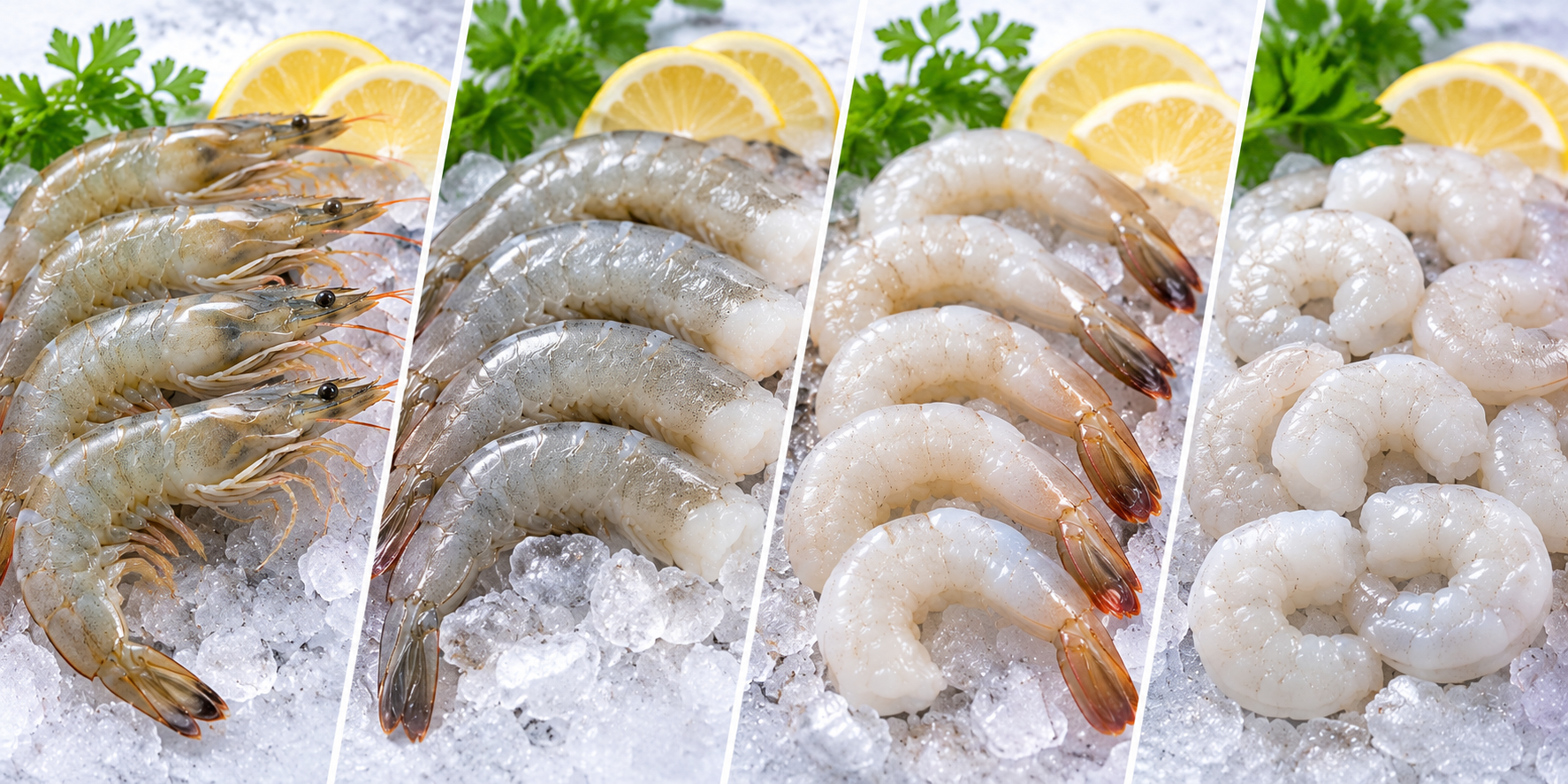
If you work in seafood sourcing or export, you have probably encountered terms such as HOSO, HLSO, PTO and PD. These abbreviations describe different shrimp presentations, affecting processing requirements, usable yield, convenience and commercial value.
Understanding these terms helps buyers specify what they need, compare quotations more accurately and identify suppliers whose products match their target market.
Key Takeaways
- HOSO means head-on, shell-on shrimp, while HLSO means headless, shell-on shrimp.
- PTO refers to peeled, tail-on shrimp, and PD means peeled and deveined shrimp. Tail presentation should be confirmed in the product specification.
- Processing changes labor requirements, usable yield, convenience and the product's intended applications. It does not automatically determine which product is more expensive.
- China, the United States, the European Union and Japan are major shrimp-importing markets, but demand varies by product form, size, species and end use.
- Buyers should specify product form, species, size, glazing, freezing method, packaging, certificates and delivery terms before requesting a quotation.
1. What Do HOSO, HLSO, PTO and PD Mean?
The abbreviations describe the physical presentation of shrimp after processing. They do not, by themselves, tell you the shrimp species, size, freshness, quality grade or country of origin.
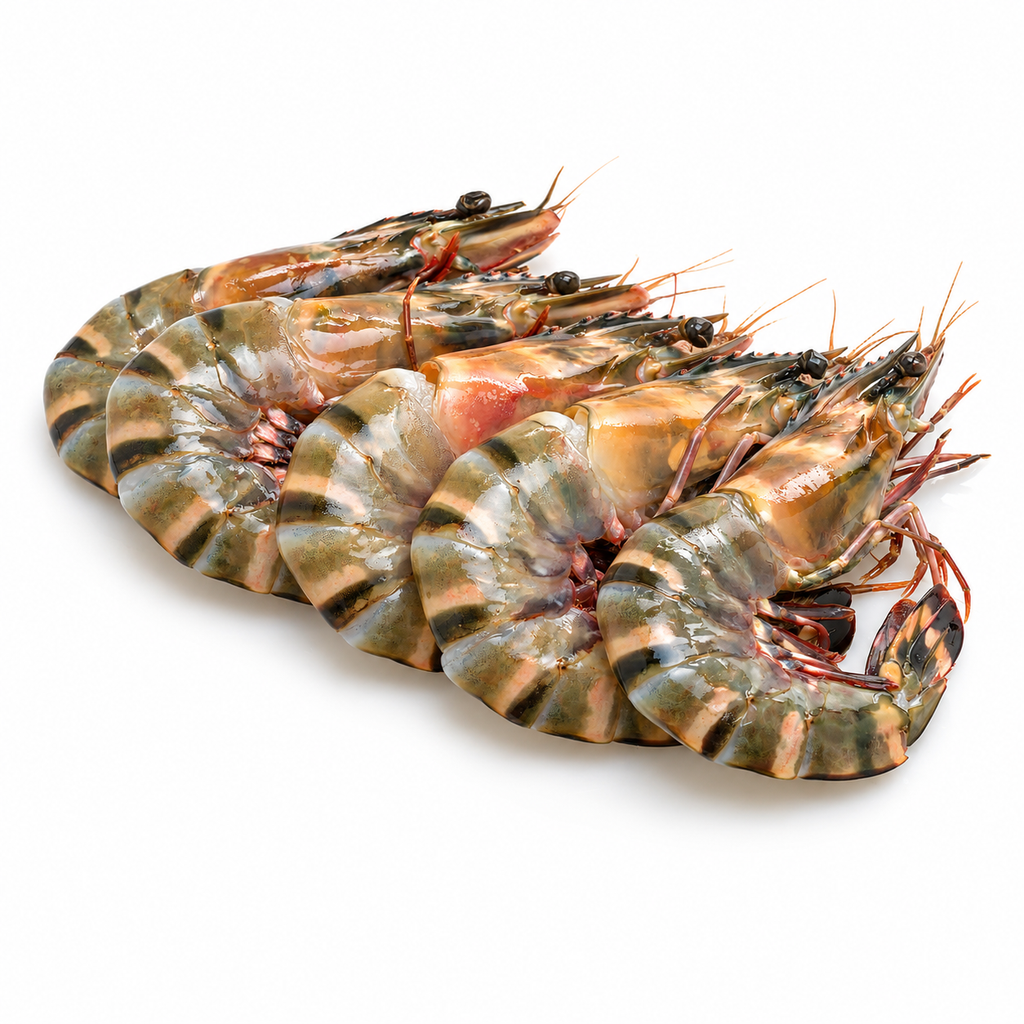
HOSO: Head-On, Shell-On Shrimp
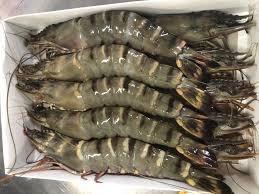
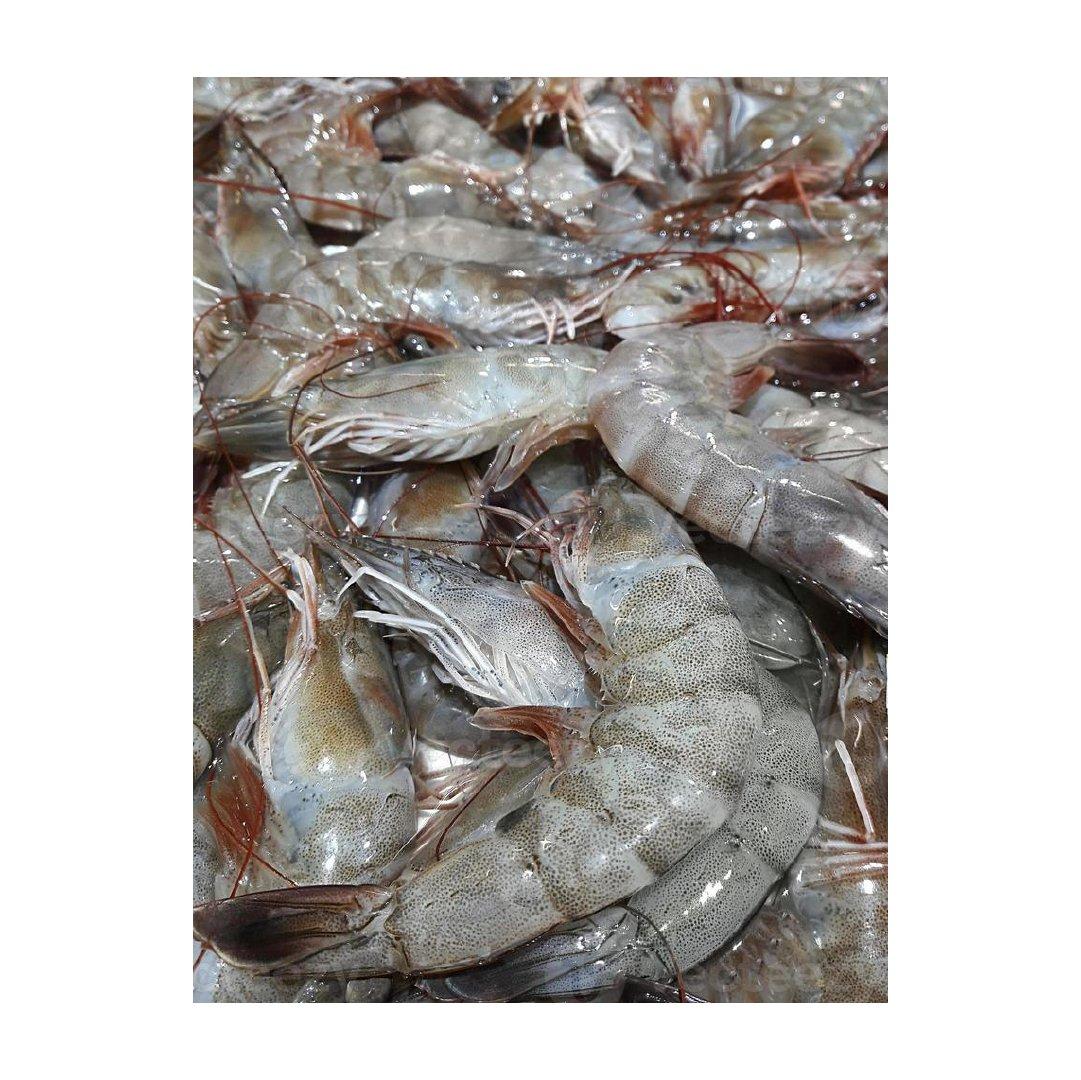
HOSO shrimp are supplied whole, with both the head and shell intact.
This presentation preserves the shrimp's natural appearance and is useful for dishes where whole shrimp are part of the visual appeal. Depending on the species and product quality, buyers may source HOSO for seafood restaurants, retail distribution, traditional cuisine and further food preparation.
Commercial considerations:
- Requires less processing than peeled products.
- Retains the head and shell, which contribute to the product's whole-shrimp presentation.
- May suit buyers who value appearance and traditional preparation.
- Requires buyers to account for the head and shell when calculating edible yield.
HOSO is not automatically the highest-priced option. Price depends on factors such as species, size, quality, production method, supply availability and market demand.
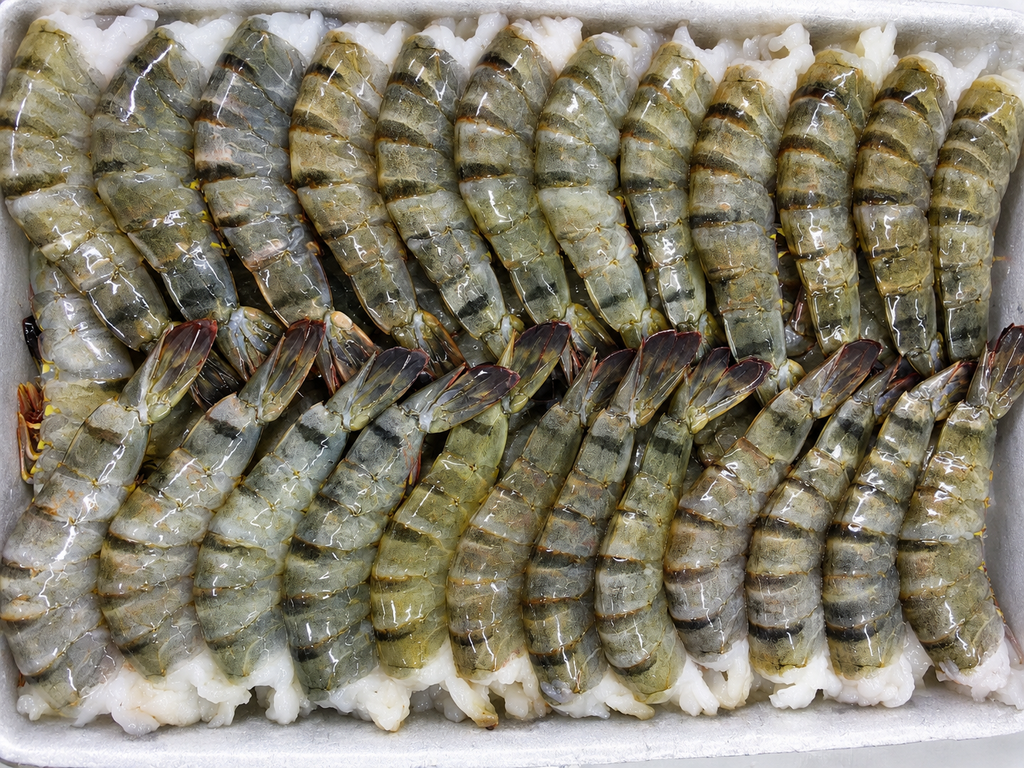
HLSO: Headless, Shell-On Shrimp
HLSO shrimp have had the head removed, while the shell remains on the body and tail.
Compared with HOSO, this presentation removes the head but retains the shell. It can be suitable for buyers who want a partially processed product that still maintains a shell-on appearance.
Commercial considerations:
- Requires more processing than whole HOSO shrimp.
- Retains the shell, so additional peeling may be needed before consumption.
- Can serve foodservice, wholesale and further-processing buyers.
- Buyers should clarify whether the shrimp is deveined, easy-peel or supplied with another back-cut specification.
Do not assume that every HLSO product is deveined. That detail should be explicitly confirmed in the supplier's specification.
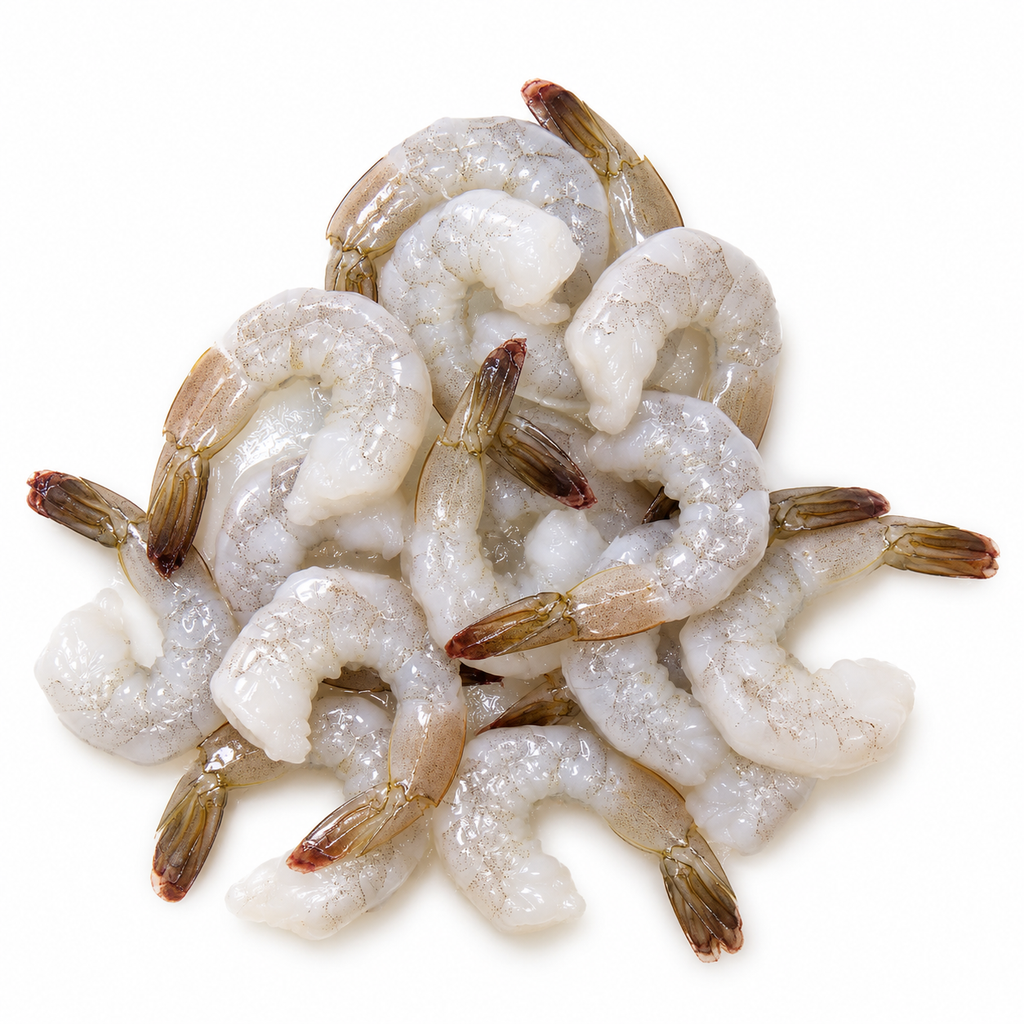
PTO: Peeled, Tail-On Shrimp
PTO shrimp have been peeled while retaining the tail. The head and body shell are removed, but the tail shell remains.
This presentation is useful when buyers want a more convenient product while keeping the tail for handling, presentation or a particular recipe.
Commercial considerations:
- Requires more peeling labor than shell-on products.
- Offers greater preparation convenience for kitchens and food manufacturers.
- Can be suitable for skewers, selected foodservice dishes and coated or breaded shrimp products.
- Buyers should confirm whether the shrimp is deveined, raw or cooked, and whether the tail is fully intact.
PTO and PD are not necessarily mutually exclusive labels. A product may be both peeled and deveined while retaining the tail. Therefore, buyers should specify the complete preparation rather than relying on a single abbreviation.
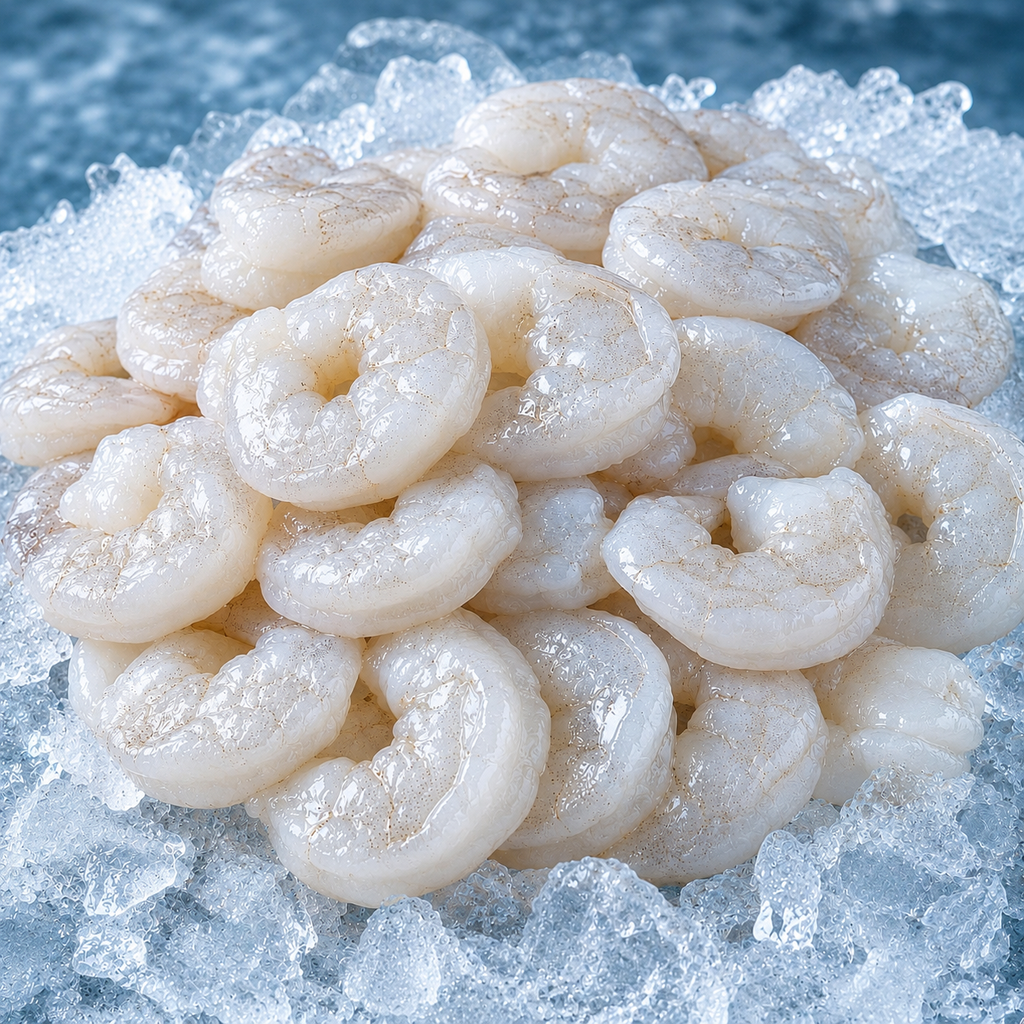
PD: Peeled and Deveined Shrimp
PD shrimp have been peeled and had the digestive tract, commonly called the black vein, removed.
The term describes two processing steps: peeling and deveining. In many commercial specifications, PD shrimp are supplied tail-off, but buyers should confirm the tail presentation because product terminology and specifications can vary.
Commercial considerations:
- Offers a high level of preparation convenience.
- Can reduce preparation time for restaurants, processors and food manufacturers.
- Is suitable for many ready-to-cook and further-processed products.
- Requires more processing than shell-on presentations, which can affect the final price.
PD shrimp may be sold raw or cooked, frozen individually or in blocks, and packed in different formats. The abbreviation alone does not specify these attributes.
Quick Comparison: HOSO vs. HLSO vs. PTO vs. PD
This table describes common commercial usage. Exact product specifications should always be confirmed with the supplier.
2. How Does Shrimp Processing Affect Commercial Value?
There is no universal price ranking for HOSO, HLSO, PTO and PD shrimp. A more processed product may command a higher price per kilogram because it requires additional labor, equipment and quality control. However, the comparison is meaningful only when the products are otherwise comparable.
For example, a quotation for PD shrimp should not be compared directly with a quotation for HOSO shrimp without considering the difference in usable yield, species, size and product specifications.
Four factors are particularly important.
Processing Costs and Labor
Removing heads, peeling shells and deveining shrimp all require processing. More preparation can increase labor and production costs, although actual costs depend on the factory's equipment, production scale and processing method.
Usable Yield
A kilogram of whole shrimp includes the head and shell. A kilogram of peeled shrimp contains a different proportion of edible meat.
Buyers should therefore compare products based on their intended use and the amount of usable product they receive—not simply the price per kilogram.
Convenience and End Use
Restaurants may prioritize appearance, consistency and preparation time. Food manufacturers may prioritize standardized specifications, portion control and processing efficiency. Retail buyers may focus on packaging, convenience and consumer expectations.
The best product is the one that meets the buyer's needs at an acceptable total cost.
Product Specifications and Quality
Species, size, count per kilogram or pound, glazing percentage, freezing method, defect tolerance, packaging and certification can all affect price.
Before comparing suppliers, buyers should ensure that the quotations refer to equivalent products and delivery conditions.
Looking to Source Shrimp?
Connect with verified suppliers, discover matching products, and explore sourcing opportunities from global markets.
3. Which Countries Import Shrimp, and Which Product Forms Do They Prefer?
Shrimp is traded internationally in many forms, from whole shell-on products to peeled, cooked and value-added preparations.
According to World Bank World Integrated Trade Solution data based on UN Comtrade, the leading importers of frozen shrimp and prawns under the displayed 2024 trade category included China, the United States, the European Union and Japan. Spain was also a major importing market. These figures describe frozen shrimp trade, not demand for any single processing form.
The following market patterns can help exporters identify potential customers, but they should be treated as general sourcing signals rather than fixed rules.
China: A Major Market for Whole Shrimp
China is an important destination for shrimp exports. Whole shrimp, including HOSO, have traditionally played a significant role in trade with this market.
The appeal of whole shrimp can include appearance, household preparation and foodservice applications. However, Chinese buyers also purchase other shrimp forms, including processed and value-added products.
For exporters considering China, relevant factors include species, size, color, product presentation, pricing, supply consistency and the buyer's intended distribution channel.
United States: Demand for Convenience and Processed Products
The United States is another major shrimp-importing market. Buyers source a wide range of products, including shell-on shrimp, peeled and deveined shrimp, cooked shrimp and breaded or otherwise value-added preparations.
For suppliers, this means that market research should go beyond asking whether a buyer wants shrimp. It should establish the required processing form, size, packaging, food-safety documentation and intended application.
A foodservice distributor, a seafood processor and a retail brand may have very different specifications.
European Union: Different Needs Across Buyers and Regions
The EU is a substantial shrimp-importing market, but preferences differ among countries, processors, foodservice businesses and consumer segments.
The Centre for the Promotion of Imports from Developing Countries (CBI) describes two segments in the European market for wild-caught warm-water shrimp: larger HOSO and HLSO products, and smaller peeled or undeveined products used in further processing. The report also notes that some larger whole shrimp can serve premium restaurant markets, while peeled blocks can supply higher-volume processing operations.
This illustrates why exporters should identify the intended customer and end use before choosing which shrimp form to promote.
Buyers supplying restaurants may prioritize appearance and size consistency. Processors may focus on yield, specifications, supply continuity and suitability for further production.
Japan: An Established Shrimp-Importing Market
Japan is also a significant shrimp importer. Buyers may source raw shell-on, peeled, cooked and prepared shrimp for retail, foodservice and food manufacturing.
Product requirements depend on the application. Exporters should confirm the desired species, size, processing method, packaging, quality requirements and documentation instead of assuming one presentation suits all Japanese buyers.
What Do the Trade Figures Tell Us?
World Bank WITS data for 2024 reported frozen shrimp and prawn imports of approximately:
These figures refer to the trade category presented by WITS for frozen shrimps and prawns. They should not be interpreted as market values for HOSO, HLSO, PTO or PD individually.
For exporters, the practical takeaway is that these markets are worth investigating—but market size alone does not establish demand for a specific product form. Product-level buying requests, buyer specifications and current market-access requirements are needed to assess a particular opportunity.
To see what buyers are currently sourcing, explore the latest requests on Freshdi:
View Latest Shrimp Buying Requests →
4. How Should Buyers Choose the Right Shrimp Product?
Before requesting quotations, buyers should prepare a specification that allows suppliers to offer comparable products.
Start with these questions:
- Which species do you need? For example, vannamei shrimp or black tiger shrimp.
- Which processing form is required? HOSO, HLSO, PTO, PD or another preparation.
- What size do you need? State the count per kilogram or pound and the applicable size tolerance.
- Is the product raw or cooked? Specify the required condition.
- Which freezing method is acceptable? For example, IQF or block frozen.
- What packaging do you require? State the bag or carton weight, inner packaging and labeling needs.
- Which certifications or market requirements apply? Confirm the actual requirements for the product and destination.
- What are the commercial terms? State the quantity, destination port, requested Incoterm, payment terms and delivery schedule.
This information helps suppliers assess whether they can meet the request and prepare more relevant quotations.
For example, a request for “frozen shrimp” leaves many important details unresolved. A request for “frozen vannamei shrimp, HLSO, size 21/25, IQF, 1 kg retail bags, export cartons, 20-foot container, CIF [destination port]” gives suppliers a much clearer starting point. The example is illustrative; the final specification must reflect the buyer's actual requirements.
Once these details are ready, buyers can use them to assess potential sourcing partners:
View Potential Shrimp Suppliers →
5. How Can Shrimp Exporters Find the Right Buyers?
Exporters do not need to offer every shrimp presentation to every market. A more practical approach is to identify buyers whose requirements align with the products the business can supply.
A supplier specializing in HOSO black tiger shrimp may target buyers looking for whole shrimp. A processor with peeling and deveining capacity may also explore demand for PTO, PD or other value-added products.
To prepare for international sourcing conversations, exporters should:
- Create clear product listings with accurate specifications and current product photos.
- State species, size, processing form, packaging and minimum order quantity.
- Identify the markets and shipment terms the business can realistically support.
- Prepare relevant certifications and export documents.
- Review buying requests and respond with quotations that directly address the buyer's requirements.
Once your product specifications and supply capabilities are clear, compare them with buyer requirements on Freshdi:
View Latest Shrimp Buying Requests →
Freshdi provides a place for buyers and suppliers to discover relevant B2B opportunities. Always review each listing's current status and verify product specifications, business information and commercial terms directly with the potential business partner.
Freshdi — Connecting Global Buyers with Trusted Suppliers.
Frequently Asked Questions
References
1. Food and Agriculture Organization of the United Nations (FAO), Shifts in the global shrimp trade and production, 29 August 2025.
2. World Bank, World Integrated Trade Solution (WITS), Frozen shrimps and prawns imports by country, 2024.
3. Centre for the Promotion of Imports from Developing Countries (CBI), The European market potential for wild caught warm-water shrimp.
4. Vietnam Association of Seafood Exporters and Producers (VASEP), Value-added products – The key for Vietnamese shrimp to break through, 15 October 2025.
Market observations and trade figures in this article refer to the stated source periods and product categories. Product-form preferences can change, and buyers should confirm current requirements directly with prospective suppliers.