

European Healthcare Design: Where Medicine Meets Innovation, Architecture, and Human Impact
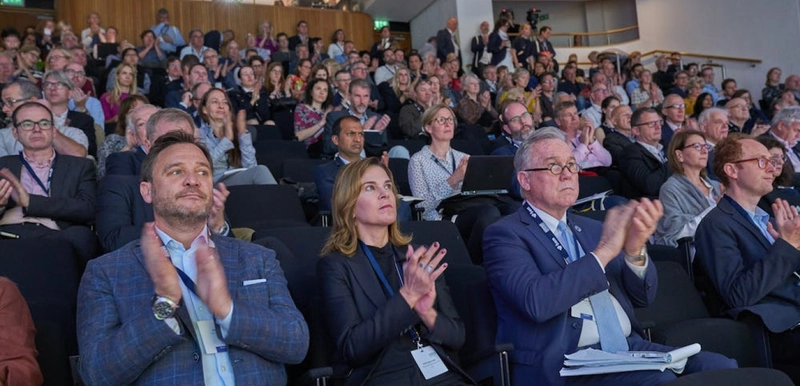
European Healthcare Design is more than just a congress—it is an evolving platform where healthcare, design, technology, and policy converge to shape the future of care environments. The annual European Healthcare Design Congress, Exhibition, and Awards brings together a global community of clinicians, architects, researchers, and decision-makers, united by one goal: improving health outcomes through better healthcare design.
This year’s congress offered an ambitious and emotionally resonant programme. It featured a doctor-turned-designer who brought human-centered thinking into architectural space, a charitable foundation building rehabilitation centers in war zones, and panels on future hospitals, artificial intelligence in healthcare, and public-private partnerships. As always, the event concluded with the prestigious European Healthcare Design Awards, honoring the most impactful and visionary projects across the sector.
A Congress That Bridges Disciplines and Borders
The European Healthcare Design Congress is internationally recognized for fostering collaboration between healthcare professionals and the built environment. Its interdisciplinary nature makes it unlike any other event in the field. The 2024 edition was no exception, combining technical insights with personal stories, design philosophy, and geopolitical relevance.
One of the standout moments came from a session with a physician who became a healthcare architect, bridging the gap between clinical needs and spatial design. Drawing on years of hospital experience, she explained how design can support healing, reduce clinician burnout, and foster safety for patients and staff alike. Her story was emblematic of the event’s purpose: to blur professional lines in the pursuit of smarter, more human healthcare systems.
Designing for Crisis: Charitable Innovation in War Zones
Another powerful highlight was the presentation from a charitable foundation actively building rehabilitation centers in conflict-affected areas. Focused on war zones where healthcare infrastructure has been decimated, the foundation combines design innovation with local knowledge and trauma-informed principles.
This initiative revealed:
The role of adaptable, rapidly deployable architecture in emergency medicine
How design can empower local clinicians and patients
The challenges of delivering healthcare infrastructure under military threat
Partnerships between governments, NGOs, and design firms in unstable regions
It served as a stark reminder that design is not only about aesthetics—it is often about survival, resilience, and dignity.
Future Hospitals: Innovation, Sustainability, and Flexibility
One of the most anticipated tracks was dedicated to future hospitals. As populations age and medical technologies evolve, healthcare environments must adapt to shifting demands.
Key themes included:
Flexible architecture – spaces that evolve with changing clinical needs
Green design – sustainable materials and energy-efficient systems
Digital infrastructure – integrating telehealth and real-time data analytics
Community engagement – including patients and staff in co-design processes
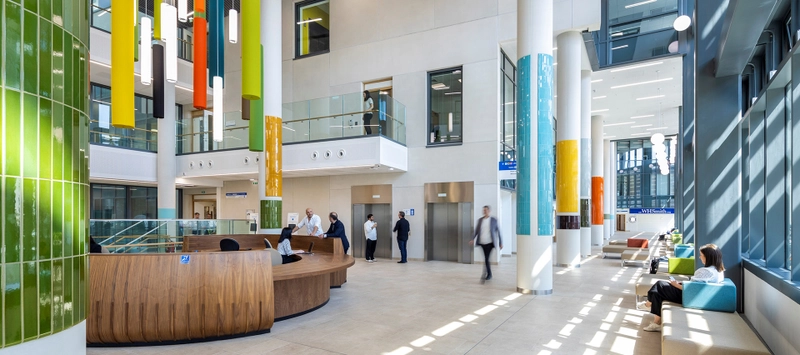
Speakers from across Europe shared projects that challenge the traditional hospital model—shifting from sterile, fortress-like structures to healing environments with light, nature, and human interaction at their core.
Innovations That Are Shaping the Next Generation of Hospitals:
Modular hospital designs for phased expansion
AI-powered logistics for patient and staff flows
Smart lighting and acoustic systems
Seamless integration of digital health records
Indoor environments promoting mental wellbeing
AI in Healthcare: Promise, Risk, and Responsibility
Artificial intelligence featured prominently in this year’s congress, with a dedicated panel exploring both the promise and risks of AI in clinical environments. Participants included data scientists, hospital CIOs, medical ethicists, and clinicians, who debated not just the how, but the why and when of AI deployment.
Major discussion points included:
The balance between efficiency and ethical risk
AI’s role in diagnostics, imaging, and patient triage
Machine learning applications for predictive care
Privacy, bias, and patient trust
Regulatory frameworks across the EU and beyond
Panelists stressed that AI cannot replace clinicians—but can become an essential tool in decision support, provided systems are transparent, explainable, and rigorously tested in clinical settings.
Public-Private Partnerships and Health System Transformation
The congress also provided space for discussing structural reform in healthcare delivery through public-private partnerships (PPPs). As governments across Europe seek ways to improve infrastructure and service delivery without overextending public budgets, PPPs have emerged as one potential solution.
Discussions focused on:
Long-term investment strategies for sustainable healthcare infrastructure
Case studies of successful PPP hospitals and clinics
The importance of clear governance and outcome-based contracts
Pitfalls of privatization and how to avoid them
Aligning private sector innovation with public health equity goals
These panels sparked constructive debate, underscoring that partnerships must be carefully managed to balance innovation, efficiency, and public accountability.
Celebrating Excellence: The European Healthcare Design Awards
The congress concluded with the European Healthcare Design Awards, celebrating the most outstanding design projects in categories such as interior design, mental health environments, sustainable hospital planning, and clinical excellence in infrastructure.
Noteworthy winners included:
A Scandinavian children’s hospital that blended play with care
A mental health facility in the UK designed with patient-led input
An oncology center in Italy that used natural landscapes for psychological recovery
A new AI-integrated outpatient clinic that streamlines triage and referral systems
These projects represent the cutting edge of healthcare design—where architecture, user experience, and medical outcomes converge.
Award Categories Recognized:
Health and Clinical Infrastructure
Sustainable Design and Innovation
Mental Health Facility of the Year
Design Research and Knowledge Sharing
Interior Design for Patient Wellbeing
Emerging Talent in Healthcare Design
A Congress That Leads, Connects, and Inspires
The European Healthcare Design Congress isn’t just a gathering of professionals—it’s a movement. It challenges outdated models, champions human-centered innovation, and connects the dots between architecture, medicine, policy, and technology. Attendees leave with more than business cards—they leave with ideas, commitments, and blueprints for a healthier world.
As healthcare continues to face global pressures—from climate change to aging populations to geopolitical instability—events like this will play a pivotal role in creating systems that are more responsive, resilient, and compassionate.