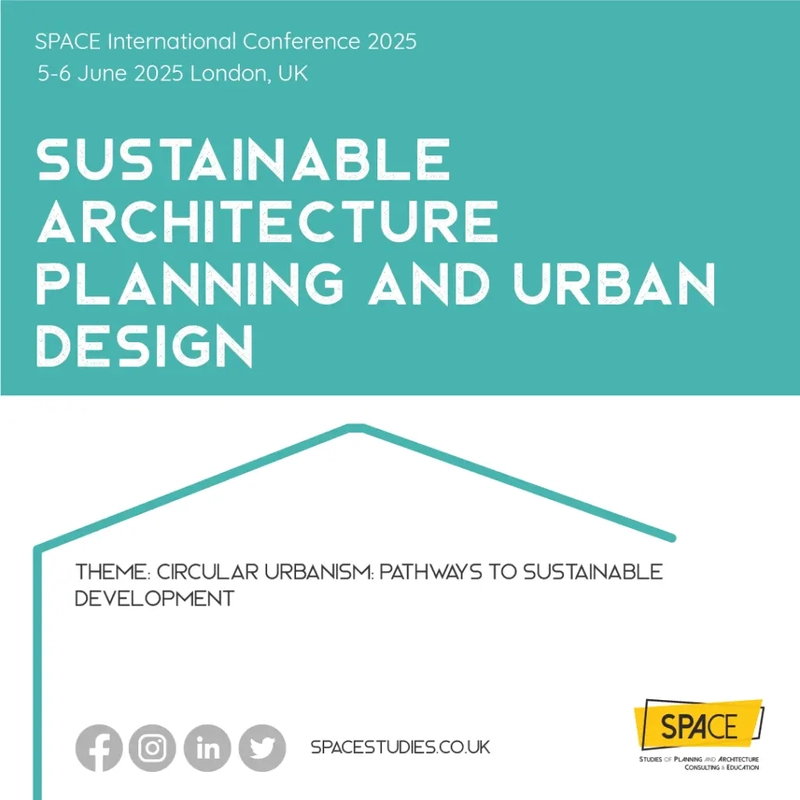
Rethinking Urban Futures: Circular Urbanism at the SPACE International Conference on Sustainable Architecture, Planning and Urban Design
In a rapidly urbanizing world, the quest for sustainable, resilient cities has never been more urgent. Against the backdrop of increasing climate volatility, diminishing natural resources, and relentless population growth, global thought leaders and professionals will converge at the SPACE International Conference on Sustainable Architecture, Planning and Urban Design. This year’s theme, “Circular Urbanism: Pathways to Sustainable Development,” explores how circular thinking can radically reshape the urban landscape.
Organized by SPACE Studies, the conference represents more than an academic gathering—it’s a rallying point for architects, planners, scholars, and policymakers who are actively engaged in reimagining cities for future generations. The agenda is not only rich with insight but also charged with the energy of innovation, bringing interdisciplinary minds together under one unifying goal: making our cities smarter, more adaptive, and environmentally responsible.
Circular Urbanism: A New Framework for City Development
At the heart of this year’s conference is the concept of circular urbanism, a progressive approach to city-making that goes beyond conventional sustainability. Unlike linear urban models that depend on constant resource input and generate substantial waste, circular urbanism is centered around the idea of closing resource loops.
This means:
Designing urban infrastructure that can be adaptively reused.
Employing materials that can be recycled or re-integrated into new building systems.
Encouraging community-driven regeneration and participatory planning.
Enhancing resource efficiency by minimizing energy and water consumption.
Promoting economic systems that thrive on reuse, repair, and resilience.
These practices align with the overarching goals of the circular economy but are deeply embedded within the spatial and architectural context of modern cities.
A Platform for Dialogue, Innovation, and Collaboration
The SPACE International Conference is structured to be both theoretical and practical, bridging academic inquiry with real-world application. Participants will be immersed in keynote lectures, roundtables, panel discussions, and interactive sessions that collectively address the most pressing questions in urban design.
Key areas of focus include:
Sustainable Architecture and Passive Design Strategies
Urban Resilience in the Face of Climate Change
Retrofitting and Adaptive Reuse of Existing Buildings
Smart Infrastructure and Technological Integration
Public Policy and Urban Governance for Circular Cities
Through these sessions, attendees will not only encounter the latest advancements but also explore the systemic changes required to support circular urbanism at the policy, design, and community levels.
Key Takeaways for Attendees
The SPACE International Conference offers a multi-dimensional experience that combines theoretical depth with actionable knowledge. Attendees can expect to:
Gain exposure to global best practices in circular urban design.
Learn about cutting-edge technologies in sustainable construction and urban planning.
Discover new research on material circularity and regenerative design.
Network with international peers and potential collaborators.
Contribute to thought leadership shaping the next era of urban development.
Building Circular Cities: Case Studies and Strategies
One of the conference’s most anticipated segments will delve into real-world case studies, showcasing how cities around the world are beginning to operationalize circular urbanism. From adaptive reuse projects in Europe to community-led urban agriculture in Latin America, these examples demonstrate that theory can indeed become practice.
Furthermore, the discussions will highlight:
The role of digital platforms and data in optimizing resource flows.
The importance of multi-stakeholder governance models in implementing circular strategies.
Innovative urban planning tools for measuring lifecycle impacts and promoting transparency.
By examining these cases, attendees will be equipped with a toolkit of strategies that they can adapt to their own local contexts.
A Focus on Interdisciplinary Collaboration
What makes the SPACE International Conference truly unique is its commitment to interdisciplinarity. Sustainable development is not the sole responsibility of architects or urban planners—it’s a shared endeavor requiring insights from environmental scientists, economists, engineers, sociologists, and even artists.
This year’s conference will encourage:
Cross-sector collaborations between academia, government, and industry.
Dialogues between traditional and contemporary urban practices.
Innovative partnerships that break down silos and foster systems thinking.
This integrative approach is essential for tackling the complexity of urban sustainability in the 21st century.
List of Potential Discussion Topics and Sessions
To ensure a comprehensive learning experience, the conference will host sessions across the following areas:
Designing Cities for Longevity and Flexibility
Resource Efficiency in Public Infrastructure
Urban Policy Reforms for Circular Economies
Life-Cycle Thinking in Urban Projects
Green Roofs, Walls, and Biophilic Architecture
Urban Mobility and Circular Transportation Systems
Each of these sessions aims to provide participants with tangible solutions and novel perspectives.
Madrid as a Context for Sustainable Conversation
Set in the dynamic and architecturally rich city of Madrid, the conference benefits from being located in a European hub that has itself embraced various urban sustainability initiatives. The city offers an ideal setting for such an exchange—not only because of its logistical convenience and cultural appeal but also due to its relevance as a living case study of urban transformation.
Participants are also encouraged to explore the city’s green corridors, historic adaptive reuse buildings, and its push toward eco-conscious public transport. These experiences deepen the academic conversations by grounding them in a real-world context.
Charting the Future Together
As the world accelerates toward urbanization, events like the SPACE International Conference on Sustainable Architecture, Planning and Urban Design become increasingly vital. They serve as arenas for rethinking what cities are, how they function, and who they serve. Circular urbanism, with its focus on regeneration, equity, and longevity, represents not just a concept—but a blueprint for the future.
Those attending the conference will leave with more than just ideas. They will return with connections, clarity, and conviction—ready to drive change in their own regions, equipped with the knowledge and inspiration gained from a global community of forward-thinking professionals.