

Filters
3,567 results for “3D Printing (Other) products found from trusted suppliers, wholesalers, manufacturers & exporters”
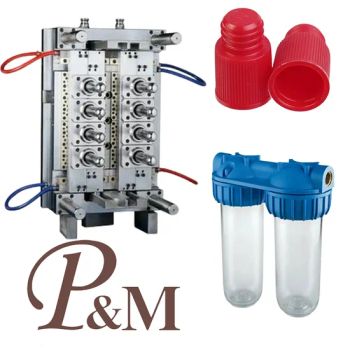
Pm Customized Plastic Product CNC Machining Product 3D Printing Product Other Plastic Parts
$0.54 - $0.56
Min. order: 1 pieces


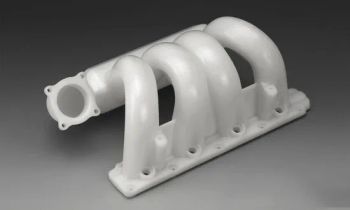
Plastic Parts 3D Printing Prototyping Aluminum Machining Casting 3D Printing Service
$0.19 - $4.99
Min. order: 1 Piece
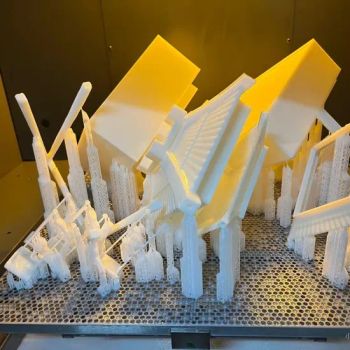
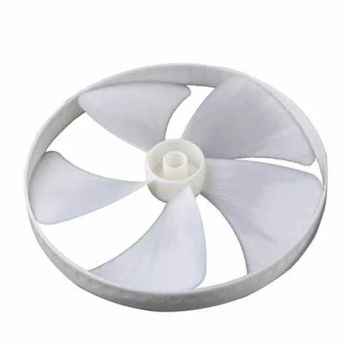
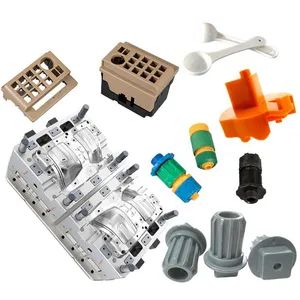
Custom 3D Printing CNC Machining Plastic Part Other Injection Plastic Injection Part
$0.1 - $0.3
Min. order: 1000 pieces
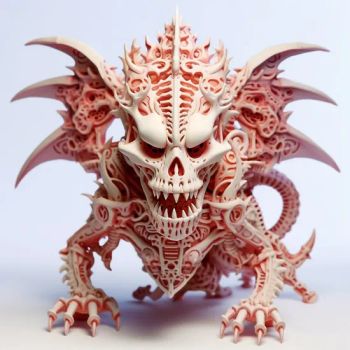
Factory 3D Printing Custom Product/SLS 3D Printing/3D Printing Service
$1.99 - $5.99
Min. order: 1 Piece

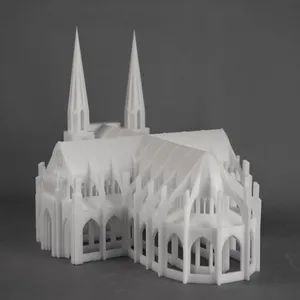




Price History for Product from Global
Frequently Asked Questions (FAQs)
Which industries use 3D printing for prototyping and how can businesses find reliable suppliers for 3D printing services on Freshdi?
3D printing, also known as additive manufacturing, is a technology used across various industries such as aerospace, automotive, healthcare, and consumer goods for creating prototypes, custom parts, and end-use components. On Freshdi, a B2B marketplace that lists a wide range of products and suppliers, businesses can discover and connect with reliable 3D printing service providers under the "3D Printing (Other)" category, which includes non-traditional and specialized printing applications. This category supports industries needing rapid iteration, small-batch production, or customized designs, and buyers in roles like product development managers or engineering leads often search for such services when launching new products or testing design concepts, especially when facing tight timelines or limited tooling availability.
Which countries are the main import markets for 3D printing equipment, and what are the most commonly exported variants with their material composition and regional preferences?
The primary import markets for 3D printing equipment include North America, Europe, and Asia-Pacific, where demand is driven by industrial manufacturing and prototyping needs. Commonly exported variants include FDM (Fused Deposition Modeling) printers with PLA and ABS materials, SLA (Stereolithography) printers using photopolymer resins, and metal 3D printers with stainless steel and titanium alloys. Suppliers typically list key attributes such as print resolution (e.g., 25–100 microns), build volume (e.g., 200×200×200 mm), and layer thickness. FDM printers with ABS material are especially popular in North America and Southeast Asia for industrial applications, while SLA printers with high-resolution resins are favored in Europe for dental and medical uses—both regions show strong demand for precision and durability in final products.
How do I evaluate 3D printing services for my manufacturing needs?
3D Printing (Other) refers to non-standardized, specialized 3D printing technologies such as multi-material printing, large-format printing, or industrial-grade resin systems, commonly used in prototyping and custom manufacturing. Conceptually, this category is structured around specific technologies, material types, and application domains, where attributes like print resolution, build volume, and post-processing requirements are interrelated to determine suitability. Procedurally, buyers should filter by technology type, verify material compatibility, and check sample output availability—such as searching for "multi-material 3D printing" or "large-scale resin printing" on a B2B platform—and review supplier portfolios with real-world case studies. To verify, buyers must ask suppliers for material certifications, print accuracy test results, and turnaround time for complex parts, such as requesting a sample print of a bracket with internal features or confirming if they offer post-processing like sanding or coating.
Which 3D printing suppliers on Freshdi have proven export experience and what payment terms are commonly offered?
Freshdi lists 3D printing suppliers across various niches, and while specific supplier experience or credentials are not detailed in the data, buyers typically look for suppliers with proven export history—such as those with over 5 years of operation and export experience in key regions like North America and Europe—to ensure reliability. Commonly expected credentials include ISO 9001 for quality management, ISO 13485 for medical devices (if applicable), and CE certification for compliance in Europe. Trade terms often include FOB Shanghai or FOB Ningbo, with payment terms typically set at 30% advance payment and 70% before shipment.
You may like
You may like