


Filters
531 results for “3D Scanner products found from trusted suppliers, wholesalers, manufacturers & exporters”

Price History for Product from Global
Frequently Asked Questions (FAQs)
How do I choose the right 3D scanner for my manufacturing needs?
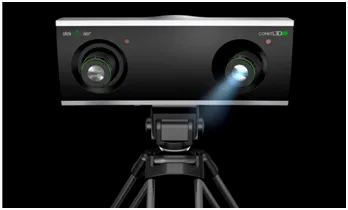
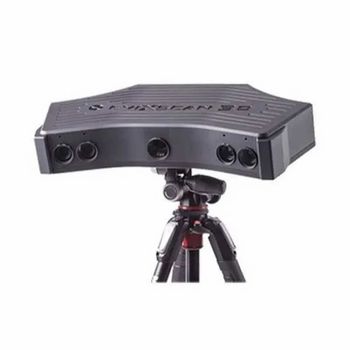
A 3D scanner is a device that captures the physical shape of objects using laser or structured light to create digital 3D models; it typically includes attributes like resolution, scanning speed, accuracy, and compatibility with CAD software. Conceptually, 3D scanners are structured into subtypes such as handheld, fixed, and portable units, where key attributes like point density and surface coverage determine suitability for applications like quality control or reverse engineering. To source one effectively on a B2B site, filter by industry use case, check technical specs like accuracy (e.g., ±0.05 mm), and compare sample output videos or case studies—such as a manufacturer using a handheld scanner for mold inspection or a factory using a fixed scanner for real-time part verification. Before finalizing, verify with suppliers that they provide calibration certificates, offer post-processing software integration, and have experience in your specific application—e.g., confirming they’ve used the scanner in automotive part validation or aerospace component scanning.
Which countries are the main import markets for 3D scanners, and what are the most commonly exported variants with their key attributes and trade names?
The primary import markets for 3D scanners include Germany, the United States, and Japan, where demand is driven by industrial automation, manufacturing, and quality control applications. Commonly exported variants include the Artec Eva (a handheld, high-resolution scanner), the Creaform HandySCAN (a portable, laser-based scanner), and the ScanStation 3D (a large-format, industrial-grade scanner), typically offered with materials such as aluminum or stainless steel, dimensions ranging from 300mm x 300mm to 1200mm x 1200mm, and resolution specs of 0.05mm to 0.1mm. The Artec Eva is widely preferred in Europe and North America for its portability and accuracy, while the Creaform HandySCAN is favored in Asia-Pacific for industrial inspection tasks, and the ScanStation 3D is commonly exported to Germany and Japan for large-scale architectural and automotive modeling. These variants are consistently listed with clear technical specifications and material grades in B2B supplier catalogs, providing transparency and enabling buyers to compare performance and durability directly.
Which 3D scanner is best for industrial quality inspection and which industries use it most?
A 3D scanner is a device that captures the physical shape and dimensions of objects using laser or structured light technology, commonly used in subcategories like reverse engineering, quality control, and digital twin creation. It is widely adopted in industries such as automotive, aerospace, manufacturing, and healthcare for tasks like detecting defects, measuring parts, and creating accurate digital models. For example, a quality assurance engineer at an automotive parts supplier might use a 3D scanner to verify part dimensions after production, while a product designer at a medical device company may use it to scan existing devices for redesign. These use cases are supported through Freshdi’s B2B marketplace, which lists suppliers offering 3D scanning solutions.
Which 3D scanner suppliers on Freshdi have proven export experience and industry certifications for reliable B2B sourcing?
Freshdi lists 3D scanner suppliers with verified export experience, typically operating for 5+ years and proven to supply to key markets like the U.S. and Germany, which signals reliability. Common credentials include ISO 9001 for quality management, CE certification for compliance, and ISO 13485 for medical device-related scanners, all of which are trusted indicators in B2B sourcing. Trade terms commonly include FOB Shanghai and FOB Hamburg, with payment terms often set at 30% advance payment and 70% before shipment, reflecting standard B2B transaction practices.
You may like
You may like