
Introduction
Packaging affects more than how refined sunflower oil is presented for sale. For buyers importing from Tanzania into the United States, the format also influences handling, transfer, storage, protection from contamination and the amount of repacking needed after arrival. A retail bottle shipment, a palletized drum order and a bulk-liquid shipment each require different equipment and operating arrangements.
There is no single best container for every order. The right choice depends on whether the oil will be sold in its original pack, repacked, used in food service or transferred directly into a processing tank. Buyers should agree on the packaging material, capacity, closure, loading method and food-contact suitability alongside the oil specification and shipping terms.
Key Takeaways
- Choose retail packs when the shipment is intended for direct resale; choose bulk formats when the buyer has suitable receiving and transfer equipment.
- PET bottles and HDPE jerrycans are examples of consumer or smaller-volume formats documented for refined sunflower oil in Tanzania.
- Drums, IBCs, flexitanks and ISO tanks involve different handling, cleaning, compatibility and receiving requirements; confirm the supplier's actual options.
- For bulk oil, clean, dry, food-suitable contact surfaces and controls that limit air exposure and contamination are important.
- For the U.S. market, confirm that food-contact materials are suitable for the intended food and conditions of use rather than relying on a generic “food grade” claim.
1. What Packaging Options Can Buyers Consider for Refined Sunflower Oil?
Packaging can be grouped by how the oil will be handled after it leaves the packing facility: consumer packs, intermediate containers and bulk transport systems. A buyer importing Tanzanian refined sunflower oil for retail distribution may need filled, sealed packs ready for downstream sale. A food manufacturer or distributor with bulk storage may prefer larger containers that can be discharged into a receiving tank. These are different supply models, not simply different sizes of the same order.
The formats above are options to discuss, not a statement that every exporter offers each one. A Tanzania producer publicly lists refined sunflower oil in PET bottles and HDPE jerrycans, while other supplier listings describe bulk-container formats. Ask the specific supplier to confirm what it can fill, pack and export for the requested order. Also distinguish a finished retail pack from a bulk shipment that will require suitable receiving and repacking facilities in the United States.
Once you know whether you need retail packs or bulk oil, you can compare relevant buying requests and supplier profiles on Freshdi.
View Latest Oil & Fats Buying Requests →View Potential Oil & Fats Suppliers →
Buying consideration: Before requesting a quotation, state the intended use and target format. For example, “retail-ready 1 L bottles” and “bulk oil for transfer into a food-manufacturing tank” describe different packing and delivery needs.
Looking to Source Refined Sunflower Oil?
Connect with verified suppliers, discover matching products, and explore sourcing opportunities from global markets.
2. How Should Buyers Compare Bottles, Jerrycans and Retail Packs?
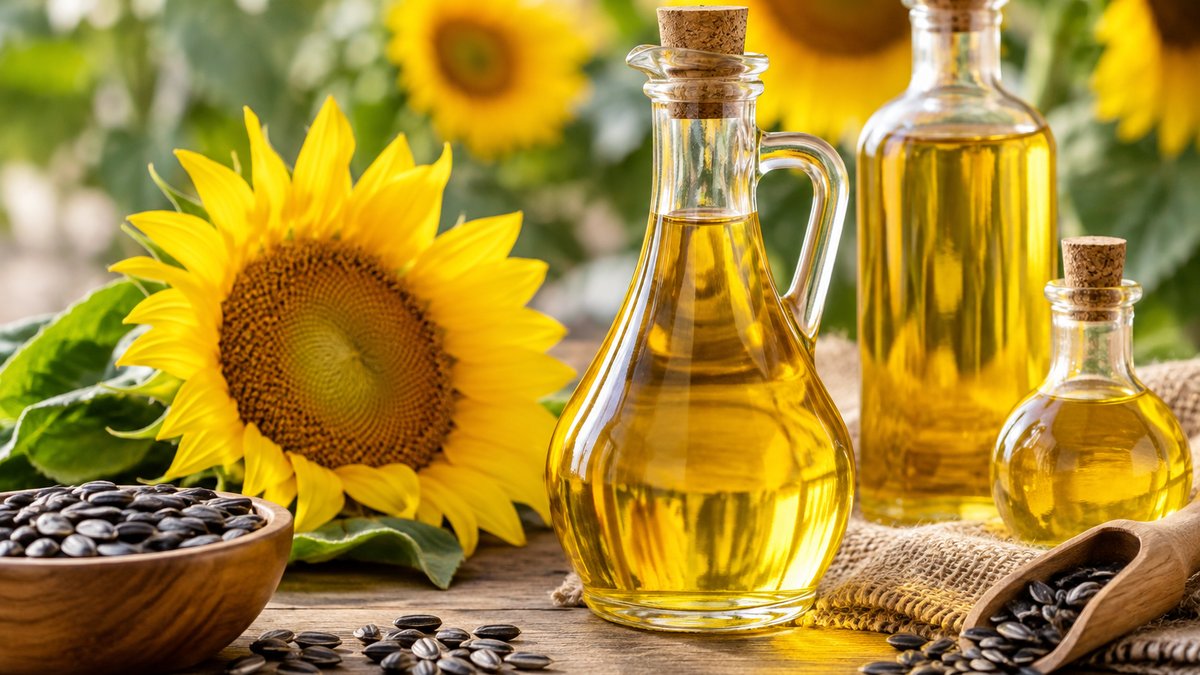
Bottles and jerrycans are appropriate when the oil is to arrive in smaller, closed units for distribution, institutional use or further handling. A Tanzanian refined sunflower oil producer lists one-, three- and five-litre PET bottles and three- and five-litre HDPE jerrycans. These examples show that both bottle and handled-container formats are available in the origin market; they do not establish a universal export pack or guarantee that a particular supplier can meet a U.S. buyer’s pack specification.

For bottles, specify the nominal fill volume, bottle material, closure and tamper-evident feature if required by the buyer’s sales channel. Ask how bottles are packed into cases, how cases are arranged on pallets and whether the outer packaging protects against movement and breakage during transport. For jerrycans, clarify the fill volume, handle design, cap and seal, case or pallet arrangement, and whether the intended user can pour or connect the container safely.
For U.S. resale, packaging and label details should be reviewed as part of the product’s market-entry work, not left until after the oil has been filled. Confirm artwork, language, declared net contents and the party responsible for checking applicable labeling rules before production. Packaging suitability also depends on what touches the oil and the conditions of use. FDA’s food-contact reference identifies fats and oils as a food type and distinguishes conditions such as room-temperature filling and storage from hot filling; material suitability should therefore be checked for the intended use, not assumed from the resin name alone.
Questions to settle before choosing retail packaging
- Pack and closure: What is the exact bottle or jerrycan capacity, closure type and seal arrangement?
- Case and pallet: How many units are packed per case, and how are cases protected and secured for shipment?
- Product contact: Can the packaging supplier document that the material is suitable for contact with edible oil under the intended filling and storage conditions?
- Market presentation: Who approves labels and artwork, and when must final files be supplied?
- Handling: Can the buyer’s warehouse and distribution network handle the proposed unit and case weights?
Buying consideration: Request a sample of the actual filled pack or an equivalent production pack before approving a large retail order. Check the closure, seal, case strength and readability of the agreed label, and record the approved pack details in the purchase specification.
3. When Do Drums or IBCs Make Sense for an Oil Shipment?
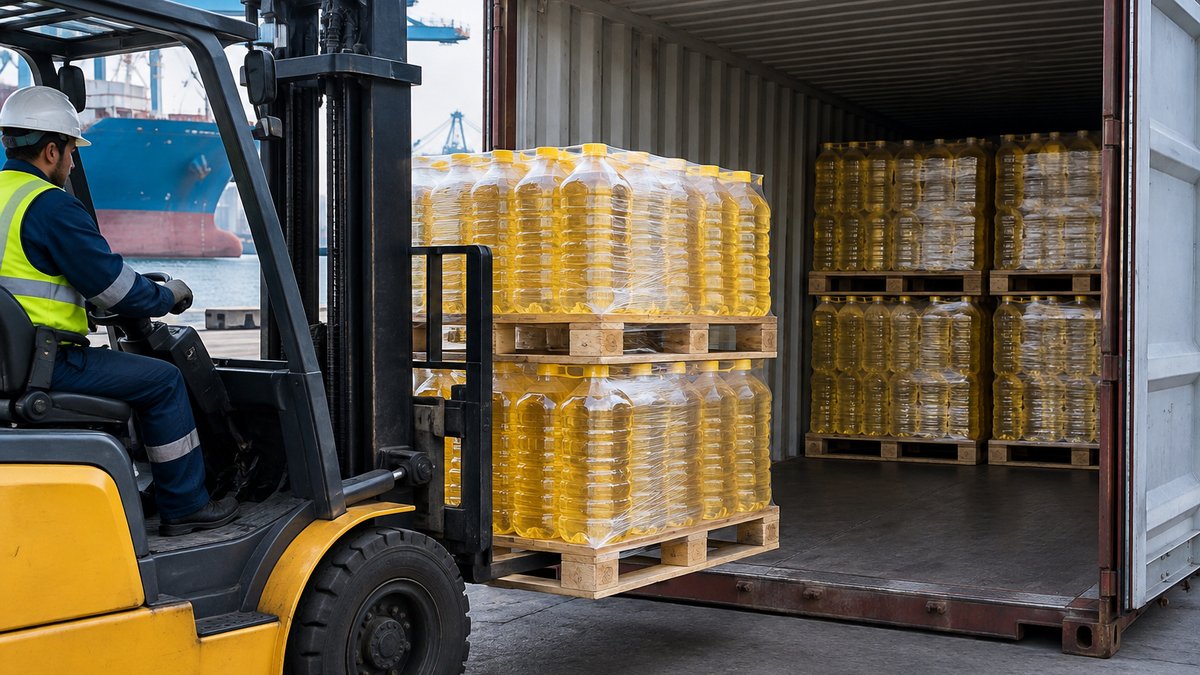
Drums and intermediate bulk containers (IBCs) can suit buyers who need larger units than bottles or jerrycans but are not arranging a dedicated tank shipment. They may be considered for wholesale distribution, food-service supply, manufacturing or repacking, depending on the buyer’s equipment and the supplier’s packing capability. Their commercial usefulness depends on the full handling chain: filling, palletizing, securing, unloading, storage and transfer into the buyer’s process.
Do not compare drums and IBCs by unit count alone. Calculate the shipment’s total net oil quantity and account for the outer container, pallet footprint, unloading labor and any transfer equipment. Confirm whether the buyer can safely move the filled unit and whether the container’s outlet connects to the receiving system. Packaging reuse or return should be agreed explicitly; do not assume that a container can be reused for food unless the cleaning, inspection and intended-use controls have been established.
The container must also protect the oil from contamination during storage and handling. The Codex Code of Practice for the Storage and Transport of Edible Fats and Oils in Bulk emphasizes clean, dry tanks and the prevention of contamination from residues, dirt, water or other materials. Although this code addresses bulk handling, the underlying checks are also practical prompts for buyers selecting smaller industrial containers: examine the product-contact surface, closure and condition, and obtain records or declarations appropriate to the transaction.
Buying consideration: Before accepting a drum or IBC offer, send the supplier a written receiving specification: container type, material or lining, net fill, outlet or closure, pallet requirements, and any agreed evidence of cleanliness and food-contact suitability.
4. How Do Flexitanks and ISO Tanks Differ for Bulk Sunflower Oil?
For larger liquid shipments, buyers may compare a flexitank with an ISO tank. A flexitank is a liquid-holding liner installed inside a suitable freight container; an ISO tank is a purpose-built tank container. Both are bulk transport approaches, but they are not interchangeable in loading, discharge, cleaning, return logistics or the equipment needed at either end. Confirm the exact equipment and operating plan with the supplier and carrier before agreeing the shipment.
The Codex code specifically addresses ISO tank containers and says materials used in tanks and ancillary equipment should be inert to oils and fats and suitable for food contact. For fully refined oils, stainless steel is identified as a preferred tank material; coated mild steel may also be used when the coating’s suitability for food contact is established. Codex also cautions against copper and copper alloys in equipment that contacts the oil. For any bulk system, ask what surfaces, valves, hoses and pumps will contact the product, and how the equipment is inspected and prepared.
Do not assume a flexitank or tank container is accepted on every route, by every carrier, or at every terminal. Confirm current carrier acceptance, container suitability, loading instructions, maximum payload under the actual equipment and route, and the receiver’s ability to discharge the oil. Agree the procedure for sampling, seals, product transfer and documentation in advance. A tank shipment can reduce the number of individual packages, but it depends on compatible facilities and disciplined operations at both ends.
If you are comparing bulk formats against packaged units, reviewing current oil-category requests and suppliers can help you frame the next sourcing inquiry.
View Latest Oil & Fats Buying Requests →View Potential Oil & Fats Suppliers →
5. What Packaging and Food-Contact Details Should a U.S. Importer Verify?
A packaging description such as “food grade” is not a complete compliance file. For refined sunflower oil entering the United States, identify every material that directly contacts the product—such as a bottle, liner, coating, closure, gasket or transfer hose—and request documentation supporting its suitability for the intended food and conditions of use. FDA’s food-contact reference separates food types and conditions of use, including low-moisture fats and oils and room-temperature filling and storage. The material’s permitted use may depend on those conditions.
The FDA also explains that food-packaging manufacturing is subject to applicable current good manufacturing practice provisions, including precautions against contamination and controls to ensure packaging materials are safe and suitable. This does not mean that a buyer should treat a supplier’s general statement as proof of compliance for every pack. Ask for material identification and the supporting food-contact basis, and have the importer or its compliance adviser assess whether it covers the specific oil, contact layer and use conditions.
A practical packaging verification checklist
- Identify all contact materials: List the container body, liner or coating, closure, seal, valve, gasket and any hose used for loading or discharge.
- Check the intended use: Confirm the food type, filling temperature, storage conditions and expected contact duration relevant to the shipment.
- Request supporting records: Obtain material specifications or supplier declarations that identify the packaging and its intended food-contact use.
- Inspect shipment condition: Agree how cleanliness, dryness, damage, seals and container identification will be checked before loading and at receipt.
- Define traceability: Match packaging lot or container identifiers to the oil batch and shipping documents where the supplier’s system supports it.
- Confirm importer responsibilities: FDA’s Foreign Supplier Verification Program guidance describes importer obligations for covered food imports; determine which party is the FSVP importer and keep the packaging and supplier evidence with the relevant compliance records.
Food-contact suitability is only one part of shipment readiness. The oil’s product specification, food-safety controls, import documentation and any applicable U.S. labeling requirements remain separate matters. Packaging does not replace verification of the oil or the importer’s regulatory responsibilities. Check current requirements for the exact product and transaction before shipment, especially when changing a material, supplier, filling process or destination use.
After you have listed the required materials, pack sizes and evidence, you can use that specification when exploring suppliers for refined sunflower oil.
View Related Suppliers for This Product →
Illustrative packaging inquiry:
Product: Refined sunflower oil, Tanzania origin
Use: Retail sale / food service / manufacturing
Format: Bottle, jerrycan, drum, IBC or bulk system
Pack details: Capacity, material, closure, seal and case or pallet arrangement
Food-contact evidence: Documentation for all product-contact materials and intended conditions of use
Shipping details: Net quantity, loading method, receiving equipment and destination
Inspection: Agreed checks for packaging condition, cleanliness and seals
This is an illustrative inquiry format, not a universal specification. Adjust it to the product, destination requirements, buyer facilities and contract.
6. How Should Buyers Select, Approve and Ship the Chosen Format?
Start with the destination use, then work backward through the shipment. A retail distributor may need shelf-ready units and approved artwork. A processor may prioritize bulk transfer and a direct connection to its receiving tank. A food-service buyer may need manageable container sizes and a practical storage plan. The packaging decision should match the buyer’s receiving equipment and distribution system rather than being made solely on the supplier’s available pack size.
A step-by-step selection process
- Define the use: Decide whether the oil will be sold in the original pack, repacked, distributed to food service or used as a manufacturing ingredient.
- Match the format to facilities: Confirm storage capacity, forklifts or other handling equipment, pumps, hose connections and any repacking line.
- Set the packaging specification: Record material, capacity, closures, seals, net fill, case or pallet arrangement and labeling responsibilities.
- Review food-contact support: Obtain documentation for the intended use of each contact material and have the appropriate U.S. compliance party review it.
- Approve a sample or pack drawing: Check the container, closure, label and outer packaging before the supplier commits to the production run.
- Agree inspection and claims procedures: Specify what will be checked, when and how any damage, leakage or quality difference will be documented.
- Confirm the logistics plan: Agree loading, stowage, transfer, discharge and any container return or disposal arrangements with the relevant logistics parties.
In the export plan, preserve product identity and condition through each handoff. Codex recommends reducing air contact and avoiding contamination during bulk handling; its code also calls for clean, dry tanks and appropriate separation of different oils and grades. For refined sunflower oil, agree how the shipment will be kept protected during filling, transit, temporary storage and discharge. Where a tank has been used previously, request the applicable cleaning and inspection information and check previous-cargo requirements with the relevant parties.
Compare quotations on equivalent terms: the same oil specification, packaging, net quantity, loading point, destination and delivery basis. A lower quote for bulk oil may not include the receiving setup or downstream packaging needed by the buyer, while a retail-packed offer may include costs that a bulk buyer does not need. Include container handling, unloading, packaging disposal and any repacking costs in the commercial comparison.
Freshdi can be a place to explore relevant refined sunflower oil suppliers and buying requests once your packaging requirements are defined. Use the product specification and receiving details to make the sourcing inquiry clear, and evaluate each offer against the same technical and logistical requirements.
With the format and receiving plan defined, continue your supplier search with the requirements you have documented.
View Related Suppliers for This Product →
Buying consideration: Do not approve packaging based on a product name or a photograph alone. Put the material, dimensions or capacity, closure, pack configuration, food-contact evidence and loading or discharge method in the written specification, then confirm the delivered shipment against that agreement.
Frequently Asked Questions
What packaging formats are available for refined sunflower oil from Tanzania?
Available formats depend on the supplier and order. A Tanzanian producer lists PET bottles and HDPE jerrycans for refined sunflower oil; other bulk supply options buyers may ask about include drums, IBCs, flexitanks and ISO tanks. Confirm availability, sizes and export suitability directly in the written offer.
Is a flexitank the same as an ISO tank?
No. A flexitank is a liner installed inside a freight container, while an ISO tank is a purpose-built tank container. Their loading, discharge, cleaning, equipment and after-delivery arrangements differ, so check route acceptance and receiving capability before selecting one.
How can I check whether packaging is suitable for edible sunflower oil?
Identify every surface that contacts the oil and request documentation for the material’s intended food-contact use and conditions, including filling and storage conditions. A generic “food grade” statement may not establish that a particular material is suitable for every use.
Should I choose retail packs or bulk containers?
Choose based on the destination use and facilities. Retail packs may suit direct resale, while drums, IBCs or tank systems may suit wholesale, repacking or manufacturing where the buyer can store and transfer bulk oil. Compare total handling and repacking costs as well as the quoted oil price.
What should be included in a packaging specification?
State the format, material, capacity or net fill, closure and seal, case or pallet arrangement, labeling responsibility, food-contact documentation, inspection checks and loading or discharge method. Add the receiving site’s handling requirements and any agreed container return or disposal plan.
Does Codex give a specific bulk-shipping temperature for sunflower oil?
The Codex bulk edible-oils code lists sunflower oil at ambient temperature for storage and bulk shipment, and 15–20°C for loading and discharge. These are code recommendations, not a substitute for checking the oil grade, actual conditions and agreed shipment procedure.
References
1. FAO/WHO Codex Alimentarius – Code of Practice for the Storage and Transport of Edible Fats and Oils in Bulk (CXC 36-1987), 2024.
2. U.S. Food and Drug Administration – Food Types & Conditions of Use for Food Contact Substances, n.d. (accessed 2026).
3. U.S. Food and Drug Administration – Frequently Asked Questions on FSMA, n.d. (accessed 2026).
4. Commundus Harvest Group – Our Products — Refined Sun Flower Oil, n.d. (accessed 2026).