
Introduction
Brazilian buyers have two different price signals to consider in November 2026: a local wholesale reference and export quotations from Asian origins. Tridge lists a Brazil wholesale entry dated 1 November at US$22.04 per 16 kg sack. On 16 November, TM Duché reported Philippine export quotations of 109 to 190 US cents per pound FOB, with an average of 135.17 cents per pound.
These figures describe different markets and bases. The Brazil entry does not specify a product grade in the available listing, while the Philippine quotation is FOB and excludes ocean freight and Brazilian import-side costs. This update covers the latest dated figures located through 18 November 2026; it treats them as reference points, not firm offers for a matched specification.
Key Takeaways
- Tridge lists a Brazilian wholesale entry of US$22.04 per 16 kg sack on 1 November 2026. The entry does not state a grade or delivery basis, so buyers should verify those details before using it for procurement.
- TM Duché reported Philippine desiccated coconut at 109 to 190 US cents/lb FOB on 16 November 2026. Its reported average was 135.17 US cents/lb, unchanged from the prior week.
- The International Coconut Community listed Indonesian fine, high-fat desiccated coconut at US$1,925/MT FOB on 7 November 2026. That specification and reporting basis are not confirmed as equivalent to the broad Philippine quotation range.
- ICC reported that worldwide desiccated coconut imports fell 18.42% year on year in January to July 2026, while imports into the EU27 and United States increased.
- Brazilian buyers should compare product cut, fat content, moisture, packaging, shipment timing and delivery basis, then calculate landed cost rather than choosing from a headline price.
1. Brazil's Desiccated Coconut Market Has Local and Import Price Signals
Brazil is both a producer and an importer of desiccated coconut. Tridge reports that Brazil imported 13,145 tonnes, worth US$18.9 million, in 2024 and identifies the Philippines, Indonesia and Vietnam as leading origins. Those figures describe 2024 trade, not current orders or November 2026 import demand.
The latest price figures located cover three different points in the supply chain: Brazilian wholesale, Philippine export quotations and an Indonesian FOB reference. A wholesale entry can include domestic handling and distribution. An FOB quote covers the goods up to loading at the named port, while the buyer pays the costs that follow. Those amounts should not be averaged or treated as interchangeable.
The International Coconut Community's October 2026 review says global import volume declined during January to July, even as the EU27 and United States recorded increases. That split matters to Brazilian buyers because global totals alone do not show the availability or price offered for a particular Brazilian shipment.
Brazilian importers can use the dated references below to frame supplier discussions. They should confirm whether the product is fine, medium or another cut, along with fat content, moisture, microbiological limits, packaging, quantity and shipment date. A price without those terms is not a comparable procurement offer.
Looking to Source Desiccated Coconut?
Connect with verified suppliers, discover matching products, and explore sourcing opportunities from global markets.
2. Latest Desiccated Coconut Prices Relevant to Brazil
2.1 Current Brazil wholesale and export references
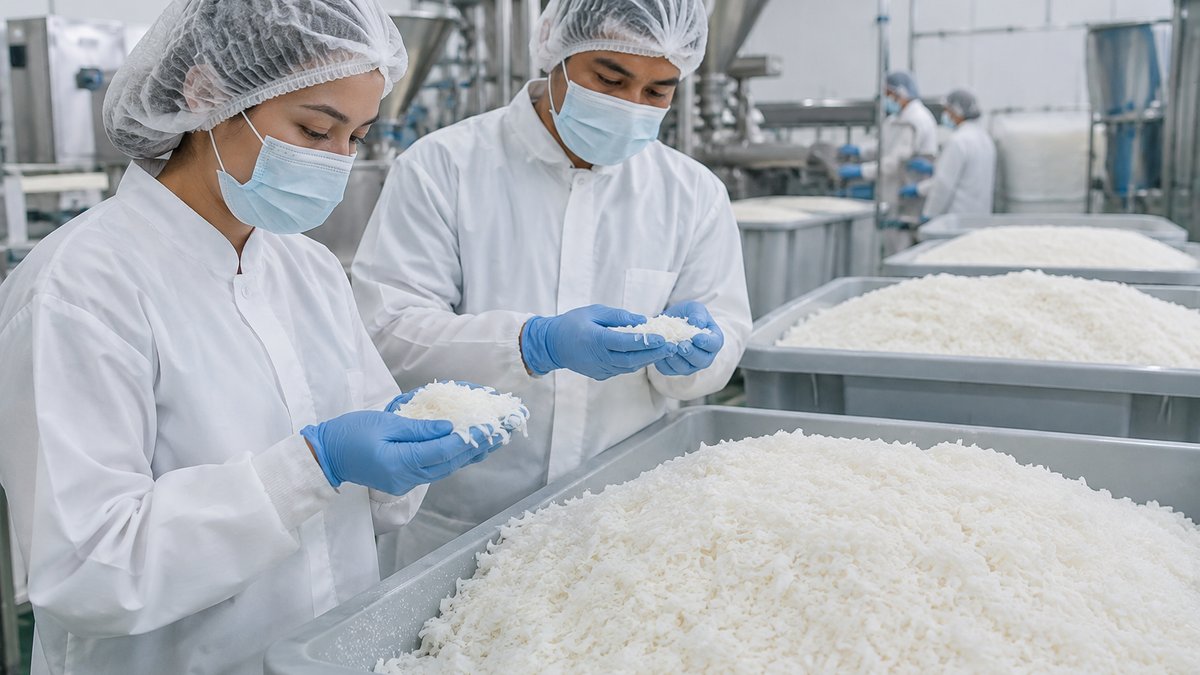
The latest Brazil wholesale price entry located is dated 1 November 2026. Tridge lists US$22.04 per 16 kg sack, equivalent to about US$1.38/kg by simple division. The listing does not identify the grade or delivery basis, so the converted figure is arithmetic only, not a verified quotation for a specific lot.
For an origin-side comparison, TM Duché's 16 November report gives Philippine export quotations of 109 to 190 US cents/lb FOB and a reported average of 135.17 US cents/lb. The report says the broad range had been unchanged for 39 consecutive weeks. It also compares the reported average with 172.33 cents/lb in November 2025, a year-on-year decline of about 21.6% in that quotation measure.
The three entries are not like-for-like. The Brazilian figure is a local wholesale listing in sack units, the Philippine number is a broad export quotation range, and the Indonesian reference names a fine, high-fat specification. The Brazilian listing does not disclose a matching grade or basis, so the figures cannot establish which origin is cheapest for a Brazilian buyer.
2.2 Price comparison by exporting origin
The Philippine and Indonesian figures offer recent origin-side context, but they use different specifications and dates. The Philippine quotation is from 16 November; the ICC Indonesian reference is from 7 November and explicitly covers fine, high-fat desiccated coconut. Buyers should request a new quote for the same cut, fat content, packaging and shipment period before comparing the origins.
2.3 Price trend and changes
The Philippine signal is a stable published range rather than a documented November week-on-week rise or fall. TM Duché reported the 109 to 190 cents/lb range unchanged for 39 consecutive weeks as of 16 November. Its average quotation was below the November 2025 comparison, but that annual comparison does not show that every grade or contract moved by the same amount.
The ICC's November 2026 weekly reference for Indonesian fine, high-fat product is not a continuous, specification-matched series with the Philippine quotation. Do not calculate a weekly change by comparing those two sources. For a purchase decision, ask suppliers for dated offers on the same Incoterm, grade, pack size, quantity and loading window.
3. Factors Affecting Desiccated Coconut Prices
The latest reports point to steady Philippine export quotations alongside movement in upstream coconut costs. TM Duché's 16 November newsletter says Philippine domestic desiccated coconut prices eased slightly after four weeks of increases, while local copra prices continued to rise. That combination can affect processors' costs without producing an immediate change in export quotations.
Supply conditions also differ by origin and time of year. Harvest availability, processor inventories and competition for coconuts can change the cost of raw material. The ICC's October review reported lower global import volumes for January to July 2026, but its figures do not establish whether Brazilian buyers faced shortages or how much inventory local importers held.
Demand is uneven across markets. ICC reported EU27 import volume up 4.01% year on year to 42,014 tonnes and United States imports up 17.53% to 28,264 tonnes in January to July 2026. Those destination figures help describe international demand, but they are not forecasts or confirmed orders for Brazil.
Currency and freight also affect a Brazilian importer's delivered cost. A US-dollar FOB quote can change in local-currency terms when exchange rates move. Freight, insurance, port charges and inland transport then add costs after loading. Ask suppliers to identify the port, currency, Incoterm and quote validity so each component can be checked.
Weather risk should be treated as a planning factor, not as a confirmed price change. TM Duché's 16 November report discusses potential El Niño effects on future coconut yields. It does not report a confirmed production loss in the current shipment period. Buyers should follow official crop updates and supplier availability before adjusting purchase plans.
4. Which Markets Import the Most Desiccated Coconut?
4.1 Major global importing markets
In the ICC's January to July 2026 comparison, the EU27 was the largest of the two leading markets highlighted, with imports of 42,014 tonnes. The United States imported 28,264 tonnes. Together they accounted for more than 45% of worldwide imports in that period, while total global import volume fell 18.42% year on year to 154,424 tonnes.
These figures are import volumes reported by the ICC for the stated seven-month period. The ICC also reported global import value of US$472.84 million, down 5.96% year on year. A lower volume and a smaller decline in value can result in different average unit values, but the figures alone do not identify the cause or a Brazil-specific price.
4.2 Brazil's import origins and market opportunities
For Brazil, Tridge identifies the Philippines, Indonesia and Vietnam as leading origins in 2024, when it reports 13,145 tonnes of imports worth US$18.9 million. This is a historical trade-flow indicator. It does not show current supplier availability, contract prices or the origin mix for 2026.
Brazilian importers can use the three origins as a starting point for quotation requests, then verify the current product specification and shipment route. Exporters considering Brazil should confirm applicable import requirements and whether their documentation and product controls meet the Brazilian rules for the specific goods. The Ministry of Agriculture and Livestock states that imported plant-origin products must follow the relevant Brazilian official standards.
A recorded import flow or market forecast is not a confirmed buyer order. Exporters should distinguish public trade statistics from active purchasing intent and verify demand through a current inquiry before reserving stock or quoting shipment dates.
5. How Buyers Can Compare Desiccated Coconut Offers
A useful comparison starts with one written specification and one delivery basis. Buyers should obtain quotations for the same product cut, fat content, moisture limit, microbiological requirements, packaging, quantity and shipment window. A fine, high-fat offer should not be compared with a product whose cut or fat content is unstated.
- Specify the cut, such as fine or medium, and state any required particle-size range.
- Set limits for fat content, moisture, foreign matter and microbiological criteria according to the intended use and applicable requirements.
- State the quantity, bag material, net weight per bag and whether the order requires retail or bulk packaging.
- Ask for the named loading port, shipment window, quotation currency and validity period.
- Compare offers on the same Incoterm. FOB excludes main ocean freight; CFR includes freight to the named destination port; CIF also includes insurance.
- Add freight, insurance where applicable, Brazilian port charges, customs costs and inland delivery before comparing landed cost.
- Confirm the import documentation and product requirements that apply to the product and shipment with the relevant Brazilian authorities.
FOB, CFR and CIF are Incoterms used to allocate delivery responsibilities and costs. An FOB price is not a delivered price in Brazil. Under CFR, the seller pays freight to the named destination port, while the buyer arranges insurance. Under CIF, the seller also arranges insurance, but the buyer should still confirm the scope of cover and destination charges in the contract.
The November references show why a single number can mislead. The Brazilian sack listing does not state its grade or delivery basis, and the export-origin figures differ in date and specification. Request a supplier quotation that states every relevant term, then compare the resulting cost at the same Brazilian destination.
Buying consideration: Before accepting an offer, ask the supplier to confirm the specification, packing, origin, loading port, Incoterm, shipment date and quote validity in writing. Use the same assumptions for every quotation in the landed-cost comparison.
6. What the Latest Buying Demand Looks Like on Freshdi
The external trade figures in this update describe national imports and exports; they do not show individual buyer requests. Buyers and suppliers can review current Desiccated Coconut listings on Freshdi to see product information and sourcing activity. Any request should be checked for its stated product, quantity, destination and trade terms before a supplier decides whether to respond.
A buying request is a buyer's stated requirement, not proof of a completed purchase or a market-wide demand trend. Suppliers should quote only when their available product matches the listed specification and destination. Buyers should confirm details directly through the relevant Freshdi request before treating a listing as current procurement intent.
7. What Buyers and Suppliers Should Do Next
7.1 For buyers and importers
- Use the 1 November Brazil wholesale entry and the November origin quotations as dated reference points only.
- Send the same product specification to suppliers in the Philippines, Indonesia and Vietnam if those origins fit the sourcing plan.
- Request a current quote with the loading port, Incoterm, package size, shipment window and quotation validity.
- Calculate delivered cost using the destination port and local charges relevant to the shipment.
- Check applicable Brazilian import, food-safety and plant-product requirements before confirming the order.
7.2 For exporters and suppliers
- State the product cut, fat content, moisture, packaging and available volume in the offer.
- Name the loading port and specify whether the price is FOB, CFR or CIF.
- Date each quotation and give a clear validity period and shipment window.
- Provide only documentation and certification claims that apply to the product and can be substantiated.
- Check the buyer's destination and requirements before preparing a quotation for Brazil.
8. How Freshdi Helps Buyers and Suppliers Connect
Freshdi's Desiccated Coconut category pages let buyers review potential suppliers and suppliers review relevant buying requests. Buyers can review Desiccated Coconut suppliers; suppliers can review Desiccated Coconut buying requests. Listings and requests support discovery, but they do not guarantee a match, a transaction or a particular price.
Buyers comparing current product options and suppliers looking for stated sourcing needs can review the relevant Desiccated Coconut pages.
View Latest Fruit Buying Requests →View Potential Fruit Suppliers →
9. Brazil Desiccated Coconut Market Outlook
The latest Brazil wholesale entry located was US$22.04 per 16 kg sack, dated 1 November 2026, while Philippine export quotations remained at 109 to 190 US cents/lb FOB in TM Duché's 16 November report. The available references do not establish a single current delivered price for Brazil because their specifications and price bases differ.
Brazilian buyers should use comparable supplier quotations and landed cost to assess offers. Exporters should quote a defined grade and delivery basis, then confirm the Brazilian requirements for the shipment. Freshdi can help buyers review potential suppliers and exporters review relevant buying requests.
Buyers ready to compare product listings can review potential Desiccated Coconut suppliers on Freshdi.
View Related Suppliers for This Product →
Frequently Asked Questions
What is the latest desiccated coconut price in Brazil?
Tridge lists a Brazil wholesale entry of US$22.04 per 16 kg sack dated 1 November 2026. The entry does not state a product grade or delivery basis, so it is a reference point rather than a complete purchase quotation.
What is the latest Philippine desiccated coconut export price?
TM Duché reported Philippine quotations of 109 to 190 US cents/lb FOB on 16 November 2026, with a reported average of 135.17 cents/lb. The range is not a firm offer for a particular grade, quantity or shipment.
Is Indonesian desiccated coconut cheaper than Philippine product?
The available references do not support a direct price ranking. ICC listed Indonesian fine, high-fat desiccated coconut at US$1,925/MT FOB on 7 November 2026, while TM Duché reported a broad Philippine quotation range on 16 November. The dates, product detail and reporting sources differ.
Which countries supply Brazil with desiccated coconut?
Tridge identifies the Philippines, Indonesia and Vietnam as leading origins for Brazil's 2024 imports. It reports 13,145 tonnes of imports worth US$18.9 million that year. This historical data does not confirm the origin mix for current shipments.
How should a Brazilian buyer compare FOB and CIF prices?
FOB covers the goods up to loading at the named port. CIF includes the seller-arranged freight and insurance to the named destination port, but buyers should confirm insurance scope and destination charges. Compare the total cost at the same destination and for the same product specification.
Where can buyers and suppliers review Desiccated Coconut sourcing needs?
Freshdi has Desiccated Coconut category pages for potential suppliers and buying requests. Review the stated product, quantity, destination and trade terms, and confirm details before preparing or accepting an offer.
References
1. TM Duché & Sons – Coconut Market Newsletter 16 November 2026, 16 November 2026.
2. International Coconut Community – Weekly Price Update, 7 November 2026, 7 November 2026.
3. International Coconut Community – Market Review of Desiccated Coconut, October 2026, October 2026.
4. Tridge – Coconut Desiccated Brazil Suppliers, Trade & Prices, Market Overview 2026, 14 November 2026.
5. Brazil Ministry of Agriculture and Livestock – Importação de Produtos Vegetais, 18 September 2026.
Disclaimer: This article is compiled from platform data, public sources and information provided by third parties, for general informational purposes only. We do not guarantee its accuracy or completeness. Prices, volumes and forecasts are indicative, reflect conditions as of 2026-11-18 and may change without notice. This is not financial, investment or trading advice.