
Introduction
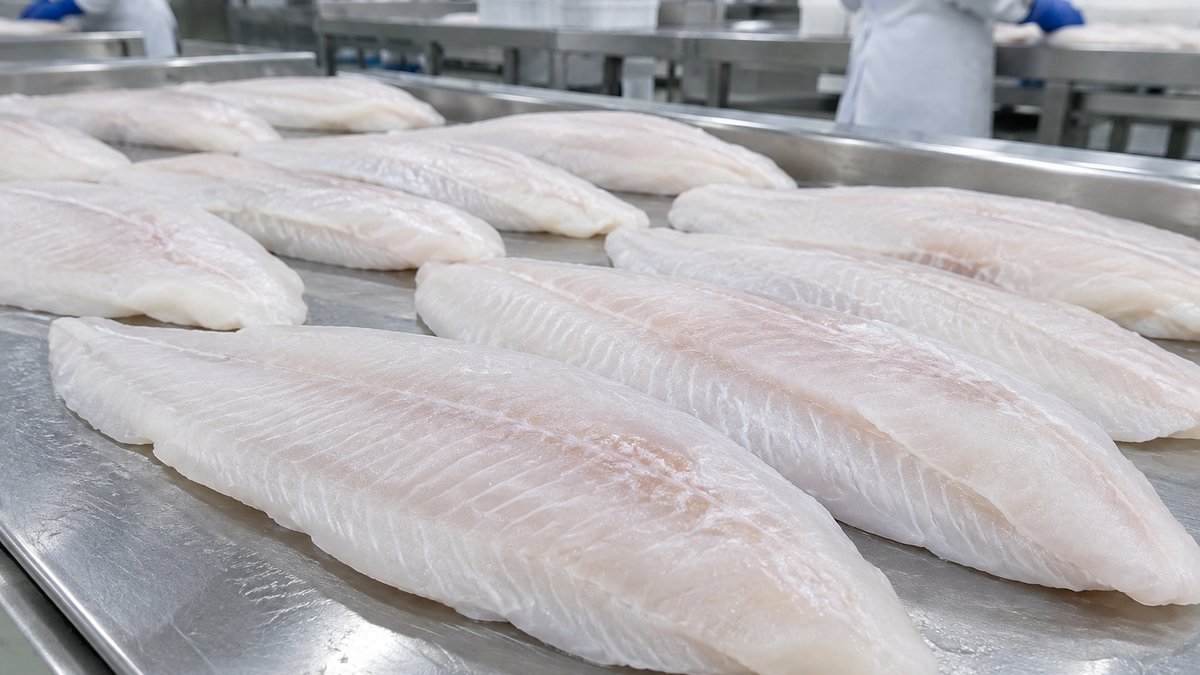
A November 2026 market report quoted Vietnamese frozen pangasius fillet at US$1.95 to US$2.15 per kilogram FOB Ho Chi Minh City for China/US-standard fillets with the red line, in 220 to 300 gram and 300-gram-and-above sizes. The report does not identify these quotations as Canada-bound or as a confirmed transaction, so they are an export-side reference rather than a Canadian delivered price.
This update covers that November export quotation and the latest available trade and supply indicators relevant to Canada. Buyers should match size, trim and delivery terms before comparing offers; exporters should state the specification, loading port and quote validity clearly.
Key Takeaways
- The November 2026 reference for Vietnam-origin China/US-standard fillets with the red line was US$1.95 to US$2.15/kg FOB Ho Chi Minh City. It is not a Canada-specific landed quote.
- The same November report listed other Vietnam fillet specifications at different prices. Those ranges are not direct comparisons because trim and size differ.
- FAO reported that Canada was among the CPTPP markets with particularly strong pangasius import gains in the first quarter of 2026, but the report did not give a Canada-specific volume in the cited summary.
- Canada imported US$55.0 million worth of frozen fish fillets from Vietnam in 2025, according to UN Comtrade data presented by the World Bank. That customs category is broader than pangasius.
- Buyers should compare identical product specifications and delivery bases, then calculate landed cost to their Canadian destination.
1. Vietnam’s Pangasius Trade Combines Strong Supply with Changing Demand
Vietnam is the main source of internationally traded frozen pangasius. FAO reported that Vietnam supplied 210,830 tonnes of the 230,129 tonnes of frozen pangasius entering international trade in the first quarter of 2026, a 92% share. Vietnamese shipments rose 16% year on year during that quarter.
The longer-term 2025 picture also points to a large, diverse export market. FAO reported that about 100 countries imported approximately 906,000 tonnes of frozen pangasius from Vietnam in 2025, up 3.4% from 2024. Frozen fillets accounted for 82.7% of total imports and increased 5.6% year on year.
Demand differed by destination. China and the United States remained Vietnam’s two largest pangasius markets in 2025, while FAO identified Brazil, CPTPP countries, Southeast Asia and the Near East as growth areas. In the first quarter of 2026, China imported 58,520 tonnes of pangasius, including 45,260 tonnes of frozen fillets. Canada was among the CPTPP markets reporting particularly strong gains, but the cited FAO summary does not give a Canadian volume.
Vietnamese supply costs also moved higher during 2026. SeafoodSource reported that Vietnamese production reached an estimated 496,200 tonnes in the third quarter, up 3.3% year on year, and that first-nine-month output exceeded 1.4 million tonnes. The same report cited higher raw-fish prices in late September and early October. Production growth and rising raw-material costs can occur at the same time, so neither figure alone establishes a fillet export price.
For Canadian buyers, national import data provide context but do not isolate pangasius. World Bank WITS data sourced to UN Comtrade show Canada imported US$55.0 million of frozen fish fillets from Vietnam in 2025, with a reported quantity of 16,084,500 kg. The category is HS 030420, frozen fish fillets, and covers species beyond pangasius. It should not be used as a pangasius-only price or volume.
Looking to Source Frozen Pangasius Fillet?
Connect with verified suppliers, discover matching products, and explore sourcing opportunities from global markets.
2. Latest Frozen Pangasius Fillet Export Prices
2.1 Current Vietnam export reference
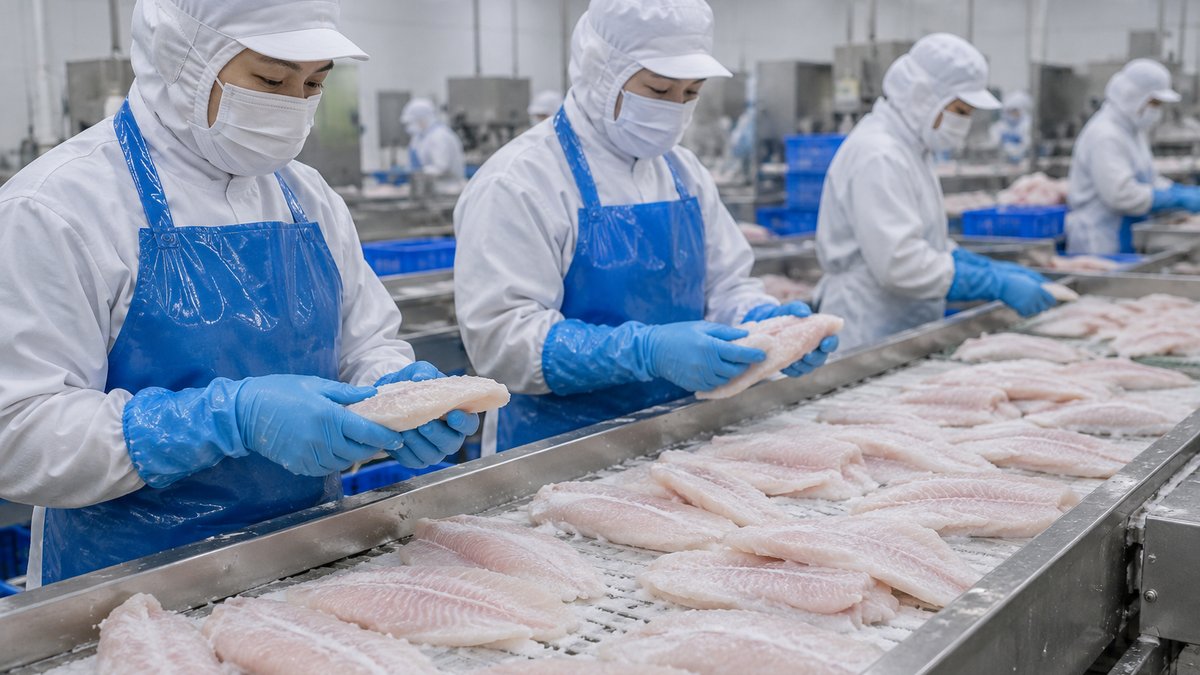
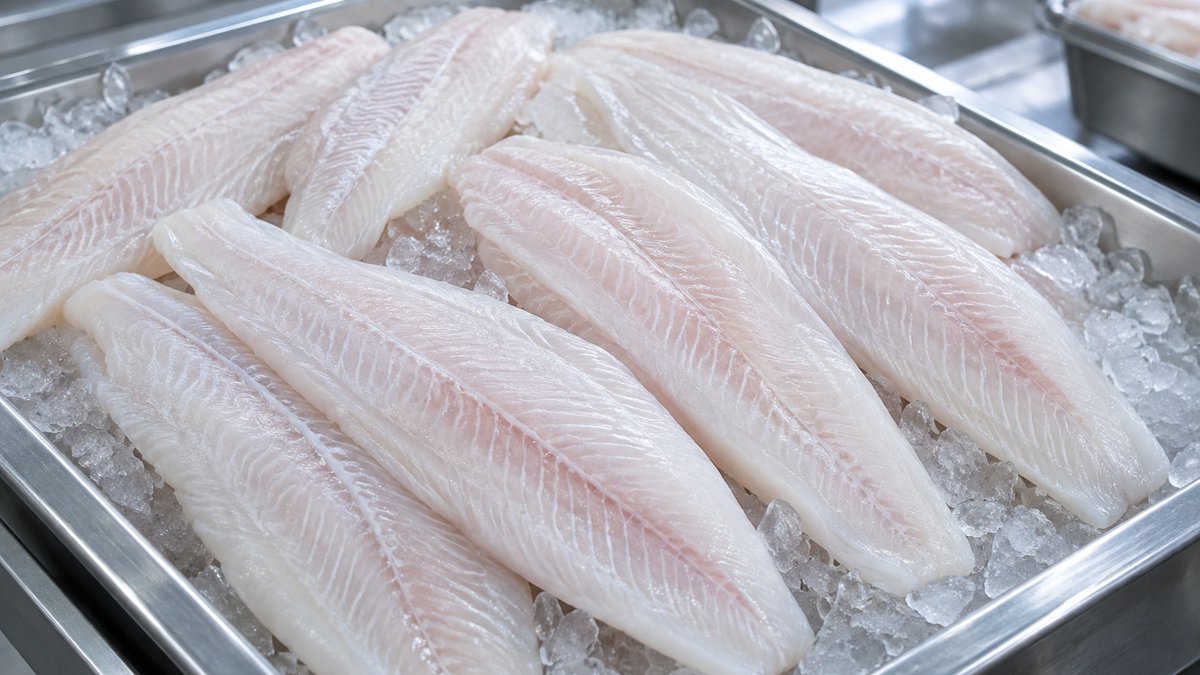
The latest dated price source used for this update is a November 2026 report from The Seafood Intelligence. It quotes China/US-standard frozen pangasius fillets with the red line, in 220 to 300 gram and 300-gram-and-above sizes, at US$1.95 to US$2.15/kg FOB Ho Chi Minh City. The report gives a November period, but does not specify a quotation day, named buyer, Canadian destination or validity period.
FOB means the seller’s quoted basis covers delivery on board at the named loading port. The quoted range does not include the buyer’s subsequent ocean freight, insurance, Canadian import charges or inland delivery. Buyers should confirm whether the offer remains valid for their shipment date.
These are different product specifications from one exporting origin, not a comparison of competing countries. The November report describes the EU-standard size groups as 170 to 220 grams and 220 to 300 grams. Differences in trim, red-line status and size mean that the three ranges cannot be read as a simple price ranking for the same fillet.
2.2 Price comparison by exporting origin
A matching November 2026 quotation from another exporting country was not verified for the same pangasius fillet specification, unit and FOB basis. A country price comparison would therefore be unsupported. Farm-gate fish prices and offers for differently trimmed fillets do not provide like-for-like substitutes.
2.3 Price trend and reported changes
The November report said CFR prices for frozen pangasius fillets across specifications rose by US$0.15 to US$0.20/kg in the fourth quarter of 2026. It does not state the comparison dates or give a Canada-specific CFR series, so the movement cannot be applied as a precise change to the FOB range above. CFR includes freight to the named destination port; it does not include insurance.
The raw-fish market provides a separate supply signal. SeafoodSource reported that Vietnamese pangasius sized 0.7 to 1 kg reached VND32,000 to VND34,000/kg during the week of 26 September to 2 October 2026. For Vinh Long, it reported VND34,000 to VND35,000/kg on 5 October 2026. Those are dated raw-fish prices, not processed-fillet export quotations, and should not be compared directly with the November FOB range.
The available evidence shows higher reported costs upstream and higher broad CFR prices in Q4, but it does not establish a consistent, grade-specific month-on-month or week-on-week series for Canada. Buyers should treat the November range as a reference point and obtain a current quote for their exact product and shipment.
3. Supply Costs, Harvest Timing and Demand Shape Export Prices
Vietnamese raw-fish availability and processing costs are relevant to frozen fillet offers, but the available reports do not quantify how much each factor changed the November price. SeafoodSource reported that prices for 0.7 to 1 kg pangasius rose by more than 6% from early September to the week of 26 September to 2 October 2026. Vinh Long processor quotations reached VND34,000 to VND35,000/kg on 5 October.
Processing specifications also affect what a buyer pays. The November export report gives separate ranges for standard-trimmed fillets, red-line fillets and well-trimmed fillets with the red line removed. Size, skin and bone status, IQF processing, glaze, net weight and packing can all make two offers commercially different. Ask suppliers to state these details rather than comparing the product name alone.
Demand is not uniform across importing markets. FAO reported that China’s frozen fillet imports from Vietnam almost doubled in the first quarter of 2026, while US frozen fillet imports were 22,720 tonnes and remained below their 2024 level. Canada was among the CPTPP markets with particularly strong gains, but the source summary provides no Canada-specific quantity or price.
The November report also described rising CFR prices across fillet specifications, but its stated increase lacks a comparison period and destination-specific series. It should be treated as a broad market observation, not proof that every Canadian buyer faced the same increase.
Currency and logistics affect the amount a Canadian importer pays after an FOB offer. The sources used here do not provide a current Canada-bound freight rate or exchange-rate calculation for this product. Buyers should use freight, insurance and currency figures applicable to their own booking and quote date rather than add a generic logistics estimate.
Trade policy and import requirements can also affect a shipment’s cost and documentation, but the sources cited here do not establish a pangasius-specific Canadian rule or duty rate. Importers should verify the current requirements for the product’s tariff classification, origin, processing and shipment before concluding a landed-cost comparison.
4. China and the United States Lead Vietnam’s Pangasius Markets
4.1 Major global importing markets
FAO’s 2025 trade summary identifies China, the United States and Brazil as major buyers of Vietnamese frozen pangasius fillets. China imported 184,000 tonnes, the United States imported 108,000 tonnes and Brazil imported 50,000 tonnes in 2025. These are reported import volumes for Vietnamese frozen fillets, not forecasts for 2026 or rankings of every country’s total fish imports.
The first-quarter 2026 update shows that demand changed by destination. China imported 45,260 tonnes of Vietnamese frozen fillets, while US frozen fillet imports slipped to 22,720 tonnes. FAO also noted stronger purchases in Latin America and ASEAN markets. Those figures cover the first quarter only and should not be projected across the full year.
4.2 Vietnam’s export destinations and Canada
Canada was among the CPTPP markets that FAO said posted particularly strong pangasius import gains in the first quarter of 2026. The cited summary does not give Canada’s volume, value, year-on-year percentage or share of Vietnam’s exports, so a Canada-specific ranking or growth rate cannot be stated from that source.
A broader Canadian customs category confirms trade with Vietnam but does not isolate this species. In 2025, Canada imported 16.08 million kg of frozen fish fillets worth US$55.0 million from Vietnam under HS 030420, according to World Bank WITS data sourced to UN Comtrade. That total includes other fish species and is not a pangasius export-destination share.
4.3 What the demand evidence means for exporters
Canada’s reported first-quarter gain makes it a relevant market to monitor, while the absence of a country-specific figure limits conclusions about its size or pace. Exporters should assess a Canadian inquiry by its exact product specification, quantity, shipment timing and delivery basis. Global import growth does not confirm an order from a Canadian buyer.
5. Compare Specifications and Landed Cost Before Choosing an Offer
The November Vietnam FOB reference is useful only when the offered fillet matches the reported specification. A lower quote for a larger, differently trimmed or differently glazed product may not represent a lower-cost alternative for the same order.
- State the size range and whether the fillet has skin or the red line. Clarify whether it is standard-trimmed or fully trimmed.
- Confirm whether the product is individually quick frozen or block frozen, and specify glaze percentage and net-weight basis.
- Set the packaging format, carton weight and order quantity before requesting comparable offers.
- Ask for the quote currency, named loading port, destination port, shipment window and validity date.
- Compare the same delivery basis. FOB excludes the main freight and insurance after loading; CFR includes freight to the named destination port; CIF includes freight and insurance.
- Add applicable freight, insurance, import charges and destination handling costs when calculating landed cost. Use current figures for the actual shipment.
Canada’s 2025 import data for HS 030420 provide context for frozen fish fillet trade with Vietnam, but not a pangasius unit price. Dividing a broad customs value by its total quantity would mix species, grades and transactions, so it would not produce a defensible pangasius benchmark.
A written specification lets an importer compare offers on the same basis. If one supplier quotes a red-line fillet FOB and another quotes a well-trimmed fillet CIF, first align the product and delivery terms. Then request the cost to the same Canadian destination and shipment window.
Buying consideration: Before comparing the final numbers, confirm that each quote states the same fillet preparation, size, weight basis, packing, destination and shipment period.
6. Freshdi Buying Requests Are Not Quantified in This Price Update
No dated Freshdi request snapshot is available to support counts, buyer quantities, destinations or a list of current pangasius buying requests here. Platform demand therefore cannot be described as a market trend or compared with the global trade figures above.
The distinction matters for procurement: FAO and customs statistics describe reported trade over a defined period, while a buying request would describe a particular buyer’s stated need. Neither source should be presented as evidence for the other.
Buyers and suppliers can review the relevant product category on Freshdi, but any listing or request should be checked against the buyer’s current specifications and the supplier’s current offer.
7. Next Steps for Canadian Buyers and Pangasius Exporters
7.1 For buyers and importers
- Use US$1.95 to US$2.15/kg FOB Ho Chi Minh City as a dated November reference only for the reported red-line, China/US-standard size groups.
- Send suppliers one specification covering size, trim, skin, red-line status, freezing method, glaze, net weight, packing and quantity.
- Ask for a current quotation with currency, named port, Incoterm, validity date and shipment window.
- Calculate landed cost to the intended Canadian destination using current freight, insurance and import costs.
- Confirm the documentation and import requirements for the exact product and shipment before contracting.
7.2 For exporters and suppliers
- Separate quotes by fillet preparation, size group and processing specification.
- State whether the offer is FOB, CFR or CIF and name the relevant port.
- Include quote date and validity period, currency, unit, available quantity, packaging and shipment window.
- Confirm product documents and destination requirements before describing an offer as suitable for Canada.
- Respond to a buyer’s actual specification rather than applying one generic price to different grades.
The November reference can help frame a sourcing discussion, but it cannot replace a current offer for the order. A supplier’s specification and delivery basis determine whether the price can be compared with the report.
8. Freshdi Can Help Buyers and Suppliers Find Relevant Product Categories
Buyers can review potential suppliers in Freshdi’s seafood category and describe the product, quantity and destination they need. Suppliers can review relevant buying requests and decide whether their current offer matches the stated requirements.
A category listing or request is a starting point for a sourcing discussion. Buyers should confirm the supplier’s current product details and commercial terms; suppliers should confirm that the requested grade, quantity and destination fit their available product.
Buyers comparing specifications and suppliers can review relevant seafood listings and requests on Freshdi.
View Latest Seafood & Aquatic Products Buying Requests →View Potential Seafood & Aquatic Products Suppliers →
The November price range is a Vietnam export reference, not a Canadian landed offer. Freshdi can help readers find relevant category pages while they compare current supplier information against their own purchase requirements.
9. Canadian Buyers Should Verify the Offer Against Their Shipment
The November 2026 Vietnam reference for red-line China/US-standard frozen pangasius fillet was US$1.95 to US$2.15/kg FOB Ho Chi Minh City. The reported Q4 CFR increase and late-September to early-October raw-fish prices point to cost pressure, but they do not provide a Canada-specific, grade-matched price trend.
Canadian buyers should request current, specification-matched quotations and compare landed cost to the same destination. Exporters should state the grade, unit, loading port, delivery basis and quote validity before treating an offer as comparable.
Readers ready to compare potential suppliers or review sourcing requests can use the relevant Freshdi category pages.
View Latest Seafood & Aquatic Products Buying Requests →View Potential Seafood & Aquatic Products Suppliers →
Frequently Asked Questions
What is the current frozen pangasius fillet export price relevant to Canadian buyers?
A November 2026 report quoted Vietnam-origin China/US-standard fillets with the red line, in 220 to 300 gram and 300-gram-and-above sizes, at US$1.95 to US$2.15/kg FOB Ho Chi Minh City. The report does not identify the quote as Canada-bound or state a Canadian landed price. Confirm a current offer for the exact product and shipment.
Why do frozen pangasius fillet prices differ between suppliers?
Offers can cover different size groups, trim, skin and red-line status, freezing method, glaze, net weight and packaging. The delivery term also changes what the quoted price includes. Compare matching specifications and delivery bases before treating two offers as alternatives.
What is driving recent Vietnamese pangasius price changes?
SeafoodSource reported higher Vietnamese raw-fish prices in late September and early October 2026. A November market report also described a US$0.15 to US$0.20/kg increase in Q4 CFR prices across frozen fillet specifications, without stating a comparison period. These signals do not establish one price change for every grade or Canadian buyer.
Which countries are major buyers of Vietnamese frozen pangasius fillets?
FAO reported that China imported 184,000 tonnes of Vietnamese frozen fillets in 2025, the United States imported 108,000 tonnes and Brazil imported 50,000 tonnes. These are 2025 trade figures, not forecasts. FAO also identified Canada among CPTPP markets with particularly strong pangasius import gains in the first quarter of 2026, without giving a Canada-specific volume in the cited summary.
How should a Canadian importer compare FOB, CFR and CIF offers?
FOB covers delivery on board at the named loading port. CFR includes freight to the named destination port, while CIF includes freight and insurance. Compare identical products and destinations, then add the costs and import charges not covered by each quote to calculate landed cost.
Where can buyers review frozen pangasius suppliers on Freshdi?
Buyers can review relevant seafood supplier categories and buying requests on Freshdi. They should check the stated product specification, quantity, destination and trade term, then confirm current availability, documentation and commercial terms with the supplier.
References
1. The Seafood Intelligence – Vietnamese Pangasius Farm-Gate Prices Hit Record High, Export Fillet Quotes Raised Across the Board!, November 2026.
2. FAO GLOBEFISH – Brazil and CPTPP Markets Drive Pangasius Trade Growth, 2026.
3. FAO GLOBEFISH – China’s Rebound Lifts Viet Nam’s Pangasius Exports, 2026.
4. SeafoodSource – Raw Material Prices in Vietnam’s Pangasius Sector Rise as Supply Tightens, Export Demand Grows, 2026.
5. World Bank WITS – Canada Frozen Fish Fillets Imports by Country, 2025, 2025.
Disclaimer: This article is compiled from platform data, public sources and information provided by third parties, for general informational purposes only. We do not guarantee its accuracy or completeness. Prices, volumes and forecasts are indicative, reflect conditions as of 2026-11-18 and may change without notice. This is not financial, investment or trading advice.