
Introduction
Cashew packaging can affect product protection, shipment planning and how easily a buyer can handle the goods after arrival. But a request that says “custom packaging” does not define a complete packing specification: suppliers may still need to confirm the pack material, pack size, labeling, net weight and how the units will be assembled for transport.
Three cashew nut buying requests posted on Freshdi from October 28 to November 9, 2026, and selected for stating packaging information, illustrate different levels of detail. One lists cartons and a 40-foot container, another leaves the format to customer requirements, and a third names vacuum-sealed tins, cartons with inner bags, and retail pouches. These are observations from this three-request sample, not a measure of wider market demand. The comparison can help exporters identify what is stated and what to clarify before preparing a quotation.
Key Takeaways
- The three requests were posted between October 28 and November 9, 2026; together they represent three buyers in the Freshdi sample.
- One request lists 700 cartons at 22.68 kg each, while also stating one 40-foot container and a 15.0–15.9 metric-tonne net-weight range; suppliers should reconcile these figures before quoting.
- A second request says customized packaging is available according to customer requirements but does not specify the actual pack format or dimensions.
- A third request lists several alternatives, including vacuum-sealed tins, cartons with two vacuum-sealed inner bags, and custom retail pouches; the buyer should confirm which option applies to the order.
- Codex guidance for tree nuts emphasizes clean, sanitary packaging materials that protect against contamination; the applicable legal requirements still depend on the destination and product.
1. Sample Scope: Three Recent Cashew Nut Requests
This article examines the three Freshdi cashew nut buying requests supplied in the brief. The sample was selected for packaging information and covers requests posted from October 28 through November 9, 2026, as of November 10, 2026. The records identify three buyers. They do not establish that a request remains open or that a purchase will proceed, so suppliers should check the original listing and confirm current details before responding.
The records are shown below as Freshdi requests. In the analysis that follows, each listed packaging option is treated as buyer-provided information—not as a universal cashew specification or a confirmed packaging standard for the destination.
A useful first distinction is whether a request defines a specific pack, gives several alternatives, or delegates the choice to the customer. Those are different levels of instruction. None by itself confirms the food-contact suitability of a material, the final label artwork, or the shipment’s complete packing plan.
Looking to Sell Cashew Nut?
Connect with verified buyers, receive relevant buying leads, and explore sourcing opportunities from global markets.
2. What the Requests State About Packaging
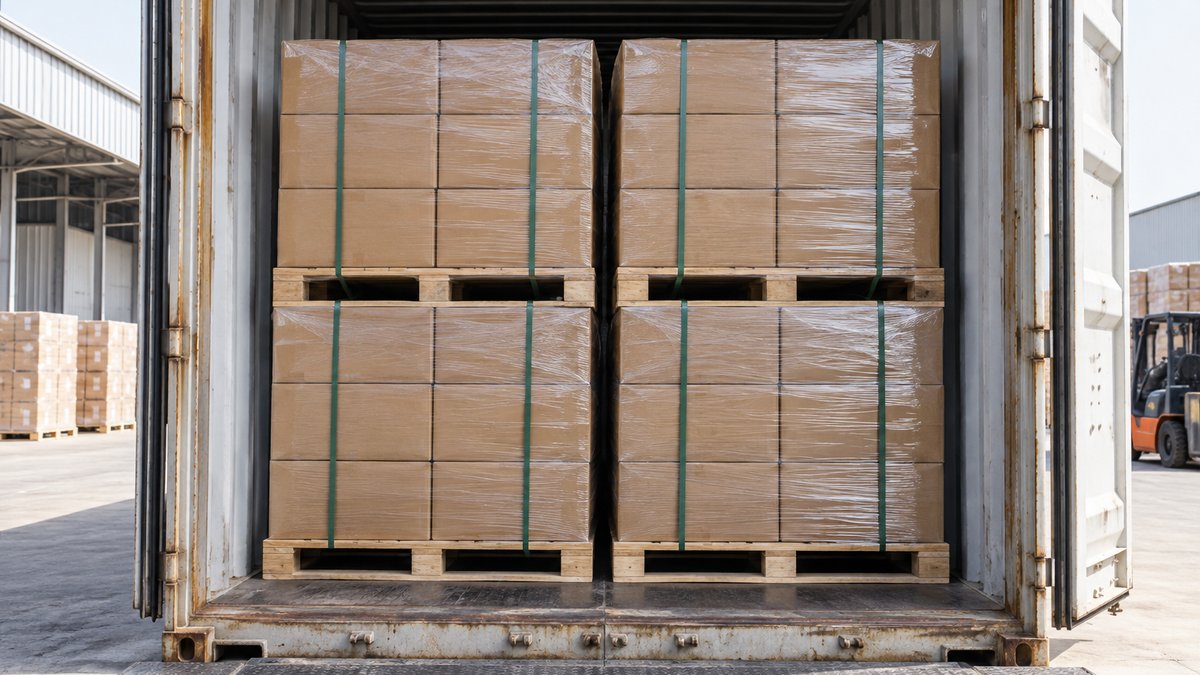
The Kenya request lists 700 cartons of 22.68 kg each. It also states a quantity of one 40-foot container and a net-weight range of 15.0–15.9 metric tonnes. These details appear together in the request, but their relationship is not explained. Suppliers should ask the buyer to confirm the intended number of cartons, net weight per carton, total net weight and whether the container quantity describes the requested shipment.
The request for delivery to Algeria says customized packaging is available according to customer requirements. It does not name a material, pack size, retail format, carton count, labeling design or case dimensions. The request mentions retail packaging, wholesale distribution and snack-food production in its title, but that wording does not establish which packaging configuration the buyer intends for the five-ton order.
The request for delivery to Mundra, India, is the most detailed about possible formats. It lists 10 kg, 25 lb or 50 lb vacuum-sealed tins; 22.68 kg (50 lb) cartons containing two vacuum-sealed bags; and custom pouches in 100 g, 250 g, 500 g and 1 kg sizes. It also includes “5kg, 10kg” separately. Since the record does not say whether all formats are alternatives, or whether some refer to different packaging levels, the supplier should confirm the chosen primary pack and outer case.
Buying consideration: Before pricing, convert each packaging description into a written packing schedule agreed with the buyer: primary pack, units per outer carton, net weight per unit, total number of units, and any pallet or container arrangement.
3. Bulk Cartons, Customer-Selected Packs and Retail Pouches
The requests represent three practical packaging situations. A defined carton weight can make it easier to estimate packing materials and handling, provided the number of cartons and total shipment weight are consistent. A customer-selected format offers flexibility but leaves more decisions open. A list of retail pouch and bulk formats gives a starting point, but does not tell the supplier which format to quote.
The India request distinguishes several possible pack sizes, but weight alone is not a complete specification. A 500 g pouch, for example, would still need confirmation of the material structure, closure, labeling and number of pouches in an outer case. For vacuum-sealed tins or bags, confirm whether the listed weight is net product weight and whether it applies to each primary pack or to a shipping unit. Do not infer these details from a product title.
Similarly, “custom packaging available” should be treated as an invitation to clarify rather than an instruction to design packaging without buyer input. Ask whether the customer will supply artwork or whether the exporter is expected to prepare it, what languages and mandatory label fields are needed, and whether samples or proofs must be approved before production.
Suppliers comparing these packaging formats can review related cashew nut buying requests and supplier listings on Freshdi.
View Latest Bean, Nut & Seed Buying Requests →View Potential Bean, Nut & Seed Suppliers →
The packaging choice can change packing-line requirements, material costs and the way the shipment is organized. Those commercial effects should be calculated only after the buyer confirms the format and quantities.
4. Match Packaging Counts to the Shipment Quantity
A supplier should check that the packaging arithmetic agrees with the requested shipment. In the Kenya record, 700 cartons multiplied by 22.68 kg is 15,876 kg, or 15.876 metric tonnes. That arithmetic falls within the request’s stated 15.0–15.9 metric-tonne range. However, the listing also gives “1 40-foot Container,” and does not clarify whether the carton count is fixed, whether the net-weight range is approximate, or how the goods are to be loaded. Confirm all three details rather than silently treating one as definitive.
In the India request, the 20-tonne quantity is stated alongside several packaging options, but no number of tins, cartons or pouches is attached to any one option. A quotation should therefore identify the selected pack size and calculate the corresponding unit count and outer-carton count, subject to the buyer’s confirmation. Do not treat the different weight units in the record as interchangeable without confirming the intended basis.
The Algeria request states five tons and customized packaging, but leaves the unit configuration open. Ask whether the buyer wants bulk packs, retail units or another format, and confirm whether the five tons refers to net product weight. If the buyer has not selected a configuration, quote each clearly differentiated option separately rather than combining them into one ambiguous offer.
Buying consideration: Make the quotation auditable: state the number of primary packs, their net weight, the number of outer cartons, total net weight, and any agreed tare or gross-weight information separately.
5. Packaging Materials, Product Protection and Handling
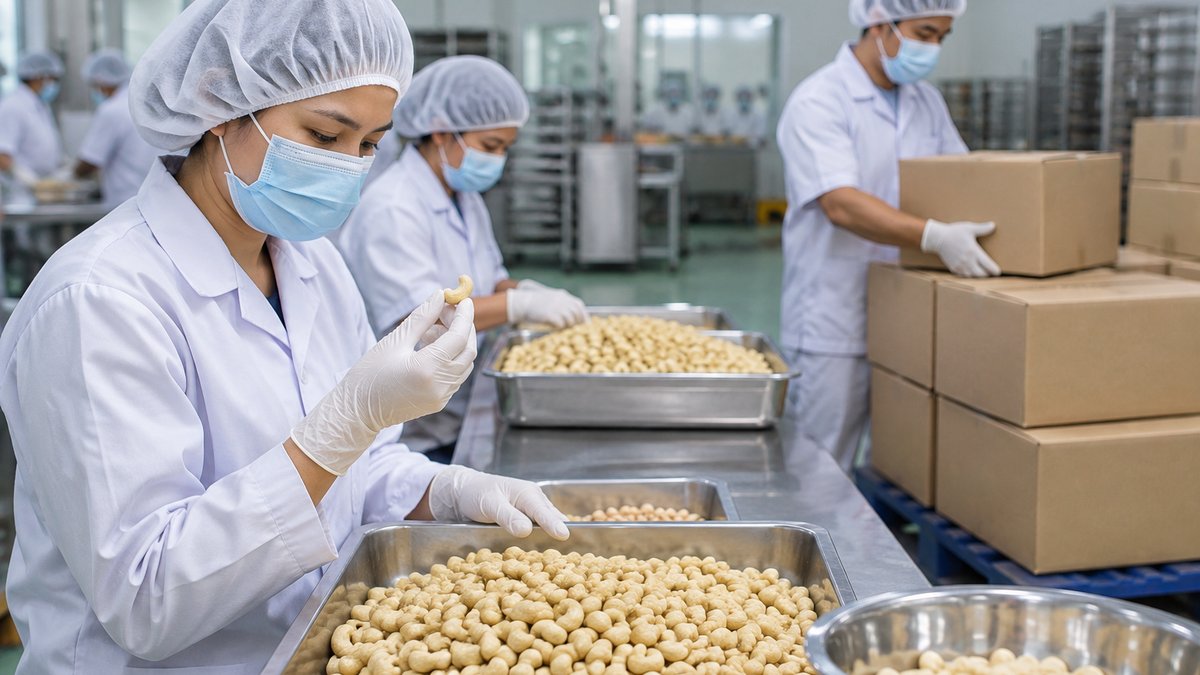
Packaging has both commercial and hygiene functions. Codex’s Code of Hygienic Practice for Tree Nuts says packaging materials should be stored hygienically, provide appropriate protection from contamination and be used under conditions that prevent contamination of the product. It also advises that finished tree-nut products be stored and transported in conditions that protect them and their containers from contamination and deterioration. This is international hygiene guidance, not a substitute for the importing country’s binding rules or the buyer’s agreed specification.
For a cashew shipment, suppliers and buyers can use that general guidance to frame practical checks: Is the packaging new or otherwise suitable for the intended food use? Is it clean and intact before filling? Does the selected pack protect the kernels during normal handling and transport? Can the outer cartons withstand the intended stacking and route? These are questions to verify for the particular packaging and shipment, not details established by the three Freshdi requests.
Vacuum sealing is specifically listed as an option in the India request, but the record does not specify a vacuum level, bag material, sealing method or shelf-life validation. Suppliers should not promise a preservation effect or shelf life solely because a pack is described as vacuum-sealed. Confirm the buyer’s packaging specification and ensure the proposed process and materials are supported by the supplier’s actual production controls.
6. Labels and Artwork Need Separate Confirmation
None of the three records provides label artwork, a required language, barcode details or a complete list of label statements. Packaging format and labeling are related, but a pack-size request does not automatically define what must appear on the label. The supplier should confirm whether the sale is bulk or retail, who provides artwork, whether buyer approval is needed, and which destination-market rules apply to the product and its presentation.
For the retail pouch alternatives in the India request, verify the requested net quantity for each pouch, the number of pouches per case and whether the buyer requires individual consumer-facing labels. For customized packaging in the Algeria request, confirm whether customization means pack size, printed design, private-label branding or another feature; the record does not specify which. For the carton format in the Kenya request, confirm whether the buyer requires marks on cartons and what information, if any, must be included.
Keep approved artwork, packaging specifications and the final quotation consistent. A change in pouch size or cartons per case can affect unit counts and shipment calculations, so record any revision and obtain buyer approval before production.
7. Commercial Details That Can Affect a Packaging Quote
A packaging quotation should distinguish the cost of the product from packaging-related costs where appropriate. Before offering a firm price, confirm the selected format, material specification, printing or labeling needs, quantities, packing configuration and delivery schedule. Clarify whether any setup, artwork, sampling or special packing costs are included in the price, and state the quotation’s assumptions.
The supplied records show different trade-term and payment-term fields, but those do not complete the packaging specification. For example, a request’s listed trade term does not tell a supplier which packing format to produce, and a listed payment option does not establish that a particular packaging cost has been approved. Confirm the named destination or port, the applicable delivery arrangement, and who is responsible for any buyer-specific packaging materials or artwork.
The Algeria request also displays a maximum moisture value of “100%.” This article does not reinterpret or correct that value. It is a product-specification issue that should be brought to the buyer’s attention and clarified alongside packaging, since suppliers should not accept a potentially unclear product specification as an established quality target.
Buying consideration: Separate facts stated in the RFQ from items proposed in your offer. Label unconfirmed packaging, labeling and quantity assumptions clearly, and request written acceptance before committing to production.
8. A Supplier Checklist Before Quoting
Use a short checklist to turn an incomplete packaging note into a quote-ready specification. Ask the buyer to confirm:
- Pack format: Which listed option should be quoted—carton, vacuum-sealed tin, inner bag, retail pouch or another format?
- Unit weights and counts: What is the net weight per primary pack, how many primary packs go into each outer carton, and how many cartons are required?
- Materials and sealing: Are there buyer-specified food-contact materials, closures, liners or sealing conditions?
- Artwork and labels: Who provides the artwork, what label content and languages are needed, and who gives final approval?
- Shipment basis: Is the order quantity net product weight, and does the stated container or carton count match the intended shipment?
- Destination requirements: Which importing-market rules and buyer-specific requirements apply to the packaging and label?
- Approval and timing: Are samples or proofs required, and when must packaging be approved to meet the shipment schedule?
Illustrative packaging clarification:
Primary pack: Please confirm the selected format and material.
Net weight: Please confirm net weight per unit and units per carton.
Label and artwork: Please confirm language, required details and approval process.
Shipment quantity: Please confirm total cartons and total net product weight.
This is an illustrative clarification format, not a universal cashew packaging specification.
A clear written response helps both sides compare like with like. If a buyer has not yet selected a format, suppliers can offer alternatives, but each should have its own explicit unit configuration and price basis.
9. Find and Review Cashew Nut Buying Requests
Freshdi is a place for suppliers to review relevant buying requests and the details buyers have posted. Use the listing as a starting point, then confirm current status, the final packaging specification and any missing commercial information before preparing a quotation. The three requests discussed here show why packaging details deserve direct confirmation: one includes figures that need reconciliation, one leaves the choice to the customer, and one provides several alternatives without selecting a final configuration.
For exporters, the practical lesson is to quote the packaging actually confirmed by the buyer—not the format that seems most likely from a product title or a list of options. Review related cashew nut buying requests on Freshdi and compare them with the packaging formats your business can document and supply.
Before accepting an order, align the product specification, packing schedule, artwork approval, net-weight basis and destination requirements in the written quotation or contract. If any one of those remains open, mark it as pending instead of implying agreement.
Frequently Asked Questions
What packaging formats do the recent cashew nut requests mention?
In this three-request sample, the listed formats include 22.68 kg cartons, customized packaging according to customer requirements, vacuum-sealed tins, cartons containing vacuum-sealed inner bags, and custom retail pouches in several stated sizes. These are options recorded in individual requests, not standard requirements for all cashew shipments.
Does “custom packaging available” tell me what to quote?
No. It indicates that customized packaging is mentioned, but the request does not specify the selected format, material, dimensions, labeling or pack counts. Ask the buyer to confirm those details and whether customization means pack size, printed artwork, branding or another feature.
How should I handle a request listing several packaging options?
Ask the buyer which option applies to the order. If helpful, present separate quotations for clearly defined alternatives, stating the net weight per pack, packs per carton, total carton count and any packaging-related costs for each.
Why should I reconcile cartons, container quantity and total weight?
Those figures must describe a coherent shipment. In one request, 700 cartons at 22.68 kg each calculate to 15.876 metric tonnes, while the record also states one 40-foot container and a 15.0–15.9 metric-tonne range. Confirm the intended count, weight basis and container arrangement with the buyer rather than assuming the listing resolves them.
Are the packaging details in these requests legal requirements?
The request details are buyer-stated commercial information, not proof of a legal rule. Codex provides international hygiene guidance for tree nuts, while binding food-contact, labeling and import requirements depend on the destination jurisdiction and product presentation. Confirm the rules that apply to the specific shipment.
What should a supplier include in a packaging clarification?
Confirm the primary pack and material, net weight per unit, units per outer carton, total carton count, label and artwork responsibility, approval process, shipment quantity basis and destination requirements. State any assumptions separately in the quotation and obtain the buyer’s agreement.
References
1. Freshdi – Cashew Nut buying requests supplied in the article brief; sample posted October 28–November 9, 2026, 2026-11-10.
2. Codex Alimentarius Commission – Code of Hygienic Practice for Tree Nuts, CXC 6-1972, 1972.
3. Codex Alimentarius Commission – Code of Hygienic Practice for Low-Moisture Foods, CXC 75-2015, 2015.