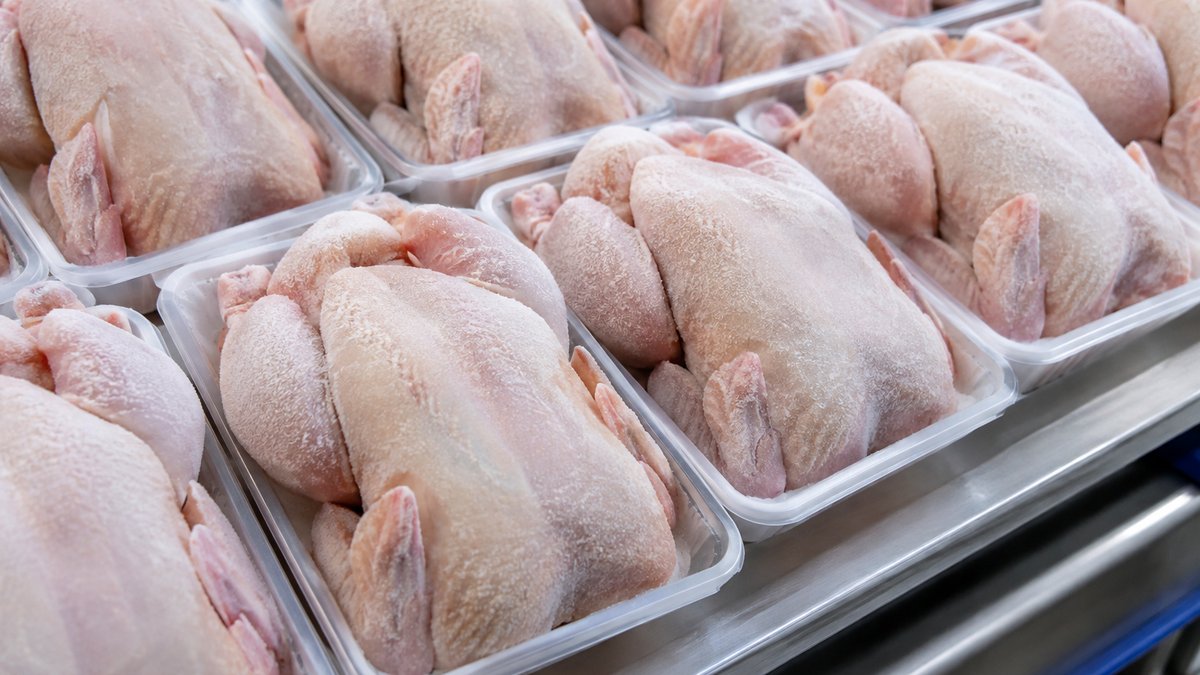

Introduction
Frozen chicken requests can cover whole birds, specific cuts or mixed product descriptions, and each choice affects what an exporter should quote. Between 5 and 16 November 2026, seven buyers posted frozen chicken requests on Freshdi. Their stated quantities use different units, their destinations range from named ports to country or airport entries, and their listed commercial terms include CIF and FOB.
The requests also leave practical gaps. Some do not state a buyer country, packaging or a measurable price amount, and the largest quantity is expressed in containers rather than weight. Suppliers can use the details to assess fit, then confirm product identity, shipment plan, price basis and import requirements before making an offer.
Key Takeaways
- Seven frozen chicken requests from seven buyers were posted on Freshdi between 5 and 16 November 2026; the requests list seven destinations.
- The stated quantities include 1 ton, 25 tons, 5,000 with no unit stated, 40 containers and one 20-foot container. These entries cannot be added or compared as a single volume range.
- Five requests list CIF and four list FOB; two list both. Five list T/T, while one lists D/P and one says negotiable.
- Two requests specify a storage temperature of -18°C or below and a weight range of 1.2 kg to 2.0 kg. Three list cuts, but the product descriptions and cut lists still need buyer confirmation.
- All seven records show USD as the target-price currency, but none gives a numeric target-price amount in the supplied listing details.
1. Frozen Chicken Market Context for Exporters
1.1 Global chicken meat production
USDA Foreign Agricultural Service’s October 2026 Livestock and Poultry: World Markets and Trade estimates global chicken meat production at 112.387 million metric tons in 2026 and forecasts 114.891 million metric tons in 2027. The figures use ready-to-cook equivalent and cover chicken meat generally, not frozen chicken alone. USDA forecasts the 2027 increase at about 2% as major producers expand output.
That production forecast gives exporters market context, but it does not establish demand for a particular cut, grade or destination. The seven Freshdi requests are a separate, dated platform sample. They show requirements posted by seven buyers in twelve days, not the size of global frozen chicken demand or confirmed orders.
For a supplier, the practical comparison starts at product level. Whole birds and individual cuts need separate specifications and price calculations. A request that lists several cuts or processing options should be clarified before an exporter assumes the buyer wants a mixed shipment.
1.2 Why frozen product specifications need to be explicit
The requests vary in how clearly they identify the product. Some give whole-bird weight ranges and storage temperature; others list a range of cuts, but no portion sizes or proportions. A quotation should identify the offered form and specification so a buyer can compare it with the requested item.
The request for 25 tons of chicken cuts, for example, names a long list of parts and offal. It does not give quantities for each item. A supplier should ask whether the buyer wants a mixed container, separate cut quotations or a selected subset before costing the order.
Frozen poultry trade statistics also depend on product classification. UN Comtrade’s Harmonized System distinguishes frozen whole domestic fowls from frozen cuts and offal under separate subheadings. Buyers and suppliers comparing customs data should check whether the statistic covers whole birds, cuts, offal or a wider poultry category.
Looking to Sell Frozen Chicken?
Connect with verified buyers, receive relevant buying leads, and explore sourcing opportunities from global markets.
2. Seven Recent Frozen Chicken Buying Requests
These seven requests were posted on Freshdi from 5 to 16 November 2026 and come from seven buyers. Buyer country is stated in six records, while all seven give a delivery destination. The quantities and destinations below remain as listed; where a unit or buyer-country detail is absent, it is not supplied here.

The listed quantities are not directly comparable. Five entries use a weight or count without a shared basis: 1 ton appears three times, one request states 25 tons, and another states 5,000 without a unit. The remaining two use container counts. Request net weight per container, packing configuration and whether the amount is for one shipment or a programme before comparing supply capacity.
All seven records display USD as the target-price currency, but the supplied details contain no numeric target-price amount. Treat USD as the currency field only. Do not use it to infer a price level or prepare a direct price comparison.
CIF appears in five requests and FOB in four, with two requests listing both. Payment terms are T/T in five requests, D/P in one and negotiable in one. These counts describe the seven listings, and the terms still need to be agreed for each transaction.
3. What Each Frozen Chicken Request Means for Suppliers
3.1 Request 1: Supplier Whole Frozen Chicken, Frozen Chicken For Sale, Wholesale Frozen Chicken.
The Gambia request identifies Grade A whole frozen chicken, a 1.2 kg to 2.0 kg weight range and storage at -18°C or below. It states 1 ton, a destination described as “Gambia port authority,” CIF or FOB, and T/T. The listing marks the request verified.
The product description is more specific than the destination entry. Before quoting, confirm the actual receiving port, whether the weight range applies to each bird, the packing format and the required shipment date. Since the request lists both CIF and FOB, present separate prices with the named loading or destination point and a clear price unit.
3.1.1 Request 2: Supplier Whole Frozen Chicken, Frozen Chicken For Sale, Wholesale Frozen Chicken.
This request repeats the Grade A whole-bird weight range and -18°C or below storage specification. It states 1 ton and lists CIF or FOB with T/T. The destination is entered as Paris Charles De Gaulle, France, and the buyer country is not stated. Halal is listed in the request details, including its certification field.
The cut field lists several parts alongside whole chicken, so the buyer should confirm whether the order is for whole birds, cuts or alternatives. Confirm the destination and import route as entered, and ask what evidence of Halal certification and product handling the buyer needs. Do not assume that the airport entry means the buyer wants air freight; the request does not state a shipping method.
3.1.2 Request 3: Frozen Chicken Cut
The Benin request states 25 tons for Cotonou Sea Port, CIF and D/P. It lists export cartons of 10 to 20 kg, 20-by-40-foot refrigerated containers and a 24-month shelf life. The cut list includes poultry cuts and offal.
The listed quantity and packaging give a starting point for a logistics discussion, but the request does not allocate tonnage by cut. Ask for proportions or a priority list, and confirm whether the buyer accepts every listed item. Agree the carton weight, container configuration, date coding and remaining shelf-life requirement at arrival before finalizing the offer.
3.1.3 Request 4: best quality cheapest wholesale price for Frozen Chicken export worldwide
The Cambodia request states 1 ton, destination “Cambodia,” FOB and T/T. Its product fields include cuts and several processing options, and list Brazil and Europe as origins. The listing marks the request verified.
The broad description does not identify one product to price. Ask the buyer to select the cut, processing state, origin preference and delivery location before preparing a firm quotation. “Cambodia” does not identify a port, and FOB needs a named place of delivery. Treat the listed processing choices as options to clarify, not as a confirmed combined specification.
3.1.4 Request 5: Frozen chicken
The United Arab Emirates request states a quantity of “5000” with no unit, names Dubai as destination, and lists sea freight, FOB and T/T. It gives three requested weights: 1 kg, 1.2 kg and 1.3 kg. The buyer asks for a sample for quality testing, and the request is marked verified.
A supplier cannot size production or freight from “5000” until the buyer confirms whether it means birds, cartons, kilograms or another unit. Clarify whether each weight is a whole-bird option and how the quantity should be divided among them. Since the listing names Dubai but states FOB, confirm the intended loading port and delivery point. Agree how the sample will be assessed before treating sample approval as acceptance of a production lot.
3.1.5 Request 6: Frozen Chicken
This United Arab Emirates request states 40 containers for Dubai, lists sea freight and CIF, and leaves payment negotiable. It names Turkey, Brazil, the United States, China, Ukraine and Azerbaijan as desired origins. The request is not marked verified in the supplied details.
The container count is not enough to calculate a tonnage or loading plan. Ask for container size, expected net weight, shipment schedule and whether all listed origins are acceptable alternatives. Confirm the product form and specification because the product field only says frozen chicken. Suppliers should assess the request and its buyer profile through the listing before committing capacity or agreeing payment terms.
3.1.6 Request 7: Frozen Whole Chicken
The Bahrain request states one 20-foot container of frozen whole chicken, with Bahrain as destination, CIF and T/T. The buyer country is Bahrain, and the request is not marked verified in the supplied details. No weight range, grade, packaging or storage specification is stated.
Ask for the required bird weight, product grade, net weight per carton, carton count and the exact receiving point. The container size alone does not establish the shipment’s net product weight. Confirm the requested documentation and any destination-specific product conditions before calculating a CIF offer.
4. What Suppliers Should Prepare Before Quoting Frozen Chicken
A useful frozen chicken quotation identifies one product and one delivery basis. Several of these requests mix whole birds, cuts and processing options, so an exporter should resolve the product description before sending a price.
- State whether the offer is for whole birds, named cuts, offal or a defined mix. Give the weight range or cut dimensions requested by the buyer.
- Describe the offered grade and processing state, and provide the current product specification and lot information relevant to the buyer’s request.
- State net weight per unit, carton format, carton weight, pallet details if applicable, and the number of cartons or net weight per container.
- Confirm the order quantity and unit. For container requests, ask for container size, expected net weight and whether the shipment is one lot or split across dates.
- Show currency, price per unit or metric ton, quotation validity and the named place. Separate FOB and CIF calculations instead of presenting them as interchangeable.
- For CIF, identify the named destination point and freight assumptions. For FOB, identify the loading point. Have the buyer confirm the intended route when the destination and term do not clearly align.
- Confirm the payment instrument and milestones in writing. “Negotiable” and any unspecified payment option need a specific agreement before production or dispatch.
- List the available product and export documents, and ask the buyer which documents and destination requirements apply to the shipment.
Temperature requirements should be stated precisely in the offer and shipment documents. Two requests specify storage at -18°C or below, but the other records do not provide a temperature. Confirm the buyer’s required temperature, monitoring method and handling expectations rather than applying one request’s specification to the others.
When a buyer asks for a sample, confirm the sample product, quantity, delivery method, testing criteria and who bears the cost. A sample can help the buyer assess a particular specification, but it should not replace agreed production-lot requirements in the contract.
Buying consideration: Before sending a firm offer, match the buyer’s exact product and quantity unit, then confirm destination, shipment timing, documents and payment terms in writing.
5. Practical Commercial Checks for These Requests
Start with the quantity and product ambiguities that could change the quotation. “5000” has no unit, 40 containers have no stated container size or net weight, and one 20-foot container has no weight or packing details. Ask for those facts before calculating product cost or freight.
Next, make sure the buyer’s destination and chosen Incoterm point to a workable delivery plan. The Paris Charles De Gaulle entry does not include a stated buyer country or shipping method, while several requests provide only a country rather than a named port. Confirm the exact delivery point and whether the buyer expects sea, air or another route.
Product definition needs the same care. Whole chicken, cuts and offal should not be priced as one undifferentiated product. Where a request lists multiple cuts or processing states, ask which products are required and how the order should be divided.
Finally, distinguish listing indicators from transaction checks. Five of the seven requests are marked verified, while two are not; no ratings are supplied. A verification mark does not resolve missing specifications, confirm payment capacity or replace supplier due diligence. Check the current listing and buyer details before allocating stock or production.
6. How Freshdi Helps Suppliers Find Frozen Chicken Buyers
Suppliers can review the original buying requests, compare the details buyers entered and decide whether each requirement matches their product and export capacity. Check the current listing before quoting, especially where a quantity unit, destination or product specification is missing. Suppliers can also review Frozen Chicken buying requests and use the available inquiry or quotation functions shown on the platform.
A complete supplier profile helps buyers assess the products and terms a supplier has actually listed. Keep product specifications and available export information current. Where Premium features are available to the account, review their terms on Freshdi before relying on them. Platform features and individual listing details can change.
Suppliers ready to assess current frozen chicken inquiries can review the available buyer requests on Freshdi.
View Latest Buying Requests for This Product →
7. Conclusion: Clarify the Request Before Pricing Frozen Chicken
The seven recent requests differ in product form, quantity unit and destination detail. Their terms include both CIF and FOB, while all seven show USD without a numeric target-price amount. The requests provide useful starting points, but several need clarification before an exporter can make a comparable, shipment-ready offer.
Suppliers should confirm the exact chicken product, unit and volume, packing plan, destination point, shipment schedule and payment structure. Then they can prepare a specification-led quotation and check the current request on Freshdi before deciding whether to proceed.
After confirming that your product and shipment plan fit the buyer’s requirements, use Freshdi to explore the relevant buying requests.
View Latest Buying Requests for This Product →

Frequently Asked Questions
What should a frozen chicken quotation include?
Name the product form, cut or whole-bird weight range, grade and processing state. State the net weight, packaging, quantity and unit, currency, price basis, named delivery point, shipment timing and quotation validity. Include available product and export documentation, then identify any requirements that still need the buyer’s confirmation.
Can I compare FOB and CIF prices directly?
Compare them only after aligning the product, unit, named place and shipment assumptions. FOB and CIF cover different delivery arrangements, so a CIF figure includes cost elements that are not represented in the same way by an FOB quotation. Show separate prices and identify the loading or destination point used for each.
How should suppliers handle an RFQ with no quantity unit?
Ask the buyer to define the unit before calculating capacity, packing or freight. For the request that states “5000,” confirm whether the figure refers to birds, cartons, kilograms or another measure. Record the agreed unit and any split by product weight in the quotation.
What should I clarify when a frozen chicken request lists multiple cuts?
Confirm which cuts the buyer wants, whether the cuts are alternatives or a mixed order, and the quantity or proportion for each. Ask for the required cut dimensions, packaging and any specific product or handling requirements. Price each item separately if the buyer has not confirmed a mix.
Does a verified request guarantee a buyer will place an order?
No. A verification indicator is one listing detail and does not guarantee a response, payment or transaction. Review the current buyer and request information, confirm specifications and terms directly through the available platform functions, and complete your own commercial checks.
References
1. USDA Foreign Agricultural Service – Livestock and Poultry: World Markets and Trade, October 2026.
2. UN Comtrade – Harmonized System, All editions combined, Accessed 16 November 2026.
3. Freshdi – Frozen Chicken buying requests reviewed in this article, Posted 5 to 16 November 2026; data as of 16 November 2026.
Disclaimer: This article is compiled from platform data, public sources and information provided by third parties, for general informational purposes only. We do not guarantee its accuracy or completeness. Mentions and rankings of suppliers do not constitute an endorsement or guarantee, and strategies and examples are illustrative; results may vary. Please conduct your own due diligence before making business decisions.