
Introduction
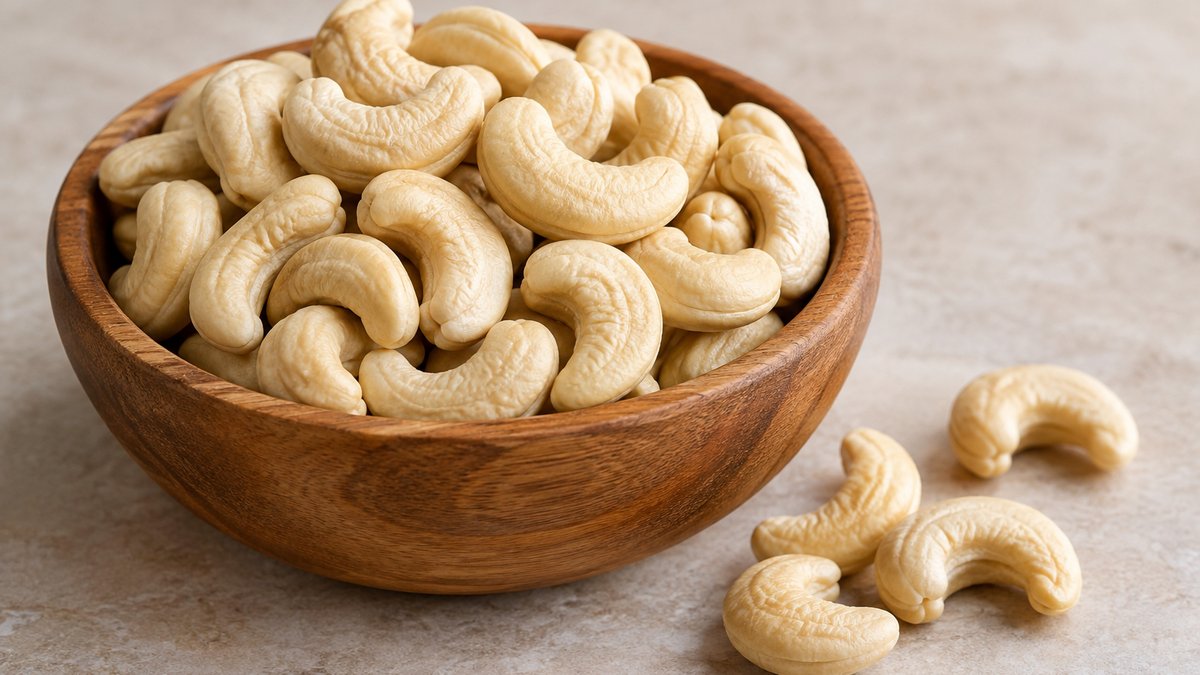
Cashew nut sourcing depends on the product form and specification a buyer needs. Whole kernels such as W180 and W320, broken kernels, blanched kernels and raw nuts in shell are not interchangeable quotation items.
This snapshot covers 12 cashew nut buying requests posted on Freshdi from October 16 to November 9, 2026. The requests come from 10 buyers; no single country filter is set. Supplier and destination details vary across the records, and buyer country is stated in five requests. The snapshot describes those requests, not total market demand. Suppliers can use it to check product fit and identify which details to confirm before preparing an offer.
Key Takeaways
- The 12 requests come from 10 buyers and include mass quantities from 1 ton to 25 tons, two container-based quantities, and one request for 12,000 kilograms.
- W180, W240, W320 and W420 grades appear in product descriptions, while some requests also seek split, whole, blanched or mixed kernel forms.
- CIF appears in all 12 requests; some records list more than one trade term. T/T appears in all 12, alongside other payment terms in some requests.
- Freshdi’s displayed target-price entries do not provide an interpretable price per unit or quantity, so they should not be used as market price benchmarks.
1. Cashew trade spans raw-nut origins, processing hubs and importing markets
Cashew trade involves two distinct products: raw cashew nuts in shell and edible kernels after processing. Suppliers and buyers need to specify which product they mean because the two forms have different processing stages, yields and trade flows.
1.1 Production and processing are concentrated in different places
The International Nut and Dried Fruit Council’s November 2025 crop report estimated raw cashew nut production at 5.29 million tonnes for the 2024/2025 season. West Africa accounted for more than 51%, or 2.71 million tonnes. The same report estimated production at 800,000 tonnes in Cambodia, 615,000 tonnes in India, 540,000 tonnes in Eastern Africa and 340,000 tonnes in Vietnam. These are raw-nut estimates, not kernel volumes.
The value chain does not end where the crop is grown. The Centre for the Promotion of Imports from developing countries reports that limited shelling capacity in some African origins means much of their crop is exported in shell to processors, including in Vietnam and India. For kernel sellers, origin, processing location and country of export can therefore refer to different stages of the same supply chain.
1.2 Shelled-kernel trade has grown, with Europe among the destination markets
A 2026 Codex Alimentarius project document, drawing on FAOSTAT data, reports worldwide shelled-cashew exports of 781,503 tonnes, valued at US$4.004 billion, in 2023. This is a global export figure for shelled cashews; it does not describe raw nuts in shell or Freshdi demand.
European sourcing illustrates how processing and import markets connect. CBI reports that Germany imported 43,095 tonnes of cashew kernels from Vietnam in 2024, equivalent to 62% of its cashew kernel imports that year. The figure concerns Germany and Vietnam in 2024, not total European consumption. Freshdi’s recent requests name destinations ranging from the United Kingdom and Algeria to the United States, Kenya and India, but those 12 requests are a platform sample rather than an import-market ranking.
1.3 What market context can and cannot tell a supplier
Production and export statistics show established supply and cross-border trade, while the Freshdi requests show specific buyer-stated needs during October and November 2026. Neither source establishes that a supplier can fill a particular order. A supplier still needs to match the requested form, grade, quantity, packaging and delivery basis, then confirm any missing or inconsistent terms directly through the request process.
Looking to Sell Cashew Nut?
Connect with verified buyers, receive relevant buying leads, and explore sourcing opportunities from global markets.
2. Twelve recent cashew requests cover multiple grades, quantities and destinations
The 12 requests posted between October 16 and November 9, 2026 state a quantity, and all 12 list a destination. Ten buyers posted them. The requests include kernel grades, different processing forms and bulk or retail-oriented packaging; the complete requests are shown here as Freshdi records.
2.1 Grades and product forms vary across the requests
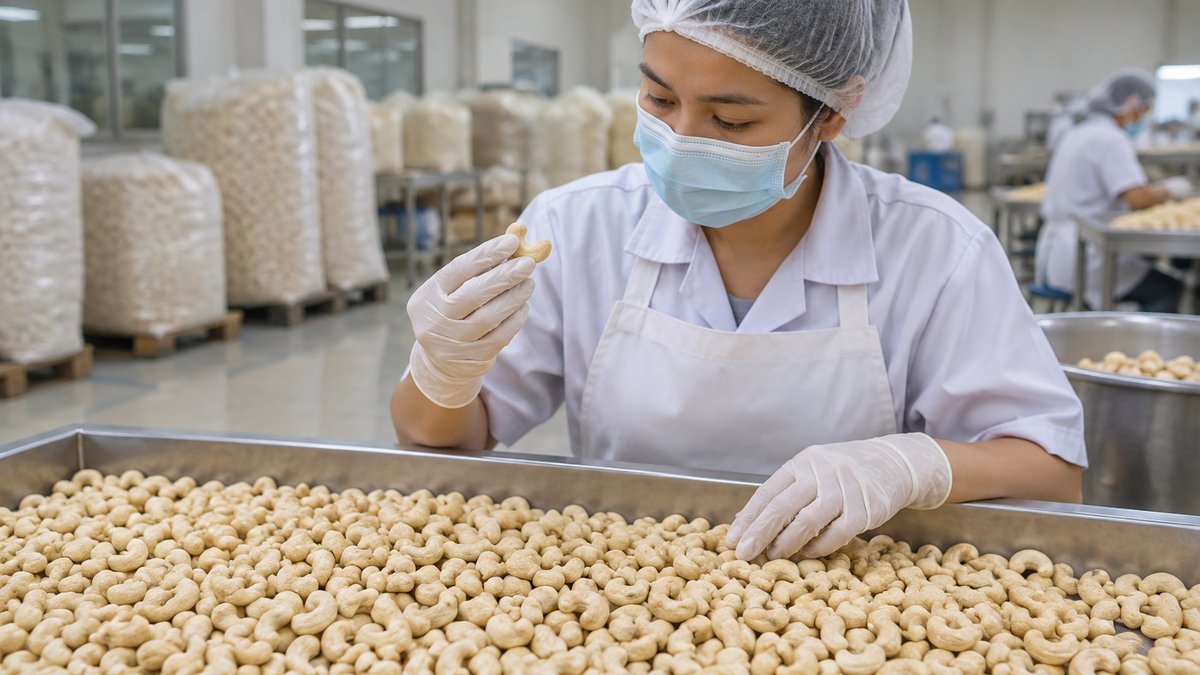
Product descriptions name W180, W240, W320 and W420, and some combine more than one grade in the listing. Other records specify whole kernels, split or broken forms, or blanched kernels. A grade name alone does not settle the full specification: suppliers should confirm the buyer’s intended grade convention, kernel style, size tolerance, color and allowable defects before quoting.
One request asks for W320 and W180 and separately lists W320 under its grade specification. Another describes W420 kernels and states a size of 400 to 420 kernels per pound. Those details are not a general specification for the other requests. Suppliers should answer each RFQ against its own stated requirements and ask the buyer to clarify any mismatch within that request.
2.2 Order quantities use different units and shipment formats
The mass-based quantities range from 1 ton to 25 tons, and one request states 12,000 kilograms. Two other requests state a 40-foot container without giving a weight in the quantity itself. A separate request describes 700 cartons of 22.68 kilograms each. Suppliers should retain the buyer’s stated unit when assessing fit and confirm the net product quantity where a container or carton count is used.
Several requests concern smaller tonnage, while others describe larger bulk requirements. The 1-ton W240 request to Belize City and the 25-ton W320/W180 request to Dubai illustrate different order scales. The quantities do not establish a general minimum order size for the market; they are individual buyer requirements.
2.3 Packaging and quality details are uneven
Eight of the 12 requests state packaging information. The stated formats include moisture-resistant sacks or cartons, vacuum-sealed packs, 20-kilogram cartons and customized consumer-size pouches. Some packaging descriptions specify a carton weight or inner vacuum bags, while others leave the exact pack configuration to be agreed with the customer.
Specifications also vary in detail. Some requests name shelf life, color, moisture or kernel size, while one request names a certificate of analysis and a certificate of quality. One request asks for whole white kernels without infestation, mould or rancid smell and requires product photographs. Those requirements apply to that request only; they should not be treated as standard requirements for every destination or buyer.
A few entries contain values that need clarification before a supplier relies on them. For example, some moisture values appear as “100%” or with repeated percent signs in the request text. Suppliers should ask the buyer to confirm the intended specification instead of silently correcting it or using it as a quality limit.
2.4 Trade terms, payment and target prices need request-level review
CIF is listed in all 12 requests. The Freshdi summary also shows FOB in four, CFR in two, EXW in two and DDP in one; some requests list multiple terms, so these are not mutually exclusive categories. Suppliers should confirm the applicable Incoterms rule and named place before calculating freight, insurance or delivery costs.
T/T is listed in all 12 requests, and some also name other payment terms. Because several requests list more than one option, the final payment arrangement needs confirmation before a quotation is treated as agreed. The displayed target-price entries do not provide an interpretable per-unit or per-quantity benchmark, so suppliers should base their quotation on a clearly stated unit, currency, quantity, specification and delivery basis rather than infer a price from this sample.
Buyer country and destination are separate details. The buyer country is stated in five requests, while destinations include ports or locations in several countries. A supplier should use the destination named in the individual request for freight planning and avoid treating the buyer’s country as the delivery point.
3. Suppliers should resolve specification gaps before quoting
The requests reward precise product matching. A supplier who can offer W320 kernels, for example, still needs to confirm the buyer’s intended style, moisture limit, packaging and destination before presenting a delivered price.
- Match the product form first. Confirm whether the buyer wants raw nuts in shell, shelled kernels, whole kernels, splits, pieces, roasted product or blanched kernels. Do not use a kernel grade to describe raw nuts in shell.
- Confirm the grade and acceptance details. Ask which grade standard the buyer uses and whether the request’s stated color, kernel-size, moisture, defect or shelf-life requirements are mandatory. Clarify unusual or conflicting values instead of changing them in the offer.
- Reconcile the order basis. For a request expressed in containers or cartons, confirm net weight, number of units and whether the requested quantity is total product weight or a packaging count. Keep the buyer’s unit visible in the quotation.
- Specify packaging exactly. State the net weight per pack, inner and outer packaging, vacuum or moisture barrier where applicable, carton count and whether custom retail sizes are included.
- Quote on one confirmed delivery basis. Identify the Incoterms rule and named place, and show whether freight and insurance are included. If multiple terms appear in a request, ask which one the buyer wants priced.
- Confirm payment in writing. A request listing several payment options does not establish which one the buyer accepts for a particular offer. State the proposed payment method, timing and any documentary conditions.
- Make the offer auditable. Include product identity, grade, origin, available quantity, packing, price unit and currency, shipment timing and quotation validity. Attach quality documents only when they describe the offered lot and the buyer’s stated requirements.
The sample’s less-complete entries show why clarification belongs before final pricing. A mixed grade description, a non-interpretable target-price entry or an unusual moisture value can change the product specification or commercial basis. Suppliers should refer to the original request and keep written confirmation of any agreed changes.
Buying consideration: Before sending an offer, compare the buyer’s requested grade, quantity unit, package and named destination against the stock or production lot you can actually supply. Quote only after the buyer confirms any unresolved specification or term.
4. Freshdi gives suppliers a place to review cashew buying requests
Suppliers can review the requirements posted in cashew buying requests on Freshdi and decide whether their available product fits. The 12 requests in this snapshot were posted from October 16 to November 9, 2026, and the listings can change after this snapshot date. Start with the individual request rather than assuming that a category-wide pattern applies to every buyer.
A practical review follows the order of a quotation: identify the kernel or raw-nut form, check grade and quality details, match the available quantity and packaging, then confirm destination and commercial terms. Freshdi’s Cashew Nut buying requests provide a place to review relevant requests. The listed target-price entries here are not comparable reference prices, so each supplier should prepare its own offer on a stated basis.
A complete response should answer the buyer’s stated requirements and separate confirmed facts from points that remain open. If the request lists more than one trade term or payment method, ask which option applies before calculating a final quotation. Freshdi provides access to the requests discussed here; the supplier and buyer still need to agree on the product, price, documents and shipment terms.
Suppliers ready to review current cashew demand can use Freshdi’s Find Buyers action to browse relevant buying requests.
View Latest Buying Requests for This Product →
5. Suppliers can use recent RFQs as a checklist, not a market forecast
The recent requests show varied cashew sourcing needs: multiple kernel grades, different processing forms, order sizes from tonnage to container quantities, and a range of packaging and delivery terms. They do not establish market-wide demand or a current market price.
A supplier’s next step is to select requests that match actual supply, verify the buyer’s unresolved requirements and submit a quotation with a clear unit and delivery basis. Freshdi is a place to review the buying requests covered in this snapshot and find relevant requests as they are posted.
Suppliers can use Find Buyers to review cashew requests and assess which ones match their available product.
View Latest Buying Requests for This Product →
Frequently Asked Questions
What cashew specifications should a supplier confirm before quoting?
Confirm whether the buyer wants raw nuts in shell or kernels, then verify grade, whole or broken style, size, color, moisture, defects, shelf life and packaging where those details apply. Ask the buyer to clarify conflicting or unusual values in the request before using them in a quotation.
What does W320 mean in a cashew request?
W320 is a cashew kernel grade designation. One request in this snapshot separately states a kernel size of 400 to 420 kernels per pound for a W420 product. Suppliers should confirm the buyer’s intended grading convention and the full acceptance specification for each request rather than applying one request’s size details to another.
Can suppliers use the target prices in these requests as market prices?
No. The displayed target-price entries do not provide an interpretable price per unit or quantity for comparison. A supplier should prepare an offer with its own stated currency, price unit, quantity, product specification and delivery basis.
What should a supplier do when an RFQ lists several trade terms or payment methods?
Ask the buyer to confirm which term and payment method apply before calculating or finalizing the offer. State the Incoterms rule with its named place, and set out the proposed payment timing and conditions in writing.
Why should the buyer country be checked separately from the destination?
A buyer’s country identifies where the buyer is based when that information is stated. The destination is the place named for delivery in the request. Use the stated destination for freight planning and confirm it if a port or delivery point is unclear.
How can suppliers find cashew buying requests on Freshdi?
Use Freshdi’s Find Buyers action to review relevant buying requests, then open each listing and compare its product form, grade, quantity, destination, packaging and commercial terms with what you can supply. Listings may change, so check the request before preparing an offer.
References
1. FAO/WHO Codex Alimentarius Commission – CL 2026/23-CAC: Request for Comments on the Development of a Codex Standard for Cashew Kernels, 2026.
2. International Nut and Dried Fruit Council – Global Crop Update & Outlook, Cashews, November 2025.
3. Centre for the Promotion of Imports from developing countries – The European Market Potential for Cashew Nuts, 2026.
4. Freshdi – Cashew Nut Buying Requests Posted October 16 to November 9, 2026; snapshot as of November 13, 2026, November 13, 2026.
Disclaimer: This article is compiled from platform data, public sources and information provided by third parties, for general informational purposes only. We do not guarantee its accuracy or completeness. Mentions and rankings of suppliers do not constitute an endorsement or guarantee, and strategies and examples are illustrative; results may vary. Please conduct your own due diligence before making business decisions.