
Introduction
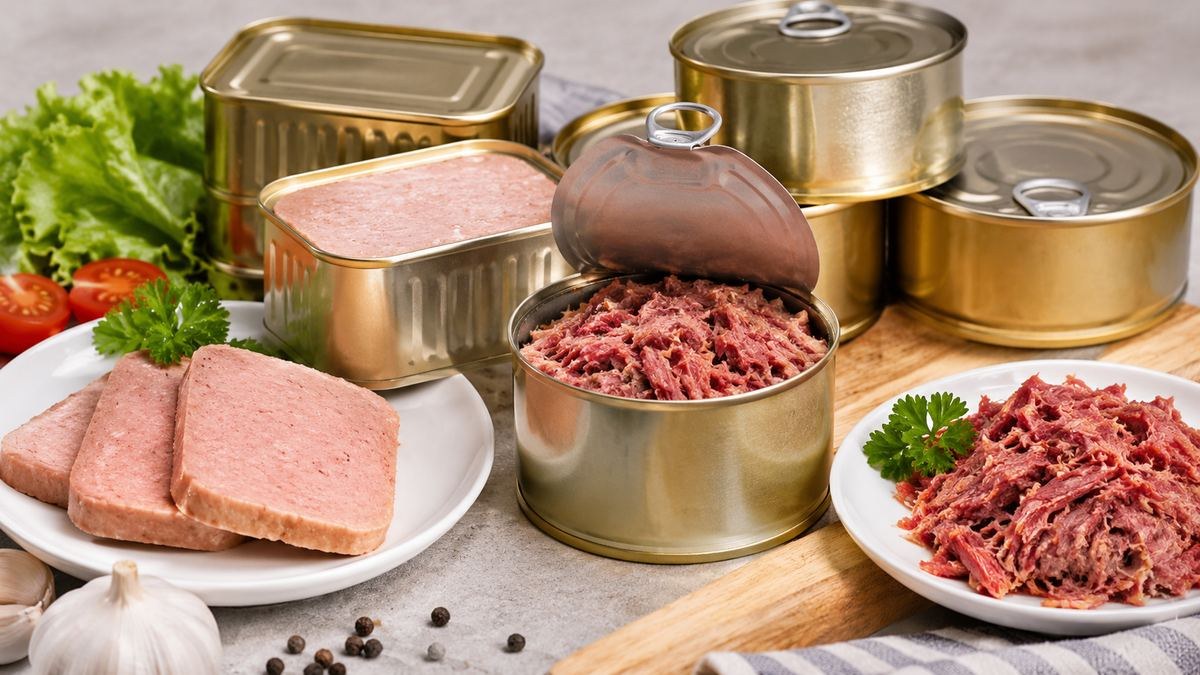
Canned meat sourcing is rarely a simple price comparison. Importers must align the meat species and formulation with the intended market, then check can size, drained weight, processing controls, shelf-life evidence, order volume and the documents required for the exact destination. A listing that looks commercially attractive can still be unsuitable if its product specification or establishment status is unclear.
This global comparison brings together four Freshdi supplier leads from three different origins: two South African leads, one Chinese product listing and one United States-based supplier profile. They are not presented as a single regional supply cluster. Instead, they illustrate different product categories and levels of listing detail that buyers can use to build an initial shortlist.
Key Takeaways
- The four leads cover canned lamb, canned corned beef and canned chicken luncheon meat; they are not interchangeable products.
- Sindo Industrial provides the most detailed ready-to-compare chicken luncheon-meat listing: 340 g × 24 cans, 1,000-carton MOQ and USD 22 per carton.
- Lawana and Sons lists canned lamb in 200 g, 400 g and 1 kg cans, but its 30,000 kg MOQ and USD 8 price without a stated unit require clarification.
- TRADE NEPAL lists several corned-beef can sizes and a 24–36 month shelf life, while its MOQ entries conflict and product origin is not specified.
- BF GLOBAL TRADING is a relevant South African corned-beef lead, but the visible category/profile information is not a complete product specification.
Market Overview
The FAO Food Outlook published on 18 June 2026 forecast global meat production at approximately 391.3 million tonnes in 2026, around 1% above 2025. This is an upstream meat-supply indicator, not a measure of canned-meat production or trade. For canned products, buyers need to evaluate the finished formulation, thermal process, packaging integrity and destination approvals separately.
The supplier records in this comparison show why category breadth matters. The South African leads include lamb and corned beef, the Chinese listing is chicken luncheon meat, and the United States-based listing is corned beef. Product species and format should therefore guide the shortlist before country or headline price.
Looking to Source Canned Lamb?
Connect with verified suppliers, discover matching products, and explore sourcing opportunities from global markets.
Compare the Featured Suppliers on Freshdi
The comparison reflects the visible supplier and product records. Missing information is not inferred, and supplier ratings are not product-quality certificates.
Source: Observed and compiled by Freshdi.
Meet the Suppliers
1. Lawana and Sons Supplies — South Africa
The South African canned-lamb category record lists Grade A product in 200 g, 400 g and 1 kg cans, a 30,000 kg minimum order and a stated shelf life of 24–36 months. The displayed price is USD 8, but no unit is attached, so it cannot be compared reliably per kilogram, can or carton. Durban, CIF and T/T are shown. Visible export markets include Angola, Australia, Bahrain, Brazil and Kenya. A related supplier card shows 5.0/5 with zero reviews; the canned-lamb record itself does not confirm a verification level. Buyers should request a full product data sheet, exact price basis and current availability before treating this as a quote-ready offer.
Open the South African canned-lamb listing.
2. BF GLOBAL TRADING (PTY) LTD — South Africa
The South African canned-corned-beef category record identifies BF GLOBAL TRADING as a relevant seller lead. Its supplier profile shows 4.8/5 and Verification Level 3, with FOB, T/T or L/C and Cape Town listed; Argentina is the visible main export market. However, the accessible category/profile evidence does not show the corned-beef formulation, can sizes, MOQ, price, shelf life or product-specific certificate scope. This is a discovery lead rather than a technical match. Request the exact SKU, product origin, specification sheet and a dated quotation.
Review the BF GLOBAL supplier profile and South African corned-beef category.
3. Sindo Industrial Co Ltd — China
The product listing identifies canned chicken luncheon meat in 340 g cans, packed 24 cans per carton. MOQ is 1,000 cartons and the displayed price is USD 22 per carton. CFR, China as loading-port location, and L/C or T/T are shown. HACCP and Halal claims appear in the listing, while the supplier profile shows 4.4/5 and Verification Level 3 with verified business documents, work email, phone and account email. Export markets are stated as the Middle East, Africa and Southeast Asia. Buyers still need the full ingredient declaration, meat species/composition, can dimensions, drained weight, certificate scope and shelf-life validation.
View the chicken luncheon-meat listing and Sindo supplier profile.
4. TRADE NEPAL LLC — United States
The canned-corned-beef listing describes 200 g, 340 g, 500 g and 1 kg cans, 24 cans per carton, Grade A and a 24–36 month shelf life. The displayed price is USD 20,000 per 40-foot container, with no validity date shown. MOQ statements conflict between one to five 40-foot containers and 1,000 cartons. Payment is shown as T/T or L/C; Incoterm and loading port are not specified. Codex, Halal, HACCP, ISO 22000 and FDA-related claims appear, but buyers must verify issuing bodies, certificate numbers, product/plant scope and current validity. Supplier country is the United States; product origin is not specified.
Review the canned corned-beef listing and TRADE NEPAL profile.

Which Suppliers Should You Contact for Your Buying Needs?
The matches below are limited to documented product specifications and commercial fields.
View Suppliers on Freshdi →Post Your Buying Request →
Commercial and Quality Checks Before Buying
For canned meat, request the species and cut, complete ingredient declaration, net and drained weights, can dimensions, can material and lining, retort schedule, commercial-sterility validation, seam-integrity controls, microbiological criteria, batch traceability, storage conditions and shelf-life study. Clarify whether the product is intended for retail, food-service or institutional use.
Codex CXC 23-1979, the Code of Hygienic Practice for Low-Acid and Acidified Low-Acid Canned Foods, and CXC 1-1969, the General Principles of Food Hygiene, are useful technical reference points. They do not replace the importing market’s own animal-product, establishment-approval, labelling or food-registration requirements.
Treat HACCP, Halal, ISO or FDA-related wording as a claim to verify, not as automatic approval of every SKU or manufacturing site. Ask for the current certificate, issuing body, scope, site address and expiry date, then confirm that the product and establishment meet the destination authority’s requirements.
How Freshdi Helps Buyers Find Suitable Suppliers
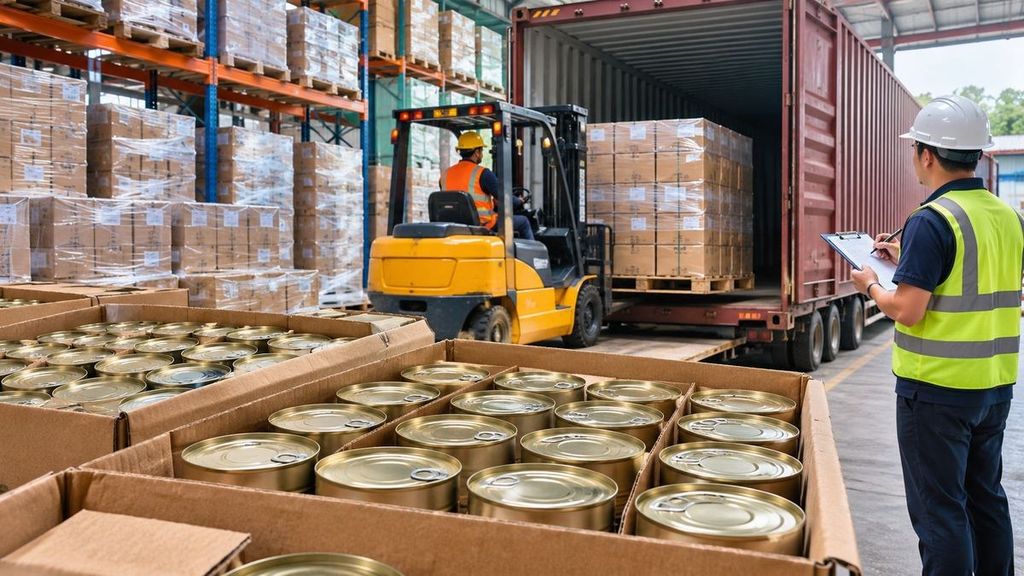
Finding a suitable canned-meat supplier means comparing the exact SKU rather than relying on a broad category label. Freshdi helps buyers discover product listings and supplier profiles across markets, review the commercial details that are visible, and identify the missing information to request before negotiation. Start with the supplier directory and compare candidates against your own product and destination checklist.
If your requirement is already defined, a structured buying request can make the specification clearer from the outset. Include species, formulation, can size, carton configuration, target volume, destination, required certificates and preferred Incoterm when you post a buying request.
Conclusion and Practical Next Step
The four listings provide distinct entry points into global canned-meat sourcing, not four interchangeable offers. Match the species and pack format first, then verify process controls, price basis, order quantity, certificate scope and destination eligibility. A supplier should move from discovery to negotiation only when its exact product and export documents match the buyer’s written specification.
Frequently Asked Questions
Are all four suppliers confirmed canned-meat exporters to every destination?
No. The visible Freshdi records show different levels of export-market information, and none establishes universal destination approval. Sindo lists the Middle East, Africa and Southeast Asia; Lawana lists several named markets; BF GLOBAL shows Argentina; and TRADE NEPAL’s product origin and shipment evidence need clarification. Buyers should request recent shipment references and confirm establishment eligibility with the importing authority before placing an order.
Which listing provides the clearest pack and commercial details for canned chicken?
Sindo Industrial’s listing is the most specific of the four for canned chicken luncheon meat. It states 340 g cans, 24 cans per carton, a 1,000-carton minimum order, USD 22 per carton, CFR, and L/C or T/T. The listing also shows HACCP and Halal claims. Buyers still need the full composition, net and drained weights, shelf-life evidence and certificate scope for the exact product and facility.
Can Lawana’s USD 8 price be compared with the other offers?
Not yet. The Lawana canned-lamb record displays USD 8 but does not identify whether the amount is per can, kilogram, carton or another unit. It should not be converted or benchmarked against Sindo’s USD 22 per carton or TRADE NEPAL’s container price. Ask the supplier for a dated quotation that states currency, unit, net weight, packaging configuration, Incoterm and price validity.
What should buyers do about TRADE NEPAL’s conflicting MOQ?
The listing shows two different minimum-order statements: one to five 40-foot containers and 1,000 cartons. These may describe different commercial units or an outdated field, but the reason is not documented. Ask the supplier to issue one written MOQ tied to a specific SKU, can size, cans per carton and container loading plan. Confirm whether the displayed USD 20,000 price corresponds to the same quantity and configuration.
Does a HACCP or Halal claim prove the product is approved for import?
No. A listing-level claim does not establish that a certificate is current, that the named site is covered, or that the destination authority recognizes it for the product concerned. Request the certificate itself, issuing body, scope, site address and validity dates. For animal products, separately verify approved establishments, health certificates, species-specific controls and destination registration requirements.
How can buyers shortlist these suppliers efficiently on Freshdi?
Start with the exact product type and pack format, then compare documented MOQ, price basis, packaging, Incoterm, payment method and loading location. Use the supplier profile to review available business information, but do not treat profile ratings as product-quality certification. Record missing details in a clarification list, request a dated quotation and compare landed costs only after every offer uses a consistent specification.
References
1. FAO, Food Outlook, 18 June 2026 — global meat production forecast; the figure is not a canned-meat market estimate.
2. Freshdi supplier and product records for Lawana and Sons Supplies, BF GLOBAL TRADING, Sindo Industrial Co Ltd and TRADE NEPAL LLC; listing evidence reviewed 4 November 2026.
3. Codex Alimentarius, CXC 23-1979, Code of Hygienic Practice for Low-Acid and Acidified Low-Acid Canned Foods; CXC 1-1969, General Principles of Food Hygiene.