
Introduction
Five rice buying requests posted on Freshdi between October 28 and November 10, 2026, provide a recent snapshot of what five buyers based in Togo have stated. The records include quantities ranging from 100 bags to 12,000 MT, and list destinations in Togo, Austria and Australia. Those destinations are reported as written; a buyer’s country and a request’s destination are separate details and should not be conflated.
This is a defined sample of Freshdi requests, not a measure of rice demand across Togo or the wider market. For exporters, its practical value is in comparing the fields buyers actually supplied, spotting incomplete or conflicting details, and identifying what needs confirmation before preparing a quotation.
Key Takeaways
- The five requests were posted in the 14-day period from October 28 through November 10, 2026, and the Freshdi summary identifies five buyers.
- All five records state a quantity, but the units vary: MT, Tons and Bag. Do not convert or combine them without clarification.
- Four records state trade terms and four state payment terms; one request leaves each of those fields unstated.
- Two requests list destinations outside Togo—Linz, Austria, and Melbourne, Australia—even though all five records identify the buyer country as Togo.
- One request describes organic basmati and non-basmati rice; the other records vary in specificity, and one has conflicting quantity fields that need reconciliation.
1. Rice Market Context: Trade Data and Freshdi Requests
The Freshdi records are individual buying requests, not customs data or a complete view of Togo’s rice market. For separate context, World Bank WITS, reporting UN Comtrade data for HS code 1006 (Rice), lists Togo’s 2024 imports as 490,073,000 kg, valued at US$74.4 million. That is a national annual trade statistic for the stated commodity code and year; it is not directly comparable with the quantities or target-price fields in the five Freshdi requests.
The distinction matters when assessing apparent scale. A platform request records what a buyer submitted, while official trade statistics record reported cross-border trade over a defined period. Neither confirms that a particular Freshdi request will result in a shipment. The sample below should therefore be read as a set of buyer-stated requirements to examine, not as evidence of a market-wide trend.
Looking to Sell Rice?
Connect with verified buyers, receive relevant buying leads, and explore sourcing opportunities from global markets.
2. The Sample: Five Requests Posted in a 14-Day Window
The Freshdi summary for this article states that the selection contains five rice requests from five buyers based in Togo, posted from October 28 to November 10, 2026. The records were selected by score, without additional required fields. As a result, the group includes both detailed and sparse requests. Buyer-country information does not establish that the listed destination is in Togo.
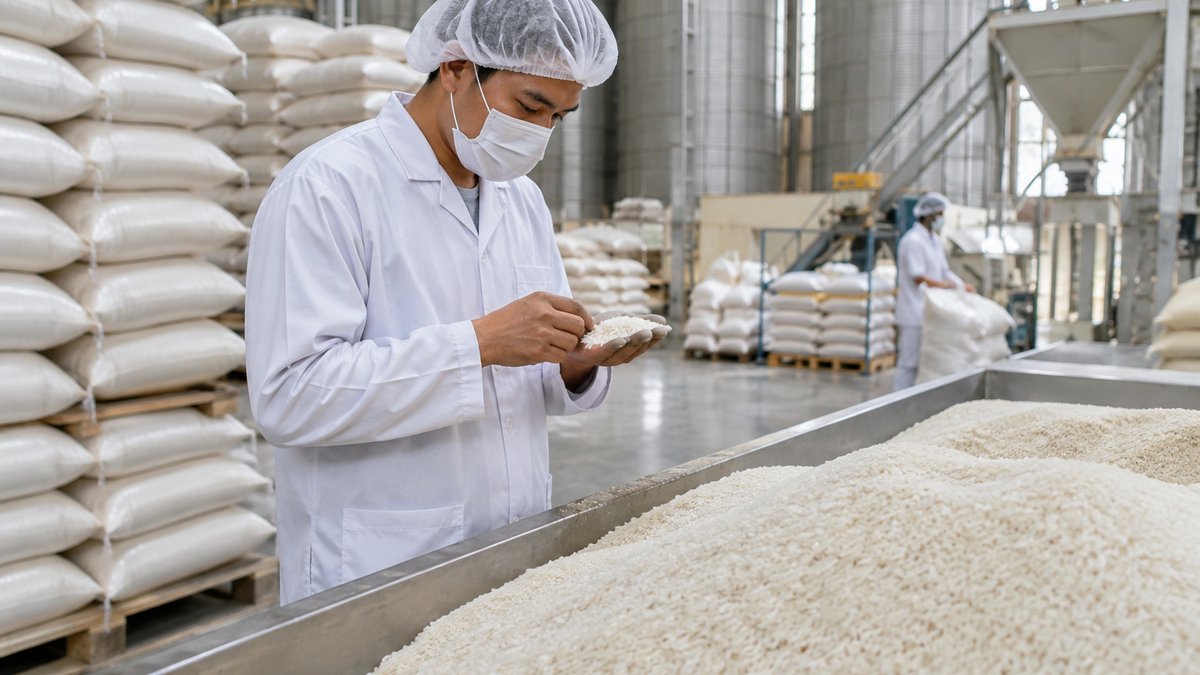
The table represents this selected Freshdi sample only. The destination, quantity, terms and other request details are shown as recorded. Missing fields should be treated as not stated, and unusual or apparently inconsistent entries should be confirmed with the buyer rather than silently corrected.
3. What the Five Requests State—and Leave Open
Every request includes a quantity, but the stated units are not uniform: three use MT, one uses Tons and one uses Bag. These units should remain as written. The records do not provide a common basis for converting or aggregating them, and a container, bag or ton-based quantity may require additional detail before an exporter can price the offer.
Four of the five requests state trade terms, and four state payment terms. FOB appears in three requests; the second request lists FOB, CIF and CFR. T/T is the stated payment term in four requests. The fourth request leaves trade and payment terms unstated. These are counts within this five-request sample, not a finding about buyers generally.
Product detail also varies. One request names basmati and non-basmati rice and states “Organic” in its specifications. Another uses a long product title referring to rice and cereals, production lines, capacity and distribution; its capacity wording is incomplete. Three other titles simply say Rice. Before quoting, suppliers should establish the requested rice type and the precise specifications the buyer will accept.
4. Request-by-Request Analysis
Rice request for Linz, Austria
R1, posted October 30, states Rice, 12,000 MT, USA as origin, sea freight, FOB and T/T. Its destination is listed as Linz, Austria (LNZ), while the buyer country is Togo. The target price is recorded as 920 USD, without a stated price basis in the supplied record. Confirm the intended destination and logistics route, rice type and quality parameters, named point for the trade term, shipment schedule, and what the target price refers to before preparing a firm offer.
Basmati and non-basmati rice for Lomé
R2, posted October 28, asks for “BASMATI AND NON BASMATI RICE,” gives a quantity of 12,000 MT, lists Lomé as destination, and states Organic in the specifications. The record lists FOB, CIF and CFR as trade-term options and T/T as payment. The target-price field contains USD but no amount. The request does not specify how the quantity is divided between rice types or provide detailed quality criteria, packaging or documentation requirements. Confirm whether both types are required, what organic evidence is expected, and which delivery term and named place the buyer wants quoted.
Rice and cereals request with incomplete specifications
R3, posted October 30, lists 12,000 Tons and a destination entered as “togo lome.” The request title includes statements about nine production lines, global distribution over 35 countries and “Production Capacity 1800 Metric Tons Per.” That capacity wording is incomplete as supplied, so its period or basis is not stated. FOB and T/T are listed. The record marks verified_request as false; that field alone should not be used to infer anything about the buyer’s legitimacy or ability to transact. Confirm the product intended, the completed capacity statement, rice specifications, quantity basis and delivery details before quoting.
Rice request for Lomé with conflicting quantity entries
R4, posted November 10, lists Rice, a quantity of 1,000 MT, Egypt as origin, Lomé, Togo as destination, sea freight and a lead time of ≤ 2 weeks. Its specifications also contain “Quantity: 12000 MT,” which conflicts with the 1,000 MT quantity field. The request does not state trade or payment terms, and the target-price field shows USD without an amount. Reconcile the two quantity entries and confirm what the lead time measures, along with the rice type, shipment schedule and commercial terms.
Rice request for Melbourne, Australia
R5, posted November 6, states Rice, 100 Bag, FOB and T/T, with Melbourne, Australia (MEL) listed as destination and Togo as buyer country. The record does not state the origin or further product specifications. The request’s price field contains USD but no amount. Confirm the destination and route, bag weight and packaging details, rice type and quality requirements, origin, named point for the trade term, and price basis. The record marks verified_request as false; treat that as a record field, not a judgment about the buyer.
5. How Suppliers Can Interpret the Differences
The requests do not describe one uniform buying specification. R2 is the only request that explicitly names basmati and non-basmati rice and states an organic feature. R1 and R2 list 12,000 MT, while R3 gives 12,000 Tons and R5 gives 100 Bag; R4 contains a conflict between 1,000 MT and 12,000 MT. These differences mean suppliers should compare each request against their actual product, available volume and ability to meet the stated destination—not assume that similar quantity figures describe equivalent orders.
The destination entries also need careful reading. R2 and R4 list Lomé, while R3 says “togo lome.” R1 lists Linz, Austria, and R5 lists Melbourne, Australia. All five identify the buyer country as Togo, but that does not make all listed destinations Togolese. Ask the buyer to confirm the intended receiving location and route if any detail is unclear.
Suppliers comparing these product and destination requirements can review related rice requests and supplier listings on Freshdi.
View Latest Grains Buying Requests →View Potential Grains Suppliers →
6. Practical Checks Before Sending a Rice Quotation
A quotation should distinguish what the request states from what the supplier is offering and what remains to be agreed. For these records, useful checks include:
- Product identity: Confirm the rice type, variety, processing or grade requested; do not treat a broad “Rice” label as a full specification.
- Quality and claims: Ask for measurable quality parameters and the buyer’s acceptance criteria. For an organic request, confirm the exact documentation and scope the buyer expects rather than assuming the word alone defines them.
- Quantity basis: Repeat the amount and unit exactly, and resolve conflicting entries such as R4’s 1,000 MT and 12,000 MT. For bags, confirm net weight per bag before converting to a mass quantity.
- Destination and routing: Confirm the country, named destination and route, especially where the buyer country and destination country differ.
- Delivery and payment: Confirm the selected trade term, its named place, shipment timing and payment arrangement. Where several terms are listed, do not assume which one the buyer prefers.
- Price basis: The records show target-price fields of “920 USD” or “USD” without a clearly stated amount or unit basis. Confirm the currency, unit, delivery basis and whether the figure is a target before using it in pricing.
Buying consideration: Before issuing a firm quotation, document the agreed product specification, quantity and unit, destination, delivery term, shipment schedule, packaging, price basis and payment conditions. Where a request contains missing or conflicting information, ask for clarification rather than making assumptions.
7. Commercial Context: Keep Guidance Separate from RFQ Facts
The five records state selected commercial fields, but they do not establish every condition needed for a sale. For example, a listed trade term is not a substitute for confirming the named place and shipment details; a stated payment method is not a complete payment schedule. These are general quotation checks, not additional requirements that the buyers have already confirmed.
Rice paddy production figures are also different from import figures for HS 1006. FAO’s Togo country brief reports 183,000 tonnes of rice (paddy) production in 2023 and forecasts 185,000 tonnes for 2024. Those figures describe domestic paddy production, not milled-rice import volumes, and should not be compared as if they shared the same product basis. For an export quotation, use the buyer’s confirmed product specification and the applicable destination requirements rather than drawing a compliance conclusion from the sample.
8. Finding and Reviewing Rice Buying Requests on Freshdi
Freshdi provides a place for suppliers to review buying requests and the details buyers have posted. The five requests discussed here are a dated sample from the platform; their fields and status can change. Open the relevant listing before deciding whether to respond, check the current request information and use only the quotation workflow and access available to your account. A listing or platform profile signal is not a guarantee of a reply, purchase or transaction.
To explore rice requests, suppliers can browse rice buying requests on Freshdi.
9. Conclusion: Confirm the Details Before Quoting
This five-request sample shows varied rice descriptions, quantity units and destinations, with several fields requiring clarification. Most notably, the listed destinations include both Lomé and locations outside Togo, and one request contains conflicting quantity entries. Suppliers should treat each record individually, preserve what is stated, and confirm missing or inconsistent details before committing to product, price or shipment terms. Freshdi is the place to review relevant buying requests and their current posted details.
Frequently Asked Questions
How many rice buying requests are included in this Togo sample?
The Freshdi summary reports five requests from five buyers, posted from October 28 through November 10, 2026. This is a 14-day platform sample, not a count of all rice buyers or requests in Togo.
Are all five rice requests destined for Togo?
No. The buyer country is listed as Togo for all five, but the destinations are recorded separately. Two entries name locations outside Togo: Linz, Austria, and Melbourne, Australia. Confirm any unclear destination directly against the request.
Can I compare or total the quantities in these requests?
Not reliably as written. The requests use MT, Tons and Bag, and one request has conflicting quantity fields. Keep the original amounts and units intact until the buyer confirms the quantity basis and any required conversion.
Which request states an organic requirement?
The request for basmati and non-basmati rice lists “Organic” in its specifications. It does not provide detailed criteria or documentation requirements in the supplied record, so exporters should confirm what evidence the buyer expects.
What should a supplier clarify before quoting these rice requests?
Confirm rice type and quality parameters, quantity and unit, packaging, destination and route, selected trade term and named place, shipment schedule, price basis and payment details. Resolve any conflicting or incomplete entries first.
Does a Freshdi request or verification field guarantee a transaction?
No. A request records information submitted on the platform; it does not guarantee an order, payment or contract performance. Review the current listing and carry out appropriate commercial checks before committing.
References
1. World Bank, World Integrated Trade Solution (WITS), using UN Comtrade data – Togo Rice Imports by Country, 2024, 2024 trade data.
2. Food and Agriculture Organization of the United Nations (FAO), GIEWS – Togo Country Brief, cereal production table, 2024.
3. United Nations Statistics Division – UN Comtrade Trade Statistics: Data Scope and Reporting, Accessed November 10, 2026.