


Share on
10-25 Tons
Minimum order quantity: 1 Tons
Open to price negotiation
Supplier Country: Poland
Export market: Albania, Armenia, Austria, Australia, Antigua and Barbuda
Key Takeaways


3.8
 Poland
Distributor/Wholesaler
Ul. Strzelców Bytomskich 4, 44-109 Gliwice
Inquiry Open Rate
45%
Total inquiries received
810
Inquiries Read
366
Year Established
2018
Based on the information provided by the supplier.
 Albania
 Armenia
 Austria
 Australia
 Antigua and Barbuda
Western Europe
39%
Eastern Europe
31%
Central America & Caribbean
13%
East Asia
9%
Middle East
7%
Verification information
Verify business documents
By Freshdi Verification System
Verify work email
By Freshdi.com
Verify account email
By Freshdi.com
Verify phone number
External Validation
Company Address
Supplier confirmed with Freshdi
Business Registered ID
Supplier confirmed with Freshdi
No reviews yet
Be the first to share your experience - your feedback helps other buyers trade with confidence.
Thyme oil is a potent essential oil derived from the leaves and flowers of Thymus vulgaris, a member of the mint family and a widely recognized herb in culinary and medicinal traditions. Renowned for its aromatic and therapeutic properties, thyme oil has been used for centuries as a natural remedy for a range of ailments and continues to play a role in modern wellness and self-care practices.
Thyme oil offers a myriad of benefits, thanks to its rich composition of bioactive compounds, such as thymol, carvacrol, and linalool, which contribute to its antifungal, antibacterial, anti-inflammatory, and antioxidant properties. In this guide, we’ll explore thyme oil’s history, production process, health benefits, practical applications in various domains, and safety considerations for its use.
2. Historical Background of Thyme Oil
The use of thyme dates back to ancient times, where it held a significant place in various cultures. The ancient Egyptians used thyme as part of their embalming process, while the Greeks employed it for its aromatic properties, burning it as incense in temples and adding it to baths. Romans used thyme as a culinary herb and a natural preservative, recognizing its ability to ward off bacteria and spoilage.
In medieval Europe, thyme was placed beneath pillows to ward off nightmares and was carried by knights as a symbol of courage. The oil extracted from thyme became popular as a remedy for respiratory conditions, digestive issues, and infections. Today, thyme oil remains a popular choice in aromatherapy, natural medicine, and culinary practices worldwide.
3. Production of Thyme Oil
Thyme oil is extracted from the leaves, flowers, and stems of the Thymus vulgaris plant through a process called steam distillation. This method preserves the integrity and potency of the oil's volatile compounds.
3.1 Harvesting and Preparation
The process begins with harvesting thyme at the peak of its essential oil concentration, usually when the flowers are in bloom. The freshly harvested plant material is then carefully dried or used fresh for distillation.
3.2 Steam Distillation Process
During steam distillation, the plant material is placed in a chamber where steam is introduced, causing the essential oils to vaporize. The steam and vaporized oils are then condensed back into liquid form and collected in a separator. The lighter essential oil rises to the top and is collected as thyme essential oil, while the remaining water (known as thyme hydrosol) may be used for other purposes.
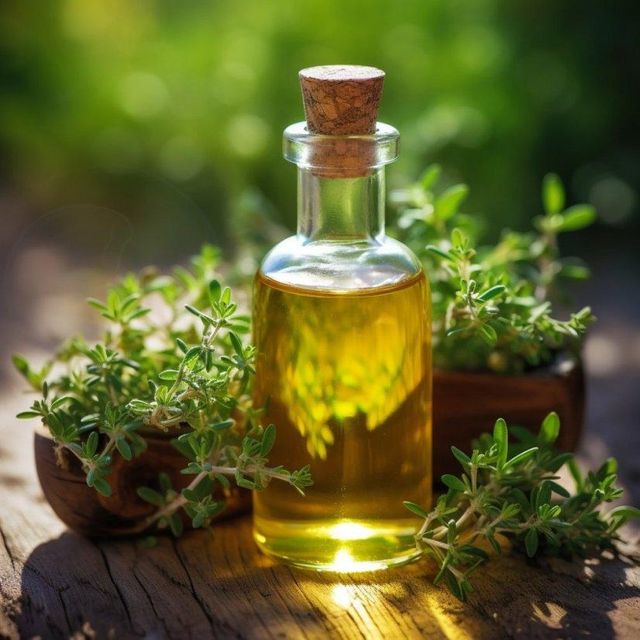
The resulting thyme oil is a yellow to reddish-brown liquid with a strong, herbaceous, and slightly spicy aroma. It contains a range of compounds, such as:
4. Chemical Composition of Thyme Oil
Thyme oil is a complex blend of over 50 active compounds, contributing to its potent therapeutic effects. The exact composition can vary based on factors such as growing conditions, harvest time, and distillation process. Here are some of the most important components:
5. Health Benefits of Thyme Oil
Thyme oil offers numerous health benefits, thanks to its rich blend of active compounds. Here’s an in-depth look at some of its most prominent benefits:
5.1 Antimicrobial and Antifungal Properties
The high thymol content in thyme oil makes it an effective natural antimicrobial and antifungal agent. Studies have shown that thyme oil can inhibit the growth of bacteria like Escherichia coli (E. coli), Staphylococcus aureus (the bacteria responsible for staph infections), and fungi like Candida albicans. This makes thyme oil an excellent choice for fighting infections, disinfecting surfaces, and preserving food.
5.2 Immune System Support
Thyme oil’s antimicrobial and antioxidant properties contribute to immune system support by protecting the body from harmful pathogens and reducing oxidative stress. Regular use of thyme oil during cold and flu season may help boost immunity and reduce the severity of illnesses.
5.3 Respiratory Health
Thyme oil has a long history of use in treating respiratory issues, such as coughs, bronchitis, asthma, and colds. Its expectorant properties help loosen mucus and clear airways, while its antimicrobial effects fight infections that may be causing respiratory distress. Inhaling thyme oil vapor, using it in steam inhalation, or adding a few drops to a diffuser can help relieve respiratory symptoms.
5.4 Anti-Inflammatory and Antioxidant Effects
The antioxidants in thyme oil, including thymol and carvacrol, reduce inflammation and combat oxidative stress. This helps protect cells from damage and lowers the risk of chronic diseases like cardiovascular disease, diabetes, and certain cancers. Applying diluted thyme oil topically may also alleviate inflammation and pain associated with conditions like arthritis.
5.5 Skin Health
Thyme oil’s antibacterial and antifungal properties make it effective for treating skin conditions like acne, eczema, and fungal infections (e.g., athlete’s foot). When diluted with a carrier oil, thyme oil can be applied to the skin to reduce redness, fight infections, and promote healing. Its antioxidant content may also help slow the aging process by reducing the appearance of wrinkles and fine lines.
5.6 Digestive Health
Thyme oil has carminative properties that can alleviate digestive discomfort, such as bloating, gas, and stomach cramps. It helps stimulate the production of digestive enzymes, which can improve nutrient absorption and overall digestion. Thyme oil is sometimes used in herbal remedies for intestinal infections and gut health.
5.7 Oral Health
Due to its antibacterial properties, thyme oil is often used in natural mouthwashes and toothpaste to promote oral hygiene. It can help prevent bad breath, reduce plaque buildup, and fight gum infections. Thymol, a major component of thyme oil, is used in many commercial mouthwash products for its effectiveness against oral bacteria.
5.8 Mood and Stress Relief
Thyme oil’s aroma has calming and mood-enhancing effects, making it a popular choice in aromatherapy. Inhaling thyme oil or diffusing it in a room can reduce stress, anxiety, and symptoms of depression. Linalool, a compound in thyme oil, has been shown to reduce stress levels and promote relaxation.
5.9 Insect Repellent
Thyme oil’s strong scent acts as a natural insect repellent, keeping mosquitoes, flies, and other pests at bay. It can be used in homemade insect repellent sprays or added to candles and diffusers to create a bug-free environment.
6. Practical Uses of Thyme Oil
Thyme oil’s versatility extends beyond health and wellness. Here are some practical ways to use thyme oil in everyday life:
6.1 Aromatherapy
Thyme oil is commonly used in aromatherapy to improve mood, reduce stress, and support respiratory health. Add a few drops to a diffuser or mix it with other essential oils like lavender or eucalyptus for a synergistic effect.
6.2 Skincare Products
Thyme oil is added to lotions, creams, and serums for its antimicrobial and anti-inflammatory properties. It can help combat acne, reduce redness, and promote clear skin. Always dilute thyme oil with a carrier oil (e.g., coconut or jojoba oil) before applying it to the skin.
6.3 Massage Oil
When diluted, thyme oil can be used as a massage oil to relieve muscle pain, joint stiffness, and inflammation. It works well with other essential oils, such as peppermint or ginger, for a warming, soothing effect.
6.4 Household Cleaning
Thyme oil’s antimicrobial properties make it an effective natural cleaner. It can be added to homemade cleaning solutions to disinfect surfaces, eliminate odors, and protect against harmful bacteria. Combine thyme oil with vinegar, baking soda, or other essential oils like lemon and tea tree oil for a powerful cleaning solution.
6.5 Haircare
Thyme oil may be added to shampoos, conditioners, or scalp treatments to promote healthy hair growth and reduce dandruff. Its antifungal properties can help combat scalp infections, while its stimulating effects improve blood circulation to the hair follicles.
6.6 Food Preservation
Thyme oil has been used historically as a food preservative due to its antimicrobial activity. It can inhibit the growth of spoilage-causing bacteria and extend the shelf life of perishable foods.
6.7 Insect Repellent
To keep insects at bay, thyme oil can be added to homemade bug sprays or used in essential oil blends for candles and diffusers. It is effective against mosquitoes, ticks, and other common pests.
7. Safety Considerations for Thyme Oil
While thyme oil offers numerous benefits, it is a potent essential oil that should be used with caution. Here are some safety considerations:
7.1 Dilution
Always dilute thyme oil with a carrier oil before applying it to the skin, as it can cause irritation or sensitization in its undiluted form. A typical dilution ratio is 1-2 drops of thyme oil per teaspoon of carrier oil.
7.2 Allergies and Sensitivities
Conduct a patch test before using thyme oil on a larger area of the skin. If you experience redness, itching, or irritation, discontinue use. Individuals with allergies to plants in the mint family should exercise caution.
7.3 Internal Use
The internal use of thyme oil should be approached carefully and under the guidance of a healthcare professional. Consuming large amounts can lead to side effects, such as stomach upset or toxicity.
7.4 Pregnancy and Breastfeeding
Pregnant and breastfeeding women should consult a healthcare provider before using thyme oil, as its potent properties may not be suitable during these periods.
7.5 Interaction with Medications
Thyme oil may interact with certain medications, such as blood thinners or medications for high blood pressure. Speak with a healthcare professional if you are taking any medications or have pre-existing conditions before using thyme oil.
8. How to Choose and Store Thyme Oil
To get the most out of thyme oil, it’s important to choose high-quality oil and store it correctly:
8.1 Quality Indicators
8.2 Storage Tips
9. Conclusion
Thyme oil is a powerful and versatile essential oil with a rich history and a wide range of benefits. From supporting respiratory health and boosting immunity to enhancing skincare and serving as a natural disinfectant, thyme oil has earned its place as a staple in holistic health and wellness practices. Whether used in aromatherapy, skincare, cleaning, or cooking, thyme oil continues to offer solutions for modern living, just as it has for centuries. By choosing high-quality thyme oil and using it safely, you can harness the full potential of this aromatic powerhouse
Looking for a natural solution to support your respiratory health? Our high-quality thyme oil is the perfect choice! Made from premium thyme plants, our thyme oil is carefully extracted to preserve its potent properties and ensure maximum effectiveness.
Thyme oil is known for its ability to promote clear breathing and support overall respiratory function. Whether you're dealing with occasional congestion or looking to maintain optimal lung health, thyme oil is a versatile and potent solution.
At our online store, you can purchase high-quality thyme oil at a competitive price. We are committed to providing our customers with the best products to support their health and wellness needs. Our thyme oil is sourced from reputable suppliers and undergoes rigorous testing to ensure purity and quality.
Don't wait any longer to experience the benefits of thyme oil for yourself. Order now and take the first step towards improving your respiratory health naturally. With easy ordering and fast shipping, getting your hands on high-quality thyme oil has never been easier.
Looking for more natural wellness solutions? Check out our Thyme-Oil products for additional options to support your health and well-being.
 Experience the power of thyme oil and take control of your respiratory health today!
You are viewing details for Buy thyme oil at a competitive price online/ Purchase thyme oil to support respiratory health/Where to purchase high-quality thyme oil affordably/Order thyme oil with ease through reputable stores. The information provided here is either posted directly by the supplier, who is responsible for its accuracy, or collected by Freshdi AI from publicly available sources. Freshdi strives to make product information as useful and reliable as possible, but we do not guarantee complete accuracy. If you notice any incorrect or misleading details, please use the Report Product option so our team can review and address it quickly.

3.8
Sylwia Anna (Sale/ Marketing/ Sourcing Manager)
Active
Year Established: 2018
Business type
Distributor/Wholesaler
Main Export Markets