Share on
7 views
Price valid until 08 Sep 2025
20000-100000 Kilogram
Minimum order quantity: 1 Kilogram
Open to price negotiation
Supplier Country: South Africa
Export market: Bahrain, South Africa, Barbados, Bahamas, Australia
Key Takeaways
Freshdi AI is analyzing this product...

5.0
 South Africa
Agent/Representative, Exporter/Wholesaler, Food manufacturing, Service Provider
1552 HEIDELBERG RD DALPARK
Avg Response Time
≤ 7 days
Response Rate
1%
Inquiry Open Rate
20%
Total inquiries received
1577
Based on the information provided by the supplier.
 Bahrain
South Africa
 Barbados
 Bahamas
 Australia
Central America & Caribbean
29%
Southern Africa
29%
East Africa
14%
Middle East
14%
Oceania
14%
Verification information
Verify business documents
By Freshdi Verification System
Verify work email
By Freshdi.com
Verify phone number
Buyer Verification Team
Verify account email
By Freshdi.com
External Validation
Company website
Supplier confirmed with Freshdi
Company Address
Supplier confirmed with Freshdi
Business Registered ID
Supplier confirmed with Freshdi
No reviews yet
Be the first to share your experience - your feedback helps other buyers trade with confidence.
Hydrochloric Acid – Identification of Product
Chemical Code: CHE-H
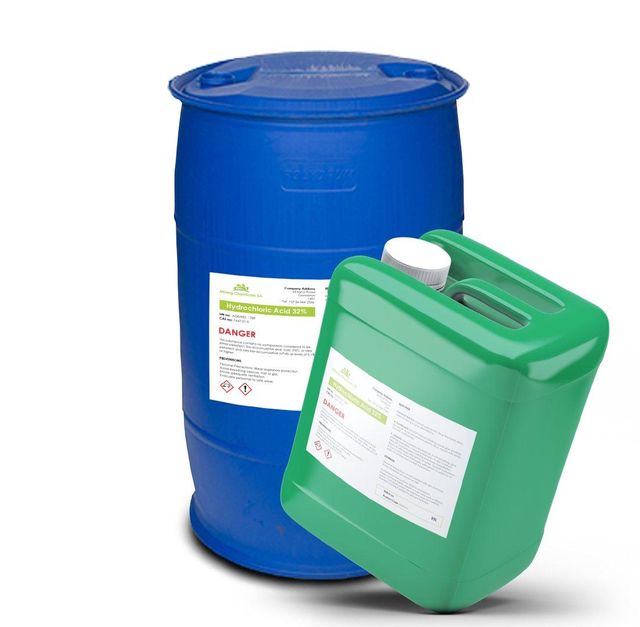
Chemical Name: Hydrochloric Acid 32%
Chemical Grade: TECHNICAL
Chemical Formula: HCl
Chemical Weight: 36,46 g/mol
CAS No: 7647-01-0
Chemical Synonyms: Chlorohydric acid,
Muriatic acid.
Hazards Identification
REACH No: 01-2119484862-27-XXXX
Signal Word: Danger
Supplemental Hazard Information:
Additional Hazard Information: This substance contains no components considered to be either persistent, bio-accumulative and toxic (PBT), or very persistent and very bio-accumulative (vPvB) at levels of 0.1% or higher.
Hydrochloric Acid – Hazards statements
H290 – May be corrosive to metals.
H314 – Causes severe skin burns and eye damage.
H335 – May cause respiratory irritation.
Precautionary statements
P261 – Avoid breathing vapours.
P280 – Wear protective gloves/ protective clothing/ eye protection/ face protection.
P303 + P361 + P353 – IF ON SKIN (or hair): Take off immediately all contaminated clothing. Rinse skin with water. P305 + P351 + P338 – IF IN EYES: Rinse cautiously with water for several minutes. Remove contact lenses, if present and easy to do. Continue rinsing.
P310 – Immediately call a POISON CENTER or doctor/ physician.
Composition of Chemical
Chemical Formula: HCl
EC No 1272/2008: 01-2119484862-27-XXXX
First Aid Measures
General Advice: Consult a physician. Show this safety data sheet to the doctor in attendance.
If: Inhaled: Move person into fresh air. If not breathing, give artificial respiration. Consult a physician. If: Skin Contact: Take off contaminated clothing and shoes immediately. Wash off with soap and plenty of water. Consult a physician. If: Eye Contac: Rinse thoroughly with plenty of water for at least 15 minutes and consult a physician
If: Swallowed: Do NOT induce vomiting. Never give anything by mouth to an unconscious person. Rinse mouth with water. Consult a physician.
Important Symptoms: The most important known symptoms and effects are described in the labeling section Immediate Medical Attention: No Data Available
Firefighting Measures
Extinguishing Media: Use Water spray, Alcohol-resistant foam, Dry chemical or Carbon Dioxide.
Hazards Arising: Hydrogen Chloride Gas
Advice for Firefighters: Wear self contained breathing apparatus for fire fighting if necessary.
Info for Firefighting: No Data Available
Accidental Release Measures
Personal Precautions: Wear respiratory protection.
Avoid breathing vapours, mist or gas.
Ensure adequate ventilation.
Evacuate personnel to safe areas.
Enviromental Precautions: Do not let product enter drains
Method for Containment: Soak up with inert absorbent material and dispose of as hazardous waste. Keep in suitable, closed containers for disposal.
Hydrochloric Acid – Handling and Storage
Personal Precautions: Avoid contact with skin and eyes.
Avoid inhalation of vapour or mist.
Enviromental Precautions: Store in cool place.
Keep container tightly closed in a dry and well-ventilated place.
Containers which are opened must be carefully resealed and kept upright to prevent leakage.
Hydrochloric Acid – Exposure Controls | Personal Protection
Derived No Effect Level (DNEL)
Workers | Application Area | Exposure Routes | Health Effect | Value
No Data Available
Consumers | Application Area | Exposure Routes | Health Effect | Value
No Data Available
Predicted No Effect Concentration (PNEC)
No Data Available
Engineering Controls: Handle in accordance with good industrial hygiene and safety practice. Wash hands before breaks and at the end of workday.
Eye/Face Protection: Tightly fitting safety goggles. Faceshield (8-inch minimum). Use equipment for eye protection tested and approved under appropriate government standards such as NIOSH (US) or EN 166(EU).
Skin Protection: Handle with gloves. Gloves must be inspected prior to use. Use proper glove removal technique (without touching glove’s outer surface) to avoid skin contact with this product. Dispose of contaminated gloves after use in accordance with applicable laws and good laboratory practices. Wash and dry hands.
The selected protective gloves have to satisfy the specifications of EU Directive 89/686/EEC and the standard EN 374 derived from it.
Full contact –
Material: Nitrile rubber. Minimum layer thickness: 0,4 mm
Break through time: 480 min. Material tested: Camatril®
Splash contact –
Material: Nitrile rubber. Minimum layer thickness: 0,11 mm
Break through time: 120 min. Material tested: Dermatril®
Data source: KCL GmbH, D-36124. Test method: EN374
If used in solution, or mixed with other substances, and under conditions which differ from EN 374, contact the supplier of the CE approved gloves. This recommendation is advisory only and must be evaluated by an industrial hygienist and safety officer familiar with the specific situation of anticipated use by our customers. It should not be construed as offering an approval for any specific use scenario.
Body Protection: Complete suit protecting against chemicals. The type of protective equipment must be selected according to the concentration and amount of the dangerous substance at the specific workplace.
Respiratory Protection: Where risk assessment shows air-purifying respirators are appropriate use a full-face respirator with multi purpose combination type OV/AG (US) or type ABEK (EU EN 14387) respirator cartridges as a backup to engineering controls. If the respirator is the sole means of protection, use a full-face supplied air respirator. Use respirators and components tested and approved under appropriate government standards such as NIOSH (US) or CEN (EU).
Hydrochloric Acid – Physical and Chemical Properties
Appearance: Clear to slightly Yellowish liquid
Odour: No Data Available
Odour Threshold: No Data Available
pH: No Data Available
Melting Point: No Data Available
Boiling Point: 100 °C
Flash Point: No Data Available
Evaporation: No Data Available
Flammability: No Data Available
Upper/Lower Flammability or Explosive Limits: No Data Available
Vapour pressure: No Data Available
Vapour density: No Data Available
Relative density: 1,1605 g/cm3
Water solubility: Miscible
Partition Coefficien: No Data Available
Auto-ignition Temperature: No Data Available
Decomposition Temperature: No Data Available
Viscosity: No Data Available
Explosive properties: No Data Available
Oxidizing properties: No Data Available
Other Safety Info: No Data Available
Hydrochloric Acid – Stability and Reactivity
Reactivity: No Data Available
Chemical Stability: Stable under recommended storage conditions.
Possibility of hazardous reactions: No Data Available
Conditions to Avoid: No Data Available
Incompatible Materials: Bases, Amines, Alkali Metals, Metals, Permanganates (e.g. Potassium Permanganate), Fluorine, Metal Acetylides, Hexalithium Disilicide
Hazardous Decomposition Products: Hazardous decomposition products formed under fire conditions – Hydrogen Chloride gas
Toxicological Information
Acute Toxicity: Inhalation: Cough, Difficulty in breathing
LCLo Inhalation – Human – 30 min – 1.970 mg/m3 (Hydrochloric Acid)
Remarks: (RTECS)
Inhalation: absorption
Skin Corrosion/Irritation: Reconstructed human epidermis (RhE) –
Result: Corrosive
(OECD Test Guideline 431)
Serious Eye damage | Eye Irritation: Bovine cornea –
Result: Corrosive (OECD Test Guideline 437)
Cell Mutagenicity: Chromosome aberration test in vitro :
Chinese hamster ovary cells –
Result: Conflicting results have been seen in different studies.
Carcinogenicity: Carcinogenicity – Did not show carcinogenic effects in animal experiments. (IUCLID).
IARC: No ingredient of this product present at levels greater than or equal to 0.1% is identified as probable, possible or confirmed human carcinogen by IARC.
Reproductive toxicity: No Data Available
Specific Target Organ Toxicity – Single Exposure: Acute inhalation toxicity – Mucosal irritations, Cough, Shortness of breath. Inhalation may lead to the formation of oedemas in the respiratory tract.
Possible damages: damage of respiratory tract, tissue damage.
Specific Target Organ Toxicity – Repeated Exposure: No Data Available
Aspiration Hazard: No Data Available
Ecological Information
Ecological Toxicity: Toxicity to fish:
LC50 – Gambusia affinis (Mosquito fish) – 282 mg/l – 96 h
Ecological Persistence and degradability: No Data Available
Bioaccumulative Potential: No Data Available
Mobility in Soil: No Data Available
Results of PBT and vPvB Assessment: This substance contains no components considered to be either persistent, bio-accumulative and toxic (PBT), or very persistent and very bio-accumulative (vPvB) at levels of 0.1% or higher.
Other Adverse Effect: May be harmful to aquatic organisms due to the shift of the pH.
Do not empty into drains.
Harmful effect due to pH shift.
Discharge into the environment must be avoided.
Disposal Considerations
Waste Treatment Methods: Product –
Offer surplus and non-recyclable solutions to a licensed disposal company. Waste material must be disposed of in accordance with the Directive on waste 2008/98/EC as well as other national and local regulations. Leave chemicals in original containers. No mixing with other waste. Handle uncleaned containers like the product itself.
Contaminated packaging – Dispose of as unused product.
Transport Information
UN Number: ADR/RID: 1789
IMDG: 1789
IATA: 1789
UN Shipping Hazard: ADR/RID: HYDROCHLORIC ACID
IMDG: HYDROCHLORIC ACID
IATA: Hydrochloric Acid
Transport Hazard Class: ADR/RID: 8
IMDG: 8
I
You are viewing details for HYDROCHLORIC ACID 32-33%. The information provided here is either posted directly by the supplier, who is responsible for its accuracy, or collected by Freshdi AI from publicly available sources. Freshdi strives to make product information as useful and reliable as possible, but we do not guarantee complete accuracy. If you notice any incorrect or misleading details, please use the Report Product option so our team can review and address it quickly.
$0.3
/ Kilogram
Min. order: 20000 Kilogram

David (Sale/ Marketing/ Sourcing Manager)
Active
Response Rate: 1%
Avg Response Time: ≤ 7 days
Business type
Agent/Representative, Exporter/Wholesaler, Food manufacturing, Service Provider
Main Export Markets