Share on
3 Inquiries
Price valid until 24 Jul 2026
Minimum order quantity: 50,000 Tons
Open to price negotiation
Supplier Country: United States
Export market: Bouvet Island, Brazil, British Indian Ocean Territory, Brunei Darussalam, Bulgaria
Key Takeaways
Freshdi AI is analyzing this product...
3.6
 United States
Distribution / Wholesale, Exporter/Wholesaler
United States
Inquiry Open Rate
13%
Total inquiries received
38
Inquiries Read
5
Based on the information provided by the supplier.
 Bouvet Island
 Brazil
 British Indian Ocean Territory
 Brunei Darussalam
 Bulgaria
Central America & Caribbean
27%
Western Europe
22%
Oceania
22%
Eastern Europe
16%
East Africa
13%
Verification information
Verify work email
By Freshdi.com
Verify phone number
Buyer Verification Team
Verify account email
By Freshdi.com
Verify business documents
External Validation
Company website
Supplier confirmed with Freshdi
No reviews yet
Be the first to share your experience - your feedback helps other buyers trade with confidence.
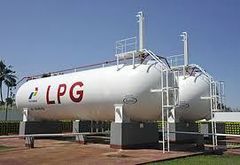
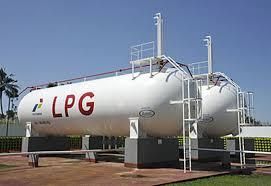
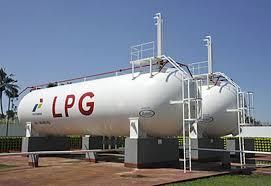
Liquefied petroleum gas or liquid petroleum gas (LPG or LP gas), also referred to as simply propane or butane, are flammable mixtures of hydrocarbon gases used as fuel in heating appliances, cooking equipment, and vehicles.
It is widely used alternative fuel. It has substantial reserves due to its dual origins from natural gas processing and crude oil refining. Liquefied Petrol Gas (LPG) powered passenger cars have about 10% lower tailpipe CO2 emission than comparable gasoline powered cars. When compared to a diesel car, there is no significant CO2 emission reduction per km driven; however, LPG powered vehicles do have substantially lower NOx emissions than diesel powered vehicles.
It is an inevitable by-product of the crude oil refining process and of natural gas processing. In natural gas processing, the natural gas is cleaned off heavy hydrocarbons such as propane and butane before distribution. About 60% of global LP Gas supply comes from natural gas processing (WLPGA, 2011). In crude oil refining, LPG is a by-product of the refining process. LPG is gaseous at room temperature and changes to a liquid when compressed at moderate pressure or chilled. The chemical composition of LPG can vary, but is usually made up of butane and propane with a 30-99% propane mix.
It is increasingly used as an aerosol propellant and a refrigerant, replacing chlorofluorocarbons in an effort to reduce damage to the ozone layer. When specifically used as a vehicle fuel it is often referred to as autogas.
Varieties of LPG bought and sold include mixes that are mostly propane (C3H8), mostly butane (C4H10) and, most commonly, mixes including both propane and butane. In the northern hemisphere winter, the mixes contain more propane, while in summer, they contain more butane. In the United States, mainly two grades of LPG are sold: commercial propane and HD-5. These specifications are published by the Gas Processors Association (GPA) and the American Society of Testing and Materials (ASTM). Propane/butane blends are also listed in these specifications.
Propylene, butylenes and various other hydrocarbons are usually also present in small concentrations. HD-5 limits the amount of propylene that can be placed in LPG to 5%, and is utilized as an autogas specification. A powerful odorant, ethanethiol, is added so that leaks can be detected easily. The internationally recognized European Standard is EN 589. In the United States, tetrahydrothiophene (thiophane) or amyl mercaptan are also approved odorants,although neither is currently being utilized.
LPG is prepared by refining petroleum or "wet" natural gas, and is almost entirely derived from fossil fuel sources, being manufactured during the refining of petroleum (crude oil), or extracted from petroleum or natural gas streams as they emerge from the ground. It was first produced in 1910 by Dr. Walter Snelling, and the first commercial products appeared in 1912. It currently provides about 3% of all energy consumed, and burns relatively cleanly with no soot and very few sulfur emissions. As it is a gas, it does not pose ground or water pollution hazards, but it can cause air pollution. LPG has a typical specific calorific value of 46.1 MJ/kg compared with 42.5 MJ/kg for fuel oil and 43.5 MJ/kg for premium grade petrol (gasoline). However, its energy density per volume unit of 26 MJ/L is lower than either that of petrol or fuel oil, as its relative density is lower (about 0.5–0.58 kg/L, compared to 0.71–0.77 kg/L for gasoline).
As its boiling point is below room temperature, LPG will evaporate quickly at normal temperatures and pressures and is usually supplied in pressurised steel vessels. They are typically filled to 80–85% of their capacity to allow for thermal expansion of the contained liquid. The ratio between the volumes of the vaporized gas and the liquefied gas varies depending on composition, pressure, and temperature, but is typically around 250:1. The pressure at which LPG becomes liquid, called its vapour pressure, likewise varies depending on composition and temperature; for example, it is approximately 220 kilopascals (32 psi) for pure butane at 20 °C (68 °F), and approximately 2,200 kilopascals (320 psi) for pure propane at 55 °C (131 °F). LPG is heavier than air, unlike natural gas, and thus will flow along floors and tend to settle in low spots, such as basements. There are two main dangers from this. The first is a possible explosion if the mixture of LPG and air is within the explosive limits and there is an ignition source. The second is suffocation due to LPG displacing air, causing a decrease in oxygen concentration.
You are viewing details for Liquefied petroleum gas. The information provided here is either posted directly by the supplier, who is responsible for its accuracy, or collected by Freshdi AI from publicly available sources. Freshdi strives to make product information as useful and reliable as possible, but we do not guarantee complete accuracy. If you notice any incorrect or misleading details, please use the Report Product option so our team can review and address it quickly.
$570
/ Tons
Min. order: Negotiable
United States
3.6
David Driver (Sale/ Marketing/ Sourcing Manager)
Active
Business type
Distribution / Wholesale, Exporter/Wholesaler
Main Export Markets