Share on
Negotiable
Minimum order quantity: 1,000 Bar
Open to price negotiation
Supplier Country: China
Export market: Not specified
Key Takeaways
Freshdi AI is analyzing this product...
3.0
 China
China
Others, Trade
China
Inquiry Open Rate
95%
Total inquiries received
19
Inquiries Read
18
Year Established
2008
Verify phone number
Buyer Verification Team
Verify account email
By Freshdi.com
Verify business documents
Verify work email
No reviews yet
Be the first to share your experience - your feedback helps other buyers trade with confidence.
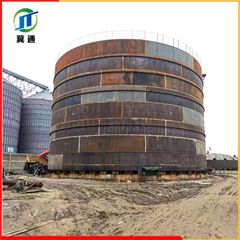
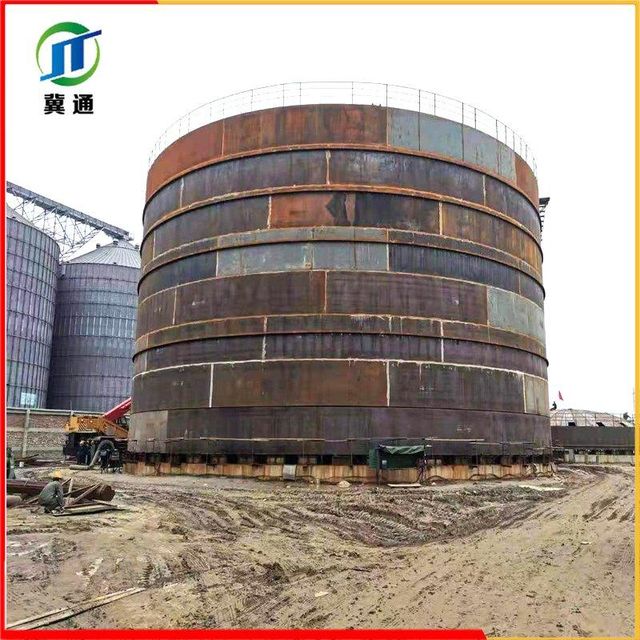
Prefabricated petrochemical storage equipment requires differentiated selection and design based on the physicochemical properties, safety regulations, and engineering standards of the stored media. The following are selection recommendations and technical points for storage tanks used for five types of media: gasoline, diesel, fire water, sulfuric acid, and crude oil:
I. Gasoline and Diesel Storage Tanks
Structural Form: Mostly horizontal or vertical welded steel atmospheric pressure vessels. Gas stations commonly use double-walled underground horizontal steel tanks (SF tanks) to meet leakage prevention and safety requirements.
Material Selection: Above-ground tanks commonly use Q235B carbon steel, with an internal conductive anti-corrosion coating. Underground tanks use Q235-B steel, covered with an epoxy coal tar anti-corrosion layer and polyethylene cold-applied tape, with a thickness ≥5.5mm.
Safety Configuration: Equipped with a mechanical breather valve (positive pressure 2000–3000Pa, negative pressure 200Pa), flame arrester, and static grounding device; the vent pipe is at least 4 meters above ground level to prevent flame flashback.
Volume Standards: Commonly available in 50m³ and 100m³ sizes, conforming to GB/T 32380-2015 requirements for glass fiber reinforced plastic underground storage tanks (applicable to gasoline and diesel).
II. Fire Water Tanks
Applications: Used for fire cooling and foam extinguishing systems in oil depots, refineries, and other similar locations.
Design Parameters: Volume is calculated based on the cooling requirements of the largest burning tank, e.g., a 2000m³ fire water tank for tank area cooling; Design pressure: atmospheric pressure; Operating temperature: room temperature; Can be vertical or horizontal.
Material and Corrosion Protection: The inner wall of the tank is coated with a high-solids epoxy coating with a dry film thickness ≥300μm to prevent corrosion; The outer surface is coated with epoxy zinc-rich primer + epoxy micaceous iron oxide intermediate paint + acrylic polyurethane topcoat, with a total dry film thickness of 230μm.
Example Product: Shengrui 500m³ fire water tank, design pressure 1MPa, suitable for emergency water supply in large tank farms.
III. Sulfuric Acid Storage Tanks
Concentrated Sulfuric Acid (≥80%): Carbon steel tanks (such as Q235B) can be used, as concentrated sulfuric acid passivates the surface of carbon steel at room temperature, forming a protective film with good corrosion resistance.
The wall thickness needs to account for corrosion allowance, typically 6–8 mm, and the tank thickness should be checked regularly (at least once every 2 years).
Dilute Sulfuric Acid (
Volume range: 0.5–2000 m³. Vertical or horizontal tanks can be customized, meeting HG/T20696 design specifications.
IV. Crude Oil Storage Tanks
Type Selection: For single tank capacities ≥ 10000 m³, floating roof tanks (especially internal floating roofs) are recommended to reduce evaporation losses and fire risks. Fixed roof tanks can be used in small mines, but the storage coefficient is lower (take 0.85).
Design Standards: Follow GB 50341-2014 "Design Code for Vertical Cylindrical Welded Steel Oil Tanks";
Typical Parameters: Diameter 30m, Height 15m, Capacity approximately 10000 m³, Material Q235B, Corrosion Allowance 1.5mm.
Insulation and Heating: Tank walls in cold regions require insulation. Heating methods include coil heating, electric heating, or mixed heating oil; Storage days are determined by the transportation method: Pipeline transport ≥ 3 days, Rail/Road transport ≥ 5 days.
V. General Engineering Parameters and Safety Specifications
**Operational Monitoring Parameters:** Real-time monitoring of pressure, temperature, and liquid level; Recording of pump start-up and shutdown times, and operation logs for sprinkler cooling.
**Fire Protection Requirements:** The tank area is equipped with a fire dike, the height and strength of which comply with GB 50351-2014; The fire cooling water pipeline is arranged in a ring, with an operating pressure of 0.8MPa and a fire hydrant spacing of ≤60m.
**Intelligent Management:** Equipped with liquid level monitoring, leak detection, and cathodic protection systems; Monthly inspection of the floating roof seal and static electricity discharge device for internal floating roof tanks.
You are viewing details for Prefabricated Petrochemical Storage Equipment, Including Storage Tanks for Gasoline, Diesel, Fire-fighting Water, Sulfur. The information provided here is either posted directly by the supplier, who is responsible for its accuracy, or collected by Freshdi AI from publicly available sources. Freshdi strives to make product information as useful and reliable as possible, but we do not guarantee complete accuracy. If you notice any incorrect or misleading details, please use the Report Product option so our team can review and address it quickly.
Negotiable
Min. order: Negotiable
Fei (Other)
Active
Year Established: 2008
Business type
Others, Trade