
Introduction
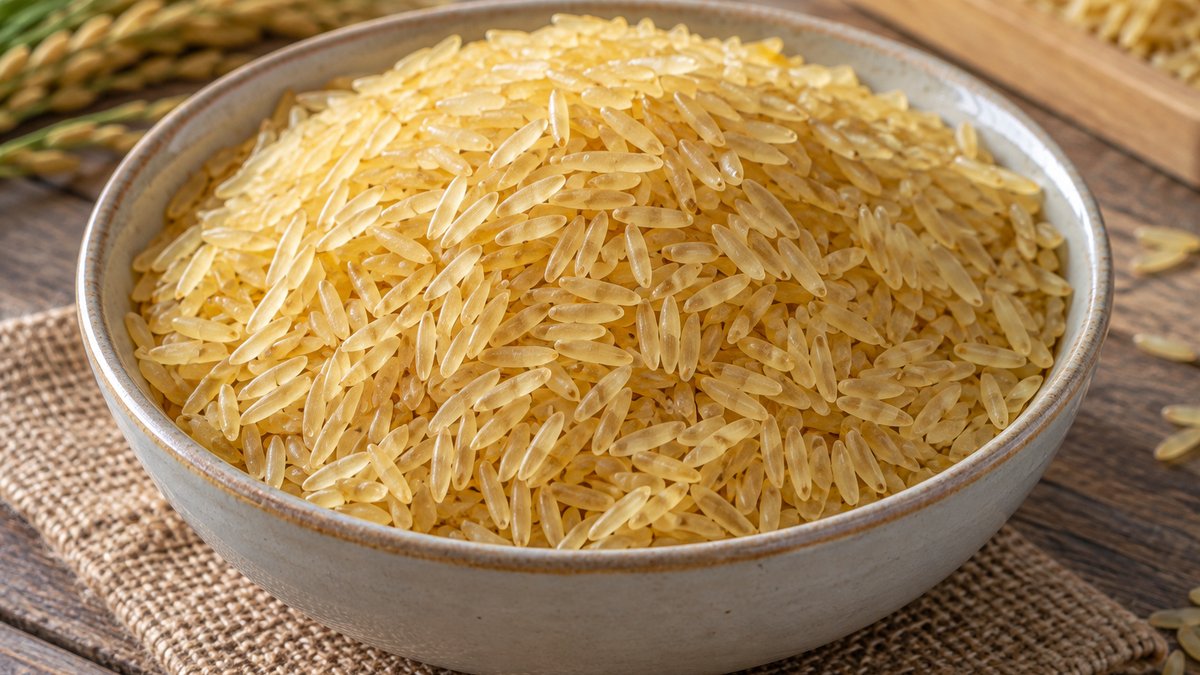
Parboiled rice is soaked, heat-treated and dried before milling or sale as husked rice. Buyers still need to specify the grain, quality limits and shipment terms because processing alone does not define a tradable grade.
Three buyers posted parboiled rice requests on Freshdi on 3 November 2026, within the 14-day period ending 17 November. The requests list quantities from 26 MT to 12,000 MT and destinations in Togo and Ghana. One is marked as a verified request. Suppliers can use the stated requirements to decide what to clarify before preparing an offer.
Key Takeaways
- The three requests come from three buyers: two based in Togo and one based in the United States. Delivery destinations are Lomé, Togo, and Accra, as stated.
- Quantities are 12,000 MT, 26 MT and 12,000 MT. The requests do not say whether either 12,000 MT requirement is a single shipment or a supply programme.
- Two requests include product specifications: one lists kernel and moisture limits, while another states 50 kg PP packing. The third gives no specifications.
- All three list FOB and T/T; one also lists L/C. Each record shows “USD” as the target-price field, without a numeric amount or price basis.
1. Market Overview: Rice Trade and the Parboiled Rice Requirements
1.1 Global rice market context
FAO’s 6 November 2026 Cereal Supply and Demand Brief forecasts global rice production at 553.1 million tonnes on a milled basis for 2026/27, 1.9% below its revised 2025/26 estimate. The brief forecasts international rice trade at 60.5 million tonnes in calendar 2026, 1.9% below the 2025 record, and expects trade to recover by 2.9% in 2027 to 61.6 million tonnes. These are forecasts for rice overall, not parboiled rice alone.
The same FAO brief lowered import expectations for some Western African markets, particularly Senegal. That regional finding does not establish demand in Togo or Ghana, and the three Freshdi requests are not a measure of national or global demand. Suppliers should assess each destination and buyer requirement on its own terms.
For Ghana, a USDA Foreign Agricultural Service report dated 3 April 2026 forecast rice imports near 1 million tonnes for the October 2026 to September 2027 marketing year. That forecast covers rice generally, not parboiled rice, and predates the Freshdi requests. It provides country-level context for the Accra destination, but cannot verify the individual buyer’s demand or explain the Togo requests.
1.2 What parboiled means for a quotation
Codex Standard CXS 198-1995 defines parboiled rice as rice processed by soaking, heat treatment that fully gelatinizes the starch, and drying. The standard covers rice for direct human consumption. It gives a maximum moisture content of 15% by mass and notes that lower limits may be appropriate depending on destination climate, transport duration and storage. Codex is an international standard; suppliers must check the importing country’s applicable rules and the buyer’s contract specification.
The Freshdi requests show why a quotation needs more than the product name. One buyer lists black tips, foreign matter, damaged or discolored kernels and moisture limits; another states a 50 kg PP pack. The third gives no product specification. Buyers and suppliers should agree on a single specification sheet before they compare prices or confirm production.
Looking to Sell Parboiled Rice?
Connect with verified buyers, receive relevant buying leads, and explore sourcing opportunities from global markets.
2. Comparison of Three Parboiled Rice Buying Requests
Three buyers posted these requests on 3 November 2026. Two buyers are based in Togo and one in the United States; the delivery destinations named in the requests are Lomé and Accra. One request is marked as verified. “USD” appears in each target-price field, but no numeric price is stated.
Buyer country and delivery destination are different fields. In particular, the United States-based buyer names Accra as the destination, while the two Togo-based buyers name Lomé, Togo. The request information does not explain the commercial arrangement behind those destinations, so suppliers should quote to the destination stated and confirm the receiving party and delivery details before committing.
The listed quantities span 26 MT to 12,000 MT. Those figures are reported as entered; neither 12,000 MT request specifies shipment size, schedule or whether the quantity is a total programme. Do not treat a large figure as a confirmed single loading.
3. Detailed Analysis of Each Buying Request
3.1 Indian Parboiled Non - Basmati Rice
A buyer based in Togo requests 12,000 MT of Indian Parboiled Non - Basmati Rice for “Lome Togo.” The request is marked as verified and lists FOB and T/T. Its target-price field contains “USD” but no numeric amount or price unit. The request was posted on 3 November 2026.
The request lists maximums for black or black tips, foreign matter, and damaged or discolored kernels. It also lists moisture as “14%% Max,” black tips as “0.25%% Max,” foreign matter as “0.25%% Max,” and damaged or discolored kernels as “1.5%% Max.” The request includes both named defect fields and corresponding percentage fields. Suppliers should preserve the buyer’s wording when seeking clarification rather than assuming how the duplicated labels or percent signs should be interpreted.
Before quoting, confirm whether 12,000 MT is one shipment or a staged requirement, and ask the buyer to confirm the intended test methods, sampling basis and final tolerances. The request does not state packing, shipment schedule, loading port or a numeric target price. FOB needs a named loading port in the commercial offer; T/T also needs agreed payment timing and milestones.
3.2 Parboiled Rice
A buyer based in the United States requests 26 MT of parboiled rice for Accra. The request lists 50 Kg Pp packing, FOB, and payment by L/C or T/T. It is not marked as a verified request. Its target-price field contains “USD,” without an amount, unit or quotation basis.
The 50 kg PP entry gives a pack type and nominal pack weight, but does not state the number of bags, pallet configuration, bag dimensions or required markings. Suppliers should confirm whether the buyer wants 26 MT net product weight and whether bags should be palletized. The request also leaves grain length, broken percentage, moisture, defects, crop year and shipment timing unstated.
Confirm that Accra is the final delivery destination and identify the named FOB loading port before calculating a quotation. The buyer’s United States profile country is not the delivery destination. For L/C, agree the required instrument terms and documents; for T/T, confirm payment timing. The request lists both methods but does not specify which one the buyer prefers.
3.3 parboiled rice
A second buyer based in Togo requests 12,000 MT of parboiled rice for “togo lome.” The request lists FOB and T/T and was posted on 3 November 2026. It is not marked as a verified request. The target-price field shows “USD” only, with no numeric price or basis.
No product specification, packing, shipment schedule or loading port is stated. Although the quantity and destination resemble the first Togo request, this is a separate request from a separate buyer. Suppliers should not assume that the two requests have the same grade, quality limits, delivery programme or purchasing arrangements.
Ask whether 12,000 MT is required as one lot or in multiple shipments, and request a written specification covering the buyer’s preferred non-basmati status, grain type, broken percentage, moisture, foreign matter and defect tolerances. The request does not state those limits. Confirm the port of loading and payment schedule before preparing an FOB offer.
4. What Parboiled Rice Suppliers Should Prepare Before Quoting
Start with a product specification that identifies the offered rice and gives measurable limits. State whether it is milled or husked parboiled rice, the variety or grain type, average length, broken percentage, moisture, foreign matter and defect tolerances. Codex CXS 198-1995 can serve as an international reference for rice quality terms, but it does not replace the buyer’s agreed specification or destination-country rules.
Where a buyer lists quality limits, use the same terms in the response and identify the inspection or test method used for each figure. For the Togo request that gives several limits, confirm the duplicated percentage fields and the exact meaning of “14%% Max” before stating that a lot complies. Do not silently correct a buyer’s entry in a quotation.
Match quantity to actual supply and shipment capacity. The requests list 26 MT and 12,000 MT, but do not define shipment splits or call-off schedules. State the quantity available per shipment, realistic production or loading lead time, and whether the quoted volume can be supplied consistently. Keep any proposed schedule separate from the buyer’s unstated terms.
Describe packing precisely. For the 50 kg PP request, confirm the net weight per bag, bag material and construction, marking requirements, and palletization if required. The other two requests do not state packaging, so ask the buyer before building packaging costs into a price.
Make the price basis readable. Each record displays “USD” without a numerical figure. Provide a numeric quotation only after the product, packing, quantity and shipment basis are agreed. State currency, price per unit, quotation validity, named FOB loading port and shipment window. If the buyer later requests another Incoterm, price it separately on its own named destination and cost basis.
For payment, the requests list T/T, and one also lists L/C. Confirm the chosen method and agreed milestones in writing. A T/T listing does not state whether payment is in advance or against documents; an L/C listing does not give the issuing bank, presentation period or documentary conditions. Resolve those terms before production or shipment.
Check destination documentation and import requirements with the buyer before dispatch. The requests do not list certificates or other export documents. Identify the required documents for the product and shipment, verify the destination rules that apply, and ensure the contract, invoice, packing list and transport documents use consistent product descriptions and quantities.
5. Practical Commercial Checks for These RFQs
For the first Togo request, resolve the specification wording, including the doubled percent signs, before confirming compliance. For the second Togo request, obtain the missing grade, quality, packing and shipment details. Both list 12,000 MT and T/T, but their separate buyer identities mean a supplier should handle them as independent enquiries.
For the 26 MT request to Accra, confirm that 50 kg PP bags meet the buyer’s packaging needs, and clarify the preferred payment method between L/C and T/T. The buyer is based in the United States; the stated destination is Accra. Confirm the delivery party and route rather than inferring them from the buyer’s profile country.
Across all three requests, the target-price field supplies a currency label but no numeric price. Ask for the buyer’s intended budget only if useful to the negotiation, and provide a fully specified quotation of your own. Do not treat the field as a benchmark or as an agreed price.
Before accepting any request, compare the required volume with available stock or production, verify that the loading schedule is feasible, and agree on inspection, payment and shipping documents in the contract. A buyer’s stated quantity or destination is not a confirmed purchase order.
6. How Freshdi Helps Suppliers Find Buyers
Suppliers can browse Rice and Parboiled Rice buying-request categories on Freshdi, then review individual requests for the product, destination and terms each buyer has stated. The three requests discussed here were posted on 3 November 2026; check the live request before relying on its status or details.
Use the request information to screen for product and volume fit. Where a request leaves quality limits, shipment timing or payment details unstated, prepare specific questions before submitting a quotation through the functions available on Freshdi. The one request marked as verified carries that status in the record; the other two are not marked as verified. Neither status guarantees a reply or a transaction.
Suppliers whose product and shipment capacity match these requirements can review current rice buying requests on Freshdi.
View Latest Buying Requests for This Product →
7. Conclusion: Clarify Specification and Shipment Basis Before Quoting
The three requests list two 12,000 MT requirements for Lomé and one 26 MT requirement for Accra. Their details differ: one Togo request gives defect and moisture limits, the Accra request specifies 50 kg PP packing, and the other Togo request provides no product specification. All list FOB and T/T, while the Accra request also lists L/C.
Suppliers should confirm the product specification, quantity schedule, loading port, packaging and payment milestones before sending a firm offer. The listed “USD” target-price fields contain no numeric prices, so they cannot be used to compare offers. Freshdi’s rice buying-request categories provide a place to review relevant requests and their stated requirements.
Suppliers can use Freshdi’s Find Buyers path to review relevant rice buying requests and assess whether their offer fits.
View Latest Buying Requests for This Product →
Frequently Asked Questions
What details should a parboiled rice export quotation include?
Name the product type and grain, give measurable quality limits, state packing and net weight, and specify the available quantity and shipment schedule. Give the currency, price unit, named FOB loading port, quotation validity and payment terms. Confirm the destination’s applicable import requirements with the buyer.
What is the difference between parboiled and non-parboiled rice?
Codex defines parboiled rice by its processing: rice is soaked, heat-treated until the starch is fully gelatinized, then dried. A non-parboiled product does not undergo that parboiling process. Buyers should state the requested processing type alongside grain, broken percentage and other quality limits.
Does a 12,000 MT request mean one shipment?
Not from the details stated in these requests. Neither 12,000 MT entry specifies whether the amount is a single shipment, several shipments or a supply programme. Ask the buyer to confirm shipment size, schedule and delivery period before confirming capacity or price.
How should suppliers respond to FOB requests?
Confirm the named loading port and shipment window, then state exactly what the offer covers up to delivery on board. Give the price unit, currency, packing basis and validity. Do not compare an FOB figure with another price basis unless the costs and delivery points have been aligned.
What does it mean when an RFQ lists “USD” but no price?
In these three requests, “USD” appears in the target-price field without a numeric amount or price unit. It is not a usable price benchmark. Ask the buyer to clarify the intended price basis if needed, and submit a quotation that states your own amount and unit.
References
1. Food and Agriculture Organization of the United Nations – Cereal Supply and Demand Brief, 6 November 2026.
2. U.S. Department of Agriculture, Foreign Agricultural Service – Grain and Feed Annual: Ghana, 3 April 2026.
3. Codex Alimentarius – Standard for Rice, CXS 198-1995, 1995, amended 2025.
4. Freshdi – Indian Parboiled Non - Basmati Rice buying request, 3 November 2026.
5. Freshdi – Parboiled Rice buying request, 3 November 2026.
6. Freshdi – parboiled rice buying request, 3 November 2026.
Disclaimer: This article is compiled from platform data, public sources and information provided by third parties, for general informational purposes only. We do not guarantee its accuracy or completeness. Mentions and rankings of suppliers do not constitute an endorsement or guarantee, and strategies and examples are illustrative; results may vary. Please conduct your own due diligence before making business decisions.