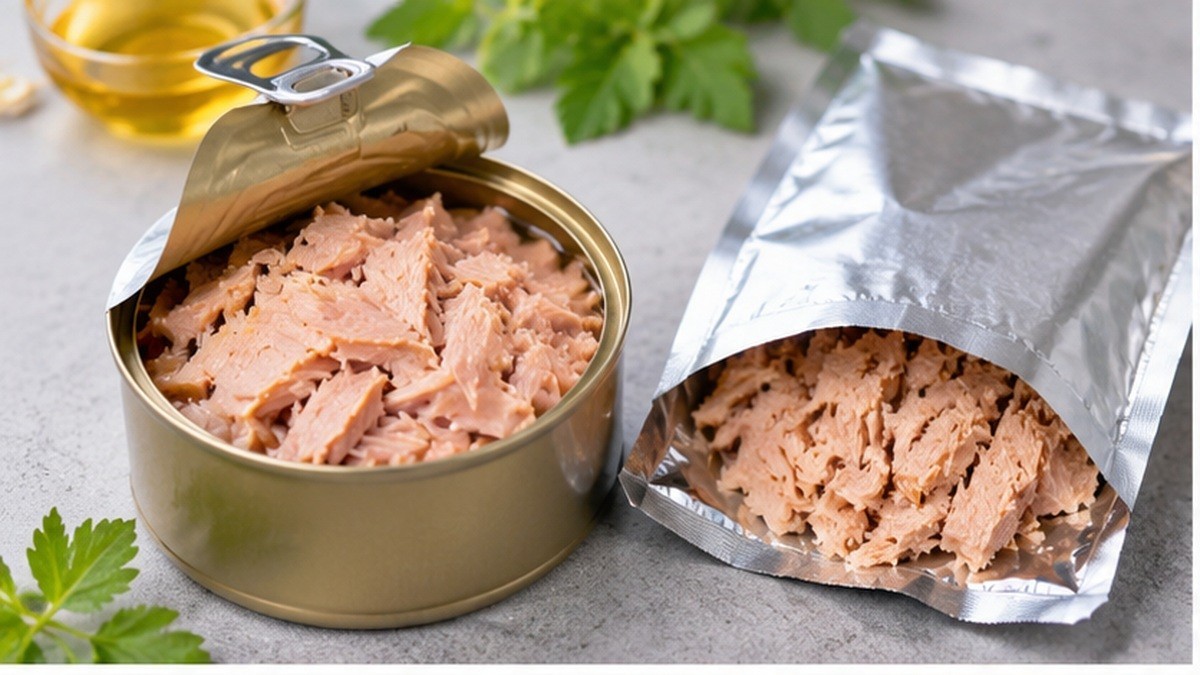

Finding canned tuna buyers for export is not simply a matter of searching for the word “tuna.” Importers may request different species, cuts, packing media and retail formats, and those details determine whether a manufacturer can prepare a suitable quotation. A buyer seeking chunk light yellowfin in water is not necessarily looking for solid white albacore, while a request for pouched skipjack flakes requires a different product and packaging configuration from conventional canned tuna chunks.
This article reviews three recent tuna buying requests on Freshdi: a 1-ton Tuna inquiry from a Vietnam-based buyer for Jeddah, a detailed canned tuna inquiry for Jeddah, Saudi Arabia, and a multi-format canned and pouched tuna request destined for Long Beach, California. Fields that a request does not state are marked rather than guessed.
Key Takeaways
- The three requests cover a 1-ton Tuna RFQ for Jeddah (FOB, L/C), a 5,000-carton canned tuna inquiry for Jeddah, and a 2,000-carton canned and pouched tuna request for Long Beach, California.
- The Saudi request specifies 90 g and 185 g cans, water or brine or sunflower oil, CIF Jeddah and USD quotation requirements.
- The India-based buyer’s RFQ is destined for Long Beach, California; buyer country and destination market must remain distinct.
- The Long Beach request includes yellowfin, albacore, skipjack, MSC-certified tuna and several canned or pouched formats.
- Before quoting, suppliers should clarify species, product style, net and drained weight, packing, labelling, documents, delivery basis and payment terms.
1. Global Canned Tuna Market Overview: International Trade, Processing and Demand Trends
The global canned tuna market is closely connected to international fishing, seafood processing and cross-border distribution networks. Major processing countries rely on imported frozen tuna and semi-processed raw materials, while consumer markets source canned products from multiple origins. Recent trade data indicates that demand for prepared and preserved tuna remains an important part of international seafood commerce, although raw material availability, fishing conditions and production costs continue to influence the market.
Global Trade Shows the Importance of Prepared and Preserved Tuna
According to FAO GLOBEFISH, global tuna trade reached approximately 4.23 million tonnes, valued at USD 18.77 billion in 2025. Within this market, imports of prepared and preserved tuna increased by 8.91% compared with 2024. International trade in canned and preserved tuna reached approximately 1.72 million tonnes, worth USD 9.40 billion.
These figures highlight the importance of processed tuna products in international seafood trade. Their shelf stability, convenient preparation and suitability for retail and foodservice distribution support demand across different consumer markets.
However, the market did not expand uniformly across all tuna product categories. FAO also reported that global exports of canned and processed tuna declined by 4% to 1.75 million tonnes in 2025. This difference reflects the importance of distinguishing between specific product classifications and trade flows when assessing market performance.
Europe Remains an Important Import Market for Processed Tuna
The European Union provides a useful example of how international tuna supply chains operate. According to the European Commission's EU Fish Market 2025 report, extra-EU imports of tuna and tuna-like species, including swordfish, reached 675,707 tonnes in 2024, an increase of 18% compared with 2023. Their import value increased by 7% to EUR 3.17 billion.
Prepared and preserved products, mainly canned tuna, represented 73% of the combined import volume, while frozen products accounted for 23%. Skipjack was the largest species group, representing 55% of total imported volume, followed by yellowfin at approximately 27%.
Ecuador was the leading external supplier of prepared and preserved skipjack tuna to the EU, accounting for more than 40% of extra-EU imports in this product category. Its shipments reached 151,603 tonnes, worth EUR 690 million, in 2024. China ranked second, with 37,632 tonnes.
These figures demonstrate the importance of processing origin and established supplier relationships in the European market. They also show that buyers may source canned tuna through international processing hubs rather than directly from the countries where the fish was originally caught.
Thailand Highlights the Role of Major Tuna Processing and Export Hubs
Thailand remains one of the world's major tuna canning and processing centres. Its industry relies significantly on imported tuna raw materials, which are processed into canned products for domestic consumption and export markets.
Krungsri Research's Industry Outlook 2025–2027: Canned Seafood Industry reports that Thailand's canned tuna production reached approximately 630,500 tonnes in 2024, representing a 22.8% increase from the previous year. The report also identifies international exports as a major driver of the industry's production activity.
In 2024, Thailand exported approximately 548,700 tonnes of canned tuna, valued at USD 2.3 billion. Major destinations included the United States, Australia and several Middle Eastern markets. The report also noted strong export growth to selected Middle Eastern destinations, including Egypt and the United Arab Emirates, during the first half of 2025.
This processing and export structure is commercially relevant to suppliers because competition is not determined by raw tuna availability alone. Processing capacity, production consistency, product specifications, packaging options and established distribution channels all influence a supplier's ability to serve international buyers.
Raw Material Availability and Production Costs Remain Key Considerations
Despite demand for shelf-stable seafood products, tuna processors remain exposed to fluctuations in fishing supply and operating costs. FAO GLOBEFISH reported that weaker catches, higher fuel expenses and supply-chain delays contributed to rising raw tuna prices in early 2026.
For example, frozen skipjack delivered from the Western and Central Pacific to Thailand increased from approximately USD 1,500–1,600 per tonne in January–February 2026 to around USD 2,000 per tonne in March 2026.
Such changes can affect production costs, quotation validity and the pricing competitiveness of canned tuna exporters. Suppliers should therefore consider the relationship between raw material sourcing, processing costs, packaging expenses and freight when preparing offers for international buyers.
What These Global Trends Mean for Canned Tuna Suppliers
The international market presents opportunities across several parts of the canned tuna supply chain, from raw material sourcing and processing to finished-product exports. However, market demand alone does not determine whether a particular buying request is commercially suitable.
Suppliers should evaluate each RFQ against its actual requirements, including tuna species, product form, chunk or flake specifications, can size, packing format, net weight, production capacity, destination market and required certifications. They should also distinguish between buyers seeking finished canned tuna and those sourcing frozen tuna or semi-processed materials for further processing.
For exporters, a competitive offer should demonstrate not only product availability but also consistent quality, reliable production capacity, compliant packaging and the ability to meet the buyer's delivery and documentation requirements.
2. Buying Request Comparison: Three Tuna RFQs
The three requests do not contain the same level of detail. The first is a short 1-ton inquiry with FOB and L/C terms and a target unit price, but it does not state the tuna species or product form. The Jeddah canned chunk inquiry is highly prescriptive about can sizes, packing and CIF pricing. The Long Beach inquiry is broad across species and product formats, but leaves trade and payment terms open.
| Buying request | Buyer country | Product / form | Quantity | Destination | Trade | Payment |
|---|---|---|---|---|---|---|
| Tuna | Vietnam · 4.7/5 | Tuna (category: Tuna Fish); species and form not specified | 1 ton | Jeddah, Saudi Arabia (JED) | FOB | L/C |
| Canned Chunk Tuna | Saudi Arabia | Canned tuna chunks in water and salt or brine, or sunflower oil; supplier to state species and scientific name | 5,000 cartons: 2,500 × 90 g and 2,500 × 185 g | Jeddah Islamic Port, Saudi Arabia | CIF | Negotiable; secure commercial methods preferred |
| Canned and Pouched Tuna | India · 4.4/5 | Canned and pouched tuna: yellowfin, albacore, skipjack, MSC-certified chunk light, seasoned tuna and pouch formats | 2,000 cartons | Long Beach, California, United States | Not specified | Not specified |
Source: Observed and compiled by Freshdi. Fields marked “Not specified” are not shown in the RFQ details and are not inferred.
Looking to Sell Canned Tuna?
Connect with verified buyers, receive relevant buying leads, and explore sourcing opportunities from global markets.
3. Detailed Buying Request Analysis
 AI-generated illustration for reference only; it does not depict the actual product. | 1. Tuna – 1 Ton, Jeddah, Saudi Arabia Hot RFQ Confirmed Buyer: Vietnam · Rating: 4.7/5 Product: Tuna (category: Tuna Fish); species and product form not specified Quantity: 1 ton · Target unit price: USD 9,000/ton Destination: Jeddah, Saudi Arabia (JED) Trade term: FOB · Payment: L/C |
Why this request may matter
A Vietnam-based buyer asks suppliers for a quotation on 1 ton of tuna for delivery to Jeddah, Saudi Arabia, on FOB terms with L/C payment. The buyer states a target unit price of USD 9,000 per ton and asks for the unit and total price, lead time and any catalogues or certificates. The small volume suits suppliers that can serve a trial or single-pallet-scale order. Buyer country and destination are different, so the offer should be built around the named Saudi port.
What to clarify first
The request does not state the tuna species, whether the product is fresh, frozen, precooked or canned, the cut or style, grade, packaging or shipment schedule. Confirm these points, and confirm what product basis the USD 9,000 per ton target price refers to. For FOB, identify the named loading port and the buyer’s forwarder arrangements. Check the L/C type, issuing bank and documentary conditions, and the food-safety documents required for import into Saudi Arabia.
View original buying request on Freshdi →
 AI-generated illustration for reference only; it does not depict the actual product. | 2. Canned Chunk Tuna Hot Buy Buyer country: Saudi Arabia Product: Canned tuna chunks in water and salt or brine, or sunflower oil; supplier to state species and scientific name Quantity: 5,000 cartons: 2,500 × 90 g and 2,500 × 185 g Destination: Jeddah Islamic Port, Saudi Arabia Trade term: CIF · Payment: Negotiable; secure commercial methods preferred |
Why this request may matter
This is the most detailed of the three requests. The buyer asks for two retail can sizes and two packing media, with a separate quotation table for each size and type. Suppliers must identify tuna species and scientific name, net and drained weights, quality specifications, carton configuration, carton dimensions and gross weight. The request specifies CIF Jeddah, USD pricing and a minimum offer validity of 30 days (45–60 days preferred).
What to clarify first
Confirm the monthly shipment split and whether indicative packing is acceptable: 90 g at 50 cans per carton (4.5 kg per carton), and 185 g at 48 cans per carton (8.88 kg per carton). Confirm species, origin, drained weight, Arabic label data, production and expiry dates, samples, factory details, lead time and payment structure. Check the precise Saudi import and SFDA-related requirements with the importer.
View original buying request on Freshdi →
 AI-generated illustration for reference only; it does not depict the actual product. | 3. Canned and Pouched Tuna New RFQ Buyer country: India · Buyer rating: 4.4/5 Product: Canned and pouched tuna: yellowfin, albacore, skipjack, MSC-certified chunk light, seasoned tuna and pouch formats Quantity: 2,000 cartons · Destination: Long Beach, California, United States Trade term: Not specified · Payment: Not specified |
Why this request may matter
The buyer profile is shown as India, while the stated destination is Long Beach, California. These should not be conflated. The request covers chunk light yellowfin in water with vegetable broth; yellowfin in water with salt and vegetable broth; chunk white albacore in brine with additives; skipjack chunk in water with vegetable broth; MSC-certified chunk light tuna in water; seasoned canned tuna; and pouched skipjack tuna flakes in brine. Trade and payment terms are not specified in the captured summary.
What to clarify first
Ask the buyer to allocate the 2,000 cartons by species, product style, can or pouch size and recipe. Confirm whether MSC certification applies only to the named line, plus packaging, net and drained weights, additives and broth composition, labelling, delivery basis, payment terms and shipment schedule.
View original buying request on Freshdi →
4. What These Buying Requests Mean for Tuna Suppliers
Start by matching the actual product form. Canned chunk tuna, solid albacore, tuna flakes and pouched products are different commercial specifications. Confirm species and scientific name, cut style (chunk, solid, flake or shredded), packing medium (water, brine, vegetable broth or oil), additives, net weight and drained weight. Where MSC certification is mentioned, identify the exact product line and confirm certificate scope and validity; do not assume the entire product range must be certified unless the buyer says so.
Next, check packaging: can or pouch size, units per carton, net and drained weight, carton dimensions, gross weight, palletisation and label requirements. For Jeddah, the buyer gives indicative carton configurations and asks for Arabic label data and Saudi import documentation. For Long Beach, carton count alone is insufficient to calculate production volume because the SKU mix is not specified. Finally, clarify commercial terms. CIF Jeddah requires freight and insurance to the named port, while the 1-ton Jeddah request is FOB with L/C payment and a USD 9,000 per ton target price that needs a defined product basis. The Long Beach request does not show a trade term or payment method in the captured RFQ, so suppliers should ask before preparing a firm quotation.
5. Commercial and Export Considerations
A technical offer should identify tuna species, scientific name, product style, packing medium, net weight, drained weight, ingredients or additives and product specification. Provide a current specification sheet and, where available, a lot-specific certificate of analysis and food-safety documentation. Confirm production date, expiry date, shelf life, sample availability and traceability information.
For packaging, specify can or pouch dimensions, closure type, units per carton, carton net and gross weight, dimensions, pallet configuration and label language. For exports to Saudi Arabia, the Jeddah buyers specifically ask suppliers to confirm the documents and label data required for Saudi import, including SFDA-related requirements and Arabic labelling; verify the precise requirements with the importer and competent authorities.
For pricing, state whether the price is per can, carton or net metric ton and keep the basis consistent. If offering CIF, name the destination port and show freight and insurance assumptions and offer validity. If payment terms are not stated, do not silently insert T/T or L/C; propose terms clearly and request acceptance.
6. How Freshdi Helps Suppliers Discover Tuna Buying Requests
Freshdi helps suppliers discover buyer demand by browsing product-specific buying requests and reviewing requirements buyers publish. Tuna exporters can search the Canned Tuna or Tuna categories, open each original RFQ, separate confirmed specifications from missing fields, and prepare a quotation in the buyer’s requested format. Suppliers can use Freshdi’s quotation workflow where available and should keep company profiles, product listings and supporting documents current. Access to full buyer contact details may depend on account permissions and plan, so check the access shown in your account rather than assuming every RFQ exposes every contact field. A buyer rating or “Confirmed” label is a platform signal, not a guarantee of payment or a completed transaction.
Frequently Asked Questions
Where can I find canned tuna buyers for export?
Search product-specific buying requests on B2B platforms such as Freshdi. Start with the Tuna and Canned Tuna categories, then open each RFQ to check species, product style, packing, quantity, destination and trade terms. Do not rely on the title alone: one buyer may need yellowfin chunks in water, while another may require albacore, skipjack, pouches or a particular certification. Review the original request before sending a quotation.
How do I see full buyer contact details for these RFQs?
Full buyer contact details are unlocked separately for each RFQ on Freshdi, and the unlock is needed before you can view them and send a quotation. Access depends on your account plan and available unlock credits. A buyer rating or Confirmed RFQ label helps with initial assessment, but it does not guarantee that the buyer will respond or complete a transaction.
What tuna species and product forms are requested in these RFQs?
The Long Beach request mentions yellowfin, albacore and skipjack, including chunk light, solid white albacore, flakes and seasoned tuna in canned or pouched formats. The Jeddah canned chunk request asks suppliers to state the species and scientific name for chunks packed in water, brine or sunflower oil. The 1-ton Tuna request does not state species or form, so suppliers should ask before quoting.
What is the difference between net weight and drained weight for canned tuna?
Net weight includes the tuna and packing medium, while drained weight refers to the tuna remaining after the liquid is drained according to the applicable test method. Buyers may compare products using either measure, so suppliers should state both clearly for each can size and recipe. Do not calculate drained weight from net weight; provide the factory-confirmed specification and test method if requested.
Does the Jeddah tuna RFQ require CIF pricing?
Yes. The Jeddah request specifies CIF Jeddah Islamic Port and asks for prices in USD, including freight and insurance. It also asks suppliers to state production or preparation time, sea transit time and offer validity of at least 30 days, preferably 45–60 days. The buyer says FOB offers, other currencies and undisclosed extra charges will not be accepted for this request. Confirm quantity and packing before calculating the offer.
What should suppliers confirm before quoting the Long Beach canned and pouched tuna request?
The request shows 2,000 cartons and Long Beach, California as destination, but the captured page does not state a trade term or payment method. It also lists several species, recipes and packaging styles without allocating quantity across each SKU. Ask for product mix, can or pouch sizes, carton configuration, net and drained weights, MSC scope, labelling requirements, delivery basis, payment terms and shipment schedule before submitting a firm quotation.
Conclusion: Prepare a Specification-Led Tuna Quotation
These three tuna requests show why exporters should treat each RFQ as a product-specific specification rather than a generic request for canned fish. The 1-ton Tuna request is a short FOB, L/C inquiry for Jeddah that leaves species and product form open. The Jeddah canned chunk buyer provides a detailed CIF brief for two can sizes and multiple packing media. The Long Beach buyer asks for a wider range of tuna species and canned and pouched presentations, but needs to clarify the SKU mix and commercial terms. Before quoting, prepare a specification-led offer that states species, product form, packing medium, net and drained weight, carton configuration, destination, trade term, payment terms, documents and lead time.
References
1. Food and Agriculture Organization of the United Nations (FAO), GLOBEFISH. Fuel Costs and Raw Material Shortages Lift Tuna Prices. 23 July 2026.
2. European Commission, European Market Observatory for Fisheries and Aquaculture Products (EUMOFA). The EU Fish Market 2025 Edition. Published 2025.
3. Krungsri Research. Industry Outlook 2025–2027: Canned Seafood Industry. 8 August 2025.
4. Freshdi buying requests (RFQs) reviewed in this article, as displayed on the platform.
Disclaimer: This article is compiled from platform data, public sources and information provided by third parties, for general informational purposes only. We do not guarantee its accuracy or completeness. Mentions and rankings of suppliers do not constitute an endorsement or guarantee, and strategies and examples are illustrative; results may vary. Please conduct your own due diligence before making business decisions.