

What products are you looking for?
Popular Searches:
617 Supply, Exporters on Freshdi, Tanzania, the United States, and Germany each account for 13.6% of Bulk Rice suppliers, with Germany following at 11.4% — a balanced distribution across three key agricultural and processing regions rather than a single dominant source.
1.3% of all listings were added in the last 30 days, indicating a steady but limited influx of new supply. 68.2% of suppliers were active in the last 90 days, and 77.3% carry business verification — the supplier base remains largely reachable and has a strong documentation foundation.
Updated Oct 5, 2026
Based on suppliers' real activity on Freshdi over the past 7 days
617 results for wholesale, bulk “Bulk Rice” products from 617 trusted suppliers, wholesalers, manufacturers & exporters
Top Quality Products
View all

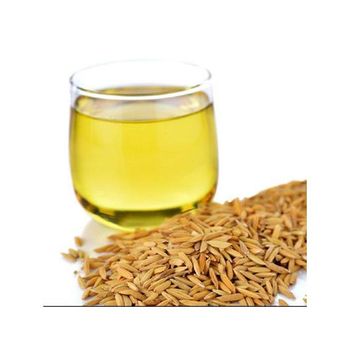
Bulk rice bran oil supplied for export to edible oil and health product markets






Good Price
+2
Rice Bran Oil With Natural Flavor And High Clarity Rice Bran Oil Supporting Efficient Handling And Bulk Buyers










Related searches
Bulk Rice Market Insight | Price, Payment Terms, Trade Terms & Supplier Countries
Updated Oct 5, 2026Based on suppliers' real activity on Freshdi over the past 7 days
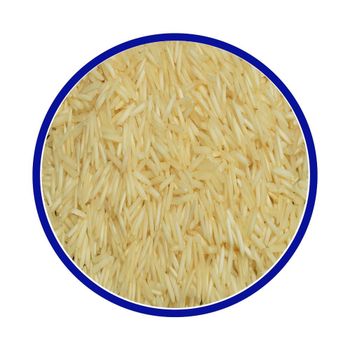
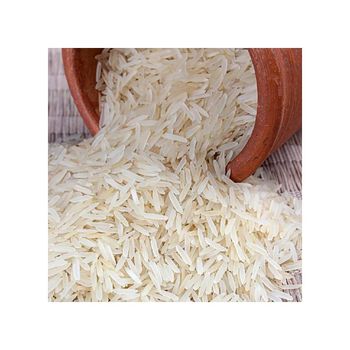
Bulk Rice listings show a typical price range of USD 295 - 1,050 per metric ton on an FOB basis, with the median price at USD 560 per metric ton . Basmati is the largest variety in terms of listings at 33.3% , with a median price of USD 1,000 per metric ton . Long Grain White follows at 21.2% with a median of USD 693 per metric ton . Jasmine accounts for 6.2% of listings at USD 568 per metric ton , Parboiled makes up 5% at USD 1,195 per metric ton , and Brown is the smallest share at 1.7% with a median of USD 334 per metric ton .
The typical minimum order quantity for Bulk Rice is 25 MT , with most listings falling within the common range of 10 to 100 MT , offering buyers a broad spectrum of order sizes to consider.
For Bulk Rice, suppliers predominantly offer FOB at 47.8% of listings, with CIF at 34.3% , indicating that freight responsibility is generally left to the buyer in most cases.
Supplier payment terms for Bulk Rice are evenly split between L/C at 35.6% and T/T at 35.1% , showing a balanced preference for both bank letters of credit and bank transfers.
A gap exists where demand for CIF exceeds supply by 25.1 percentage points , suggesting that many buyers are seeking suppliers who can arrange freight and insurance to the destination port. Suppliers offering CIF could better align with active buyer demand and improve match rates in this category.