
Introduction
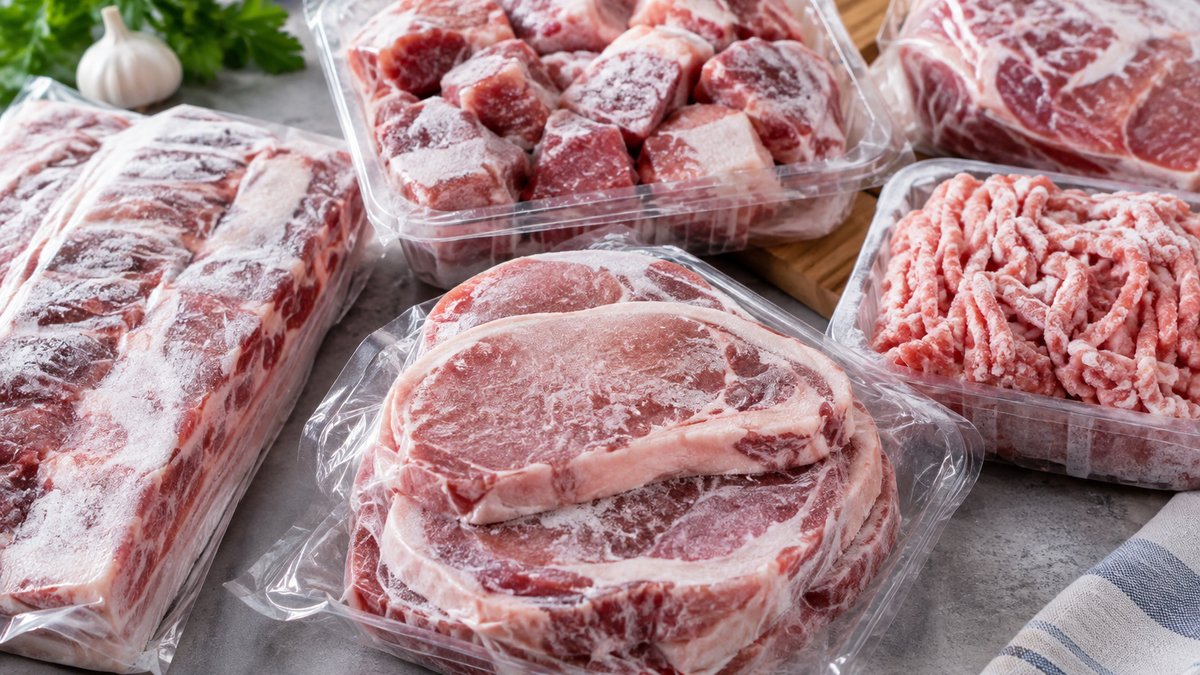
Frozen pork buyers specify different cuts, processing methods, temperatures and delivery terms.
As of November 19, 2026, these four Frozen Pork buying requests from four buyers were posted on Freshdi between November 8 and 13. Buyer countries are Singapore, Malaysia and the United States; stated destinations are Manila, Kuching and the New York/Newark area. Quantities range from 20 pieces to 2,000 cartons, with a separate 5-ton request. The requests show which details suppliers should match and where clarification is needed before they price an offer.
Key Takeaways
- Four buyers posted Frozen Pork requests on Freshdi between November 8 and 13, 2026. Their buyer countries are Singapore, Malaysia and the United States; their stated delivery destinations are Manila, Kuching and the New York/Newark area.
- Stated quantities range from 20 pieces to 2,000 cartons, with one request for 5 tons and another for 900 cartons. Do not compare these quantities without confirming carton weights and the buyer's intended order basis.
- Specifications vary by request: they include Pork Trim 80, skin-on presentation, IQF processing, mechanically deboned meat, shelf life and frozen storage temperatures.
- One request states CIF, one states FOB and two do not specify a trade term. One lists T/T; payment terms are not specified in the other three.
- Each request's target-price field shows USD without a numerical amount. Suppliers need a complete price basis and shipment details before preparing a comparable quotation.
1. Frozen Pork trade context: production and exports in 2026
USDA Foreign Agricultural Service's October 9, 2026, report forecasts global pork production at 117.2 million metric tons in 2026, virtually unchanged from the previous year. It forecasts global pork exports at 10.3 million metric tons, down 1 percent. The agency attributes the export decline to lower exports from the European Union, which are not fully offset by forecast growth from Brazil, the United States and Canada.
That outlook gives suppliers a reason to check destination access and shipment eligibility before quoting. USDA's report describes trade restrictions following African swine fever findings in Spain and says several export markets remained closed to Spanish product or restricted product from the affected region. Those statements concern particular origins and markets; they do not establish the rules for every supplier or destination in these four requests.
The Freshdi requests are a separate snapshot of buyer-stated requirements, not a measure of world demand or a forecast. They name destinations in the Philippines, Malaysia and the United States, but the buyer's country does not establish the pork's origin. Suppliers should confirm the permitted exporting country and establishment, health documentation, product form and import conditions for the actual destination before offering goods.
Looking to Sell Frozen Pork?
Connect with verified buyers, receive relevant buying leads, and explore sourcing opportunities from global markets.
2. Four Frozen Pork buying requests and their stated requirements
Four buyers posted these requests on Freshdi from November 8 to 13, 2026. The request pages show product descriptions, quantities and commercial details as entered; missing fields are not specified. The buyer's country is separate from the delivery destination, which may be in another country.

The quantity units are not interchangeable: the requests use cartons, tons and pieces, without a common weight basis. All four target-price fields display USD but provide no numerical amount. A supplier cannot calculate a comparable delivered price from those fields alone.
3. What each Frozen Pork request means for a supplier
3.1 Frozen Pork, Pork Trim 80, skin on
A buyer based in Singapore requests 900 cartons for delivery to MANILA INTERNATIONAL CONTAINER TERMINAL. The request lists Pork Trim 80, skin-on presentation, a lean percentage entered as “80%%,” “Ca Proposition 12” under compliance, and a storage temperature of “-20°c.” It states CIF; payment terms are not specified. The packaging field says “Pieces.” The request is not marked verified.
The combination of a named trim, skin-on presentation and a lean percentage gives suppliers several product-match points to confirm. Ask the buyer to explain the exact cut specification and what “80%%” means in its intended format. Confirm what the buyer means by “Ca Proposition 12” and which documents or product conditions it expects. Do not assume the buyer's wording establishes eligibility for a destination or proves that a product meets a particular rule.
Before pricing CIF, confirm the named destination port, carton net weight, number of pieces per carton, shipment quantity by weight, delivery window and which costs the buyer expects included. The request gives no numeric price, payment instrument or further packaging detail beyond “Pieces.” Suppliers should resolve those points before treating a quotation as comparable with another offer.
3.2 High Quality Bulk Frozen Pork Meat with IQF Freezing Process 24 Months Shelf Life Wholesale for Meat Packing Industry
A buyer based in Malaysia requests 5 Tons for Kuching, Malaysia. The request states IQF processing, a 24-month shelf life and storage at “-18°c Or Below.” It also says maximum moisture is 2 and moisture content is “2%%,” and describes the meat as carefully selected, cleaned and hygienically processed. The request states FOB and T/T. Its request-verification field is marked true.
The request contains two moisture entries that suppliers should not silently treat as identical. Ask the buyer to confirm the intended limit, test method and product specification, as well as the required evidence for shelf life and processing claims. Confirm whether the 5 tons is net product weight, how it should be packed and whether the buyer expects a single shipment.
Codex's Code of Practice for the Processing and Handling of Quick Frozen Foods recommends maintaining product at -18°C or colder during storage and transport, while destination rules and contractual requirements still need to be checked. The request's stated temperature is consistent with that general handling benchmark. For the offer, state the product temperature specification, packing format, loading port, delivery schedule and temperature-recording arrangements. A request marked verified does not by itself confirm the product match or commercial terms.
3.3 Frozen Pork Meat, 20 Pieces, mechanically deboned meat
A United States-based buyer requests 20 pieces for the New York Newark Area in Newark, New Jersey. The request identifies the product as frozen pork and lists “Mechanically Deboned Meat” as an included variant. Delivery condition and product form are both entered as frozen. Trade terms and payment terms are not specified, and the request is not marked verified.
The unit “20 Pieces” needs definition before a supplier can assess the order. Ask for the weight per piece, total net weight, intended cut or raw material, packaging and the buyer's use for the mechanically deboned meat. Confirm whether “included variant” means the buyer wants mechanically deboned meat specifically or is listing it as one possible form.
No Incoterm or payment method is stated. Ask the buyer to name the delivery point and preferred trade term, then identify the required shipping schedule and import documents. A supplier should also confirm that its country and establishment can export this product to the stated destination before preparing a firm offer.
3.4 Frozen Pork Meat, 2,000 cartons
A second United States-based buyer requests 2,000 cartons for New York/Newark, USA, and lists a temperature requirement of “−20°c.” The request does not state a cut, product form beyond Frozen Pork Meat, carton weight, trade term or payment term. The request is not marked verified.
The carton count does not reveal the total shipment weight. Ask for net weight per carton, carton dimensions, pallet configuration and whether the buyer accepts a particular cut or requires a defined specification. Confirm whether −20°C is a product-temperature limit, a storage requirement or a transport setpoint, and agree how temperature will be documented.
The buyer has not provided a trade term or payment method, and the target-price field contains USD without an amount. A supplier should request a named delivery point and a quotation basis before calculating freight or giving a firm price. The destination is stated as New York/Newark, so confirm the exact port or delivery location the buyer intends.
4. What Frozen Pork suppliers should prepare before quoting
A useful offer starts with the exact product the buyer requested. Name the cut, presentation, meat type and processing method. For Pork Trim 80, identify the trim specification and explain the offered lean percentage in a clear, agreed format. For mechanically deboned meat, state the product identity and intended form rather than using a generic Frozen Pork description.
Attach a current product specification and, where relevant, lot-specific test results. State the measurable quality limits, method of measurement and product temperature. If a request mentions moisture, shelf life or compliance, answer each item directly and identify any assumption that needs the buyer's approval. Do not claim compliance with a named rule or programme unless the product and supporting records substantiate the claim.
Convert the requested quantity into a shipment plan only after the buyer confirms the unit basis. Give net weight per carton, pieces per carton, pallet count and total net weight when those details are known. For the 20-piece request, clarify the weight per piece. For the 2,000-carton request, confirm carton weight and packing configuration before estimating container loading.
Describe packaging precisely: inner and outer materials, net weight, carton dimensions, labels, lot coding and palletisation. Only one of these requests states packaging, as “Pieces”; the others leave it unstated. Suppliers should not assume a standard carton size or packing format where the buyer has not named one.
Separate the price from its delivery basis. State currency, price per unit or per metric ton, named port or place, Incoterm, shipment window, quotation validity and the costs included. For CIF or FOB, identify the relevant port and align the offer with the agreed shipment responsibilities. The current RFQs do not provide numeric target prices, so do not treat “USD” as a benchmark.
Confirm payment milestones and documents before accepting an order. One request states T/T; three leave payment terms unspecified. Ask the buyer to specify the payment instrument, timing and documentary conditions, then include the agreed terms in the sales contract. Separately check destination-country import rules, approved exporting establishments and required health certificates with the relevant authorities.
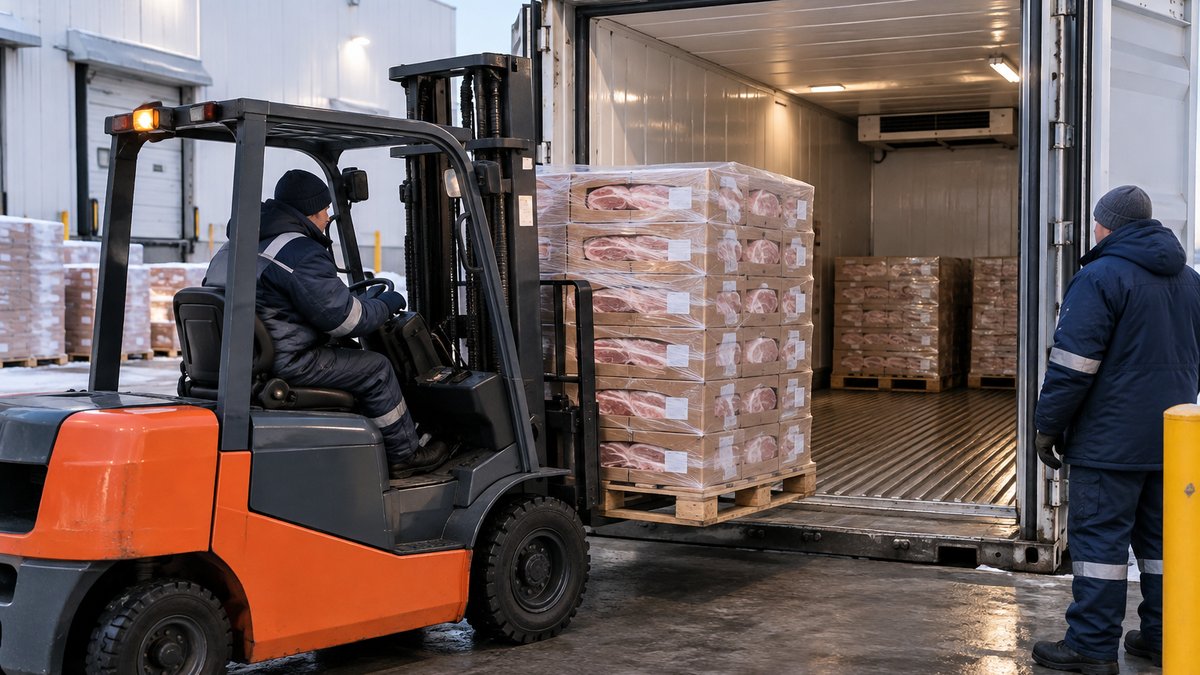
Frozen cargo needs an agreed temperature and a plan to record it through loading, transit and arrival. Codex recommends that quick-frozen foods be transported in equipment capable of maintaining product at -18°C or lower. The actual requirement for a shipment depends on the product, destination rules and buyer contract. Confirm pre-cooling, reefer settings, loading practices, temperature records and the process for handling a recorded deviation.
5. Commercial checks for these four requests
For the Singapore-based buyer's CIF request, confirm the Manila destination, requested trim and skin-on presentation, the meaning of the lean-percentage entry and the compliance wording before estimating freight. Ask for carton weight, payment terms and a numeric price basis.
For the Malaysia-based buyer, settle the conflicting moisture entries and confirm the 5-ton quantity basis, packing and shipment timing. The request states FOB and T/T, but suppliers still need the loading port, exact product specification and the buyer's expected supporting documents.
For the two United States destinations, clarify what “20 Pieces” weighs and what each buyer means by its product description. The 2,000-carton request also needs carton weight and an exact delivery point. Neither request states a trade or payment term; do not price either one on an assumed basis.
Across all four requests, verify export eligibility and destination requirements before committing to a shipment. The buyer country, destination, verification field and specification are separate details. Confirm each one against the buyer's current instructions and the applicable official import requirements.
6. How suppliers can use Freshdi to find buyers
Suppliers can browse Freshdi's Frozen Pork buying requests, review each request's stated requirements and compare them with their product and export capability. Freshdi describes supplier profiles, product listings and Premium membership features for suppliers; check the current account information to see which functions apply to your account. A profile should accurately describe available cuts, processing, packaging, certificates and export markets.
Before responding, check the request page and buyer profile, note every missing commercial term, and prepare a quotation that answers the stated requirements point by point. Keep any proposed substitutions or assumptions separate from the buyer's request. Platform verification indicators can support initial screening, but they do not guarantee a response, payment or transaction.
Suppliers matching these product and shipment requirements can use Freshdi to find relevant buyer requests.
View Latest Buying Requests for This Product →
7. Conclusion: clarify the product and shipment basis before quoting
These four Freshdi requests describe different Frozen Pork needs, from Pork Trim 80 and IQF pork to mechanically deboned meat and a general frozen-meat request. Their quantities use cartons, tons and pieces, and the target-price fields give no numerical amounts. The stated destinations and commercial terms also vary.
Suppliers should confirm product identity, unit weight, packaging, temperature, shipment point, import eligibility and payment terms before submitting a firm price. Review current Frozen Pork buying requests on Freshdi when checking for requirements that match your product and export capacity.
After checking which requirements your product can meet, use Freshdi to look for relevant buying requests.
View Latest Buying Requests for This Product →
Frequently Asked Questions
What details should a Frozen Pork supplier include in a quotation?
Name the cut and product form, processing method, specification, net weight, packaging, price unit and currency, named delivery point, Incoterm, shipment window and quotation validity. Include the temperature requirement and relevant product documents. Ask the buyer to confirm any missing detail before treating the offer as firm.
Can I compare 900 cartons with 2,000 cartons?
Not from carton counts alone. Ask for net weight per carton, pieces per carton and the total net weight. The requests in this roundup also use tons and pieces, so confirm each unit basis before comparing volumes or calculating freight.
What should I do when a buyer gives a temperature such as -18°C or -20°C?
Ask whether the figure applies to product temperature, storage or the transport equipment setting, and agree how it will be measured and recorded. Codex recommends maintaining quick-frozen food at -18°C or colder during transport. Check the applicable destination rules and contract requirements for the actual shipment.
How should suppliers handle a request that says FOB or CIF?
Confirm the named port and the precise delivery basis before pricing. State the currency, price unit, shipment timing and costs included. The supplier and buyer should also confirm which party handles each shipping responsibility under the agreed term. Do not compare FOB and CIF prices as if they cover the same costs.
What does “USD” in a target-price field tell a supplier?
In these four requests, the target-price field shows the currency but no numerical amount. It does not provide a usable target price or a market benchmark. Ask the buyer for a numeric target, or prepare an offer with a clear unit, price basis and delivery term.
Does a Freshdi verification indicator guarantee that an RFQ will lead to an order?
No. A verification indicator is a screening signal, not a guarantee of a response, payment or transaction. Check the current request and buyer profile, verify the commercial details independently, and agree product, documents and payment terms before making a commitment.
References
1. USDA Foreign Agricultural Service – Livestock and Poultry: World Markets and Trade, October 9, 2026.
2. Codex Alimentarius – Code of Practice for the Processing and Handling of Quick Frozen Foods, 1983.
3. Freshdi – Frozen Pork buying requests R1 to R4, posted November 8 to 13, 2026, November 2026.
4. Freshdi – About Freshdi, Accessed November 19, 2026.
Disclaimer: This article is compiled from platform data, public sources and information provided by third parties, for general informational purposes only. We do not guarantee its accuracy or completeness. Mentions and rankings of suppliers do not constitute an endorsement or guarantee, and strategies and examples are illustrative; results may vary. Please conduct your own due diligence before making business decisions.