
Introduction
Olive oil requests can cover distinct grades, processing methods and packaging formats. Suppliers need to match the offered product to the buyer’s stated specification before comparing quantities or preparing a price.
This review covers five olive oil buying requests posted on Freshdi from 7 to 11 November 2026, representing five buyers. The requests name destinations in Benin, Bangladesh, Indonesia, the United States and Spain; buyer countries are stated for three requests. Quantities range from 1 MT to a buyer-stated “38000 20-foot Container.” The listings show a mix of extra virgin oil, refined-oil blends, packaging details and CIF terms. Suppliers can use the information to identify what each request states and what needs clarification before quoting.
Key Takeaways
- Five buyers posted olive oil requests on Freshdi from 7 to 11 November 2026. The sample includes destinations in five countries, while buyer countries are stated for three requests.
- Product details range from extra virgin olive oil to a stated blend of extra virgin and refined oil. One listing also describes organic extra virgin olive oil.
- The listed quantities use different units, from 1 MT and 1 pallet to 1,000 cartons and a request stated as “38000 20-foot Container.” Confirm the intended order unit and shipment programme before quoting.
- CIF appears on four of the five requests. Payment terms include L/C, D/P and “Other”; one request does not specify payment terms.
- Each request has a target-price field, but four show only “USD” without an amount. The remaining request states “1650 USD” without a unit or pricing basis, so none of these entries is a comparable market quotation.
1. Olive Oil Market Context for Suppliers
Olive oil supply can change substantially between crop years, so exporters should date their availability and quotation assumptions. The European Commission’s olive oil dashboard, last updated 30 September 2026, forecasts world production of 3.429 million tonnes for the 2025/26 marketing year, compared with an estimated 3.612 million tonnes for 2024/25. These are Commission dashboard estimates and forecasts, not final figures.
The same dashboard forecasts EU production of 2.045 million tonnes in 2025/26, down from an estimated 2.150 million tonnes in 2024/25. For 2025/26, it forecasts EU extra-EU imports of 267,000 tonnes and exports of 758,000 tonnes. These figures describe the EU market; they do not establish demand in the five destinations named in the Freshdi requests.
For exporters, the commercial point is to quote against the lot and shipment period actually available. When a buyer requests extra virgin olive oil, a refined-oil blend or another stated type, the specification and test documents need to match that product. Where the request does not define the grade or composition, ask the buyer before offering a price.
Product categories also have defined regulatory meanings in particular jurisdictions. For example, EU Delegated Regulation 2022/2104 sets characteristics for olive oil categories placed on the EU market; its extra virgin category includes a maximum free acidity of 0.8% and other chemical and organoleptic criteria. Those EU rules should not be presented as universal requirements. Suppliers should check the destination’s current rules and the buyer’s contract specification.
Looking to Sell Olive Oil?
Connect with verified buyers, receive relevant buying leads, and explore sourcing opportunities from global markets.
2. Five Olive Oil Buying Requests Compared
The five requests below were posted from 7 to 11 November 2026 and were selected by score. Freshdi’s records identify five buyers. A buyer country is stated for three requests; destination and buyer location are separate fields and should not be treated as interchangeable.

Across these five requests, four specify CIF and one leaves the trade term unstated. The payment field lists L/C twice, D/P once, “Other” once and no term once. Those counts describe these five listings only. The target-price field is present for all five, but the entries do not provide five usable price points: four state USD without an amount, while one gives an amount without a unit or basis.
3. What Each Olive Oil Buyer Request Means for Suppliers
3.1 Extra Virgin Olive Oil
The Benin-based buyer’s request, posted 7 November, names extra virgin olive oil for delivery to Cotonou Sea Port. It states “38000 20-foot Container” as the quantity, CIF as the trade term and D/P as payment. The request is marked verified. Its specifications state Cap Bon as the origin region, cold extracted as the extraction method and private-label availability. Packaging is listed as “Can, Glass, Other.” The target-price entry says USD but gives no amount.
The quantity wording does not establish how many containers or how much oil the buyer intends to purchase. Ask the buyer to confirm the quantity and its unit, the planned number of shipments, and whether the listed packaging options are alternatives or required formats. Confirm the applicable payment instrument and milestones for D/P, the named loading port for the CIF calculation, and the detailed quality parameters expected for extra virgin oil. Do not price the request as though the target-price field contains a figure.
3.2 Export Quality Extra Virgin Olive Oil Pure Cold Pressed Natural Healthy Olive Oil for Cooking Wholesale Supply
Posted 10 November, this request states a quantity of 1 MT for delivery to “Chitagong, Bangladesh, Bd (CGG/CGP/CHG).” The request is marked verified and lists CIF and L/C. Its product description includes extra virgin olive oil and cold pressed processing. The origin field reads “European Continent, Export Quality, Export Quality.” The target-price entry says USD without an amount, and the buyer country is not stated.
Before quoting, confirm the exact delivery port and spelling the buyer intends, as well as the origin country or countries acceptable for the order. “European Continent” does not identify a specific origin, and “Export Quality” does not define a measurable grade. Ask for the buyer’s required quality limits, package size, label language and shipment timing. State the named destination port and the freight assumptions in any CIF offer, and confirm the L/C terms and document requirements.
3.3 Olive Oil (Pure) 2 Liter PET Bottle (20% Extra Virgin & 80% Refined), Refined Olive Oil
An Indonesia-based buyer posted this request on 10 November for 20 Tons delivered to Surabaya. The listing states CIF, L/C and sea freight. It specifies a 2 Liter PET Bottle, lists Turkey and Italy as origins, and names a certificate of analysis and a certificate of quality. The request is not marked verified. Its target-price field gives “1650 USD,” but does not state a price unit, delivery basis or other calculation details. The specification field writes the composition as “20%% Extra Virgin And 80%% Refined.”
Confirm the composition and required category in the buyer’s own specification before offering the blend. The listing uses both “pure” and a stated combination of extra virgin and refined oil, so suppliers should ask which product identity and label wording the buyer expects. Confirm bottle and carton configuration, palletization, label artwork, and whether the named certificates must cover each shipment or batch. The price figure cannot be compared with another offer until the buyer confirms its unit, packaging basis and CIF assumptions. Because the request is not marked verified, review the available buyer profile and independently check the proposed transaction details.
3.4 Extra Virgin Olive Oil
Posted 11 November, this request states a quantity of 1,000 cartons for delivery to Houston, USA. The listing specifies extra virgin grade, an organic olive oil type and support for brand varieties. Packaging is recorded as “Available.” Trade and payment terms are not specified. The target-price field says USD without an amount, and the request is not marked verified. The buyer country is not stated.
Suppliers should establish what “organic” means for this buyer’s target market, including which certification or evidence the buyer will accept. Ask whether the buyer requires its own brand, a supplier brand or more than one brand option, and confirm bottle sizes, carton count, label requirements and expected shipment schedule. Houston is the named destination, but the request does not specify an Incoterm or payment method. Do not calculate a delivered price until the buyer confirms the delivery basis and commercial terms.
3.5 Extra Virgin Olive Oil Blend from Spain
This request was posted 9 November by a Spain-based buyer and gives Spain as the destination. It states 1 Pallet, CIF and payment as “Other,” and is marked verified. The product title describes an extra virgin olive oil blend from Spain. The target-price field says USD but gives no amount. Packaging and further product specifications are not stated.
Ask the buyer what “blend” means in this request, including the intended composition, grade and origin requirements. Confirm the destination address or port, pallet configuration, unit count, package size and whether the order is a trial shipment or part of a larger programme. “Other” does not identify a payment instrument, so agree the method and payment milestones in writing before production or dispatch. The buyer’s stated country and destination are both Spain, but the precise delivery point is absent.
4. What Olive Oil Suppliers Should Prepare Before Quoting
A useful olive oil offer starts with the exact product identity. State whether the offer is extra virgin, virgin, refined, a blend of refined and virgin oils, or another category, and do not substitute one for another. For blended products, give the composition and confirm that it matches the buyer’s requested label and product description.
Attach a current specification for the offered product and, where available, a lot-specific certificate of analysis. Match the test parameters to the product category and destination rules. EU category criteria apply in the EU market; other destinations may set different requirements. If an RFQ asks for a certificate of quality or analysis, confirm the issuing laboratory, scope and required format with the buyer.
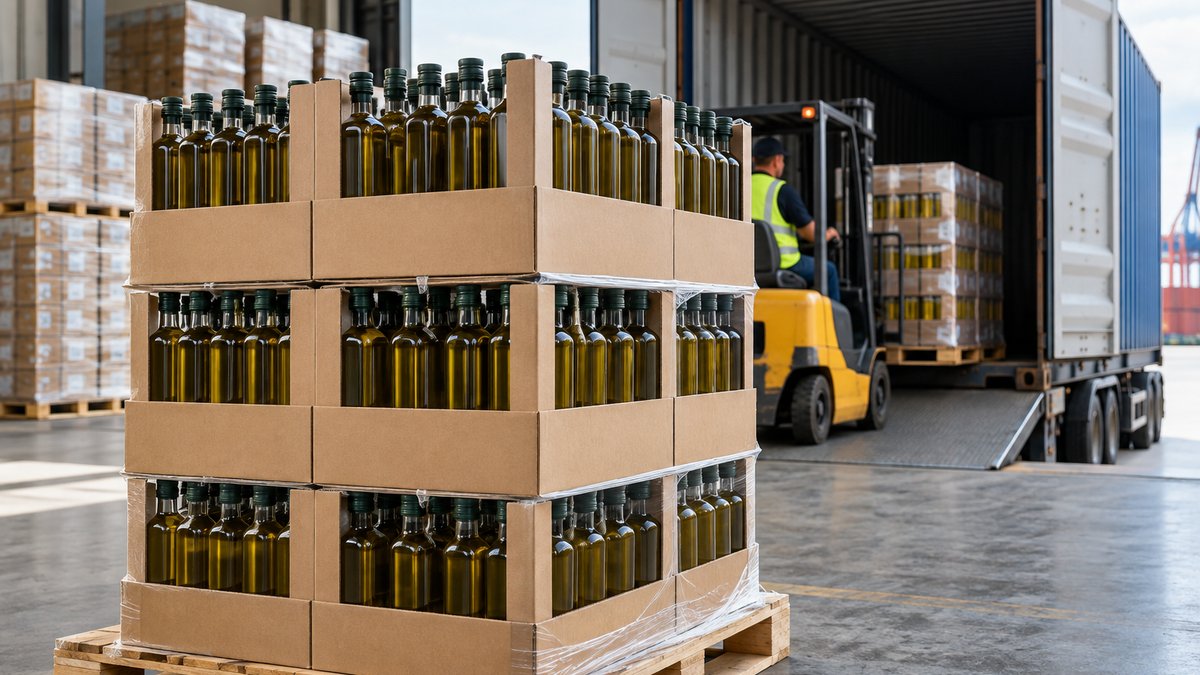
Confirm the order unit before reserving stock or calculating price. A metric tonne, carton, pallet and container are not interchangeable quantity descriptions. Where a request uses an unusual or unclear quantity expression, ask the buyer to restate the total quantity, package count, container loading plan and whether the volume is for one shipment or multiple shipments.
List the packaging in operational detail: oil volume per bottle or container, units per carton, cartons per pallet, packaging material and any buyer label requirements. For private label or buyer-branded supply, establish who provides artwork and who approves the final label. Include the production and shipment lead time that your facility can meet.
For each price, name the currency, unit, product grade, package basis, named port and Incoterm. CIF means the seller quotes cost, insurance and freight to the named destination port under the applicable Incoterms rules; it is not a complete description of every delivery or risk term. State the shipment window, quotation validity and freight assumptions separately. Do not treat an RFQ’s currency-only entry as a target price.
Finally, confirm the payment instrument and documentary conditions. L/C and D/P have different document and payment processes, while “Other” needs to be defined by both parties. Clarify which certificates, origin documents and shipping records the buyer expects, and ensure the final contract records the agreed product, quantity, packaging, price basis, payment schedule and delivery terms.
5. Commercial Checks for These Olive Oil Requests
Start with product fit. Separate requests for extra virgin oil from the Indonesia listing that describes a blend of extra virgin and refined oil. The Benin request refers to cold-extracted extra virgin oil, while the Bangladesh request uses cold-pressed wording. Ask each buyer for measurable quality requirements and accepted documentation before presenting either process description as sufficient proof of grade.
Next, resolve the order basis. The recorded units range across MT, tons, cartons, a pallet and “38000 20-foot Container.” Confirm the intended net quantity and shipment structure directly with the buyer. Then calculate a price using the confirmed package, loading point, destination and delivery term. The listings’ target-price entries do not provide a comparable benchmark.
Check logistics and commercial terms before committing capacity. Four listings state CIF, but the supplier still needs the precise destination point and shipment timing to prepare a freight-based offer. Confirm the accepted payment method, especially where the request states “Other” or leaves payment unstated. For requests not marked verified, review the available profile information and conduct the supplier’s normal counterparty checks.
6. How Freshdi Helps Olive Oil Suppliers Find Buyers
Suppliers can review olive oil buying requests on Freshdi, compare the buyer’s stated product and commercial requirements with their own capability, and use available quotation functions where their account permits. A complete supplier profile and clear product listing give buyers information to assess the offer. Freshdi membership features and quotation limits can change, so check the current plan details before relying on a particular feature.
Use the olive oil buying-request category to review relevant requests. A listed request or verification indicator is a starting point for screening, not a guarantee of a response, order or payment. Confirm product specifications, buyer requirements and commercial terms independently.
Suppliers with an olive oil offer that matches a buyer’s stated requirements can use Freshdi’s Find Buyers page to explore relevant sourcing opportunities.
View Latest Buying Requests for This Product →
7. Conclusion: Confirm the Product and Order Basis Before Quoting
These five requests show several distinct olive oil sourcing needs, including extra virgin products, a stated refined-oil blend, organic type, private-label availability and different package formats. Quantities and payment details vary, and the listed price fields do not provide a common basis for comparison.
Before replying, confirm the exact product and quality specification, resolve any unclear quantity or packaging, and quote against a named delivery point and agreed Incoterm. Suppliers can also review olive oil suppliers on Freshdi when assessing product listings and marketplace activity.
After checking product fit, quantity and delivery terms, suppliers can use Freshdi’s Find Buyers page to continue exploring relevant olive oil requests.
View Latest Buying Requests for This Product →
Frequently Asked Questions
What should an olive oil supplier confirm before quoting an RFQ?
Confirm the exact oil category or blend, the measurable quality specification, quantity and unit, package format, shipment timing, named destination and Incoterm. Also establish the required certificates and payment instrument. If any field is missing or unclear, ask the buyer rather than filling in the gap.
Can extra virgin olive oil and a refined-oil blend use the same specification?
No. They describe different product categories or compositions. A supplier should identify the offered oil accurately and give a specification that matches the buyer’s intended product and destination rules. For a blend, confirm the requested composition and label description with the buyer.
How should suppliers handle an RFQ that gives a quantity in containers or cartons?
Ask the buyer to confirm the total net quantity, package size and shipment plan. A container count, carton count, pallet and metric-tonne quantity describe different things. Do not convert an unclear quantity into a tonnage or assume a container load without the buyer’s confirmation.
What does CIF mean in an olive oil quotation?
CIF means cost, insurance and freight to the named destination port under the applicable Incoterms rules. A supplier should identify that port and state the currency, price unit, packaging basis, shipment window and quotation validity. Confirm the buyer’s requested delivery point and any other contract terms before finalizing the offer.
Can a target-price field that says only USD be used to price an order?
No. A currency without an amount, unit and pricing basis is not a usable target price. Ask the buyer whether a target price exists and confirm whether the comparison should be per tonne, carton, bottle or another unit, and whether it is FOB, CIF or another basis.
References
1. European Commission – DG AGRI Dashboard: Olive Oil, 30 September 2026.
2. European Commission – Commission Delegated Regulation (EU) 2022/2104 on olive oil marketing standards, 29 July 2022, consolidated version 10 June 2024.
3. Freshdi – Olive oil buying requests reviewed in this article, posted 7 to 11 November 2026, 19 November 2026.
Disclaimer: This article is compiled from platform data, public sources and information provided by third parties, for general informational purposes only. We do not guarantee its accuracy or completeness. Mentions and rankings of suppliers do not constitute an endorsement or guarantee, and strategies and examples are illustrative; results may vary. Please conduct your own due diligence before making business decisions.