
Introduction
Germany is a major market for green Arabica, but there is no single German buying price for every origin, grade and delivery basis. The latest complete monthly benchmark available for this update is the International Coffee Organization’s October 2026 indicator-price report.
In October, the ICO’s Brazilian Naturals, Colombian Milds and Other Milds indicators all rose from September, while its overall composite indicator edged down. These are international green-coffee benchmarks, not Germany-specific offers or delivered prices. This update covers the October benchmark period and Germany’s latest full-year import data, for 2025.
Key Takeaways
- The ICO’s October 2026 indicator averages were 294.49 US cents per pound for Brazilian Naturals, 337.85 cents for Colombian Milds and 334.99 cents for Other Milds. Each rose month on month.
- The ICO composite indicator averaged 261.26 cents per pound in October, down 0.3% from September, even as the three Arabica group indicators increased.
- CBI reports that Germany imported 611,000 tonnes of green Arabica directly from producing countries in 2025. Brazil, Honduras, Colombia and Peru were the leading suppliers by volume.
- Indicator prices do not include a buyer’s specific grade, quality differentials, freight, insurance or import costs. Compare offers on the same specification and delivery basis.
- Germany imported 1.22 million tonnes of coffee in 2025 according to Germany’s Federal Information Centre for Agriculture. That figure covers coffee generally, not Arabica alone.
1. Germany’s green coffee market depends on direct origin supply
Germany is one of Europe’s largest coffee markets and a major entry point for green coffee. CBI reports that the country imported 938,000 tonnes of green coffee directly from producing countries in 2025, including 611,000 tonnes of green Arabica. Arabica accounted for 70% of Germany’s coffee imports over 2021 to 2025.
Germany’s Federal Information Centre for Agriculture reports total coffee imports of 1.22 million tonnes in 2025. That total includes coffee beyond green Arabica, so it should not be compared directly with CBI’s Arabica figure. Hamburg is the main entry port for green coffee; Bremen and Bremerhaven also handle imports.
The broader market is supplied by several producing countries. Eurostat says Brazil and Vietnam together accounted for 54% of the European Union’s extra-EU coffee imports in 2025. Those EU-wide figures cover coffee imports overall, rather than Germany’s Arabica imports specifically.
The ICO reported 10.19 million 60-kilogram bags of global green coffee exports in September 2026, up 5.8% from September 2025. That is a monthly export measure, not a production estimate. A rise in global export volume does not by itself show that a particular Arabica grade is more available to a German buyer.
For a procurement decision, keep the measures separate: international indicator prices describe benchmark movements, while customs and import statistics describe recorded trade volumes. Neither gives the current delivered price for a specified German shipment.
Looking to Source Arabica Coffee?
Connect with verified suppliers, discover matching products, and explore sourcing opportunities from global markets.
2. October 2026 Arabica price indicators
2.1 October benchmark levels and scope
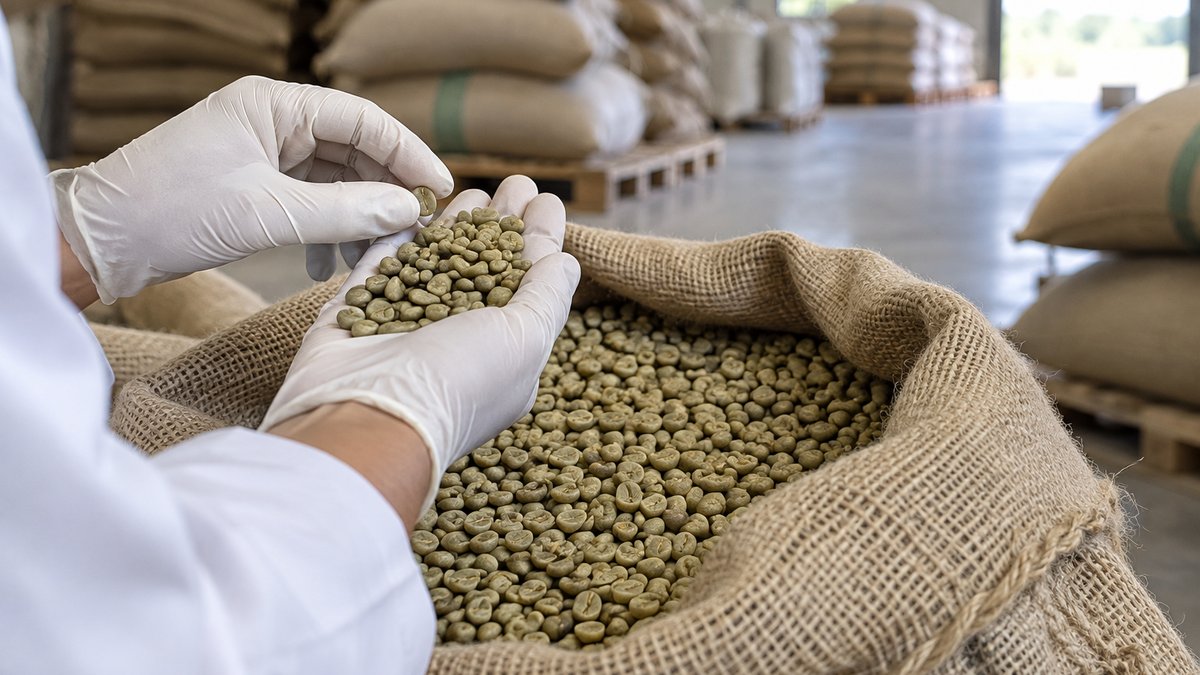
The ICO’s latest complete monthly Arabica indicators available for this update are October 2026 monthly averages. Brazilian Naturals averaged 294.49 US cents per pound, Colombian Milds 337.85 cents per pound, and Other Milds 334.99 cents per pound. These are indicator prices for green coffee groups, not fixed export quotations for a named grade or shipment.
The ICO does not report these group averages as German port prices or as FOB offers from one exporting country. The figures are useful for tracking broad benchmark direction. Buyers still need a supplier quotation that identifies origin, grade, quality parameters, quantity, delivery term and shipment timing.
The three Arabica group indicators moved higher while the ICO composite indicator averaged 261.26 cents per pound, down 0.3% from September. The composite also includes Robusta, whose indicator fell 2.0% to 164.19 cents per pound in October. A change in the composite therefore does not describe Arabica alone.
2.2 Comparing origin groups
The ICO group averages provide a like-for-like monthly benchmark comparison at the indicator-group level, but not a direct comparison of specific export offers. Colombian Milds averaged 43.36 cents per pound above Brazilian Naturals in October. Other Milds averaged 40.50 cents above Brazilian Naturals. These differences reflect the indicator groups, not a guaranteed premium for every Colombian or other mild coffee.
The ICO also reported that New York ICE Arabica futures averaged 285.10 cents per pound in October, up 1.6% from September. Futures and ICO group indicators measure different things. Buyers should not treat either one as an FOB or CIF quotation for their specific coffee.
For a shipment comparison, request offers for the same grade, screen size or other agreed specification, defect limits, crop, packaging and quantity. Ask each supplier to state whether the price is FOB, CFR or CIF. FOB means the seller delivers the goods on board at the named port; CFR includes freight to the destination port, while CIF also includes insurance. Confirm the contract’s named ports and risk-transfer terms.
2.3 Price movement and reporting period
From September to October 2026, the ICO’s Brazilian Naturals indicator increased 1.5%, Colombian Milds increased 0.5%, and Other Milds increased 1.7%. The composite fell 0.3% over the same monthly comparison. The figures establish the direction and size of the monthly changes, but they do not explain the cost of any particular shipment to Germany.
The ICO report also notes that the monthly composite ranged from 251.28 to 272.34 cents per pound during October and closed at 252.32 cents on 30 October. A month-end value is a single date’s figure, so it should not be substituted for the monthly average when comparing periods.
3. What is moving Arabica prices and supply?
In October 2026, Arabica indicators and Robusta moved in opposite directions: the three Arabica group averages rose, while the Robusta indicator declined. That divergence explains why the composite indicator fell despite increases across the reported Arabica groups.
The ICO also reported a 4.9% increase in the arbitrage between London and New York futures markets, to 132.54 US cents per pound in October. The London market is associated with Robusta futures and New York with Arabica futures. This spread is a market indicator, not a delivered-cost measure for German importers.
The ICO’s September export total gives a recent supply-flow measure: global green coffee exports reached 10.19 million bags, compared with 9.63 million bags a year earlier. It does not identify how much of that volume was available in a particular grade or destination market. Buyers should confirm current shipment availability directly in offers.
Weather, harvest progress, inventories, currency movements and shipping costs can affect the price a buyer receives. The October ICO indicator figures do not isolate the contribution of each factor, so buyers should avoid attributing the monthly changes to a single cause without a dated source for that claim.
Germany’s purchasing position also depends on origin supply. CBI’s 2025 data show Brazil as the largest direct supplier of green Arabica, followed by Honduras, Colombia and Peru. The quantities establish recent sourcing patterns, but they do not predict the next crop or guarantee that any origin will have a particular grade available.
4. Which markets import Arabica and where does Germany source it?
4.1 Major European Arabica markets
Germany was Europe’s largest direct importer of green Arabica from producing countries in 2025, at 611,000 tonnes, according to CBI using Eurostat data. Italy followed with 325,000 tonnes. Belgium, Switzerland, the Netherlands and Spain were also significant European destinations.
These are direct imports of green Arabica from producing countries in 2025. They are not forecasts, orders or total coffee consumption. The distinction matters for exporters assessing market size: an import figure describes past trade, while a confirmed buyer order must specify a product, quantity and shipment requirement.
4.2 Germany’s leading Arabica origins
CBI’s 2025 figures identify Brazil, Honduras, Colombia and Peru as Germany’s largest green Arabica suppliers by volume. Brazil supplied 356,000 tonnes, Honduras 62,000, Colombia 61,000 and Peru 40,000. CBI cautions that a large share of coffee imported from Brazil is Robusta, so country-level total coffee figures should not be read as Arabica volumes.
Germany’s origin mix gives exporters a basis for understanding existing trade connections, not a guarantee of demand for a new offer. A buyer may seek a different origin, grade, certification or delivery schedule. A supplier should describe the coffee actually available rather than infer buyer preference from national import totals.
5. How buyers should compare Arabica offers for Germany
Compare the full landed cost of green Arabica, not the benchmark alone. An ICO indicator in US cents per pound does not include a named supplier’s differential, freight, insurance, port charges, inland delivery, financing or any shipment-specific costs.
- Write one specification for every supplier: origin, Arabica type, grade or screen size, moisture and defect limits, crop, processing method, packaging and quantity.
- Ask for a dated quotation in a stated currency, with the validity period, shipment window and named loading port.
- Compare offers on the same Incoterm and destination basis. If offers use different terms, add the costs needed to bring them to the same comparison point.
- Confirm freight and insurance assumptions for CFR or CIF offers. Check whether destination port charges, customs costs and inland transport are excluded.
- Review samples and agreed quality tolerances before contracting. Clarify inspection arrangements, documents, payment terms and what happens if a shipment falls outside specification.
A lower FOB price does not establish a lower delivered cost. A buyer comparing origins should use the same quantity, packing format, shipment period and destination port, then calculate the costs needed to receive the coffee in Germany. Record the benchmark date separately from the supplier’s offer date.
Quotation comparison fields:
Product: Green Arabica, origin and grade stated
Quantity and packing: Buyer’s required volume and bag format
Price basis: Currency, unit, Incoterm and named ports
Shipment: Loading window and quotation validity
Quality and documents: Agreed parameters, inspection and required documents
This is an illustrative comparison format, not a universal coffee specification.
6. Freshdi buying requests are separate from market statistics
This update uses public ICO, Eurostat and German trade information; it does not include a dated Freshdi request dataset. No request count, buyer destination, quantity or requested trade term can therefore be stated here. A platform request is a buyer-posted requirement, not a measure of total German or global demand.
Buyers can review potential Arabica Coffee suppliers and state their origin, grade, volume, delivery point and shipment timing when preparing a sourcing request. Suppliers can review Arabica Coffee buying requests and assess whether the listed requirements match their available coffee.
When responding to a request, suppliers should quote the exact product and basis requested or state where their offer differs. Buyers should check the request and supplier details directly before discussing samples, documentation or contract terms.
7. Practical next steps for importers and exporters
7.1 For buyers and importers
- Use the October ICO averages as dated benchmarks, not as purchase offers or a forecast of the next quotation.
- Request comparable, written offers for the same Arabica grade, quantity, packaging and delivery window.
- Check the delivery basis and calculate costs to the same German destination before comparing prices.
- Confirm sample approval, quality tolerances, inspection arrangements and shipment documents in the contract.
- Verify the current import and product requirements that apply to the shipment and its processing status.
7.2 For exporters and suppliers
- State origin, Arabica type, grade, processing, crop, available quantity and packaging in the offer.
- Identify the loading port, currency, unit, Incoterm, named destination and quotation validity.
- Separate any benchmark reference from the actual offer price, and date both figures.
- Describe certificates and supporting documents only when they apply to the lot being offered.
- Tailor the quotation to the buyer’s requested destination and specification, and clarify any difference before pricing.
Buying consideration: Before comparing two offers, put both on the same product, quantity, shipment period and delivery basis; otherwise the price difference may reflect different terms rather than a lower cost for equivalent coffee.
8. Find Arabica suppliers and buying requests on Freshdi
Freshdi’s Arabica Coffee category gives buyers a place to review supplier listings and gives suppliers a place to review relevant buying requests. Use the product details and requirements shown there as starting points for a direct comparison; platform listings do not replace confirmation of quality, availability or contract terms.
Once the target grade and delivery basis are clear, buyers can review supplier listings and suppliers can check whether current requests match their offers.
View Latest Coffee & Coffee Bean Buying Requests →View Potential Coffee & Coffee Bean Suppliers →
9. Arabica coffee price and sourcing questions
10. Germany Arabica market outlook
The latest complete monthly benchmark in this update is the ICO’s October 2026 report: the three Arabica group indicators rose from September, while the composite indicator edged lower. Germany’s 2025 import figures show a large direct market for green Arabica, led by Brazil, Honduras, Colombia and Peru.
For procurement, the October indicator movement is context rather than a price prediction. Buyers should compare current offers on matched specifications and landed-cost terms. Exporters should date their quotations and state the grade, quantity, loading point and delivery basis. Freshdi provides a place to review Arabica Coffee suppliers alongside product requirements.
Buyers ready to compare offers can review suppliers listed for Arabica Coffee.
View Related Suppliers for This Product →
Frequently Asked Questions
What was the Arabica coffee price in October 2026?
The ICO reported October 2026 monthly indicator averages of 294.49 US cents per pound for Brazilian Naturals, 337.85 cents for Colombian Milds and 334.99 cents for Other Milds. These are green-coffee group benchmarks, not a Germany-specific supplier quotation or delivered price.
Did Arabica coffee prices rise in October 2026?
Yes. The ICO’s Brazilian Naturals indicator rose 1.5% from September, Colombian Milds rose 0.5%, and Other Milds rose 1.7%. The ICO composite indicator, which also includes Robusta, declined 0.3% to 261.26 US cents per pound.
Which countries supply Germany with green Arabica?
CBI’s Eurostat-based 2025 figures identify Brazil as Germany’s largest direct supplier of green Arabica, at 356,000 tonnes. Honduras supplied 62,000 tonnes, Colombia 61,000 tonnes and Peru 40,000 tonnes.
Which European country imports the most green Arabica?
Germany was the largest European importer of green Arabica directly from producing countries in 2025, with 611,000 tonnes, according to CBI using Eurostat data. Italy followed with 325,000 tonnes.
Why does an ICO benchmark differ from a supplier quotation?
An ICO indicator is a market benchmark for a coffee group. A supplier quotation applies to a specific origin, grade, quality, quantity, shipment period and delivery basis. Freight, insurance and destination costs also affect the price a German buyer pays.
How should a buyer compare FOB, CFR and CIF coffee offers?
Compare offers using the same product specification, quantity, destination and shipment period. FOB covers delivery on board at the named port; CFR includes freight to the named destination port, and CIF also includes insurance. Check the named ports and contract terms, then include any remaining destination and inland costs.
References
1. International Coffee Organization – Coffee Market Report, October 2026, October 2026.
2. CBI – The European market potential for Arabica coffee, 2026.
3. Eurostat – Import value of coffee more than doubled in a decade, 2026.
4. World Bank WITS – Germany imports of coffee, not roasted or decaffeinated, by country, 2025, 2025 data, page refreshed November 16, 2026.
5. Federal Information Centre for Agriculture – Wie wird Kaffee angebaut?, 2026.
Disclaimer: This article is compiled from platform data, public sources and information provided by third parties, for general informational purposes only. We do not guarantee its accuracy or completeness. Prices, volumes and forecasts are indicative, reflect conditions as of 2026-11-17 and may change without notice. This is not financial, investment or trading advice.