
Introduction
Black pepper export reference prices fell in the week leading to 16 November 2026. A market update published that day listed Vietnamese 500 g/l black pepper at US$5,700 per metric tonne and 550 g/l at US$5,900/MT; those are origin-level export references, not Canadian wholesale prices or delivered offers.
Canada’s latest annual import figures available in the sources reviewed cover 2025. Under HS 090411, dried pepper that is neither crushed nor ground, Canada imported 4,904 tonnes, led by Vietnam and India. This update separates the November export references from Canada’s 2025 customs data, since they describe different periods and price bases.
Key Takeaways
- On 16 November 2026, Vietnamese 500 g/l black pepper was reported at US$5,700/MT, down US$250/MT, or 4.2%, from the previous reported level; 550 g/l was US$5,900/MT, down US$95/MT, or 1.58%. These are export references, not Canada-delivered quotations.
- Canada imported 4,904 tonnes of dried whole pepper under HS 090411 in 2025. Vietnam supplied 3,156 tonnes and India 970 tonnes. The customs category is a useful whole-pepper trade measure, but it does not identify black pepper alone.
- Export references differ by origin and specification. On 13 November 2026, the reported levels were US$5,700/MT for Vietnam 500 g/l, US$5,550/MT for Brazil ASTA 570, US$6,770/MT for Indonesian Lampung ASTA and US$9,100/MT for Malaysian ASTA. Those grades are not identical, so the figures do not establish a like-for-like ranking.
- The International Pepper Community’s January 2026 outlook projected global pepper production, including non-member countries, at about 530,000 tonnes in 2026, broadly in line with 2025. It also described low carry-over stocks as a price-supporting factor. These are outlook statements, not final production results.
- Canadian buyers should request a current offer against a written grade, cleaning, packaging, quantity, shipment window and delivery basis. Compare the resulting landed cost, and check the Canadian import requirements that apply to the exact product and shipment.
1. Black Pepper Supply and Demand in the Global Market
Vietnam is a major producing and exporting origin, while Brazil, India, Indonesia and Malaysia also contribute to international supply. The International Pepper Community’s January 2026 annual review described supply conditions as tight in 2025, with limited carry-over stocks and higher production, compliance and logistics costs. Its outlook put global pepper production, including non-member countries, at about 530,000 tonnes in 2026, broadly in line with the previous year. The estimate covers pepper generally and should not be read as a confirmed black-pepper-only harvest total.
That outlook described different supply positions by origin. It expected Vietnam’s production to remain broadly stable in 2026, while Brazil’s exports were projected to rise from about 80,000 tonnes in 2025 to about 90,000 tonnes in 2026. The IPC also identified constrained Indian availability and strong domestic absorption as factors affecting exportable supply. These are the organization’s dated outlook assessments, not audited final outcomes.
Canada’s 2025 import record shows how this sourcing mix reaches the market. World Bank WITS, using UN Comtrade data, records 4,904,350 kg of Canadian imports under HS 090411, valued at US$40.17 million. Vietnam accounted for 3,156,090 kg and India for 970,382 kg. The code covers dried pepper, excluding crushed or ground pepper; it is not a clean measure of black pepper alone.
The cited sources do not provide a current Canadian wholesale quote or a matched global ranking of importing countries for November 2026. The price figures below are therefore export-origin references useful for procurement comparisons, not a price index for Canadian distributors or retail products. For a Canada-bound purchase, the supplier’s current quote, freight, insurance, import charges and product compliance determine the buyer’s cost.
Looking to Source Black Pepper?
Connect with verified suppliers, discover matching products, and explore sourcing opportunities from global markets.
2. Latest Black Pepper Export Prices Relevant to Canada
2.1 Current export references from Vietnam
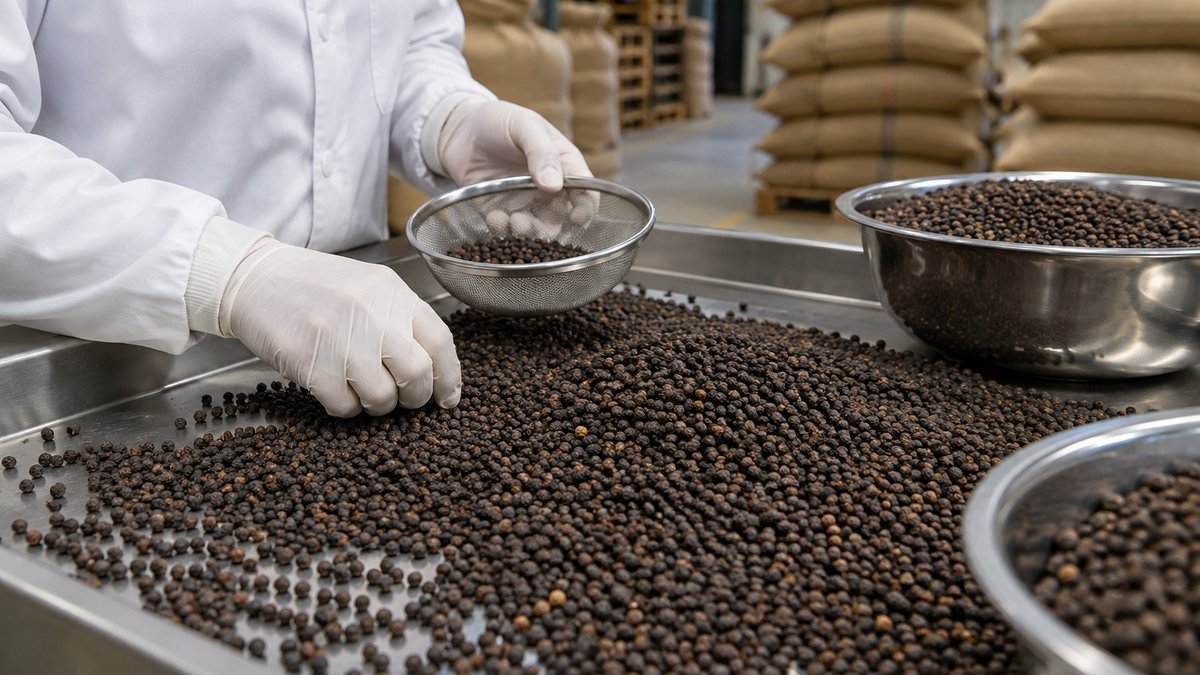
A Tridge market update dated 16 November 2026 reported Vietnamese black pepper at US$5,700/MT for 500 g/l and US$5,900/MT for 550 g/l. It reported week-on-week declines of US$250/MT, or 4.2%, for 500 g/l and US$95/MT, or 1.58%, for 550 g/l. These are export-market reference prices. The report does not state that the prices are quoted CIF or delivered to Canada, and they are not binding offers.
The 16 November report provides the newest dated Vietnam prices in this update. Its earlier comparison point implies previous reference levels of US$5,950/MT for Vietnamese 500 g/l and US$5,995/MT for 550 g/l. A separate 13 November table listed those Vietnamese grades at US$5,700/MT and US$5,900/MT. Because the reports use distinct dates and reporting formats, buyers should not combine them into a single continuous series without checking the underlying quote method.
2.2 Price comparison by exporting origin
The 13 November reference table puts Brazil ASTA 570 at US$5,550/MT, below the listed Vietnamese 500 g/l price of US$5,700/MT. The Brazilian product specification is ASTA 570, while Vietnam’s figure is stated by density grade. Indonesian Lampung ASTA was US$6,770/MT and Malaysian ASTA US$9,100/MT. Because the table does not establish equivalent grade tolerances, cleaning, shipment basis or contract terms across all origins, treat these as market indicators rather than a direct price league table.
No matched Canadian landed-price comparison was available in the cited sources. The export references exclude costs that depend on the shipment and contract. A buyer should ask each exporter to specify the loading port, Incoterm, freight and insurance treatment, bag type, net weight, inspection terms, quote validity and shipment window before comparing offers.
2.3 Recent price movement and trend
The latest reported movement was lower for the Vietnamese grades in the 16 November update: 500 g/l fell by US$250/MT to US$5,700/MT, and 550 g/l fell by US$95/MT to US$5,900/MT. The same update reported Brazil ASTA 570 down US$150/MT to US$5,550/MT. These changes describe the week covered by that market report, not a Canadian import-price movement.
For a longer-term supply context, the IPC’s January 2026 review cited low carry-over stocks and projected limited global production expansion for 2026. The November price decline does not, by itself, show that supply constraints have ended. Conversely, the IPC outlook is not a forecast of a particular Canadian buying price. Buyers should track new origin references alongside actual offers for their required grade and shipment date.
3. Factors Affecting Black Pepper Export Prices
Supply availability is one factor behind pepper price changes. The IPC’s January 2026 review linked constrained supply and limited carry-over stocks with firm prices in 2025, and its 2026 outlook expected production to remain broadly near the prior year’s level. The IPC described Vietnam’s production as broadly stable and Brazil’s export availability as increasing. Seasonal harvest flows can change the amount offered by origin, but the outlook does not quantify the effect on a specific November Canadian quotation.
Demand and sellers’ readiness to offer stock also matter. The IPC described pepper consumption as resilient in major markets in its 2025 review, while noting that high absolute prices can restrain near-term buying appetite. Those broad observations do not confirm a Canadian buyer order. Importers should distinguish market commentary from tenders, contracts or active supplier quotations.
Grade and preparation affect the price comparison. The November references distinguish Vietnamese 500 g/l and 550 g/l, Brazil ASTA 570 and Indonesian Lampung ASTA. They do not supply a full set of equivalent quality specifications. Before treating a lower figure as a cheaper substitute, buyers should confirm density or ASTA grade as applicable, moisture, foreign matter, cleaning method, packaging and inspection tolerances with the exporter.
Export policy, currency and logistics can change a destination offer even when an origin reference is unchanged. The cited November price tables do not quantify the impact of exchange rates, freight, insurance or Canadian port charges. Buyers should request the commercial basis and validity period on every quote, then price the same quantity to the same Canadian destination under comparable delivery terms.
Buying consideration: For a Canada-bound comparison, record the product grade, origin, packaging, quantity, loading port, Incoterm, shipment window and quote date beside each offer. Keep market references separate from a supplier’s firm quotation.
4. Which Countries Import the Most Black Pepper?
4.1 Major importing markets and Canada’s sourcing
The sources used for this update do not establish a comparable November 2026 ranking of global black-pepper importing countries. Canada’s latest annual trade figures in the cited dataset are for 2025 and cover HS 090411, dried whole pepper excluding crushed or ground pepper. They show a measurable Canadian import market, but the category is broader than black pepper alone.
Vietnam and India were the two largest listed suppliers to Canada by quantity in 2025. Across all reported origins, Canada imported 4,904,350 kg valued at US$40,170.11 thousand. These are customs trade values and quantities for the calendar year, not current spot prices or the average price of a single black-pepper grade.
4.2 Canada’s imports by exporting origin
Vietnam supplied about 64% of Canada’s 2025 HS 090411 import quantity, while India supplied about 20%, based on the reported quantities. These shares are calculated from the WITS total and partner quantities and refer only to the whole dried pepper category. They do not prove that the same shares apply to black pepper specifically, to ground pepper, or to 2026 purchases.
Canada’s supplier mix gives importers a reason to request comparable offers from more than one origin. When reviewing a Vietnamese or Indian quotation against a Brazilian or Indonesian offer, buyers should confirm that grade, cleaning, shipment timing and delivery terms match. A country’s annual share is not evidence that a particular exporter has stock available or can meet a buyer’s specification.
4.3 What import demand means for exporters
The 2025 customs data confirms imports from several origins, led by Vietnam and India, but does not identify current purchase orders or projected Canadian demand. Exporters can use the origin mix as background when preparing offers for Canadian buyers. They still need to state the product grade, available quantity, loading port, packaging and delivery basis for each quotation.
5. How Canadian Buyers Can Compare Black Pepper Offers
Compare landed cost for the same product and destination, rather than selecting an offer from its headline export price. The November origin references are not Canadian delivery prices. A Canada-bound quotation can include or exclude freight, insurance and other charges depending on its Incoterm, so buyers need the supplier to state the named place and delivery basis clearly.
- Write one specification for every supplier: whole black pepper, required grade or density, cleaning method, moisture and foreign-matter tolerances, packaging and any inspection requirements.
- Request the same order quantity and shipment window from each exporter. Ask suppliers to identify the loading port and quote currency.
- Compare offers on a consistent basis. For FOB, the buyer generally arranges the main carriage; for CFR, the seller pays freight to the named destination port; for CIF, the seller also arranges insurance. Confirm the exact contract wording and named port.
- Add the relevant freight, insurance, destination handling and import costs to estimate landed cost. Do not treat an origin reference as the amount payable at a Canadian port.
- Check food import obligations for the exact product and transaction. The Canadian Food Inspection Agency directs importers to use its Automated Import Reference System for commodity-specific requirements and explains general obligations under the Safe Food for Canadians Regulations.
- Record the quotation date and validity period. Reconfirm availability and price before signing, particularly when an offer is based on a changing market reference.
A like-for-like request helps reveal whether a price gap comes from origin, grade, cleaning, packaging or delivery terms. If a supplier cannot quote the requested basis, keep that offer separate rather than filling in missing freight or insurance costs yourself.
Illustrative black pepper inquiry:
Product: Whole black pepper, state the required grade and cleaning method
Quantity: State the required quantity and packaging
Destination: Canadian destination port or delivery location
Delivery basis: Ask for the Incoterm and named place
Shipment: State the target shipment window and quote validity
This is an illustrative inquiry format. Confirm the specifications and import requirements for each transaction.
6. What Does the Latest Black Pepper Demand Look Like on Freshdi?
Freshdi has category pages for black pepper buying requests and potential suppliers. The current market references and annual customs data discussed here do not establish Freshdi request counts, buyer quantities or active demand by destination. Treat those platform pages as places to review individual listings, not as a measure of total Canadian or global demand.
Buyers can review black pepper supplier listings and compare the product and commercial details stated on each profile. Exporters can review black pepper buying requests and check whether a request matches their grade, quantity and shipment capability. Confirm each listing’s current details before making a sourcing decision.
Once the grade and delivery requirements are clear, buyers and exporters can review relevant black pepper listings and requests on Freshdi.
View Latest Herbs, Spices & Seasonings Buying Requests →View Potential Herbs, Spices & Seasonings Suppliers →
7. What Buyers and Suppliers Should Do Next
7.1 For Canadian buyers and importers
- Use the 16 November Vietnamese export references as dated market context, not as a Canadian delivered price.
- Request comparable offers for the same grade, quantity, packaging and shipment window from the origins under consideration.
- Calculate landed cost to the intended Canadian destination and document which freight, insurance and destination charges are included.
- Check the CFIA import requirements for the specific commodity and shipment using AIRS, and confirm applicable importer obligations before dispatch.
- Reconfirm the quote, shipment availability and validity before contracting.
7.2 For black pepper exporters and suppliers
- State whether the offer is for 500 g/l, 550 g/l, ASTA or another defined grade, and include the applicable quality tolerances.
- Identify cleaning method, packaging, available quantity, loading port, quote currency and Incoterm with named place.
- Date the quotation and state its validity period; distinguish an indicative reference from a firm commercial offer.
- Prepare product and compliance documents relevant to the Canadian buyer’s product and shipment, and verify requirements before confirming the transaction.
- Review buying requests and tailor a quotation only when the requested grade, quantity and destination fit the available offer.
8. Canada Black Pepper Market Outlook
The latest dated export references found for this update show a decline in Vietnamese black pepper prices during the week reported on 16 November 2026: 500 g/l was US$5,700/MT and 550 g/l was US$5,900/MT. These origin-level figures do not establish a Canadian wholesale price or predict the next movement.
Canada’s 2025 HS 090411 imports show Vietnam and India as the leading listed sources of dried whole pepper by quantity. The customs figures and the November origin references answer different questions: one records Canada’s prior-year trade under a broader product code, while the other reports recent export-market indications for specified grades.
Canadian buyers should compare current quotations on matching specifications and delivery terms, then calculate the landed cost. Exporters should date offers and state grade, loading point, quantity and Incoterm. Freshdi’s black pepper categories let buyers review potential suppliers and exporters review buying requests.
Buyers comparing offers and exporters looking for relevant requests can review the black pepper categories on Freshdi.
View Latest Herbs, Spices & Seasonings Buying Requests →View Potential Herbs, Spices & Seasonings Suppliers →
Frequently Asked Questions
What is the current black pepper export price relevant to Canadian buyers?
A market update dated 16 November 2026 reported Vietnamese black pepper at US$5,700/MT for 500 g/l and US$5,900/MT for 550 g/l. These are origin-level export references, not Canadian wholesale prices or delivered quotations. Ask suppliers for a current offer with grade, shipment basis and quote validity stated.
Why do black pepper prices differ between exporting countries?
Origin references may describe different grades, cleaning methods, quality tolerances, shipment dates and quote bases. For example, the 13 November 2026 comparison listed Vietnam 500 g/l at US$5,700/MT and Brazil ASTA 570 at US$5,550/MT. Those specifications are not demonstrated to be identical, so buyers should compare full specifications and delivery terms before judging the price difference.
What caused the recent decline in Vietnamese black pepper references?
The 16 November 2026 update reported the size of the weekly declines but did not establish one confirmed cause. The International Pepper Community’s January 2026 outlook discussed supply, stock levels, seasonal availability and buying appetite as market factors, but that outlook does not explain a specific November weekly move. Buyers should avoid treating an unconfirmed explanation as a market fact.
Which countries supplied Canada with the most whole dried pepper?
In 2025, Canada imported 3,156,090 kg from Vietnam and 970,382 kg from India under HS 090411, which covers dried pepper that is neither crushed nor ground. This customs category is broader than black pepper alone and does not describe current 2026 orders.
How should I compare FOB, CFR and CIF black pepper quotations?
Check the named place and the contract terms. FOB generally leaves main carriage for the buyer to arrange; CFR includes seller-arranged freight to the named destination port; CIF also includes seller-arranged insurance. Compare quotes on the same delivery basis and add any excluded charges before estimating landed cost.
Where can buyers find black pepper suppliers or exporters find requests on Freshdi?
Freshdi has black pepper category pages for potential suppliers and buying requests. Review each listing’s stated product and commercial details, and confirm that the information matches your required grade, quantity and destination.
References
1. Tridge – Pepper Prices Decline Domestically and Internationally in Mid-November, 16 November 2026.
2. Vietnam.vn – Pepper prices today, November 16, 2026: After a week of decline, awaiting new buying pressure, 16 November 2026.
3. World Bank WITS, using UN Comtrade data – Canada imports of dried pepper (excluding crushed or ground), HS 090411, 2025, 2025 trade data.
4. International Pepper Community – Global Pepper Market Report Annual Review 2025 and Outlook 2026, 8 January 2026.
5. Canadian Food Inspection Agency – Importing food into Canada: General requirements, Accessed 17 November 2026.
6. Canadian Food Inspection Agency – Automated Import Reference System, Accessed 17 November 2026.
Disclaimer: This article is compiled from platform data, public sources and information provided by third parties, for general informational purposes only. We do not guarantee its accuracy or completeness. Prices, volumes and forecasts are indicative, reflect conditions as of 2026-11-17 and may change without notice. This is not financial, investment or trading advice.