
Introduction
As of November 17, 2026, the newest comparable export benchmark located for long-grain rice is the USDA Foreign Agricultural Service’s November 2026 series of FOB quotes, dated November 5. It puts India at US$389 per metric tonne, Vietnam at US$439/MT, Thailand at US$497/MT, Pakistan at US$411/MT, Uruguay at US$610/MT and the United States at US$680/MT.
Those are export-origin reference prices, not Ghana-delivered offers. Ghana-specific figures are older and cover broader rice categories: an October national average and retail prices reported for March. This update separates those measures from current export quotes so Ghanaian buyers and exporters can compare like with like.
Key Takeaways
- The USDA’s November 5, 2026 FOB benchmark ranged from US$389/MT for Indian 5% broken white rice to US$680/MT for U.S. 4% broken long-grain rice. Thai 100B rice and 5% broken white rice from other listed origins make the comparison indicative, not perfectly identical.
- Reuters-reported trader offers on November 13 put Indian 5% broken white rice at US$390-395/MT, Vietnamese 5% broken rice at US$490-495/MT and Thai 5% broken rice at US$495-500/MT. Reuters did not state the delivery basis for these offers.
- Ghana’s rice price series tracked by AGRA was GHS 11,100/MT in October 2026, unchanged month on month and 11.5% below a year earlier. The series does not identify a variety or market level, so it is not a specific long-grain white-rice quotation.
- USDA FAS Accra’s 2026/27 marketing-year forecast puts Ghana’s rice imports at 950,000 MT. The forecast points to substantial import demand, but it is not a confirmed order or a forecast for long-grain white rice alone.
- Buyers should compare exact variety, broken percentage, packaging, shipment timing and delivery basis. An export quote cannot be compared directly with a Ghana retail or national-average price.
1. Ghana rice prices reflect both import costs and local market conditions
Ghana’s rice market combines imported and locally produced rice, and the available price measures cover different products and stages of sale. The latest broad Ghana price observation located for this update is AGRA’s October 2026 national average of GHS 11,100 per metric tonne. AGRA reports no month-on-month change, a 2.78% increase over six months and an 11.53% decrease year on year.
That national figure does not identify long-grain white rice, origin, packaging or whether the price is wholesale or retail. It should be used as general market context, not as a buying quotation for a specified imported grade.
USDA FAS Accra’s 2026 Ghana Grain and Feed Annual gives a more product-specific, but older, retail reference. In March 2026, it reported an average GHS 325 for a 25 kg bag of Vietnamese rice, equivalent to GHS 13/kg, and GHS 655 for a 25 kg bag of Thai fragrant rice. The report does not establish that either figure is for the exact long-grain white-rice specification in a buyer’s contract.
Import demand is substantial. USDA FAS Accra forecasts Ghana’s rice imports at 950,000 MT for marketing year 2026/27, unchanged from its preceding-year estimate. The report links import demand to population growth, urbanization and expansion in hotels, restaurants and catering. These are annual forecasts and demand drivers, not confirmed orders for a particular variety.
Looking to Source Long Grain White Rice?
Connect with verified suppliers, discover matching products, and explore sourcing opportunities from global markets.
2. November export benchmarks vary by origin and specification
2.1 Current export price benchmarks
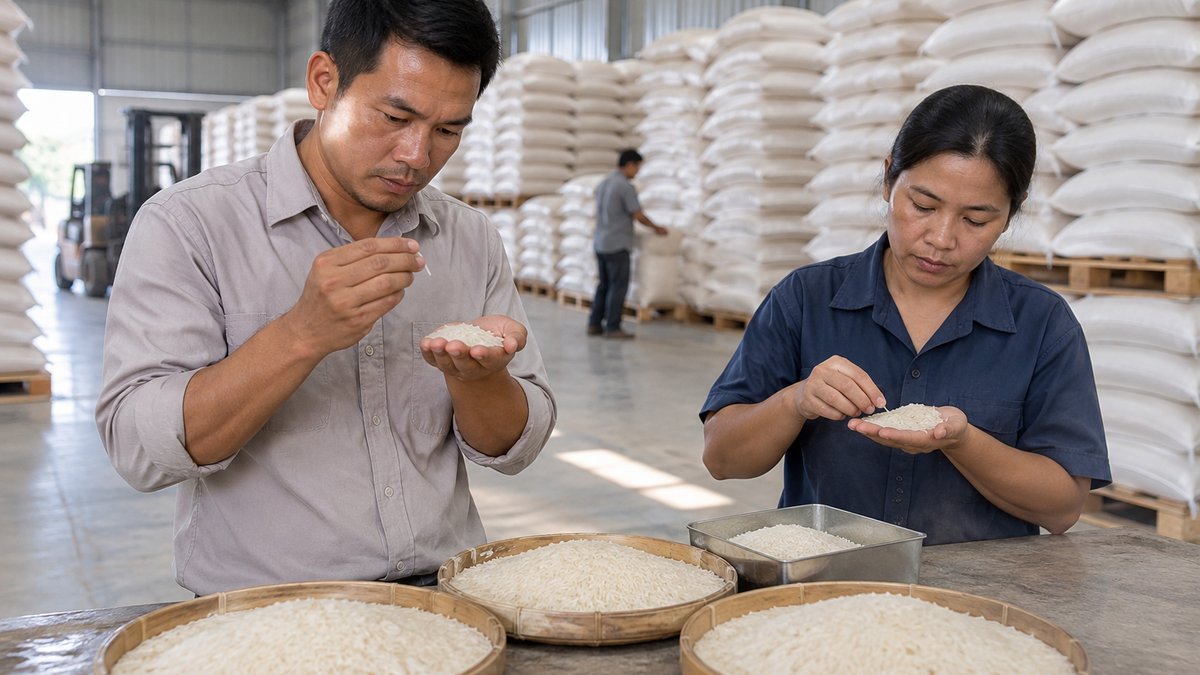
The latest standardized comparison located is the USDA Foreign Agricultural Service’s November 2026 report, which plots daily FOB long-grain rice export quotes through November 5. FOB means the seller delivers the goods on board at the named port; the buyer generally arranges the main sea freight and insurance. The report’s comparison uses Thai 100B, U.S. 4% broken rice and 5% broken white rice for the other origins, so the quotes are benchmarks rather than a quotation for one identical grade.
The USDA report says quotes increased after its October outlook: U.S. prices rose US$41/MT, Uruguay US$19/MT, Thailand US$31/MT, Vietnam US$24/MT, Pakistan US$15/MT and India US$5/MT. These changes refer to the report’s comparison with October, not to every transaction or grade sold into Ghana.
2.2 Newer trader offers and origin differences
A Reuters market report published November 13 gives newer trader offers for several Asian origins. Indian 5% broken white rice was US$390-395/MT; Vietnamese 5% broken rice was US$490-495/MT; and Thai 5% broken rice was US$495-500/MT. Reuters did not state a delivery basis in the report. Keep these offers separate from the November 5 FOB series rather than treating them as a direct price comparison.
The gap between the USDA’s November 5 Vietnamese quote and Reuters’ November 13 offer is a reminder to check the quotation date, grade and basis. The reports may use different market observations and specifications. Neither is a confirmed offer for delivery to Ghana.
2.3 What the price trend means for Ghana buyers
The November USDA series shows increases across its listed exporters since the October outlook, with the largest reported dollar increase for U.S. rice and the smallest for India. Reuters also reported rising Vietnamese and Thai offers on November 13. For a Ghana buyer, these movements are signals to refresh quotations, not a prediction of the final landed price.
The Ghana retail references are not a continuous series for one grade: AGRA’s October measure covers rice nationally, while USDA FAS Accra’s March figures distinguish Vietnamese and Thai products but use different retail products and a different date. Do not calculate a price change between those observations as if they were the same rice, market level and period.
3. Supply, demand and currency shifts are moving export offers
Supply expectations and currency changes have affected export prices in November. In its November 13 report, Reuters attributed Indian exporters’ higher offers partly to a stronger rupee, which raised exporters’ local-currency returns from dollar sales. Traders cited tighter supply concerns for Thai and Vietnamese rice.
USDA’s November Rice Outlook says India’s 2026/27 crop outlook was reduced because of weather, and its November 10 quote for Indian 5% broken rice was US$390/MT, the highest in over a year. The same report reduced its 2026/27 global rice trade forecast by 1.1 million tonnes from the previous month to 60.3 million tonnes. The forecast remains a record, but lower expected Indian exports account for most of the reduction.
Demand does not move in the same direction in every importing market. USDA ERS lowered its 2026/27 import outlook for Senegal, Côte d’Ivoire and Cameroon, citing factors including competitive domestic rice, slower buying and a lagging import pace. Ghana’s separate 950,000 MT forecast from USDA FAS Accra is for Ghana’s marketing year and should not be confused with the global trade-year total.
For Ghana, local currency, freight, insurance, port charges, packaging and taxes or levies can change the cost between an export quote and a buyer’s final price. USDA FAS Accra noted that Ghana had eliminated taxes and levies affecting landed costs in its 2026 annual report. Buyers should verify applicable charges for the shipment date and product before using that report as a current cost calculation.
Buying consideration: Ask each exporter to quote the same rice type, broken percentage, quantity, bag size, shipment window and Incoterm. Compare export prices on a consistent basis, then add freight, insurance and destination costs to estimate the landed amount.
4. Ghana’s import outlook matters more than a global ranking
4.1 Global import outlook
USDA ERS forecasts global rice imports of 60.3 million metric tonnes for trade year 2026/27 in its November 13, 2026 Rice Outlook, down 1.1 million tonnes from the previous month. The report identifies reductions for several importing markets, including Senegal, Côte d’Ivoire and Cameroon. These forecasts cover rice broadly, not long-grain white rice alone.
A country ranking for total rice imports does not establish demand for a specific long-grain grade. Buyers sourcing for Ghana should assess Ghana’s import outlook, local packaging preferences and the quality specifications their customers require rather than using a global ranking as a sales forecast.
4.2 Ghana’s import destinations and demand
Ghana is the destination in this update, so the relevant trade question is how local buyers evaluate offers for the market. USDA FAS Accra forecasts imports of 950,000 MT for marketing year 2026/27. It reports that importers often buy in bulk and re-bag into sizes such as 50 kg, 25 kg, 22.5 kg and 5 kg; smaller firms also import packaged rice in 1 kg and 2 kg bags.
The same USDA report describes demand from households and the hotel, restaurant and catering sector. It does not provide a long-grain white-rice destination share by exporting country in the figures used here, so no origin ranking or year-on-year change is presented.
4.3 What import demand can and cannot tell exporters
The Ghana import forecast supports market planning at the broad rice-category level. It does not prove that a buyer has placed an order, that a particular grade is short, or that one origin will win a contract. Exporters need to confirm current buyer specifications and import requirements before preparing a market-specific offer.
5. Compare landed cost, not export prices alone
An FOB benchmark shows the export price at origin; it does not show the cost of rice delivered to Ghana. A buyer comparing origins should first confirm that the offers cover the same long-grain type, broken percentage, crop year, moisture limits, foreign matter tolerance, packaging and quantity.
Then compare the delivery basis. CFR includes cost and freight to the named destination port, while CIF includes cost, insurance and freight. The exact allocation of charges and risk depends on the agreed Incoterm and named place. A lower FOB offer can result in a higher landed cost if freight, insurance, handling or other destination costs differ.
- Request a dated quotation with currency, validity period, quantity and shipment window.
- Confirm the loading port, destination port and whether the offer is FOB, CFR or CIF.
- Match the broken percentage, grain type, packaging and quality tolerances before comparing prices.
- Add freight, insurance, customs charges and local handling costs to calculate the landed amount.
- Check import documentation and applicable Ghana requirements for the shipment and product.
Illustrative inquiry format:
Product: Long-grain white rice, with broken percentage and other tolerances stated
Quantity: Requested metric tonnes and acceptable shipment split
Packaging: Bag material, net weight and whether bulk re-bagging is required
Delivery: FOB, CFR or CIF, with named port and shipment window
Documents: Required certificates and inspection documents for the shipment
This is an illustrative inquiry format. Buyers should adapt it to the product, destination and contract.
Buying consideration: Request quotations against one specification sheet so price differences reflect origin, delivery and supplier terms instead of mismatched grades.
6. Freshdi buying requests should be assessed individually
A buying request is useful for checking an individual buyer’s stated product, quantity, destination and delivery terms. Treat each inquiry as a specific requirement, not as proof of Ghana-wide demand or a confirmed sale.
For long-grain white rice, exporters should check whether a request specifies broken percentage, variety, packaging, volume and shipment timing. If an essential detail is absent, ask for it before preparing a firm quotation. Compare any requested delivery basis with the export benchmarks above only after matching the specification.
Buyers can use supplier listings to identify offers for comparison, then verify product details, availability and documentation directly through the information available for each supplier. A listing or inquiry does not confirm current stock or a transaction.
7. Buyers and exporters can prepare more comparable offers
7.1 For buyers and importers
- Refresh quotations close to the purchase decision; the newest price references in this update are dated November 5 and November 13, 2026.
- Write the required long-grain type and broken percentage explicitly. A general description such as white rice may not identify the grade.
- Compare offers on the same quantity, bag size, shipment window and delivery basis.
- Calculate landed cost using current freight, insurance, customs and local handling charges.
- Check samples, inspection terms and required import documents before committing to a shipment.
7.2 For exporters and suppliers
- Date each quotation and state its validity period, currency, Incoterm and named port.
- State grain type, broken percentage, crop year, moisture, packaging and available volume.
- Separate a reference export price from a firm offer for delivery to Ghana.
- Confirm which documents and quality checks the buyer requires before agreeing on shipment terms.
- Update product details when stock, packaging or shipment availability changes.
8. Freshdi connects rice buyers with supplier listings
Buyers can use Freshdi’s rice supplier listings to review potential suppliers, while exporters can check rice buying requests for individual sourcing requirements. Compare each listing or request with the specification and delivery basis in the quotation.
Buyers and exporters comparing rice requirements can review current listings and requests in the rice category.
View Latest Rice Buying Requests →View Potential Rice Suppliers →
9. What buyers and exporters should do next
The November export benchmarks show higher quotes across the origins covered by USDA’s latest comparison, while Ghana’s most recent broad price measure was stable month on month in October. The measures describe different markets and products, so neither establishes the price of a particular long-grain white-rice shipment to Ghana.
Buyers should obtain current, specification-matched offers and calculate landed cost. Exporters should state grade, quantity, packaging, port and quotation validity clearly before presenting a Ghana-bound price.
Buyers ready to compare product offers can review potential suppliers for long-grain white rice.
View Related Suppliers for This Product →
Frequently Asked Questions
What is the latest long-grain rice export price relevant to Ghana?
The latest standardized benchmark located is the USDA Foreign Agricultural Service’s FOB long-grain rice series dated November 5, 2026. It lists India at US$389/MT, Pakistan at US$411/MT, Vietnam at US$439/MT, Thailand at US$497/MT, Uruguay at US$610/MT and the United States at US$680/MT. The product basis varies by origin, and these are not Ghana-delivered prices.
What was the latest reported rice price inside Ghana?
AGRA’s October 2026 Food Security Monitor reports a Ghana national rice average of GHS 11,100 per metric tonne. It was unchanged month on month and 11.53% below the year-earlier level. The measure does not state a rice variety or market level, so it is not a specific long-grain white-rice quote.
How did export prices change in November 2026?
The USDA November comparison reports increases since its October outlook of US$41/MT for U.S. rice, US$31/MT for Thailand, US$24/MT for Vietnam, US$19/MT for Uruguay, US$15/MT for Pakistan and US$5/MT for India. Reuters-reported trader offers on November 13 also put Indian, Vietnamese and Thai rice above their previous week’s offers. The sources use different observations and should not be combined as one price series.
Which exporting origin has the lowest quoted price?
India had the lowest price in the USDA November 5 comparison at US$389/MT for 5% broken white rice. That does not mean an Indian shipment will have the lowest cost in Ghana. Freight, insurance, quality, packaging and destination charges can change the landed-cost comparison.
How should I compare FOB, CFR and CIF rice offers?
FOB covers delivery on board at the named loading port, while CFR includes cost and freight to the named destination port and CIF includes cost, insurance and freight. Compare offers only after confirming the same specification, quantity and shipment period. Add destination costs that are not included to estimate the landed amount.
Does Ghana’s import forecast confirm demand for long-grain white rice?
No. USDA FAS Accra forecasts Ghana’s total rice imports at 950,000 MT for marketing year 2026/27. That forecast covers rice broadly and is not a confirmed order or a projection for long-grain white rice alone.
References
1. USDA Foreign Agricultural Service – Grain: World Markets and Trade, November 2026, November 2026.
2. Reuters, reported by Business Recorder – Indian rice export rates gain on Africa demand, firm rupee, November 13, 2026.
3. USDA Economic Research Service – Rice Outlook: November 2026, November 13, 2026.
4. USDA Foreign Agricultural Service – Grain and Feed Annual: Ghana, 2026.
5. Alliance for a Green Revolution in Africa – Food Security Monitor, 74 Edition, October 2026.
Disclaimer: This article is compiled from platform data, public sources and information provided by third parties, for general informational purposes only. We do not guarantee its accuracy or completeness. Prices, volumes and forecasts are indicative, reflect conditions as of 2026-11-17 and may change without notice. This is not financial, investment or trading advice.