
Introduction
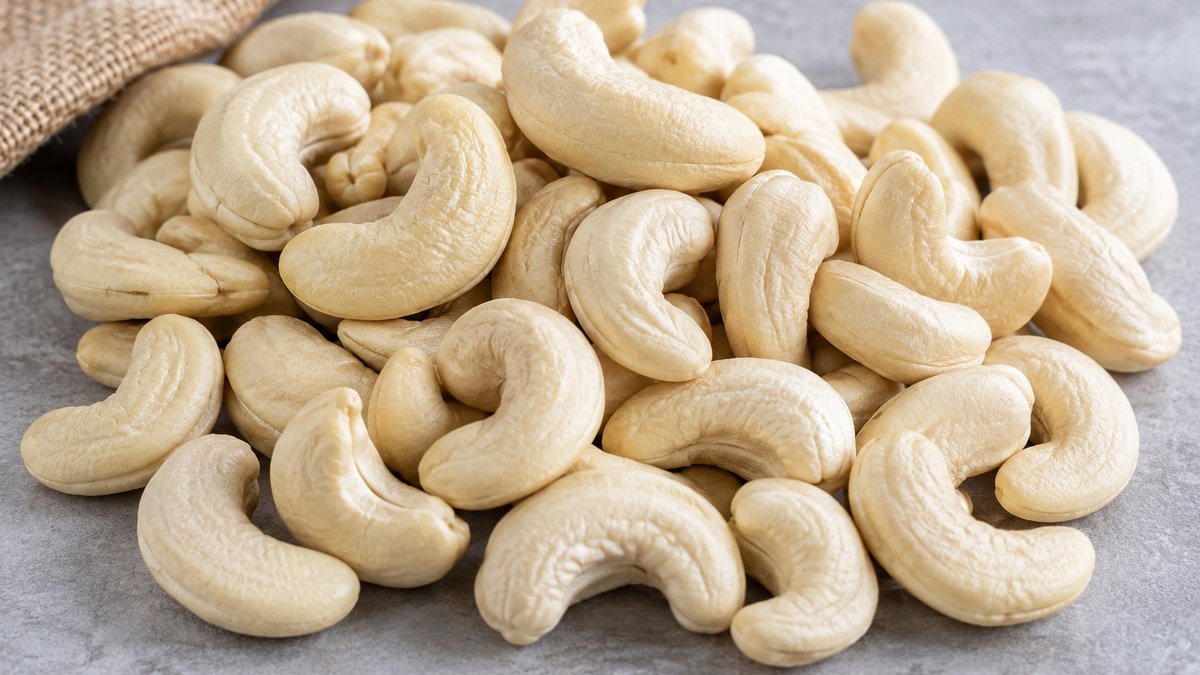
Vietnam W320 cashew kernels were quoted at US$3.17 to US$3.25 per pound FOB in a market report dated 5 November 2026. A separate Vietnamese exporter listed WW320 at US$7.15 per kilogram FOB Ho Chi Minh City for November shipment. These are export-price references, not prices delivered to Australia.
This update uses price indications published through 5 November 2026 and Australian annual import data for 2024 and 2025. The import statistics cover HS 080130, cashew nuts fresh or dried, and do not isolate shelled kernels. Buyers should therefore use them for origin and trade context, not as a kernel-only measure or a current Australian landed price.
Key Takeaways
- On 5 November 2026, TerraNuts reported Vietnam W320 at US$3.17 to US$3.25/lb FOB. Its Africa-origin indication was US$3.45/lb, with no specific African country named.
- SVC International quoted WW320 at US$7.15/kg FOB Ho Chi Minh City for November shipment in its 19 October 2026 bulletin, up from US$7.00/kg in its 13 July bulletin.
- Australia imported 15.835 million kg under HS 080130 in 2025, valued at US$105.5 million. Vietnam accounted for 15.479 million kg; the code does not distinguish kernel imports from other cashew nuts within its scope.
- The price references are not Australian delivered quotations. Buyers should match grade, specifications, packaging, shipment date and Incoterm, then calculate freight, insurance, duties and destination charges.
1. Cashew Kernel Market Overview for Australian Buyers
Vietnam is the dominant reported origin in Australia’s recent cashew import trade, while the latest published W320 price indications are FOB Vietnam rather than Australia-delivered prices. Those two facts help frame sourcing, but they do not establish the price an Australian importer will pay after freight, insurance, border charges and local handling.
World Bank WITS data based on UN Comtrade reports Australian imports of cashew nuts under HS 080130 at 18.106 million kg in 2024, worth US$100.7 million. For 2025, the same code recorded 15.835 million kg valued at US$105.5 million. The reported quantity fell about 12.5% year on year while customs value rose about 4.8%. The product code covers cashew nuts fresh or dried and does not separate kernels, so these figures cannot be presented as a kernel-only price or volume series.
Vietnam supplied 17.916 million kg of Australia’s 2024 HS 080130 imports and 15.479 million kg in 2025. The 2025 figure represents about 97.8% of the reported total quantity. Brazil, Indonesia, the United States and China were among the other listed origins in 2025, each at much smaller volumes. Customs origin data can include product forms beyond kernels, so buyers should confirm the form and grade in an offer.
For wider market conditions, TerraNuts’ 5 November 2026 report described cautious kernel buying by exporters, stronger buying activity from China, stable U.S. demand and weaker EU demand. The report also said high raw cashew nut costs were limiting Vietnamese processors’ buying interest. These are market observations from that report, not a global demand forecast or confirmation of Australian orders.
Import conditions depend on how the nuts are processed and packed. Australia’s Department of Agriculture, Fisheries and Forestry directs importers to the Biosecurity Import Conditions system for the applicable conditions for raw, processed or vacuum-sealed nuts. Confirm the conditions for the exact product and packaging before shipment; a general rule for one preparation should not be assumed to cover another.
Looking to Source Cashew Nuts Kernel?
Connect with verified suppliers, discover matching products, and explore sourcing opportunities from global markets.
2. Latest Cashew Nuts Kernel Export Prices
2.1 Current W320 and WW320 price indications
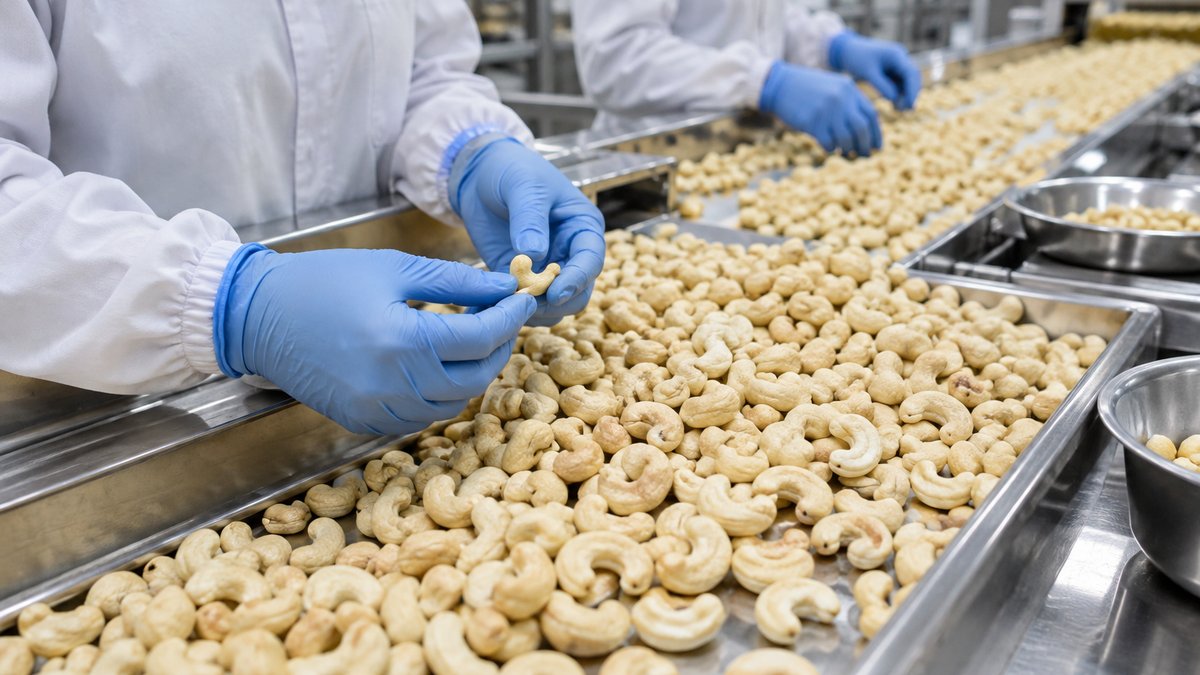
The latest dated W320 range located for this update is TerraNuts’ 5 November 2026 Vietnam indication: US$3.17 to US$3.25 per pound FOB. The report gives a grade, origin and FOB basis, but the price should still be treated as an indication rather than a firm offer to an Australian buyer. The report does not establish a specific Australian destination price.
SVC International’s bulletin dated 19 October 2026 listed WW320 at US$7.15/kg FOB Ho Chi Minh City for November 2026 shipment. SVC specified AFI standards and packing in 22.68 kg PE bags in cartons for its listed products. Those terms describe that publisher’s offer context; buyers should confirm the same details in any current supplier quotation.
W320 and WW320 are grade labels for whole white kernels, but the labels alone do not set every quality tolerance, crop, packaging arrangement or contract condition. TerraNuts and SVC also report different units and product descriptions. Do not combine the quotations into one price range or assume that the offers describe identical goods.
The references above are export-side prices, not Australian wholesale, retail or landed prices. A buyer comparing them with an Australian supplier quote should first confirm whether the quotation is FOB, CFR or CIF, and which port and shipment window it covers. FOB means the seller’s delivery obligation includes loading the goods aboard the vessel at the named port; the buyer’s costs after that point depend on the contract and shipment.
2.2 Price comparison by exporting origin
TerraNuts’ same-report comparison places Vietnam W320 at US$3.17 to US$3.25/lb FOB and an Africa-origin W320 indication at US$3.45/lb FOB. The report does not name a specific African exporting country or provide matching packaging, shipment timing or detailed quality tolerances. The difference is a comparison of published indications, not proof that an African offer would cost more for an Australian delivery.
The W240 figures provide another grade reference from the same report, not a like-for-like comparison with W320. Kernel count, grade, whole-kernel integrity, moisture, defects, packing and inspection terms can all affect whether quotations match. The report does not give a corresponding Africa-origin W240 price in the cited comparison.
No same-date, same-grade quotation for India or another named competing country was established for this Australian update. Buyers should not fill that gap with a price for a different grade, unit or market. Request offers from each origin against one written specification and compare the named FOB port, shipment period and packing.
2.3 Price trend and changes
SVC’s own WW320 bulletin series shows its FOB Ho Chi Minh City indication moving from US$7.00/kg on 13 July 2026 to US$7.15/kg on 19 October 2026, for the shipment periods stated in those bulletins. That is a rise of about 2.1% between those two dated indications. SVC also listed US$7.00/kg on 4 September, US$7.10/kg on 28 September and US$7.15/kg on 7 October.
The TerraNuts 5 November W320 range cannot be used as the next point in SVC’s WW320 series: the publisher, grade wording and reporting method differ. TerraNuts described W320 and broken-kernel prices as likely to hold steady or increase slightly, citing limited stocks and elevated raw nut prices. That is the report’s outlook, not a confirmed subsequent price change or a forecast for Australian landed costs.
For budgeting, record the date and validity period of each quotation. A price from October for November shipment and a report published in early November may refer to different transaction windows. Ask the supplier to reconfirm availability and the price basis before using either figure in a purchase decision.
3. Why Are Cashew Kernel Export Prices Changing?
Raw cashew nut costs and kernel buying activity were the two pressures TerraNuts emphasized in its 5 November 2026 market report. It said Vietnamese processors were cautious about buying raw nuts because input costs were high, while kernel demand varied by destination. The report characterized China as the most active buying market, U.S. demand as stable and EU buying as weaker.
Raw nut availability affects processors’ replacement costs, but a change in raw nut prices does not translate mechanically into the same percentage change in kernel quotations. Processing yield, kernel grade mix, labor, finance and stock position also affect a processor’s calculation. TerraNuts reported that raw nut offers from Tanzania, Indonesia and Guinea-Bissau were high enough to reduce Vietnamese processors’ buying interest. Treat this as the report’s description of market behavior, not a cost quotation for a particular Australian order.
Harvest timing and inventory can change the amount of raw nuts available to processors. TerraNuts reported that Tanzania was entering its 2026/27 season and that warehouse stocks had exceeded 200,000 tonnes. This is a dated report observation about raw cashew nuts in Tanzania, not a forecast of kernel supply available to Australia.
Export policy can affect market access and logistics, but no new Australia-specific cashew tariff or export restriction is established by the cited price sources. Importers should check current Australian customs and biosecurity requirements for their product form, and suppliers should confirm export documentation and shipment permissions for the origin and destination involved.
Weather and climate conditions may affect harvest volumes, but the cited November price evidence does not establish a weather-related production loss that can be quantified for this update. Buyers should avoid adding a weather premium to a procurement calculation without a dated crop report tied to the relevant origin and season.
Currency movements, ocean freight, insurance and port charges affect the Australian buyer’s landed cost even when the FOB kernel quote is unchanged. Compare the currency and price validity of each quote, then obtain freight and insurance figures for the same shipment window and destination. An FOB offer alone cannot establish which origin is cheapest after delivery.
4. Which Countries Import the Most Cashew Kernels?
4.1 Major global importing markets
The trade figures cited for this update establish Australia’s imports and supplying origins, but they do not provide a comparable, current global ranking of kernel-importing countries. Australia’s HS 080130 figures also combine cashew forms rather than isolating kernels. A ranking based on those figures would overstate what the data can show.
For Australian sourcing decisions, the available annual figures show a substantial import flow dominated by Vietnam. In 2025 Australia recorded 15.835 million kg and US$105.5 million under HS 080130, compared with 18.106 million kg and US$100.7 million in 2024. These are annual customs totals, not forecasts, buyer orders or kernel-specific consumption figures.
4.2 Australia’s main reported supply origins
Vietnam supplied 15.479 million kg of Australia’s 2025 imports under HS 080130. Brazil supplied 124,593 kg, Indonesia 61,236 kg, the United States 65,796 kg and China 33,661 kg. The quantities are reported for the broader customs code, which does not isolate shelled kernels.
A customs origin share does not show why an importer selected a supplier or whether the shipment was raw, processed, bulk or retail-packed. Buyers comparing origins should request the exact kernel grade, origin documentation, pack format and shipment terms before treating national import shares as evidence of supplier suitability.
4.3 What import data means for exporters
The reported concentration in Vietnam indicates that Vietnamese-origin cashews have a strong established presence in Australia’s HS 080130 trade. It does not confirm an open tender, an individual buyer’s current requirement or a guaranteed sales opportunity. Exporters considering Australia should verify product-specific import conditions, quote the buyer’s requested grade and pack, and confirm that the shipment schedule fits.
5. Where Can Buyers Source Cashew Kernels at a Competitive Price?
A competitive purchase starts with comparable quotations, not the lowest number on a price sheet. The latest Vietnam W320 reference is FOB, while a buyer’s actual cost may include ocean freight, insurance, customs duties, biosecurity measures, port handling, storage and local transport. A delivered price should be compared only with another offer on the same destination and delivery basis.
- Write one specification for every supplier: W320 or another grade, whole-kernel count, broken-kernel tolerance, moisture, defects, crop or production period, and any agreed testing method.
- Set the quantity, packaging, pallet or container arrangement, shipment window and Australian destination port.
- Request each supplier’s named loading port, currency, Incoterm, price validity and payment terms. Confirm whether inspection, certificates and export documents are included or priced separately.
- Compare product quality and packaging along with price. A lower quote for a different grade or pack is not a direct saving if it does not suit the buyer’s production or resale requirements.
- Add freight, insurance, customs and destination charges to the same cost sheet. Check Australia’s current biosecurity conditions for the exact processing and packaging description before confirming the order.
FOB, CFR and CIF quotes allocate shipping costs differently. Under CFR, the seller pays freight to the named destination port, while insurance is not included as it is under CIF. Buyers should check the named port and the contract’s risk-transfer terms rather than treating an Incoterm label as a complete landed-cost calculation. Port charges, customs costs and inland delivery may still sit outside the quoted amount.
Buying consideration: For a valid comparison, ask each supplier to quote the same kernel grade, quantity, packaging, shipment window and destination basis, then compare the resulting landed cost and documents side by side.
6. What Does the Latest Cashew Kernel Demand Look Like on Freshdi?
This update has no Freshdi buying-request statistics or individual request records to report, so it cannot describe current platform quantities, destinations or requested terms as market-wide demand. Australia’s customs totals above are official annual trade figures under a broader product code; they are separate from individual sourcing requests.
Suppliers can review cashew kernel buying requests on Freshdi and check each request’s product description, destination, quantity and requested trade terms before preparing a quotation. Buyers can browse supplier listings and state the grade, pack and delivery requirement they need. A listing or request is a place to review potential matches, not confirmation of an order or transaction.
The strongest response to a request is a quote tied to the buyer’s stated specification. Suppliers should identify the grade, quantity available, packing, loading port, quotation basis and validity period, and should avoid presenting a generic W320 price as a landed Australian offer.
7. What Should Buyers and Suppliers Do Next?
7.1 For buyers and importers
- Treat the 5 November Vietnam W320 range as an FOB reference, not an Australian delivery price.
- Request current quotations with matching grade, quantity, packing, port, shipment period and Incoterm.
- Calculate landed cost with freight, insurance, duties and destination charges for the actual shipment.
- Check current Australian biosecurity conditions for the nut’s processing method and packaging in the Biosecurity Import Conditions system.
- Confirm quality tolerances, samples or inspection arrangements and required documents before signing the contract.
7.2 For exporters and suppliers
- State whether the offer is W320, WW320 or another grade, and give the quality tolerances that define the product.
- Specify quantity, packaging, loading port, quote currency, Incoterm, shipment period and validity date.
- Keep FOB and delivered offers distinct, and avoid calling an export reference an Australian landed price.
- Check the Australian import conditions relevant to the exact processing and packaging method before confirming shipment.
- Review current buying requests and tailor a quotation only where the product and shipment terms match the stated need.
8. How Freshdi Helps Cashew Kernel Buyers and Suppliers Connect
Freshdi’s product pages give buyers a place to review potential cashew kernel suppliers and give suppliers a place to review relevant buying requests. Use the listing details as a starting point for due diligence; confirm product specifications, current availability, company documents and contract terms directly through the transaction process.
Australian buyers can review potential cashew kernel suppliers. Suppliers can review cashew kernel buying requests and decide whether a listed requirement matches their grade, quantity and shipment options.
Once the grade and delivery basis are clear, buyers can compare relevant listings and suppliers can review requests that match their offer.
View Latest Bean, Nut & Seed Buying Requests →View Potential Bean, Nut & Seed Suppliers →
Frequently Asked Questions
What is the latest reported Vietnam W320 cashew kernel price?
TerraNuts’ report dated 5 November 2026 listed Vietnam W320 at US$3.17 to US$3.25 per pound FOB. It is an export-price indication, not a firm offer or an Australian landed price. Confirm grade tolerances, shipment timing, packaging and validity with the supplier.
Are Vietnam cashew kernels cheaper than African-origin kernels?
TerraNuts’ 5 November report listed Vietnam W320 at US$3.17 to US$3.25/lb FOB and an Africa-origin W320 indication at US$3.45/lb FOB. The report did not identify the African country or give matching shipment and packaging details. The figures are not enough to determine which origin will have the lower landed cost in Australia.
Which country supplies most of Australia’s reported cashew imports?
World Bank WITS data based on UN Comtrade lists Vietnam as Australia’s largest reported origin under HS 080130 in 2025, with 15.479 million kg out of a total 15.835 million kg. That customs code covers cashew nuts fresh or dried and does not separate kernels from other forms.
How should Australian buyers compare FOB and CIF cashew kernel prices?
FOB and CIF quotes include different shipping responsibilities. Compare offers for the same grade, quantity, packing, shipment period, named ports and destination. Add any costs outside the quoted basis, including applicable port, customs and inland charges, before comparing total landed cost. Confirm the contract’s risk-transfer terms.
What import requirements apply to cashew kernels entering Australia?
Australia’s Department of Agriculture, Fisheries and Forestry says nut conditions depend on nut type, processing and packaging, and directs importers to the Biosecurity Import Conditions system. Check the current conditions for the exact product description and preparation rather than applying a rule for raw, roasted or vacuum-sealed nuts to every shipment.
How can suppliers find Australian cashew kernel buying requests on Freshdi?
Suppliers can review cashew kernel buying requests on Freshdi and check the requested grade, quantity, destination and trade terms before deciding whether to quote. Match the offer to the request and state the loading port, packaging, shipment timing and quotation basis. A request does not guarantee a completed sale.
References
1. TerraNuts – Cashew Market Report Week 44, 5 November 2026.
2. SVC International – Cashew Price Today: SVC Official FOB Price Update for Every Kernel Grade, 21 October 2026; price bulletin dated 19 October 2026.
3. World Bank WITS, using UN Comtrade data – Australia Cashew Nuts, Fresh or Dried Imports by Country, 2025, 2025 trade data.
4. World Bank WITS, using UN Comtrade data – Australia Cashew Nuts, Fresh or Dried Imports by Country, 2024, 2024 trade data.
5. Australian Department of Agriculture, Fisheries and Forestry – Importing Plant-Based Food, Drink and Supplements, Accessed 17 November 2026.
Disclaimer: This article is compiled from platform data, public sources and information provided by third parties, for general informational purposes only. We do not guarantee its accuracy or completeness. Prices, volumes and forecasts are indicative, reflect conditions as of 2026-11-17 and may change without notice. This is not financial, investment or trading advice.