
Introduction
Basmati rice buyers in the United Arab Emirates can use recent Indian and Pakistani export quotations as reference points, but the offers do not describe identical products. On 21 November 2026, Qulixo listed Indian 1121 Basmati at US$1,202 per metric tonne FOB; Agroprices listed Pakistani Super Kernel Basmati at US$948 per tonne FOB on 18 November.
These are origin-side quotations, not UAE delivered prices or firm offers. This update covers November 2026 export-price references, UAE rice-market context and practical checks for comparing quotations. The latest public prices found are indicative, and the available Pakistani and Indian quotations do not specify matching processing, crop, packing and quality terms.
Key Takeaways
- Qulixo listed Indian 1121 Basmati at US$1,202/MT FOB on 21 November 2026, compared with US$1,121/MT on 5 November in the same price feed.
- Agroprices listed Pakistani Super Kernel Basmati at US$948/MT FOB on 18 November 2026; its product details are not sufficient to treat this as a like-for-like comparison with Indian 1121.
- World Bank WITS data for 2025 reports India and Pakistan as the two largest rice exporters to the UAE by value and volume, but the HS 1006 data covers all rice, not Basmati alone.
- USDA’s April 2026 UAE Grain and Feed Annual describes Basmati as a popular rice variety in the UAE and forecasts higher total rice imports for marketing year 2026/27.
- Importers should compare the same variety, processing type, crop, packing, shipment window and Incoterm, then calculate landed cost at the UAE destination.
1. UAE Basmati Rice Market Overview
India and Pakistan are the central origins to check when sourcing Basmati for the UAE. World Bank WITS, using 2025 UN Comtrade data for HS 1006, reports that India exported 786,456 tonnes of rice to the UAE, valued at US$579.1 million, while Pakistan exported 347,991 tonnes, valued at US$178.2 million. These figures cover rice of all types, so they show the wider supply relationship rather than Basmati-specific volumes.
The UAE market has demand beyond household retail. USDA Foreign Agricultural Service’s Grain and Feed Annual for the UAE, published on 17 April 2026, identifies population growth, tourism and the hotel, restaurant and institutional sector as factors supporting rice consumption. The report forecasts total UAE rice imports to rise in marketing year 2026/27. That forecast concerns rice overall and does not guarantee demand for a particular Basmati variety or shipment.
USDA’s report describes Basmati as a popular variety in the UAE and notes that consumers may pay more for it than for other rice varieties. It also cites retail price observations for 5 kg packs, including different ranges for Indian, locally packed and Pakistani Basmati. Those retail observations are not wholesale import prices, and the report does not establish a current November shelf price. Buyers should treat them as market context, not as a basis for calculating a bulk order.
India and Pakistan compete in the wider UAE rice supply, while traders also need to distinguish local consumption from re-export activity. A shipment entering the UAE may be destined for local retail, food service, repacking or onward trade. The buyer’s intended channel affects pack size, labeling, documentation, delivery location and whether an FOB export quotation is useful as a starting point.
Looking to Source Basmati Rice?
Connect with verified suppliers, discover matching products, and explore sourcing opportunities from global markets.
2. Latest Basmati Rice Export Prices
2.1 Current export price references for India and Pakistan
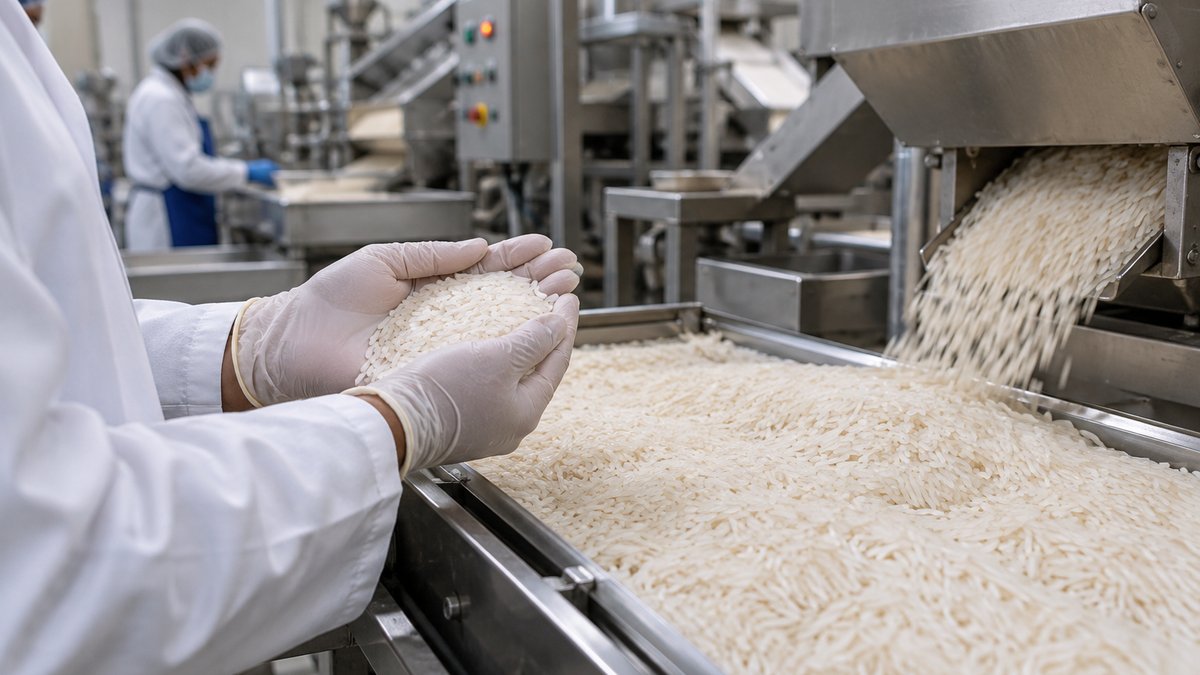
Recent FOB quotations provide a reference for origin-side pricing, but they are not confirmed offers to a UAE buyer. Qulixo’s price feed listed Indian 1121 Basmati at US$1,202/MT FOB on 21 November 2026. Its same-series listing for 5 November was US$1,121/MT FOB, an increase of about 7.2% between those two dated entries. The feed does not establish that the product grade, processing, packing or shipment terms were held constant beyond its 1121 Basmati label.
For Pakistan, Agroprices reported a Super Kernel Basmati export reference of US$948/MT FOB on 18 November 2026. The price page identifies the variety and FOB basis but does not provide a full matching specification for comparison with the Indian 1121 listing. Neither number is a binding quotation, and neither includes UAE import costs.
The two origins’ November prices should not be read as a direct price contest. The listings do not establish identical grain length, crop year, aging, broken percentage, moisture, processing method, bag specification or quote validity. The difference may reflect product and quotation scope as well as origin. Buyers should request written offers against one specification before using a price gap to choose a supplier.
2.2 Price comparison by exporting origin
A further Pakistani reference illustrates why the product description matters. Rice.ag’s price page lists Pakistan Super Kernel Basmati with 2% broken at US$1,067/MT FOB for 1 October 2026, attributing the monthly series to FAO. This October series and Agroprices’ November US$948 figure are not interchangeable: their dates and published product detail differ, and the sources do not establish that the quotations use the same specification or methodology.
The comparisons below are therefore price references, not a ranked supplier comparison. The Pakistan October entry is included to show the dated, more specifically described series alongside the newer November reference.
The Qulixo feed’s two Indian 1121 entries rose by about 7.2% from 5 to 21 November 2026, calculated from US$1,121 and US$1,202/MT FOB. That movement describes those two entries only. The sources do not establish a market-wide Basmati price trend, and the separately published Pakistani figures cannot be used to calculate a matching week-on-week or month-on-month change.
2.3 How to read price changes
A price movement is useful only when the compared offers share a basis and specification. FOB generally covers the goods delivered on board at the named port; it does not include ocean freight and insurance to the UAE. A CIF offer includes cost, insurance and freight to the named destination port, but buyers should confirm which destination charges remain outside the seller’s price.
Ask whether a change comes from paddy and milling costs, stock availability, exchange rates, freight or a changed specification. A supplier quoting steam Basmati in one week and sella rice in another has not supplied a valid price series for the same product. Record the quote date, validity period, port, currency, grade, packing and delivery term with every offer.
3. Why Are Basmati Rice Export Prices Changing?
The November quotations do not identify a single cause for the difference between India and Pakistan or for the movement in the Indian price feed. Buyers should assess the factors below against dated supplier offers and origin-specific evidence, rather than attributing a price change to an unsupported market explanation.
3.1 Crop, stocks and processing
Harvest timing, paddy availability and mill stocks can affect the cost and availability of a specific Basmati variety. Crop year and aging also matter to buyers who require a particular aroma, grain performance or cooking result. Request the crop year and processing method, then compare those details across offers. A generic label such as “Basmati” does not identify whether the rice is raw, steam, white sella or golden sella.
3.2 Demand and destination mix
UAE demand comes from retail, food service and institutional buyers, and the USDA FAS April 2026 report forecasts growth in total rice imports for marketing year 2026/27. That projection is for rice overall. It does not say how much of the increase will be Basmati, which origin will supply it or when individual importers will buy.
3.3 Export rules and currency
Export policy can affect the availability or cost of rice from an origin. Buyers should check current official rules for the exporting country and confirm that the specific variety and shipment can be exported on the proposed date. Currency movements can also change a seller’s local-currency costs or the buyer’s effective cost in UAE dirhams. Compare offers in the same currency and note the date used for any conversion.
3.4 Freight and competition
Freight, insurance, container availability, loading port and shipment timing affect the delivered price. A lower FOB quotation can result in a higher landed cost if the freight or other destination charges are higher. Competition between Indian and Pakistani sellers is meaningful only after the buyer aligns variety, processing, broken percentage, bag type, quantity and shipment window.
4. Which Countries Import the Most Basmati Rice?
4.1 Major importing markets and the limits of the available trade data
The public trade figure used here is for all rice, not Basmati alone. World Bank WITS reports 2025 rice exports to the UAE under HS 1006, a category that does not isolate Basmati. The figures are useful for understanding the UAE’s wider rice supply links, but they cannot support a Basmati-specific ranking of importing countries.
These World Bank WITS figures describe reported 2025 exports of all rice to the UAE, not Basmati imports alone. They also do not separate rice sold to UAE consumers from rice imported for repacking or re-export. Buyers should not use the table to infer a Basmati market share or to forecast a particular supplier’s sales.
4.2 UAE supply routes and export destinations
For a UAE importer, the most relevant comparison is often between offers from India and Pakistan, the two leading origins in the 2025 all-rice trade data. The USDA FAS report also describes a market where rice imports support local consumption and commercial food channels. A supplier’s destination experience can still matter, but it should be checked through documented shipments and product-specific references rather than inferred from national trade totals.
4.3 What import demand means for exporters
The USDA FAS forecast of higher UAE rice imports in 2026/27 gives exporters a reason to monitor the market, not evidence of a confirmed order. Suppliers should identify the buyer’s channel, required variety, packaging, delivery point and expected shipment period before quoting. A forecast for national rice imports is not the same as a buyer commitment for Basmati.
5. Where Can Buyers Source Basmati Rice at a Competitive Price?
Compare the delivered cost of equivalent rice, not the lowest headline FOB number. Start by sending the same written specification to suppliers in India and Pakistan. Include variety, processing method, crop year, aging if required, grain length, broken percentage, moisture and other contractual quality limits.
- Specify the variety and processing: for example, 1121 or Super Kernel, and raw, steam or sella.
- State the required broken percentage, moisture, foreign matter and any agreed inspection method.
- Set the order quantity, bag material and net weight per bag, pallet requirement and label language.
- Name the UAE destination port or delivery location and request quotations on the same Incoterm.
- Ask for the loading port, shipment window, quote validity, payment terms and available export documents.
- Add freight, insurance, bank charges and destination handling to compare landed cost.
FOB, CFR and CIF quotations include different cost responsibilities. CFR includes cost and freight to the named destination port but does not include insurance. CIF includes cost, insurance and freight to that port. In each case, specify the named port and confirm the current Incoterms edition and the charges the seller excludes. Local customs, clearance, inspection and delivery expenses may still affect the buyer’s final cost.
The price references in this update do not include a verified freight rate to a UAE port. Do not add a generic freight estimate and present the result as a current landed price. Request a dated freight-inclusive offer for the intended shipment window, then confirm which charges are payable at destination.
Buying consideration: Before comparing suppliers, ask each one to quote the same Basmati specification, quantity, packing, UAE destination and delivery basis. Keep the quote date and validity beside the price.
6. What Does the Latest Demand Look Like on Freshdi?
Freshdi’s Rice buyer category is a place for suppliers to review rice-related buying requests, while buyers can use the Rice supplier category to browse supplier listings. These pages are discovery tools, not a measure of total UAE Basmati demand. A listing or request should be checked for its current status and the product details stated by the user.
For a Basmati inquiry, buyers should state the variety, processing, grade, broken percentage, quantity, packing, destination and requested delivery term. Suppliers can then assess whether their available stock matches the request before preparing a quotation. If the buyer has a target arrival date or a required document, include it in the inquiry rather than assuming every supplier can meet it.
Freshdi does not replace national import statistics or confirm that a listing will lead to a transaction. Buyers should verify the seller’s offer, documents, sample and shipment details through their normal due-diligence process.
7. What Should Buyers and Suppliers Do Next?
7.1 For buyers and importers
- Use the November prices as dated references only; obtain fresh written offers before budgeting or placing an order.
- Compare Indian and Pakistani offers on one product specification and one UAE destination basis.
- Check whether the quotation is FOB, CFR or CIF and identify charges excluded from the price.
- Confirm the crop year, processing, quality tolerances, packing and inspection arrangements in the contract.
- Check the applicable UAE import and food-labeling requirements for the product and packaging before shipment.
- Review shipment dates, payment terms, export documents and procedures for handling a quality dispute.
7.2 For exporters and suppliers
- Date each quotation and state the currency, unit, loading port and Incoterm.
- Describe the Basmati variety, crop year, processing method, broken percentage, moisture and packing accurately.
- Separate prices by processing type or packaging when those differences change the offer.
- State the quotation validity and available shipment window instead of presenting a reference price as a standing offer.
- Confirm which UAE documents and labels the buyer requires before finalizing the shipment plan.
- Respond to buying requests only when the requested product, quantity, destination and timing match the offer.
A useful quotation gives the buyer enough detail to compare like with like. If the price depends on quantity, packing or shipment date, show the condition alongside the price rather than leaving the buyer to infer it.
8. How Freshdi Helps Buyers and Suppliers Connect
Buyers can browse potential rice suppliers on Freshdi and suppliers can review rice buying requests. For a Basmati order, the buyer’s specification should distinguish the variety and processing method, then state quantity, packaging and UAE destination. A supplier can use those details to decide whether to prepare a relevant offer.
Buyers can browse Rice suppliers, while exporters can review Rice buying requests. These category pages support discovery; they do not verify a particular quotation or guarantee a completed sale.
After setting a comparable product specification, buyers can review suppliers and exporters can check current rice sourcing requests.
View Latest Rice Buying Requests →View Potential Rice Suppliers →
9. Conclusion: UAE Basmati Rice Market Outlook
The latest public references found for November 2026 put Indian 1121 Basmati at US$1,202/MT FOB on 21 November and Pakistani Super Kernel Basmati at US$948/MT FOB on 18 November. The products and published details are not matched closely enough to treat the difference as a reliable origin-price premium. The Indian price feed’s earlier 5 November entry was US$1,121/MT FOB, but two entries do not establish a market-wide trend.
For UAE buyers, the next step is to compare fresh quotations against an agreed specification and delivered-cost basis. Exporters should date offers, state the quality and packing clearly, and confirm shipment terms before quoting. Freshdi can help buyers find supplier listings and exporters review buying requests, while commercial and product checks remain part of each buyer’s procurement process.
Buyers ready to compare offers can review rice suppliers against their required variety, quantity and delivery terms.
View Related Suppliers for This Product →
Frequently Asked Questions
What is the latest Basmati rice export price relevant to UAE buyers?
Qulixo listed Indian 1121 Basmati at US$1,202 per metric tonne FOB on 21 November 2026. Agroprices listed Pakistani Super Kernel Basmati at US$948/MT FOB on 18 November 2026. These are indicative references with different product detail, not delivered UAE prices or confirmed offers.
Why do Indian and Pakistani Basmati prices differ?
The published quotations may describe different varieties, crop years, processing, broken percentage, packing, shipment periods or quote methods. The November references in this update do not provide enough matching detail to isolate an origin-based price difference. Ask suppliers to quote the same written specification.
What factors affect Basmati export prices?
Paddy and mill stocks, crop timing, processing, export rules, currency movements, freight and shipment availability can affect a quotation. The sources cited here do not establish one cause for the difference between the November India and Pakistan references.
Which countries supply the UAE with the most rice?
World Bank WITS reports that India and Pakistan were the largest rice exporters to the UAE by value and volume in 2025, followed by Thailand among the origins shown. The figures use HS 1006 and cover all rice, not Basmati alone.
How should a UAE importer compare FOB and CIF Basmati quotations?
FOB excludes ocean freight and insurance to the UAE. CIF includes cost, insurance and freight to the named destination port. Compare offers for the same product, quantity, shipment period and destination, then add any excluded destination, customs, handling and delivery charges to estimate landed cost.
How can buyers find Basmati suppliers on Freshdi?
Buyers can browse Freshdi’s Rice supplier category and state the required Basmati variety, processing, quality, quantity, packing and UAE destination when making an inquiry. Suppliers should check that the request matches their product and shipment availability. A listing does not guarantee a transaction.
References
1. Qulixo – Rice Prices, Price entries dated 5 and 21 November 2026.
2. Agroprices.gr – Basmati Rice Super Kernel, Pakistan, FOB, 18 November 2026.
3. rice.ag – Pakistan Rice Export Prices, Price entry dated 1 October 2026; page updated 21 November 2026.
4. USDA Foreign Agricultural Service – United Arab Emirates: Grain and Feed Annual, 17 April 2026.
5. World Bank WITS – Rice Exports to United Arab Emirates, 2025, 2025 trade data.
Disclaimer: This article is compiled from platform data, public sources and information provided by third parties, for general informational purposes only. We do not guarantee its accuracy or completeness. Prices, volumes and forecasts are indicative, reflect conditions as of 2026-11-22 and may change without notice. This is not financial, investment or trading advice.