
Introduction
Bangladesh’s latest publicly reported wheat import benchmark located for this update was a lowest tender offer of US$310.88 per metric tonne on CIF liner-out terms, reported on 3 September 2026 for a 50,000-tonne government purchase. It was an offer, not a confirmed contract price. A newer government tender for 50,000 tonnes was scheduled to open on 22 November 2026, but a bid price was not available in the published notice.
This update covers Bangladesh and uses September 2026 as the latest dated price benchmark found. It compares that offer with earlier government procurement prices, then reviews import forecasts and the factors buyers should check before treating a reference price as a workable quotation.
Key Takeaways
- The latest located public benchmark was US$310.88/MT CIF liner out, the lowest offer reported for Bangladesh’s 50,000-tonne wheat tender on 3 September 2026. It was not identified as an awarded contract.
- In July 2026, Bangladesh approved a US$297.92/MT open-tender purchase and a separate US$322/MT US government-to-government purchase. Procurement route and specification details differ, so these figures are reference points, not a like-for-like origin comparison.
- USDA FAS lowered its Bangladesh wheat import forecast for marketing year 2026/27 to 6.6 million tonnes in its 8 September 2026 update, citing higher international prices and carryover stocks.
- The latest government tender notice found sought 50,000 tonnes of milling wheat for Chattogram and Mongla, with bids quoted in US dollars per metric tonne on CIF liner-out terms.
- Buyers should compare the same wheat specification, delivery basis, shipment window and destination charges. Exporters should state those details and the quotation’s validity period.
1. Bangladesh wheat market overview
Bangladesh relies heavily on imported wheat because domestic production supplies less than 10 percent of total demand, according to USDA Foreign Agricultural Service (FAS) Dhaka’s 7 April 2026 Grain and Feed Annual.
Import forecasts vary by publisher and report date. USDA FAS Dhaka’s 8 September 2026 update projected 6.6 million tonnes of wheat imports in Bangladesh’s 2026/27 marketing year. FAO’s 4 September 2026 country brief projected 6.8 million tonnes for the same marketing year. These are forecasts, not completed import totals; the difference reflects separate assessments and should not be averaged into a single figure.
USDA FAS attributed its lower forecast to higher international wheat prices and relatively high carryover stocks from 2025/26. The agency reported that the private sector imported approximately 6.6 million tonnes in MY 2025/26, with the remainder imported by the Government of Bangladesh. This procurement mix matters because public tenders and private miller purchases can have different specifications, schedules and contract terms.
World supply also affects Bangladesh’s buying costs. USDA’s October 2026 global grain report reduced its Bangladesh 2026/27 wheat import estimate to 6.5 million tonnes, citing higher wheat prices and an expected shift in consumption toward rice. The estimate is one snapshot in a changing forecast series; buyers should record the publisher and issue date when using any projection in procurement plans.
Looking to Source Wheat?
Connect with verified suppliers, discover matching products, and explore sourcing opportunities from global markets.
2. Latest wheat import prices in Bangladesh
2.1 Current export price references for Bangladesh
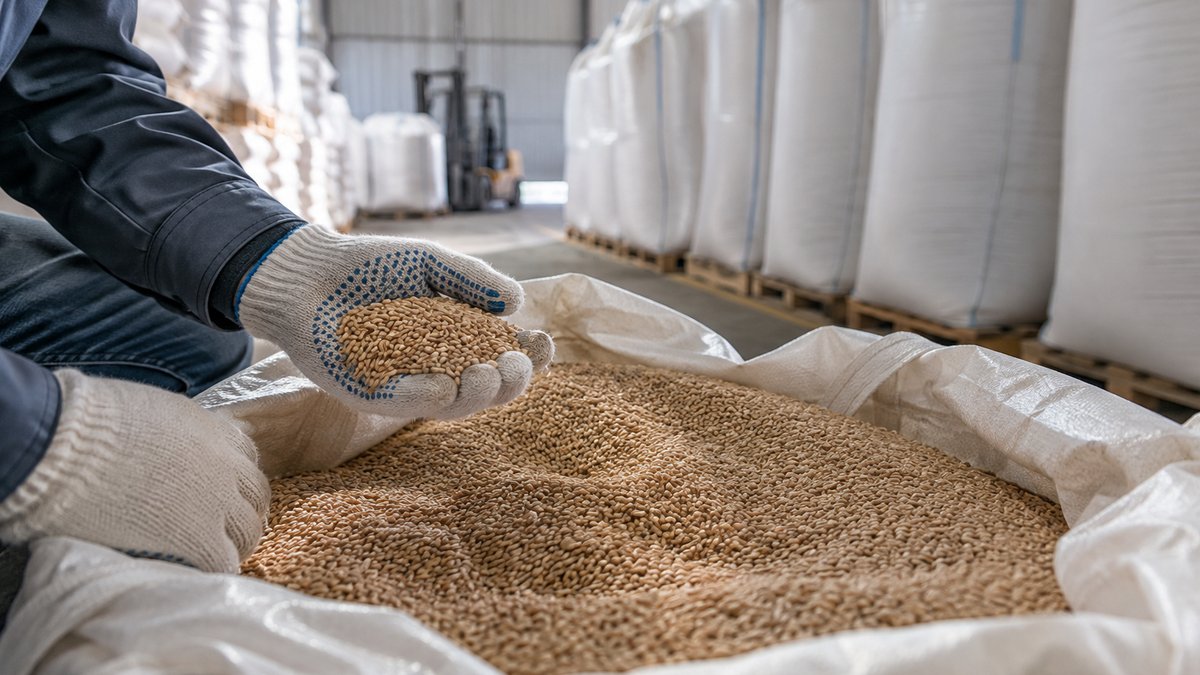
The most recent dated public price found for a Bangladesh government wheat purchase was reported on 3 September 2026. Olam International submitted the lowest offer, US$310.88/MT on a CIF liner-out basis, in a tender for 50,000 tonnes. The report identified the offer and delivery basis but did not establish that the tender resulted in a contract at that price.
A Bangladesh Public Procurement Authority notice published on 8 November 2026 announced another tender for 50,000 tonnes, plus or minus 5 percent, of milling wheat. It required bids in US dollars per metric tonne on CIF liner-out terms, with 60 percent allocated to Chattogram and 40 percent to Mongla. The notice set bid opening for 22 November 2026 and did not state a price. The September offer is therefore the latest located price benchmark, while the November tender is the newer procurement event.
The July figures come from two separate procurement decisions: Bangladesh approved an open-tender purchase at US$297.92/MT and a US wheat purchase under a government-to-government arrangement at US$322/MT. The September report gives a CIF liner-out basis for the lowest offer. Differences in date, procurement route, product specification and stated price basis prevent a clean performance comparison across all three figures.
2.2 Price comparison by exporting origin
The public price reports located for this update do not provide a consistent set of Bangladesh-bound wheat prices by exporting origin, grade and delivery basis. The September report names the lowest bidder, but does not establish the wheat’s origin in the reported price details. The July reports distinguish procurement arrangements, but they do not provide enough matched information to rank origins on an equivalent basis.
For a usable origin comparison, request quotations for the same protein level, class or milling specification, quantity, shipment window and destination port. Compare CIF offers only when freight, insurance and discharge terms are defined consistently. A country label by itself cannot explain a price difference.
2.3 Price trend and changes
Bangladesh’s reported open-tender purchase in July was US$297.92/MT. The lowest offer reported in September was US$310.88/MT, US$12.96/MT higher. Those two figures are a dated comparison across separate procurement events, not a continuous market-price series; the available reports do not establish identical specifications or conditions.
The US$322/MT government-to-government price reported in July was above the July open-tender price, but it arose under a different purchasing arrangement. Buyers should not treat that gap as a premium attributable solely to US origin. The contract’s specification, timing and commercial conditions also need to be checked before drawing that conclusion.
3. Why Bangladesh wheat prices are changing
Bangladesh’s wheat import outlook reflects world prices, existing stocks and local demand. USDA FAS Dhaka said higher international prices and large carryover stocks were expected to reduce imports in MY 2026/27. Its September update also noted that Bangladesh’s import market is price-sensitive.
3.1 Import stocks and purchasing decisions
Stocks accumulated during MY 2025/26 may reduce the need for new purchases, particularly among private millers and traders. USDA FAS reported approximately 6.6 million tonnes of private-sector wheat imports in that marketing year. Its assessment links carryover stocks and higher prices with a lower MY 2026/27 import forecast, rather than indicating that consumption has stopped growing.
3.2 Global prices and competing food use
USDA’s October 2026 report reduced its Bangladesh wheat import estimate to 6.5 million tonnes and attributed the change partly to higher wheat prices shifting consumption toward rice. Importers should monitor world quotations alongside local stocks and demand; a global benchmark does not by itself determine the landed cost of a Bangladesh shipment.
3.3 Harvests, policies and logistics
Harvest conditions in exporting countries can change export availability, while government procurement choices affect the timing and volume of Bangladesh’s public purchases. Freight, insurance, port allocation and discharge conditions also shape the delivered offer. The November 2026 government tender, for example, divided the planned quantity between Chattogram and Mongla and specified CIF liner-out delivery. These are tender terms, not evidence of a market-wide freight rate.
4. Which countries import the most wheat?
4.1 Major global importing markets
USDA Economic Research Service’s May 2026 Wheat Outlook listed Indonesia, Egypt and Algeria among the largest wheat importers in its 2025/26 trade-year estimates. The report put Bangladesh at 7.8 million tonnes for 2025/26 and 7.7 million tonnes for 2026/27 in that forecast vintage. These estimates are dated projections, and later USDA or FAO updates may revise them.
The same USDA outlook estimated Bangladesh’s 2026/27 imports at 7.7 million tonnes. Later 2026 estimates were lower: USDA FAS Dhaka projected 6.6 million tonnes in September, and USDA’s October global report showed 6.5 million tonnes. Use the report date and forecast vintage when comparing market size; these figures are not actual final import totals.
4.2 Bangladesh’s main export destinations
The sources used for this update do not provide a current, comparable breakdown of Bangladesh’s wheat imports by exporting country. USDA FAS reports that the Government of Bangladesh procured about 745,000 tonnes of US wheat in MY 2025/26 and committed to purchasing up to 700,000 tonnes annually through 2030. That describes a government purchasing commitment and recent procurement, not the full origin mix of national imports.
4.3 What import demand means for exporters
Bangladesh’s large import requirement makes it a relevant market for wheat exporters, but annual forecasts do not guarantee an order from a particular buyer. Public tenders specify their own volume, wheat type, port and delivery conditions. Exporters should check each notice and distinguish an announced requirement from a completed purchase.
5. How buyers can source wheat at a competitive price
A competitive wheat offer is the one that meets the buyer’s specification at an acceptable delivered cost and shipment schedule. Comparing headline prices across different bases can mislead: a CIF liner-out tender offer includes conditions that an FOB quotation does not.
- Set one written specification for every supplier, including wheat type, protein content, grade or milling requirement, moisture, foreign matter and any agreed tolerances.
- Compare the same quantity, packaging, loading period and destination port. Bangladesh’s November 2026 government tender named both Chattogram and Mongla, so port allocation was part of the requirement.
- Put the delivery basis beside every price. FOB generally leaves the buyer to arrange ocean freight and insurance; CIF includes seller-arranged carriage and insurance to the named port, subject to the contract’s exact terms.
- Calculate landed cost using the quotation, freight, insurance, port and discharge charges, duties or taxes, and any inspection or financing costs that apply to the shipment.
- Confirm shipment timing, quotation validity, payment terms, required documents and the procedure for quality inspection before comparing offers.
- Check whether a published price is an offer, a tender result, an approved procurement price or a completed transaction. Those figures answer different questions.
The September US$310.88/MT figure is useful as a recent public tender reference, but it is not a buyer-specific quote. Importers should ask suppliers to price the same product and delivery conditions, then compare the complete landed cost rather than relying on that reference alone.
6. What the latest wheat demand looks like on Freshdi
The market sources in this update provide national import forecasts and government procurement notices. They do not establish current Freshdi request counts, buyer quantities or platform-wide demand. Those platform observations should be assessed separately from Bangladesh’s national import statistics.
For a specific sourcing decision, buyers and suppliers can review the current wheat listings and buying requests on Freshdi and check each request’s stated specification, destination, quantity and trade terms. A platform request is an individual buyer requirement, not a measure of total market demand.
7. What buyers and suppliers should do next
7.1 For buyers and importers
- Use the September US$310.88/MT tender offer as a dated reference only, and ask for a current quotation against the required wheat specification.
- Compare offers on one delivery basis and one destination port. Recalculate landed cost if port, freight, insurance or discharge terms differ.
- Check carryover stocks and procurement timing against the latest dated USDA and FAO forecasts, while treating forecasts as estimates rather than confirmed supply.
- Review quality, shipment schedule, payment terms, inspection arrangements and import documentation before accepting a low offer.
7.2 For exporters and suppliers
- State wheat class or milling type, protein content, quantity, packaging and available shipment window in each offer.
- Name the loading port and quote currency, Incoterm, destination port and quotation validity period.
- Separate FOB, CFR and CIF prices and specify which freight, insurance and discharge costs are included.
- Check the latest tender requirements before responding; the November 2026 notice sought milling wheat for two Bangladesh ports.
- Keep market references dated and label them accurately as an offer, forecast, tender result or completed purchase.
8. How Freshdi helps buyers and suppliers connect
After setting the specification and delivery basis, buyers can use Freshdi’s wheat supplier category to review relevant supplier listings. Suppliers can review wheat buying requests and decide whether the stated quantity, destination and terms fit their offer. These discovery tools do not replace verification of product quality, documents or contract conditions.
Buyers can review wheat suppliers on Freshdi, while exporters can review wheat buying requests on Freshdi. Check each listing or request for its current details before starting a commercial discussion.
Once your wheat specification and destination terms are clear, you can review relevant suppliers and buying requests on Freshdi.
View Latest Grains, Cereal & Legumes Buying Requests →View Potential Grains, Cereal & Legumes Suppliers →
9. Bangladesh wheat market outlook
The latest located public wheat price reference for Bangladesh was the US$310.88/MT lowest tender offer reported on 3 September 2026, quoted CIF liner out. A newer government tender was scheduled to open on 22 November, but its notice contained no bid price. The September figure should therefore be treated as a dated benchmark, not a current quotation.
Forecasts from USDA and FAO show Bangladesh continuing to import substantial wheat volumes, while USDA’s later 2026 estimates point to lower imports than earlier projections. Buyers should watch prices, stocks, tender results and shipment costs together. Exporters should quote the exact specification and delivery basis requested. Freshdi can be used to review relevant wheat suppliers and buying requests.
Buyers comparing wheat offers can review related supplier listings after setting their specification and delivery basis.
View Related Suppliers for This Product →
Frequently Asked Questions
What was the latest reported wheat import price for Bangladesh?
The latest dated public benchmark located for this update was US$310.88 per metric tonne, the lowest offer reported on 3 September 2026 for a 50,000-tonne Bangladesh government tender. The report stated CIF liner-out terms. It identified a tender offer, not a confirmed award or a quotation available to every buyer.
Did Bangladesh publish a newer wheat tender price in November 2026?
The Bangladesh Public Procurement Authority notice published on 8 November 2026 announced a 50,000-tonne milling wheat tender and set bid opening for 22 November. The notice required prices in US dollars per metric tonne on CIF liner-out terms, but it did not state a bid price.
Why do Bangladesh wheat import forecasts differ?
Forecasts have different publishers, issue dates and assumptions. USDA FAS Dhaka projected 6.6 million tonnes for MY 2026/27 in its September 2026 update, FAO projected 6.8 million tonnes in its September country brief, and USDA’s October global report showed 6.5 million tonnes. Treat each as a dated forecast, not an actual import total.
How should buyers compare wheat prices from different origins?
Ask each supplier to quote the same wheat type, protein content, quantity, packaging, shipment window and destination port. Compare the same Incoterm and include freight, insurance, port and discharge charges when calculating landed cost. The public prices cited here do not provide a consistent, origin-by-origin comparison.
What is the difference between a CIF price and an FOB price?
Under FOB, the seller delivers the goods on board at the named port of shipment and the buyer generally arranges the main carriage and insurance. Under CIF, the seller arranges carriage and insurance to the named destination port, subject to the contract and applicable Incoterms. Compare quotations only after checking the named ports and included costs.
Can buyers and exporters use Freshdi to find wheat trade opportunities?
Freshdi’s wheat category pages let buyers review supplier listings and exporters review buying requests. Check the details stated in each listing or request, and verify specifications, documents, shipment terms and counterparties before agreeing a transaction.
References
1. Bangladesh Public Procurement Authority – Invitation for Tender: Procurement of 50,000 MT Milling Wheat, Package-01, 8 November 2026.
2. USDA Foreign Agricultural Service – Bangladesh: Grain and Feed Update, GAIN Report BG2026-0008, 8 September 2026.
3. The Edge Malaysia – Olam makes lowest offer in Bangladesh wheat tender, at $391.37 per tonne, 3 September 2026.
4. The Daily Star – US wheat to cost $24/tonne more than open tender rate, 2 July 2026.
5. USDA Economic Research Service – Wheat Outlook: May 2026, 14 May 2026.
6. Food and Agriculture Organization of the United Nations – GIEWS Country Brief: Bangladesh, 4 September 2026.
Disclaimer: This article is compiled from platform data, public sources and information provided by third parties, for general informational purposes only. We do not guarantee its accuracy or completeness. Prices, volumes and forecasts are indicative, reflect conditions as of 2026-11-22 and may change without notice. This is not financial, investment or trading advice.