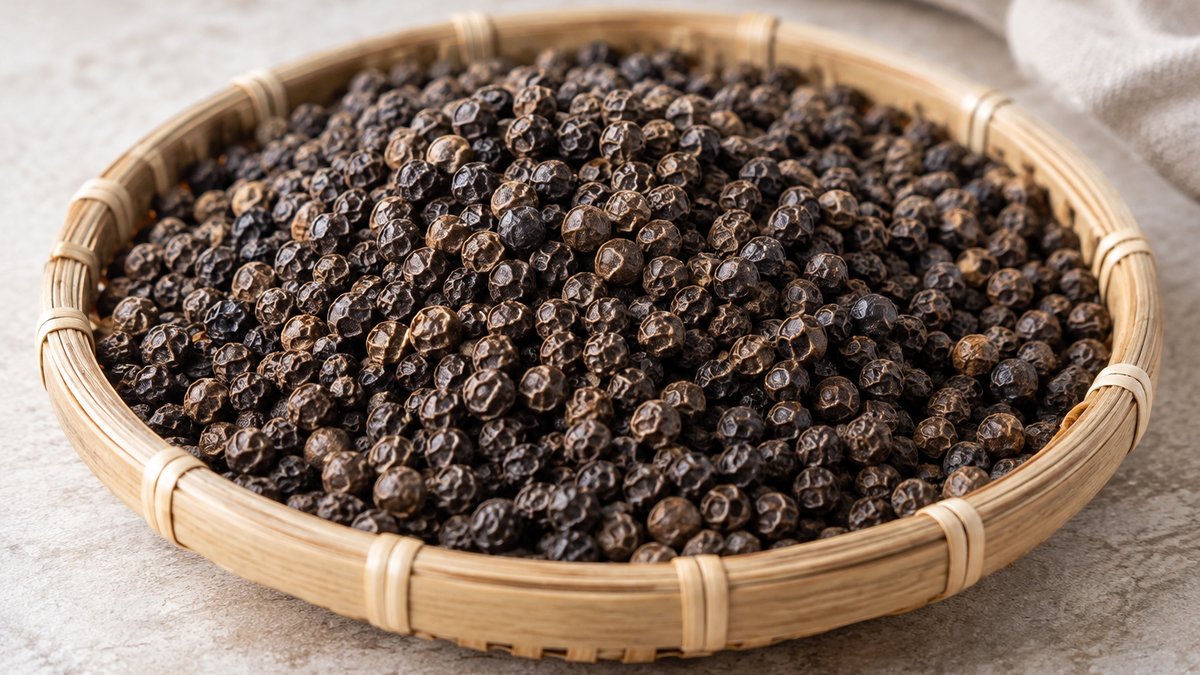

Introduction
Spain’s latest annual customs data put the 2025 import unit value for dried whole pepper at about US$7,845 per metric tonne. That is a trade-value average for HS 090411, which covers dried pepper that is neither crushed nor ground; it is not a current supplier offer or a Spain-delivered quotation.
This November 2026 update separates Spain’s 2025 customs benchmark from newer origin-market references. The available sources do not establish a current November price delivered to Spain, so buyers should treat the figures as distinct reference points and request dated, specification-matched offers.
Key Takeaways
- Spain imported 4,906.2 tonnes of dried whole pepper worth US$38.49 million in 2025. Dividing customs value by quantity gives an approximate import unit value of US$7,845/tonne.
- Vietnam supplied 3,441.46 tonnes, about 70% of Spain’s reported HS 090411 import volume in 2025. The next listed sources by volume were the Netherlands, India and Brazil.
- Recent November origin-market references are not Spain-delivered prices, and the available source excerpts do not establish a matching delivery basis or specification for every origin. Do not compare them directly with Spain’s annual customs unit value.
- The European market report describes export prices as sensitive to origin, quality and production volumes; it says prices stabilized at about US$6.6/kg in 2025 after rising in 2024. That is a broad export-market reference, not a Spain-specific price.
- Buyers should compare grade, cleaning, shipment timing, delivery basis and landed costs. Freshdi category pages can be used to review relevant black pepper buying requests and supplier listings.
1. Spain’s Black Pepper Market Depends on Imported Whole Pepper
Spain’s 2025 imports under HS 090411 totaled 4,906.2 tonnes, valued at US$38.49 million, according to World Bank WITS data sourced from UN Comtrade. The category covers dried pepper, excluding crushed or ground pepper, so these figures should not be treated as covering all black pepper products.
Vietnam was the leading reported supplier, with 3,441.46 tonnes. The Netherlands supplied 249.07 tonnes, India 248.50 tonnes and Brazil 224.95 tonnes. Customs partner data identify the country of reported supply; they do not by themselves establish where the pepper was grown or whether goods routed through a trading hub were produced there.
The European Centre for the Promotion of Imports from developing countries describes pepper as an ingredient used by food-service and food-processing businesses and notes that export prices vary by origin and quality. Its report gives a broad 2025 export-price level of about US$6.6/kg after a 69% increase in 2024. That regional benchmark has a different scope and basis from Spain’s customs unit value.
The trade figures describe completed imports in 2025, while origin-market quotations describe offers or market references from a later date. Neither series alone establishes Spain’s current wholesale or delivered price. Buyers need a current quote for the required grade, packaging, quantity and destination before setting a purchase budget.
Looking to Source Black Pepper?
Connect with verified suppliers, discover matching products, and explore sourcing opportunities from global markets.
2. Latest Black Pepper Price References for Spain
2.1 Spain’s latest customs unit value
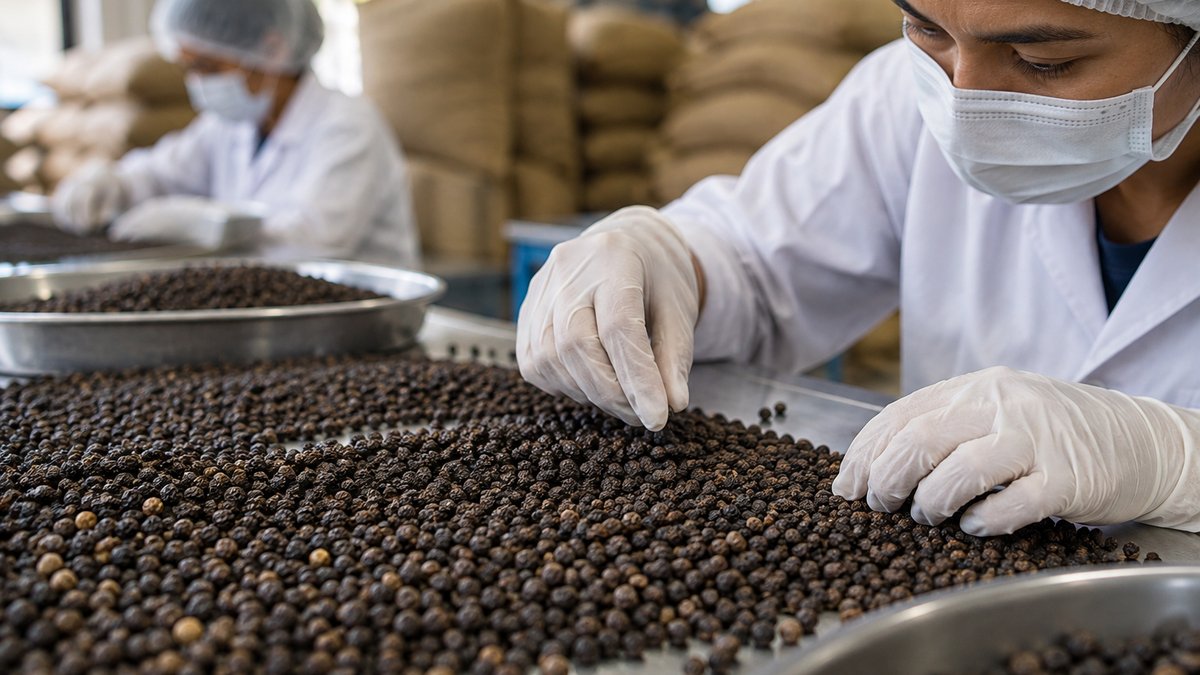
The 2025 Spain import data imply an average customs unit value of about US$7.85/kg, or US$7,845/tonne, calculated by dividing reported import value by reported net weight. This is an annual average across the recorded whole-pepper import mix. It is not a spot quotation, a specific grade price, or a stated FOB, CFR or CIF offer.
The derived unit value is useful for historical context, but it blends different grades, shipment dates, contract sizes and supplier arrangements. It cannot show whether a November 2026 offer is high or low without a like-for-like comparison. WITS also reports the value in US dollars, so this benchmark is not a euro-denominated wholesale price in Spain.
2.2 Origin-market references are not Spanish delivered prices
A report published on 16 November 2026 described declines in several black pepper origin references: Vietnam 500 g/l was reported at US$5,700/tonne, Vietnam 550 g/l at US$5,900/tonne, and Brazil ASTA 570 at US$5,550/tonne. Those grades are not identical, and the cited report does not establish a Spain delivery basis. The figures therefore provide origin-market context only, not quotes that a Spanish buyer can compare directly with the 2025 import unit value.
The International Pepper Community’s November report describes mixed but moderate price movements across its reporting origins, with firmer quotations in India and Sri Lanka and broadly stable prices in several other markets. That overview helps explain why a single origin’s movement should not be treated as a change in Spain’s entire import market.
2.3 No matched Spanish monthly price series is established here
The sources used for this update provide Spain’s 2025 annual customs value and quantity, plus newer origin-market references. They do not provide a dated November 2026 Spanish import quotation for a specified black pepper grade and delivery basis. A week-on-week or month-on-month change for Spain cannot be calculated from these different measures without implying a comparison the data do not support.
3. Why Black Pepper Prices Can Change
Supply from producing countries, grade and origin can affect export prices. The CBI market report identifies production volumes in major producing countries and product quality as factors behind origin price differences. It also reports a broad export-price increase in 2024 followed by stabilization around US$6.6/kg in 2025. These are regional market observations, not a forecast for Spain.
Recent origin references moved differently by grade and country. The 16 November report put Vietnam 500 g/l and 550 g/l at different price levels and listed a separate Brazil ASTA 570 reference. The IPC described mixed movement among reporting origins during the second week of November. Together, these sources argue for checking the precise origin and grade behind each offer rather than treating “black pepper” as one uniform commodity price.
A buyer’s delivered cost also depends on the shipment terms and costs not included in an origin reference. Freight, insurance where applicable, packaging, inspection, import charges and inland delivery can change the comparison. A low origin-market figure does not establish a low landed cost in Spain.
4. Which Markets Import the Most Black Pepper?
4.1 Spain’s reported whole-pepper suppliers
For Spain’s 2025 imports of dried whole pepper under HS 090411, Vietnam ranked first by reported volume at 3,441.46 tonnes. The Netherlands was next at 249.07 tonnes, followed closely by India at 248.50 tonnes and Brazil at 224.95 tonnes. The data describe Spain’s imports by reported partner, not the global ranking of black pepper importing countries.
Shares are approximate calculations from the WITS quantity figures for Spain’s total 4,906.2 tonnes. Rounded shares should be read as context, not as a measure of current buying demand.
4.2 Origin-country figures and Spain’s import data answer different questions
The 2025 customs data identify Vietnam as Spain’s largest reported supplier by quantity. The November origin-market references give later price indications for Vietnam and Brazil, but they do not state that the goods were sold to Spain. Import data show historical trade flows; origin references show a later price snapshot. Neither confirms a current Spanish buyer order.
4.3 Demand opportunities require confirmed buyer requirements
Spain’s recorded whole-pepper imports show an established channel for the product, with Vietnam accounting for most of the reported volume in 2025. Exporters assessing the market should confirm the buyer’s required origin, grade, food-safety documentation, quantity and delivery terms. National import totals are not a substitute for a confirmed order or current tender.
5. How Buyers Can Compare Black Pepper Offers
Compare quotes only after matching the product and commercial basis. Ask each supplier to state the pepper’s origin, grade or density, cleaning method, moisture and other agreed quality limits, packaging, quantity, shipment window and quote validity. Record the named loading and destination ports, and confirm the Incoterms rule and edition.
- Check whether the offer is for whole, crushed or ground pepper. Spain’s HS 090411 customs series covers dried pepper that is neither crushed nor ground.
- Match the grade and specification, including any stated density or ASTA requirement. A 500 g/l offer and an ASTA 570 offer are not automatically equivalent.
- Compare the same quantity and packaging, and confirm whether inspection or testing costs are included.
- Put every offer on a common delivery basis. For FOB, CFR and CIF quotations, check which freight, insurance and destination costs remain outside the quoted amount.
- Calculate landed cost to the same Spanish destination, including freight, insurance where applicable, import charges and inland delivery.
For a practical comparison, retain both the supplier’s original quotation and a normalized worksheet. The worksheet should show currency, unit, grade, quantity, shipment date, named ports, delivery term and excluded costs. Convert currencies only with a dated exchange rate and keep the original offer visible so the conversion does not obscure its basis.
Buying consideration: Before choosing an offer, ask suppliers to quote the same written specification and destination basis, then compare the resulting landed cost with the historical customs unit value only as a broad reference.
6. What Freshdi Buying Requests Show
No dated Freshdi black pepper request snapshot accompanies this update, so it makes no claim about current request counts, buyer quantities, destinations or preferred trade terms. The platform’s category pages can be used to review relevant buying requests, but any requirement should be checked in the individual request before preparing an offer.
Spain’s 2025 customs imports and Freshdi buying requests measure different things. Customs statistics record reported completed trade by product code and partner; a buying request records a buyer’s stated requirement. Neither should be presented as a proxy for the other.
7. Practical Steps for Buyers and Exporters
7.1 For buyers and importers
- Use the 2025 Spain customs unit value as historical context, not as a November 2026 budget quotation.
- Request current offers for the same grade, quality limits, packaging, volume and delivery basis.
- Confirm certificates and documents required for the specific product and shipment into Spain.
- Check shipment schedule, sample or inspection arrangements, payment terms and quotation validity before comparing totals.
- Keep origin-market references separate from delivered prices in the sourcing comparison.
7.2 For exporters and suppliers
- State origin, grade, cleaning method, quality limits, packaging and available quantity in each offer.
- Name the loading port, delivery term, quote currency and validity period.
- Separate the product price from freight, insurance and other charges when the offer excludes them.
- Use the buyer’s destination and specification to prepare a tailored quotation.
- Treat national import totals as market context, not evidence of a specific buyer’s demand.
8. How Freshdi Helps Buyers and Suppliers Connect
Buyers can use Freshdi’s black pepper supplier category to review supplier listings, while exporters can review black pepper buying requests for stated product and shipment requirements. A listing or request is a discovery starting point; buyers and suppliers still need to check the details of each potential transaction.
Once the required grade and shipment basis are clear, buyers can review relevant black pepper requests and suppliers on Freshdi.
View Latest Herbs, Spices & Seasonings Buying Requests →View Potential Herbs, Spices & Seasonings Suppliers →
Freshdi also groups black pepper under Herbs, Spices & Seasonings. Buyers sourcing across related products can review that broader category, and suppliers can check whether relevant requests match the products they can actually provide.
Businesses comparing related spice requirements can browse the broader category after confirming their product specifications.
View Latest Herbs, Spices & Seasonings Buying Requests →View Potential Herbs, Spices & Seasonings Suppliers →
9. Spain Black Pepper Market Outlook
Spain’s latest reported annual benchmark is a 2025 customs unit value of about US$7,845/tonne for dried whole pepper under HS 090411. Vietnam supplied most of the recorded volume. Newer November origin references show price differences by origin and grade, but they do not establish a current price delivered to Spain.
Buyers should obtain current offers on a common specification and delivery basis before making a purchasing decision. Exporters should identify grade, origin, quantity, port and quotation validity so buyers can compare the offer against other sources and calculate landed cost.
Buyers and suppliers can use Freshdi to review relevant black pepper sourcing requests and supplier listings.
View Latest Herbs, Spices & Seasonings Buying Requests →View Potential Herbs, Spices & Seasonings Suppliers →
Frequently Asked Questions
What is the current black pepper price in Spain?
The latest Spain-specific customs benchmark used here is for 2025: about US$7,845 per tonne, calculated from Spain’s reported import value and quantity for dried whole pepper under HS 090411. It is an annual customs unit value across a mixed import basket, not a current November 2026 supplier quote or delivered price.
Which countries supplied Spain with the most whole pepper?
In 2025, Vietnam was Spain’s largest reported supplier under HS 090411, with 3,441.46 tonnes. The Netherlands, India and Brazil followed by reported quantity. The code covers dried pepper that is neither crushed nor ground.
Why do black pepper prices differ by origin?
Export prices vary with origin and quality, and production volumes in major producing countries can affect supply. Grade and delivery terms also matter when comparing individual offers. The CBI report gives broad European export-market context, while the November origin references describe different grades and do not state a Spain delivery basis.
Can buyers compare FOB, CFR and CIF black pepper prices directly?
No. Each term can include different transport and insurance responsibilities. Confirm the named ports and applicable Incoterms rule, identify costs excluded from each quotation, then compare the total cost to the same destination and for the same pepper specification.
How can buyers find black pepper suppliers or requests on Freshdi?
Buyers can browse Freshdi’s black pepper supplier category, and suppliers can review black pepper buying requests. Check each listing or request for its stated product, quantity, destination and trade terms; a platform listing or request does not guarantee a transaction.
References
1. World Bank WITS, using UN Comtrade data – Spain Dried pepper (excl. crushed or ground) imports by country, 2025, 2025 trade data.
2. International Pepper Community – Pepper market report for the second week of November 2026, November 2026.
3. Tridge Insights – Pepper Prices Decline Domestically and Internationally in Mid-November, 16 November 2026.
4. Centre for the Promotion of Imports from developing countries – Entering the European market for black pepper, 2026.
Disclaimer: This article is compiled from platform data, public sources and information provided by third parties, for general informational purposes only. We do not guarantee its accuracy or completeness. Prices, volumes and forecasts are indicative, reflect conditions as of 2026-11-20 and may change without notice. This is not financial, investment or trading advice.