
Introduction
Vietnamese black pepper export references stood at US$5,700 per metric tonne for 500 g/l and US$5,900 per metric tonne for 550 g/l in a market update dated 19 November 2026. These are origin-market reference prices, not offers delivered to a US port. The latest US import statistics available in this snapshot cover 2025, so buyers should keep those trade flows separate from November price indications.
This update covers November 2026 export references, their reported recent movement, and US imports of whole dried pepper. The United States imported 50,994.3 tonnes of dried pepper, whole and neither crushed nor ground, in 2025, according to World Bank WITS data based on UN Comtrade. That customs category is broader than black pepper alone. Buyers should confirm the pepper type, grade, delivery basis and shipment date before using a benchmark in a purchasing decision.
Key Takeaways
- On 19 November 2026, Vietnam black pepper export references were US$5,700/MT for 500 g/l and US$5,900/MT for 550 g/l, according to a Tridge market update.
- A Tridge report dated 16 November said the 500 g/l reference had fallen US$250/MT, or 4.2%, over the week; its 550 g/l reference was down US$95/MT, or 1.58%.
- The International Pepper Community's 13 November price page listed Brazil ASTA 570 at US$5,550/MT, Vietnam 500 g/l at US$5,700/MT and Vietnam 550 g/l at US$5,900/MT. The page does not state a common delivery basis for these references.
- In 2025, Vietnam supplied 37,231.8 tonnes of the United States' 50,994.3 tonnes of imports under HS 090411, which covers dried pepper excluding crushed or ground pepper.
- US buyers should request matching grade, cleaning, packaging, quantity, shipment timing and Incoterm, then compare total landed cost rather than export reference prices alone.
1. The United States Relies on Imported Whole Dried Pepper
The United States imported 50,994.3 tonnes of dried pepper, whole and neither crushed nor ground, in 2025. World Bank WITS, using UN Comtrade data for HS 090411, recorded imports valued at US$377.9 million. The code describes a customs product category, not black pepper alone, and does not separate pepper by density, cleaning method or food-use specification.
Vietnam was the largest supplier in that US import category by volume, shipping 37,231.8 tonnes in 2025. Indonesia supplied 7,687.0 tonnes, India 2,412.5 tonnes and Brazil 2,150.1 tonnes. Those annual customs figures show the origin mix for whole dried pepper; they do not establish a November 2026 shipment price or current purchasing demand.
The November reference market is moving on a different clock from annual customs data. Tridge's 19 November update reported stable international export references for Vietnam's 500 g/l and 550 g/l black pepper at US$5,700/MT and US$5,900/MT. The International Pepper Community also publishes origin reference prices, and states that it displays prevailing prices reported by sources rather than setting them.
Supply availability, harvest timing, inventories, buyer orders and currency movements can affect exporter offers. The sources used here do not quantify each factor's contribution to the November price change. Importers should therefore treat the reported decrease as a dated market signal, then verify current availability, specifications and freight before setting a purchase budget.
Looking to Source Black Pepper?
Connect with verified suppliers, discover matching products, and explore sourcing opportunities from global markets.
2. Latest Black Pepper Export Prices Relevant to US Buyers
2.1 Current Vietnam references and competing origins
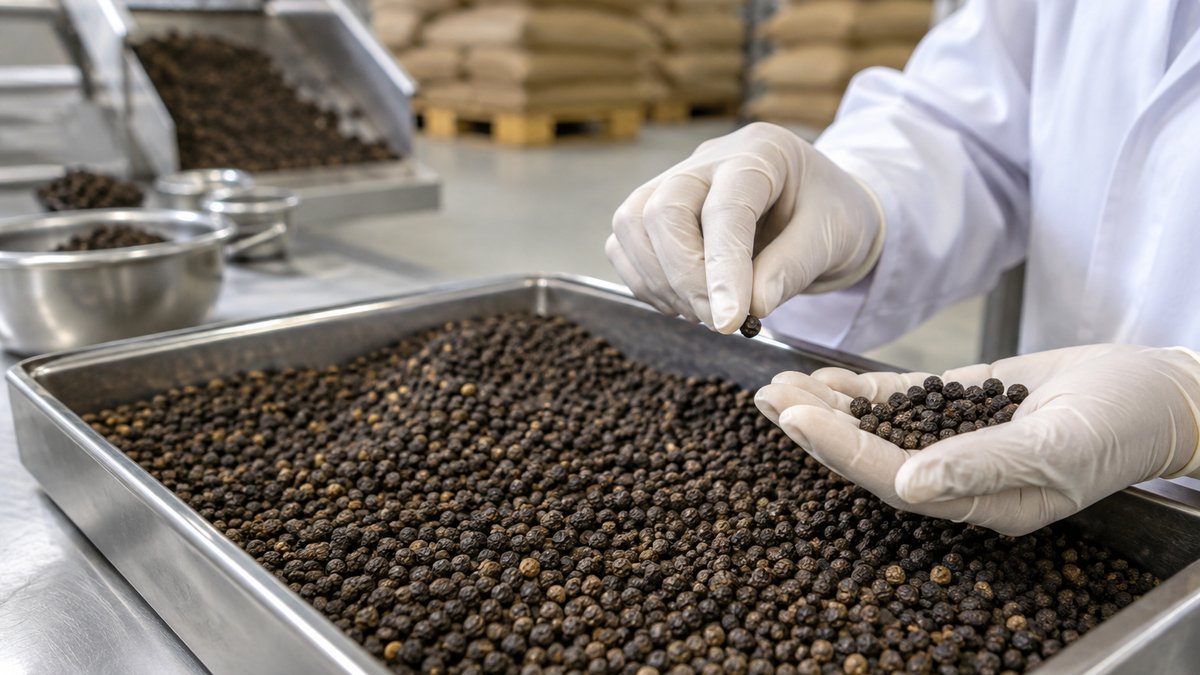
Tridge's 19 November 2026 market update reported Vietnam black pepper at US$5,700/MT for 500 g/l and US$5,900/MT for 550 g/l. These are export-market references, not a quotation for delivery to the United States. The report does not establish a US destination, named port, or complete Incoterm basis for either figure.
The International Pepper Community's daily price page dated 13 November listed Vietnam 500 g/l at US$5,700/MT and Vietnam 550 g/l at US$5,900/MT. It listed Brazil ASTA 570 at US$5,550/MT, Indonesia black pepper at US$6,770/MT and Malaysia ASTA black pepper at US$9,100/MT. The figures offer a dated origin comparison, but the page does not specify matching delivery terms or a US landed basis.
These entries are not a fully matched comparison. The specifications differ, and the IPC page does not state an Incoterm or a named port for these references. In particular, Vietnam 500 g/l should not be compared as though it were identical to Brazil ASTA 570. Ask exporters to quote against the same density, cleaning specification, packaging and delivery basis before treating a price gap as a sourcing advantage.
2.2 Reported movement in November
Tridge's 16 November report said Vietnam's 500 g/l black pepper export reference had dropped by US$250/MT, or 4.2%, to US$5,700/MT. The same report put the 550 g/l reference at US$5,900/MT, down US$95/MT, or 1.58%. Tridge's update dated 19 November described the international references as stable at those levels.
Those reported weekly changes apply to export references, not US wholesale or retail prices. They do not include ocean freight, insurance, customs charges, inland transport or any other buyer-specific costs. The IPC's 13 November page also recorded the same Vietnam 500 g/l and 550 g/l levels, but its publication date and reporting series should remain visible when buyers compare observations.
For a US-bound historical comparison, VietnamNet reported an average Vietnamese black pepper export price of US$8,112/MT for shipments to the United States in the first quarter of 2026. That quarterly transaction average covers a different period and measure from the November export references. It should not be presented as a current offer or compared directly without a matching grade and quotation basis.
Buying consideration: Request a current quotation that names the grade or density, cleaning method, packaging, quantity, loading port, shipment window, Incoterm and quote validity. Compare the US-bound landed cost on the same specification, including freight, insurance and destination charges where applicable.
3. Factors Buyers Should Check When Export Prices Change
The available November reports document lower Vietnamese export references during the week before 16 November, followed by stable reference levels in the 19 November update. They do not attribute the full move to a single cause. Buyers can use the following commercial checks to assess how a market change affects a particular offer.
3.1 Grade and available export supply
A 500 g/l reference and a 550 g/l reference describe different product specifications. Density, cleaning, permitted defects and other quality terms can change the offer. Ask the supplier to state the agreed tolerances and confirm that the quoted specification matches the buyer's product requirement. A change in the price of one grade does not establish the same movement for every grade.
3.2 Harvest timing and inventory
Harvest arrivals and stocks available to exporters can affect how much product sellers can offer for a particular shipment window. The cited November price reports do not quantify current Vietnamese inventories or identify a verified crop-loss figure. Buyers assessing nearby supply should request the supplier's current available quantity and shipment schedule rather than infer stock levels from a price move alone.
3.3 Demand, competing origins and currencies
Importers can compare offers from Vietnam, Brazil, Indonesia, India and other origins, while checking whether the product specifications are equivalent. Currency movements can also change an exporter's local-currency return or a buyer's converted cost. The IPC figures are origin references, so they do not show how much a specific US importer paid after freight, exchange conversion or contract adjustments.
3.4 Freight, insurance and policy conditions
A lower export reference may be offset by freight, insurance, port handling, customs charges or inland delivery. Import requirements and applicable duties depend on the product classification and the shipment circumstances. Before committing, buyers should confirm current US entry requirements with the relevant authorities and their customs broker; this price snapshot does not determine a tariff rate or regulatory approval.
4. US Import Origins and the Limits of the Trade Comparison
4.1 Leading origins in the 2025 US whole-pepper import category
Vietnam supplied most of the United States' 2025 imports reported under HS 090411, followed by Indonesia, India and Brazil. The quantities below come from World Bank WITS data based on UN Comtrade and refer to dried pepper excluding crushed or ground pepper. They should not be read as black-pepper-only figures or as a forecast for 2026.
4.2 What the US destination figures can and cannot show
These customs figures identify origins and quantities for a broad product code. They do not show the density, crop year, cleaning level, packaging or contract terms of each shipment. They also do not provide an up-to-date count of buyer inquiries or distinguish every black and white pepper transaction. The figures are useful for understanding the US import mix, not for pricing a specific black pepper lot.
4.3 How importers can use the origin information
The 2025 import mix identifies several origins that US buyers may include in a quotation round. A sourcing comparison still needs matched product and shipment details. A country with a lower reference price may have a different grade, loading port, packaging cost or shipping schedule, and customs data alone does not establish which origin will have the lowest delivered cost for a buyer.
5. Compare Black Pepper Offers on Landed Cost
An export reference is only one part of a US import cost comparison. FOB means free on board: the seller's delivery obligation is tied to the named loading point under the agreed contract, and the buyer generally arranges main carriage from there. CFR means cost and freight to the named destination port, while CIF includes cost, insurance and freight to that port. Contract terms and responsibilities must be checked in the agreed Incoterms version.
- Match the product: specify black pepper, density or grade, cleaning method, quality tolerances and any required test results.
- Match the order: use the same quantity, packaging, shipment window and loading port when comparing offers.
- Record the delivery basis: ask for the named place or port and the Incoterm, rather than comparing an FOB number with a CIF number as if they cover the same services.
- Build the landed-cost estimate: include the quoted product price, freight, insurance where applicable, port and customs charges, and inland delivery.
- Confirm import conditions: check product classification and applicable US requirements for the shipment with the appropriate authorities and service providers.
- Check offer validity and availability: prices and quantities can change, so ask the supplier to confirm both before placing an order.
A US buyer comparing Vietnam's November 500 g/l reference with another origin should first request quotations for the same density and quality terms. The buyer can then compare the named delivery basis and costs to the intended destination. A lower origin reference is not enough to establish a lower landed cost.
6. What Freshdi Black Pepper Buying Requests Can Tell Suppliers
Freshdi buying requests are individual buyer inquiries, so they should be read separately from national import statistics. A request can state a product requirement, quantity, destination or trade term, but suppliers should rely on what each live request actually says. A platform request is not a measure of total US demand and does not confirm a completed purchase.
For a relevant response, suppliers should compare the request's stated product and destination with the pepper they can supply. If the buyer's grade, quantity, packaging or delivery basis is not stated, ask for clarification rather than filling in the missing detail. Buyers reviewing offers can use the same discipline by giving suppliers a written specification and shipment window.
US import totals and Freshdi requests answer different questions. The 2025 customs quantity describes recorded imports in a broad product category. A buying request describes one buyer's stated procurement needs. Suppliers should not use either source to claim a particular order is guaranteed.
7. Practical Next Steps for Buyers and Exporters
7.1 For buyers and importers
- Use the November Vietnam figures as dated export references, not as a delivered US quotation.
- Send the same grade, quality tolerances, packaging, quantity and shipment window to each supplier invited to quote.
- Ask for the loading port, named delivery point, Incoterm, quote currency and validity period.
- Compare the full estimated cost to the destination and verify any applicable import requirements before placing an order.
- Confirm current availability and agreed inspection or testing procedures with the supplier.
7.2 For exporters and suppliers
- State the pepper grade or density, cleaning method, quality parameters, packaging and available quantity in each offer.
- Name the loading port and the Incoterm, and make the quote validity and shipment window clear.
- Keep the product listing consistent with the goods currently available.
- Review the destination and stated requirements in a buying request before preparing a quotation.
- Describe certificates and test documents accurately, and provide only documents that apply to the offered lot.
A clear specification lets both sides compare offers on the same basis. The November reference movement gives buyers a dated point for asking about price changes, while the US import data shows that Vietnam, Indonesia, India and Brazil were established origins in the 2025 whole dried pepper category.
8. Find Black Pepper Suppliers and Buying Requests on Freshdi
Buyers can review potential suppliers in the Freshdi black pepper supplier category and compare the product and commercial details each profile states. Suppliers can review Freshdi black pepper buying requests and assess whether their available grade, quantity and delivery terms fit a buyer's stated need.
Use a listing or request as a starting point for checking fit. Confirm the product specification, destination, available quantity and shipment timing directly through the information available on the relevant Freshdi page. Neither a listing nor a request guarantees a transaction.
Buyers comparing pepper origins and suppliers can review relevant category listings, while exporters can check current buying requests.
View Latest Herbs, Spices & Seasonings Buying Requests →View Potential Herbs, Spices & Seasonings Suppliers →
9. November Black Pepper Market Outlook for US Buyers
The latest dated level used here is the 19 November 2026 Tridge update, which reported Vietnam black pepper references at US$5,700/MT for 500 g/l and US$5,900/MT for 550 g/l. Tridge's 16 November report had recorded weekly declines for both grades. The IPC's 13 November figures provide a separate dated origin comparison, including Brazil ASTA 570 at US$5,550/MT.
Those figures do not establish the current price of black pepper delivered to a US buyer. The recent origin references, the 2025 US customs quantities and the first-quarter 2026 US-bound transaction average describe different periods and bases. Procurement teams should request current, like-for-like quotations and calculate landed cost before deciding whether the reported movement changes their buying plan.
Buyers should confirm grade, quantity, shipment availability and delivery costs before placing an order. Exporters should state the specification, loading point, quote validity and destination terms clearly. Freshdi can be used to review relevant black pepper supplier listings and buying requests.
Once the required grade and delivery details are set, buyers can review suppliers offering related black pepper products.
View Related Suppliers for This Product →
Frequently Asked Questions
What was the latest Vietnam black pepper price reported for November 2026?
Tridge's market update dated 19 November 2026 reported Vietnam black pepper at US$5,700 per metric tonne for 500 g/l and US$5,900 per metric tonne for 550 g/l. These are export-market references, not offers for delivery to a named US port.
Did Vietnamese black pepper export prices fall in November?
Tridge's 16 November report said the Vietnam 500 g/l reference fell US$250/MT, or 4.2%, over the week to US$5,700/MT. It reported the 550 g/l reference down US$95/MT, or 1.58%, to US$5,900/MT. Tridge's 19 November update described international export references as stable at those levels.
Which countries supplied the most whole dried pepper to the United States?
World Bank WITS data based on UN Comtrade records Vietnam as the largest supplier under HS 090411 in 2025, with 37,231.8 tonnes. Indonesia supplied 7,687.0 tonnes, India 2,412.5 tonnes and Brazil 2,150.1 tonnes. The code covers dried pepper excluding crushed or ground pepper, so it is broader than black pepper alone.
Why can a US buyer's price differ from a Vietnam export reference?
An export reference does not necessarily include ocean freight, insurance, destination charges or inland delivery. The grade, cleaning, packaging, shipment date, quantity and Incoterm can also differ. Ask suppliers to quote the same specification and destination basis before comparing estimated landed costs.
How should buyers compare FOB, CFR and CIF quotations?
Confirm the named port or place and the Incoterm on each quotation. FOB refers to delivery at the named loading point, CFR includes cost and freight to the named destination port, and CIF also includes insurance to that port. Compare quotations only after accounting for the services and costs each one includes.
Can Freshdi buying requests confirm total US black pepper demand?
No. Freshdi requests are individual buyer inquiries, while customs statistics record trade flows across a reporting period and product category. Review each request for its stated grade, quantity, destination and terms, and do not treat it as a measure of total market demand or a confirmed order.
References
1. International Pepper Community – Daily Prices, 13 November 2026.
2. Tridge – Vietnam Pepper Prices Decline Domestically While International Prices Remain Stable, 19 November 2026.
3. Tridge – Pepper Prices Decline Domestically and Internationally in Mid-November, 16 November 2026.
4. World Bank WITS – United States Dried Pepper (Excl. Crushed or Ground) Imports by Country, 2025, 2025.
5. VietnamNet – Vietnam Black Pepper Export Price to the United States, First Quarter 2026, First quarter 2026.
Disclaimer: This article is compiled from platform data, public sources and information provided by third parties, for general informational purposes only. We do not guarantee its accuracy or completeness. Prices, volumes and forecasts are indicative, reflect conditions as of 2026-11-20 and may change without notice. This is not financial, investment or trading advice.