
Introduction
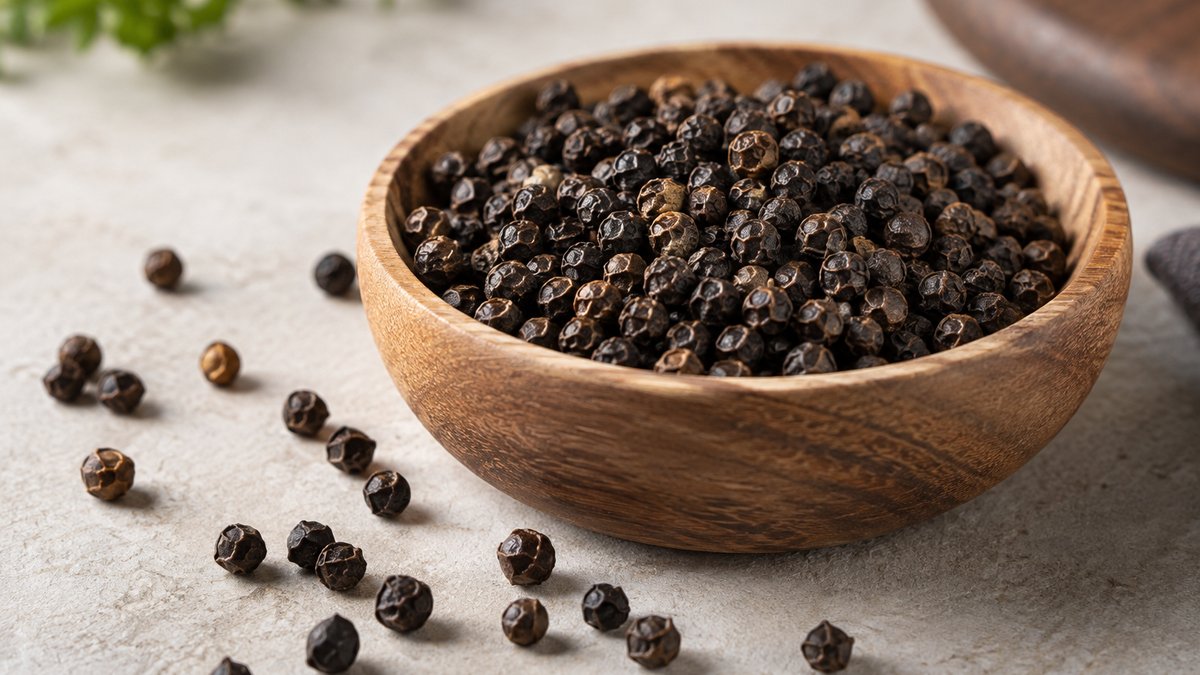
On 22 November 2026, Vietnam-origin black pepper export offers were reported at US$5,700 per metric tonne for 500 g/l and US$5,900 per metric tonne for 550 g/l. Those are origin-market references, not prices for delivery to the Netherlands. The same report said Vietnam’s domestic pepper purchase prices had fallen during the week, while export offers were unchanged.
This update covers November 2026 export-price references and Dutch market context. The latest Dutch black pepper import figures cited here cover 2025, while the latest detailed product volumes from the European market report cover 2024. No comparable, dated November quotation for black pepper delivered to a Dutch port was found, so buyers should treat the origin prices as benchmarks and obtain current quotations for their own shipment basis.
Key Takeaways
- On 22 November 2026, Vietnam export references were US$5,700/MT for 500 g/l and US$5,900/MT for 550 g/l black pepper, as reported by VietVance. The report described these offers as unchanged.
- On the same date, Vietnam’s domestic pepper purchase prices were VND 128,000 to VND 132,000 per kilogram across surveyed growing areas, down VND 4,000 to VND 7,000 per kilogram from a week earlier, according to VietVance. These domestic prices are not export quotations.
- A 22 November VietVance report citing International Pepper Community references listed Brazilian ASTA 570 black pepper at US$5,400/MT and Indonesian black pepper at US$6,748/MT. The source does not state an equivalent delivery basis for all origins, so the figures are not a like-for-like Netherlands price comparison.
- The Netherlands imported about 10,000 tonnes of pepper in 2024, according to the Netherlands Enterprise Agency’s CBI market report. Vietnam supplied more than half of Dutch pepper imports that year; Brazil supplied 22%.
- Before choosing an offer, buyers should align density or ASTA grade, cleaning, packaging, shipment timing and Incoterm, then compare freight, insurance and destination charges alongside the export reference.
1. Black Pepper Trade and the Netherlands Market
The Netherlands is both a pepper-import market and a European trading hub. The Netherlands Enterprise Agency’s CBI report says Dutch pepper imports reached 10,000 tonnes in 2024, up from 7,300 tonnes in 2020. About 40% of the imported volume was re-exported in 2024, down from 75% in 2020; the remaining volume was available for domestic use and processing.
Vietnam was the leading supplier to the Netherlands in 2024, accounting for more than half of pepper imports. Brazil supplied 22%, Indonesia 11%, China 5.1% and India 4.5%, according to CBI. These are historical import shares, not a measure of November 2026 orders or prices. Buyers considering a Dutch entry point should also distinguish pepper intended for Dutch processors from shipments intended for re-export to other European countries.
Global supply estimates vary by source and crop-year definition. In its November 2026 crop report, Nedspice estimated global pepper production at 434,000 to 464,000 tonnes for the 2026-2027 crop year. The range signals uncertainty in the estimate; it is not a confirmed final harvest total. Vietnam, Brazil, Indonesia and India are important supplying origins, but the available figures here do not support a complete, comparable ranking of their current production.
For wider import demand, CBI’s 2024 European figures place Germany first among the European markets it lists, with 26,400 tonnes of pepper imports. The United Kingdom imported 10,500 tonnes, while the Netherlands and France each imported 10,100 tonnes. Those figures describe Europe, not a global ranking. CBI also reports that European imports of ground pepper grew faster than whole pepper over 2020-2024, a distinction that matters to suppliers selling whole peppercorns versus processed product.
Vietnam’s export activity remains substantial. VietnamPlus, citing the Vietnam Pepper and Spice Association, reported that Vietnam exported nearly 237,700 tonnes of pepper worth more than US$1.53 billion from January to October 2026. That figure covers pepper exports overall, not black pepper alone. The same report identified Asia as the largest regional destination and the United States as Vietnam’s largest single market; it does not establish Dutch buyer demand.
Looking to Source Black Pepper?
Connect with verified suppliers, discover matching products, and explore sourcing opportunities from global markets.
2. Latest Black Pepper Export Prices
2.1 Current origin references and price ranges
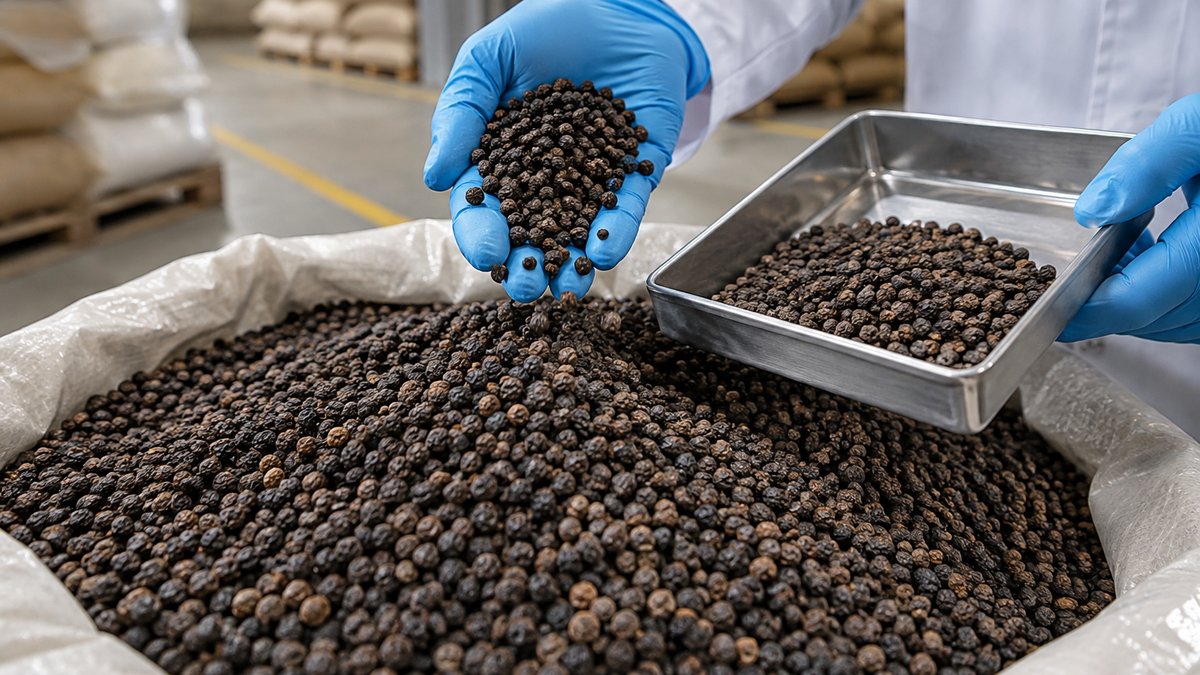
The latest dated export references found for this update are from 22 November 2026. VietVance reported Vietnam-origin black pepper offers at US$5,700 per metric tonne for 500 g/l and US$5,900 per metric tonne for 550 g/l. The report described both export offers as unchanged over the preceding week. It did not identify a Dutch destination port or provide a complete Incoterm basis, so importers should not read these figures as delivered prices for the Netherlands.
The origin and grade fields are not identical across these references. The Brazilian figure specifies ASTA 570, while the Indonesian reference does not state a grade in the report. The quoted sources also do not establish a common loading port, Incoterm or delivery date for all rows. Use the table as a dated indication of reported origin-market levels, not as a ranked comparison of offers available to Dutch buyers.
2.2 Price movement and comparison with earlier reports
The 22 November report separates two movements: domestic purchase prices in Vietnam fell, while reported export offers stayed unchanged. Across surveyed growing areas, domestic purchase prices ranged from VND 128,000 to VND 132,000 per kilogram, down VND 4,000 to VND 7,000 per kilogram from a week earlier. Those are local prices in production areas, not prices for exported, cleaned pepper, and they should not be converted into a Dutch import price.
Earlier November reports give context but use their own dates and source series. BCCE reported Vietnam export quotations of US$5,950/MT for 500 g/l and US$5,995/MT for 550 g/l on 6 November 2026. VietVance reported lower Vietnam export references by 22 November. The dates and sources should remain attached to each quotation; the change does not establish a contract price or explain how any individual offer was negotiated.
The available evidence does not provide a consistent historical series for one grade, one delivery basis and one destination. It therefore does not support a precise percentage change for a November Netherlands import price. Buyers should ask for a new quote that names the grade, quantity, loading location, shipment window, packaging and delivery term before using any reference in a budget.
3. Why Black Pepper Prices Are Changing
The November reports show a difference between domestic buying prices and export offers, but they do not quantify how much each market factor contributed. A domestic price can respond to nearby supply and local buying activity; an export reference also reflects grade, cleaning, exporter availability and the terms attached to a shipment. Buyers should avoid treating a short-term move in one series as proof that all grades or destinations have moved by the same amount.
Harvest and inventory expectations are relevant to supply planning. Nedspice’s November 2026 report estimates 2026-2027 global production at 434,000 to 464,000 tonnes and discusses weather and crop risks in its outlook. That estimate is a forecast range, not a final production result. Importers can use it as a reason to monitor crop updates and supplier availability, but it does not confirm a future price direction.
Demand also differs by destination and form. VietnamPlus reported that Vietnam’s pepper exports increased in volume and value over January to October 2026, with Asia the largest regional market and the United States the leading single-country destination. Those figures cover total pepper exports and do not specify the Dutch share. CBI’s market analysis describes the Netherlands as a re-export hub, so a Dutch importer may be buying for local food production or onward European distribution, with different requirements for each route.
Currency, freight, insurance and port charges affect a buyer’s delivered cost even when the origin reference is unchanged. The November price reports cited here do not provide a Dutch freight quote, insurance rate or destination charge. Obtain those costs for the shipment date and route instead of adding an undated estimate to an origin price.
Trade rules and buyer specifications can also affect whether an offer is usable. The price sources do not identify a regulatory change that explains the November movement. Importers should check the current European Union and Netherlands requirements for the exact product, processing method and shipment, and specify any buyer-required testing or documentation in the inquiry. A requirement applying to one product form or buyer should not be assumed to apply to every black pepper shipment.
4. Which Countries Import the Most Black Pepper?
4.1 Major European importing markets
The latest comparable European figures cited here are for 2024. CBI reports Germany imported 26,400 tonnes of pepper, the United Kingdom 10,500 tonnes, and the Netherlands and France 10,100 tonnes each. These are European market figures, not a global country ranking, and they refer to pepper rather than a narrowly separated black pepper grade.
The Netherlands is especially relevant to exporters because it combines domestic demand with re-export trade. CBI estimates that Dutch imports were 10,000 tonnes in 2024 and that 40% of the volume was re-exported. The leading Dutch destinations for re-exported pepper included Belgium, France, Hungary, Germany and Spain, according to the same CBI analysis. Exporters should confirm whether a Dutch buyer needs product for local use or a wider distribution programme.
4.2 The Netherlands’ main supplying origins
Vietnam supplied more than half of Dutch pepper imports in 2024, followed by Brazil at 22%, Indonesia at 11%, China at 5.1% and India at 4.5%, CBI reports. These shares show established competition among origins. They do not establish the November 2026 price competitiveness of any one origin or the availability of a particular grade.
CBI’s broader Dutch market analysis also reports that black pepper remained the largest spice import from low- and middle-income countries in 2025. The Dutch share of European Union black pepper imports was about 19% that year. This supports the Netherlands’ role as a sizeable entry market, while the 2025 annual statistic does not tell suppliers which Dutch buyers are currently placing orders.
4.3 What import demand means for exporters
Exporters can evaluate Dutch demand as two potential routes: supplying a Dutch processor or wholesaler for local use, or supplying a trader that redistributes pepper within Europe. CBI’s 2021-2025 averages estimate Dutch apparent use of black pepper at 2,344 tonnes per year, calculated as imports minus exports. Apparent use is a trade balance indicator, not a direct measurement of consumption or confirmed orders.
A market forecast, annual customs total and buyer order answer different questions. A forecast estimates future activity; customs data records completed trade; a buying request states an individual buyer’s sourcing need. Suppliers should not treat a national import trend as a specific buyer commitment. For a quotation, ask the buyer to confirm destination, product form, specification, quantity and delivery window.
5. How Buyers Can Compare Black Pepper Offers
A lower origin reference does not by itself identify the lowest-cost shipment to the Netherlands. Compare offers on the same product specification and delivery basis, then calculate landed cost using the actual freight, insurance and destination charges for the shipment.
- Confirm the product form: whole peppercorns, crushed pepper or ground pepper. Import statistics and price references may cover different forms.
- Match the grade. Compare 500 g/l with 500 g/l, or ASTA specifications with the same stated ASTA basis; ask the exporter to define any specification that is unclear.
- Set the same quantity, bag type, packaging material and shipment window for each supplier quotation.
- Compare the Incoterm and named place. FOB means the seller loads the goods on board at the named port, while CFR includes cost and freight to the named destination port and CIF includes cost, insurance and freight. Confirm the contract’s exact allocation of tasks and risk.
- Add the costs that are not included in the quoted price, including freight, insurance, port handling, customs charges and any testing or inspection arranged by the buyer.
- Check applicable import requirements for the product and intended use, then agree the documents and quality checks before shipment.
For example, the reported US$5,700/MT Vietnam 500 g/l reference on 22 November is not directly comparable with an offer that includes sea freight to Rotterdam or another Dutch port. Request the same 500 g/l specification from each origin, with the same packaging and destination basis. Record the quote date and validity because the cited market references are dated observations, not binding offers.
Buyers preparing a matched quotation request can review suppliers listed for black pepper and compare the specifications they provide.
View Related Suppliers for This Product →
Buying consideration: Before selecting an offer, confirm whether the seller’s stated price is FOB, CFR or CIF, identify the named port, and calculate the same landed-cost components for every quotation.
6. What Does the Latest Demand Look Like on Freshdi?
No dated Freshdi buying-request snapshot accompanies this price update, so it cannot state a current count of black pepper requests, buyer countries, quantities, grades or trade terms. Freshdi requests are individual notices of sourcing needs; they are not national import statistics or a measure of total Dutch demand.
The market evidence available here describes a different period and scope. CBI reports Dutch black pepper import activity for 2025, and its detailed supplier shares are for 2024. Vietnam’s national export figures cover pepper shipments to all destinations and product forms reported in the cited source. None of these figures should be presented as current Freshdi buyer activity.
When reviewing a buying request, suppliers should check whether the buyer has specified whole or ground pepper, grade, quantity, destination, shipment timing and delivery terms. A missing detail should be clarified before quoting. Buyers comparing suppliers should send the same requirements to each candidate so that differences in price reflect a comparable offer.
7. What Buyers and Suppliers Should Do Next
7.1 For buyers and importers
- Use the 22 November Vietnam references as dated origin-market context, not as a Dutch-delivered budget price.
- Ask suppliers to quote the same pepper form, density or ASTA grade, packaging, quantity and shipment window.
- Compare the named Incoterm and place, then calculate landed cost to the actual Dutch destination.
- Confirm product-specific import rules and agree testing, inspection and documentation before the contract is finalized.
- Recheck price validity and stock availability before confirming a purchase, particularly when the quotation is based on a market reference.
7.2 For exporters and suppliers
- State the origin, pepper form, grade and quality parameters in each listing and quotation.
- Name the loading port, currency, Incoterm, quote validity, available quantity and earliest shipment date.
- Separate an export reference from a firm offer and identify whether freight or insurance is included.
- For Dutch buyers, clarify whether the product is for local processing or onward distribution in Europe.
- Respond to a buying request only when the requested product and shipment terms match the offer.
8. How Freshdi Helps Buyers and Suppliers Connect
Freshdi’s black pepper category pages give buyers a place to browse potential suppliers and give suppliers a place to review relevant buying requests. The pages are a sourcing starting point; each business should still check product specifications, availability, documentation and shipment terms directly through its own due diligence.
A useful supplier comparison begins with the details that determine whether an offer fits the order: origin, pepper form, grade, quantity, packaging, loading port and delivery term. Buyers can state these details in a sourcing request so that suppliers can assess whether their available product matches. Suppliers can use the same details to decide whether a request is relevant before preparing a quotation.
Buyers and exporters ready to check current sourcing options can browse black pepper requests and potential suppliers on Freshdi.
View Latest Herbs, Spices & Seasonings Buying Requests →View Potential Herbs, Spices & Seasonings Suppliers →
9. Conclusion: Black Pepper Market Outlook for the Netherlands
The latest dated references found for this update put Vietnam black pepper at US$5,700/MT for 500 g/l and US$5,900/MT for 550 g/l on 22 November 2026. The reports described those export offers as unchanged while local Vietnamese purchase prices had fallen over the week. The origin references do not state a comparable delivered price for the Netherlands.
Dutch importers should compare current quotations on a matched specification and Incoterm, then add freight, insurance and destination charges. Exporters should account for the Netherlands’ role as both a consumer market and a European re-export hub, and make the intended product, quality and delivery terms explicit in each offer. Freshdi’s black pepper pages can help readers find relevant suppliers and buying requests.
Frequently Asked Questions
What was the latest black pepper export price relevant to Dutch buyers?
VietVance reported Vietnam-origin black pepper export offers on 22 November 2026 at US$5,700 per metric tonne for 500 g/l and US$5,900 per metric tonne for 550 g/l. The report did not identify a Dutch destination port or a complete delivery basis, so these are origin-market references, not prices delivered to the Netherlands.
Did black pepper prices fall in November 2026?
The 22 November VietVance report said Vietnam’s domestic pepper purchase prices had fallen VND 4,000 to VND 7,000 per kilogram from a week earlier, while Vietnam export offers remained unchanged at US$5,700/MT for 500 g/l and US$5,900/MT for 550 g/l. Domestic and export prices describe different markets and should not be combined into one price series.
Which countries supply the Netherlands with black pepper?
CBI’s Dutch market report identifies Vietnam as the leading supplier in 2024, with more than half of Dutch pepper imports. Brazil accounted for 22%, Indonesia 11%, China 5.1% and India 4.5%. Those are 2024 import shares, not a current supplier ranking for November 2026.
Which European countries import the most pepper?
CBI’s 2024 figures list Germany at 26,400 tonnes, the United Kingdom at 10,500 tonnes, and the Netherlands and France at 10,100 tonnes each. These figures cover pepper imports in Europe and do not constitute a global ranking.
How should buyers compare FOB, CFR and CIF pepper quotations?
Compare quotations for the same grade, quantity, packaging and shipment window. FOB covers delivery on board at the named loading port; CFR includes cost and freight to the named destination port; CIF also includes insurance. Confirm the named place and the contract’s exact allocation of responsibilities, then add any costs not included in each offer to compare landed cost.
Can Freshdi request counts confirm Dutch black pepper demand?
A dated Freshdi buying-request snapshot is not included in this update, so no current request count or buyer specification can be reported. Freshdi requests are individual sourcing notices, while national import statistics measure trade across a reporting period.
References
1. VietVance – Vietnam pepper prices fall by up to VND 7,000/kg in a week, 22 November 2026.
2. BCCE – Agricultural Commodity Prices on November 6: Coffee Rebounds by Up to VND 300/kg, Pepper Prices Hold Firm at Elevated Levels, 6 November 2026.
3. Nedspice – Pepper Crop Report, November 2026, November 2026.
4. VietnamPlus – Vietnam’s pepper and spice exports target 2.4 billion USD in 2026, 12 November 2026.
5. CBI – The European market potential for black pepper, 2026.
6. CBI – The Dutch market potential for spices and herbs, 2026.
Disclaimer: This article is compiled from platform data, public sources and information provided by third parties, for general informational purposes only. We do not guarantee its accuracy or completeness. Prices, volumes and forecasts are indicative, reflect conditions as of 2026-11-23 and may change without notice. This is not financial, investment or trading advice.