
Introduction
Diesel fuel is traded under several grading systems, and a grade name alone may not say whether a shipment suits a particular engine, application or importing market. For buyers sourcing from the United States for the United Arab Emirates, a key distinction is that an ASTM sulfur category and a destination-market specification are related but not interchangeable.
ASTM D975 classifies diesel fuel by grade and sulfur category, while UAE guidance for vehicle fuels references UAE.S 477 and a sulfur limit of no more than 10 parts per million (ppm). Buyers should therefore compare the full product specification—not just “ULSD,” “No. 2-D” or a supplier’s shorthand—against the applicable UAE requirements and their intended use.
Key Takeaways
- ASTM D975 separates diesel into No. 1-D, No. 2-D and No. 4-D grades, with sulfur subcategories for No. 1-D and No. 2-D.
- ASTM D975 Grade No. 2-D S15 allows up to 15 ppm sulfur; UAE guidance for vehicle fuel cites a maximum of 10 ppm under UAE.S 477:2021.
- A U.S. grade designation does not, by itself, establish compliance with UAE requirements or prove suitability for every engine or use.
- Buyers should agree measurable limits, test methods, sampling, documentation and the point of specification before comparing offers.
1. What Does a Diesel Fuel Grade Tell Buyers?
A grade is a structured way to describe fuel characteristics and intended application. In the United States, ASTM D975 covers diesel fuel oils and identifies grades including No. 1-D, No. 2-D and No. 4-D. The standard also identifies sulfur subcategories for No. 1-D and No. 2-D. These labels are not a complete commercial specification: buyers still need to agree the required properties, applicable test methods and delivery conditions.
The suffix and sulfur designation matter. For example, “No. 2-D” identifies a general-purpose middle distillate grade, but does not state which sulfur subcategory is offered. “No. 2-D S15” is more specific: the S15 designation indicates a maximum sulfur content of 15 ppm under the cited ASTM grade. A supplier may also describe a fuel as ultra-low-sulfur diesel (ULSD), but buyers should request the governing standard and a certificate of analysis rather than relying on an informal label.
A grade should be treated as a starting point for a specification, not as a guarantee about every operational or regulatory need. ASTM D975 describes properties at the time and place of delivery unless buyer and supplier agree otherwise, and it does not displace more restrictive applicable regulations. For an export sale, the contract should make clear which market’s requirements apply and which party is responsible for confirming destination compliance.
Looking to Source Diesel Fuel?
Connect with verified suppliers, discover matching products, and explore sourcing opportunities from global markets.
2. Which ASTM D975 Grades Should Buyers Recognize?
ASTM D975 distinguishes lighter No. 1-D fuels, general-purpose No. 2-D fuels and heavier No. 4-D fuel. The No. 1-D and No. 2-D grades each have S15, S500 and S5000 sulfur categories in the current public ASTM specification description. No. 4-D is described for low- and medium-speed engines in applications that operate predominantly at constant speed and load.
The number is not a quality ranking. No. 1-D and No. 2-D describe different fuel categories and intended applications; neither label automatically means “better.” No. 4-D is distinct from the typical automotive middle-distillate offer and should not be treated as a substitute for automotive diesel simply because both are called diesel fuel. Confirm the equipment maker’s fuel requirements and the purchaser’s use before selecting a grade.
Sulfur categories also need to be read precisely. ASTM’s public description identifies S15 as a maximum of 15 ppm sulfur, S500 as a maximum of 500 ppm and S5000 as a maximum of 5,000 ppm for the relevant No. 1-D and No. 2-D grades. These are maximum sulfur categories, not assurances that a batch will have a particular measured value below the maximum. A shipment’s test results and agreed specification remain important.
Once the required grade and application are clear, buyers can compare current diesel-related buying requests with potential suppliers.
View Latest Energy Chemicals Buying Requests →View Potential Energy Chemicals Suppliers →
Buying consideration: Buying consideration: Ask the seller to state the complete designation—for example, ASTM D975 Grade No. 2-D S15—rather than “diesel” or “low sulfur” alone. Then request the full specification and recent batch test results.
3. How Do U.S. Sulfur Grades Compare with UAE Requirements?
Sulfur content is a critical comparison point in a U.S.-to-UAE sale. The UAE Ministry of Industry and Advanced Technology’s implementation guideline for vehicle emission requirements refers to UAE.S 477:2021 for diesel fuel and states that vehicle fuels should meet a sulfur level of no more than 10 ppm. The guideline is about UAE vehicle requirements; buyers should check the currently applicable UAE rules and product scope for their specific import and use.
This comparison has a direct commercial implication: even ASTM Grade No. 2-D S15 permits a sulfur maximum higher than the 10 ppm figure cited in the UAE guideline. A seller’s “S15” or “ULSD” label therefore cannot, by itself, demonstrate that a batch meets a 10 ppm destination limit. The buyer should specify the destination requirement explicitly, confirm the applicable test method and obtain batch-specific evidence showing the measured result.
The GCC Standardization Organization published GSO 477:2026, a regional guide for automotive diesel fuel, and its references include EN 590:2022 and ASTM D975-24a. That regional document is useful context for the standards used in the region, but its existence alone does not establish which UAE legal or conformity requirements apply to a specific shipment. Do not treat a regional guide, a vehicle-emissions guideline or a supplier’s marketing description as a substitute for checking the current UAE product rules.
Buyers comparing sulfur limits and destination specifications can review relevant diesel requests and supplier profiles before framing an inquiry.
View Latest Energy Chemicals Buying Requests →View Potential Energy Chemicals Suppliers →
Buying consideration: Buying consideration: If the UAE limit applicable to the transaction is 10 ppm, write “maximum sulfur 10 mg/kg (10 ppm)” in the inquiry and contract, subject to confirmation of the applicable UAE standard and test method. Do not assume that a U.S. S15 grade meets it.
4. Which Quality Parameters Distinguish Diesel Offers?
Sulfur is only one dimension of diesel quality. ASTM D975 identifies test areas that include flash point, cloud point, water and sediment, carbon residue, ash, distillation, viscosity, sulfur, copper corrosion, cetane number, cetane index, aromaticity, lubricity and conductivity. The applicable limits depend on the grade and the requirements agreed for the shipment. Buyers should avoid copying a generic specification without checking whether each parameter applies to the exact fuel and use.
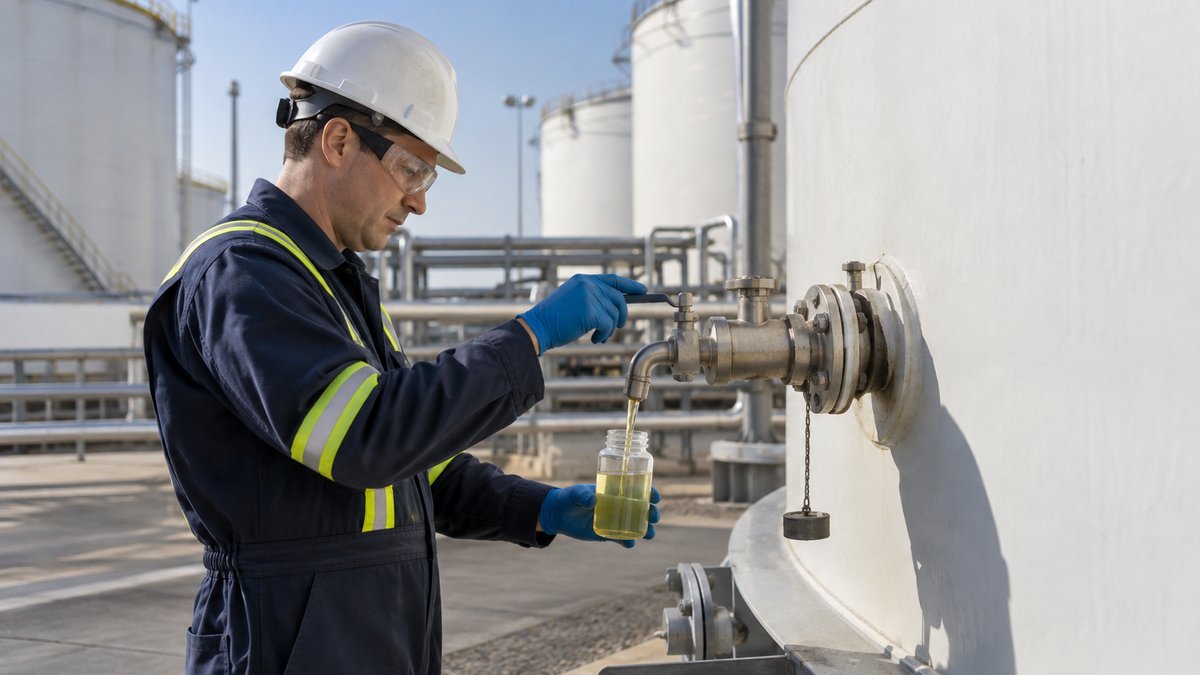
Units and methods should be written into the specification. Sulfur may be stated in ppm or mg/kg; do not assume that a number in a quotation uses the unit or basis you expect. Likewise, a result is only comparable when the test method, sampling point and timing are clear. Agree whether the certificate describes the product at loading, at delivery or at another contractual point, and specify how discrepancies will be handled.
An ASTM grade and a UAE requirement may draw on different standards or scope definitions. The GSO guide’s references to EN 590 and ASTM D975 show that both frameworks are relevant points of comparison, but buyers should not assume that one standard’s grade automatically equals another standard’s grade. Compare each required property and limit directly, and check for differences in methods, units, grade coverage and regulatory status.
Buying consideration: Buying consideration: Request a certificate of analysis tied to the shipment or batch, with results, units and test methods. If a parameter is commercially important, put its limit and the agreed acceptance procedure in the contract rather than relying on a general claim of compliance.
5. How Should Buyers Specify Diesel Fuel for UAE Import?
A useful inquiry makes the requested fuel identifiable and the offers comparable. Start with the intended application and the destination’s applicable specification. Then state the grade or standard, sulfur ceiling, required quality parameters, quantity, packaging or delivery mode, delivery point, shipment timing, inspection arrangements and documents required. Where the destination requirement is still being confirmed, state that clearly and do not present an unverified standard as a settled legal requirement.
Build the specification around measurable fields
- Product and use: Automotive diesel or another clearly described diesel-fuel use; identify the intended equipment or application.
- Standard and grade: State the full designation, such as the applicable ASTM D975 grade, and list any additional destination requirements.
- Sulfur: Give a numerical maximum, unit and test method. For a transaction subject to the cited UAE vehicle-fuel limit, verify that the required limit is no more than 10 ppm.
- Other quality limits: Identify only the applicable parameters, such as cetane quality, viscosity, flash point, water and sediment, lubricity or conductivity.
- Evidence and inspection: Identify the certificate, sampling point, test methods and inspection or acceptance process agreed by both parties.
- Commercial details: State volume, delivery point, schedule, trade term and any other contract conditions needed to compare quotations.
A common sourcing error is to ask for “U.S. ULSD” and assume that the name answers the destination-compliance question. The ASTM S15 category permits up to 15 ppm sulfur, whereas the MOIAT guideline cites no more than 10 ppm for the referenced UAE vehicle-fuel context. The buyer must therefore express the actual destination ceiling and confirm it with the responsible compliance parties before purchase and shipment.
Illustrative inquiry format:
Product: Diesel fuel for the stated application
Origin: United States
Destination: United Arab Emirates; delivery point to be agreed
Standard: State the proposed standard and full grade designation
Sulfur: Maximum limit, unit and test method to be confirmed against applicable UAE requirements
Quality evidence: Batch certificate of analysis with results, methods and sampling point
Quantity and schedule: Buyer to specify required volume and delivery period
Inspection and acceptance: Agree sampling, testing, inspection and resolution procedure in the contract
This is an illustrative inquiry format, not a universal specification. Adjust it to the applicable UAE requirements, intended use and contract.
With the destination limit and evidence requirements set out, buyers can look for suppliers whose offers can be compared against that specification.
View Related Suppliers for This Product →
6. How Can Buyers Compare Diesel Grades and Offers?
Compare offers on a like-for-like basis. Check that each quotation refers to the same product use, standard, grade, sulfur ceiling, test methods and delivery point. A lower quoted price may reflect a different sulfur category, a different grade or a different set of included services. If the specification is incomplete, ask the seller to complete it before evaluating the commercial offer.
Before committing, buyers should also make clear what happens if a test result falls outside a contractual limit: who arranges retesting, which laboratory or method applies, how samples are handled and what remedies are available. These are contract questions, not properties implied by the product’s grade name. Requirements can vary with the intended use, product scope and current destination rules, so confirm the relevant details before shipment.
Freshdi’s Diesel Fuel supplier category can be a starting point for exploring relevant suppliers. The buyer should send the same specification to each prospective seller so that grade, sulfur limit, test evidence and delivery terms can be compared on a consistent basis.
Buying consideration: Buying consideration: Choose an offer only after verifying product identity, destination fit, batch evidence and the contractual acceptance procedure. A familiar grade name is useful—but it is not a substitute for a complete, destination-specific specification.
Frequently Asked Questions
What are the main ASTM D975 diesel grades?
ASTM D975 identifies No. 1-D, No. 2-D and No. 4-D grades. No. 1-D and No. 2-D have S15, S500 and S5000 sulfur categories in the public specification description. The grades differ in fuel category and intended application, so buyers should verify the exact designation and use.
Does ASTM Grade No. 2-D S15 meet a 10 ppm sulfur requirement?
Not based on its grade maximum alone. ASTM D975 describes S15 as having a maximum sulfur content of 15 ppm. UAE guidance for the referenced vehicle-fuel context cites no more than 10 ppm under UAE.S 477:2021. Buyers should specify and verify the applicable destination limit.
Is ULSD the same as fuel that complies with UAE requirements?
Not necessarily. ULSD is a general description, and the ASTM S15 category permits up to 15 ppm sulfur. A label alone does not demonstrate compliance with a 10 ppm limit or any other UAE requirement applicable to the transaction.
What does the No. 2-D grade mean?
ASTM describes No. 2-D as a general-purpose middle distillate for diesel-engine applications, especially those involving varying speed and load. The grade name does not specify the sulfur category or all the quality limits required by a buyer.
Is No. 4-D automotive diesel?
ASTM describes No. 4-D as a heavy distillate, or a blend of distillate and residual oil, for certain low- and medium-speed engines operating predominantly at constant speed and load. Buyers should not assume it is interchangeable with automotive diesel; confirm equipment suitability and destination rules.
What should a diesel fuel certificate of analysis show?
Agree the required parameters and evidence with the supplier and contract. A useful certificate identifies the batch, reports results with units, states test methods and makes clear the sampling or delivery point. Confirm that it covers the limits important to the intended use and destination.
How can buyers compare diesel fuel offers?
Compare offers using the same product application, standard, grade, sulfur limit, units, test methods and delivery basis. Also compare batch evidence, inspection arrangements and contract acceptance terms; a grade label or price alone is not enough.
References
1. ASTM International – Standard Specification for Diesel Fuel, ASTM D975-26b (public specification description), 2026.
2. United Arab Emirates Ministry of Industry and Advanced Technology – Implementation Guideline for the New Emission Limits, 2025.
3. GCC Standardization Organization – GSO 477:2026, Gulf Guide for Specifications of Diesel Fuel (Gas Oil), 2026.