
Introduction
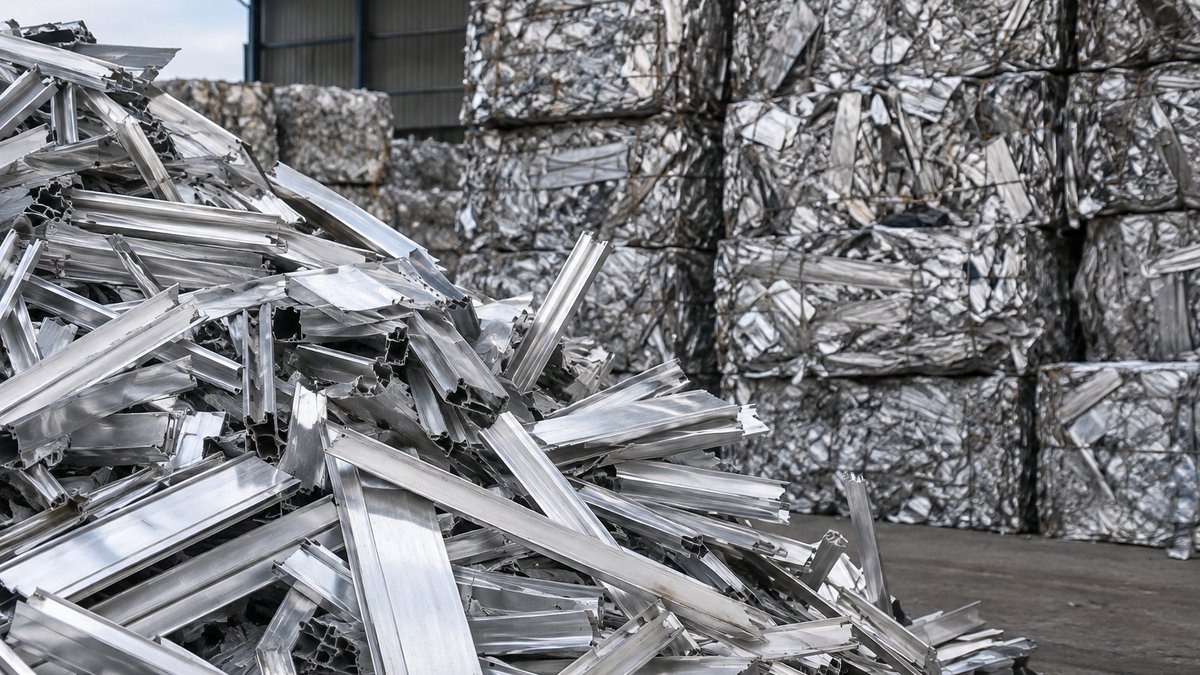
Aluminium scrap buyers can request very different materials under the same product name. Used beverage cans, compressed bales, alloy wheel scrap and engine block scrap need separate checks for material condition, chemistry, contaminants and preparation before an exporter can quote.
Twelve aluminium scrap buying requests posted on Freshdi from 18 October to 12 November 2026 provide a recent demand snapshot. They came from 11 buyers and state quantities, destinations, trade terms and payment terms. The requests are a platform sample, not a measure of total market demand. Suppliers can use them to see what buyers specified and which details need confirmation before a commercial offer.
Key Takeaways
- The 12 Freshdi requests came from 11 buyers and covered several scrap forms, including used beverage cans, wheel scrap and engine block scrap.
- Quantities are stated in different units and formats, so suppliers should not compare them without confirming the required tonnage, container count and material split.
- Trade terms and payment options vary across the requests; some list more than one option and need clarification before freight or payment costs are calculated.
- The detailed wheel-scrap request specifies alloy chemistry and cleanliness, while many other requests leave important grading, contamination or packaging details open.
- Global trade statistics show substantial cross-border trade in aluminium waste and scrap, but they do not establish demand for any one grade or Freshdi request.
1. What does the aluminium scrap market show?
Aluminium scrap is a traded input for recycled-metal production, but market statistics group together materials with different forms and grades. Global production figures provide context for the recycling sector; customs data for HS 7602 cover aluminium waste and scrap as a broad category, not a specification such as clean used beverage cans or A356 wheel scrap.
The International Aluminium Institute reported 39.2 million tonnes of recycled aluminium production in 2022, compared with 69 million tonnes of primary aluminium production that year. The IAI measures recycled production at the ingot stage, so this figure is not a direct measure of scrap traded or collected. The institute's June 2024 factsheet reported that recycled output had grown from 27.7 million tonnes in 2015 to 39.2 million tonnes in 2022.
The U.S. Geological Survey's Mineral Commodity Summaries 2026 estimates that the United States recovered about 3.6 million U.S. tons of aluminium from purchased scrap in 2025. Of that amount, 56% came from new manufacturing scrap and 44% from old scrap; recovered old scrap equalled about 28% of U.S. apparent consumption. These are U.S. figures for 2025, not global totals.
Trade data gives a separate view of cross-border movement. World Bank WITS, using UN Comtrade data for calendar 2024 under HS 7602, records U.S. exports of aluminium waste and scrap at about 2.053 million tonnes, valued at USD 3.982 billion. The European Union export aggregate was about 1.258 million tonnes, while Germany's reported exports were about 1.215 million tonnes. The EU figure includes trade reported by member states, so it should not be added to Germany's figure as if they were separate countries. These are declared trade quantities and values, not prices for a particular grade.
India is one example of a large importing market. A Directorate General of Commercial Intelligence and Statistics publication drawing on Indian Ministry of Commerce and Industry data reports aluminium waste and scrap imports of about 1.767 million tonnes in Indian fiscal year 2024. The report identifies the United States, the United Arab Emirates and the United Kingdom as major supply origins for that fiscal year. Its partner figures describe India's trade, not global import shares.
This market context helps explain why buyers may ask for scrap suited to particular recycling processes, but it cannot establish whether a particular RFQ is commercially workable. A supplier still needs the buyer's accepted grade, contamination limits, bale or loose form, quantity basis, destination and delivery term.
Looking to Sell Aluminium Scrap?
Connect with verified buyers, receive relevant buying leads, and explore sourcing opportunities from global markets.
2. What are aluminium scrap buyers requesting?
The Freshdi requests posted from 18 October to 12 November 2026 cover several material types rather than one uniform scrap grade. All 12 state a quantity, a destination and trade and payment terms. Eight state the buyer's country, and nine are marked as verified requests on Freshdi. Those platform fields describe this set of listings only.
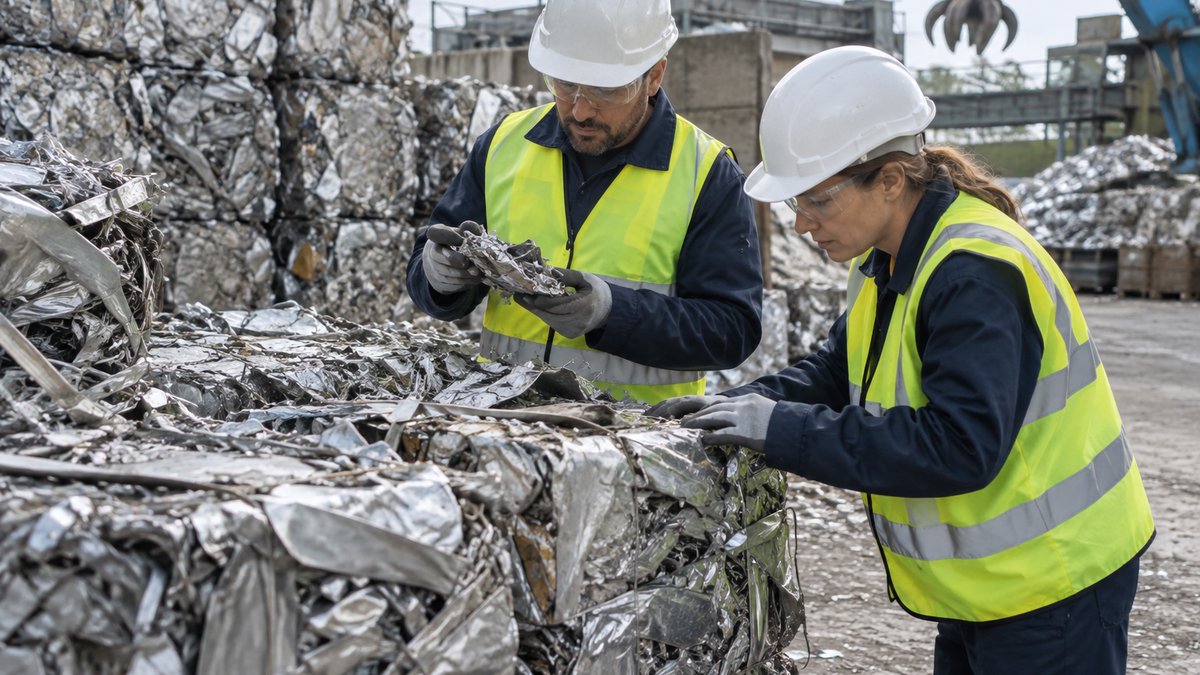
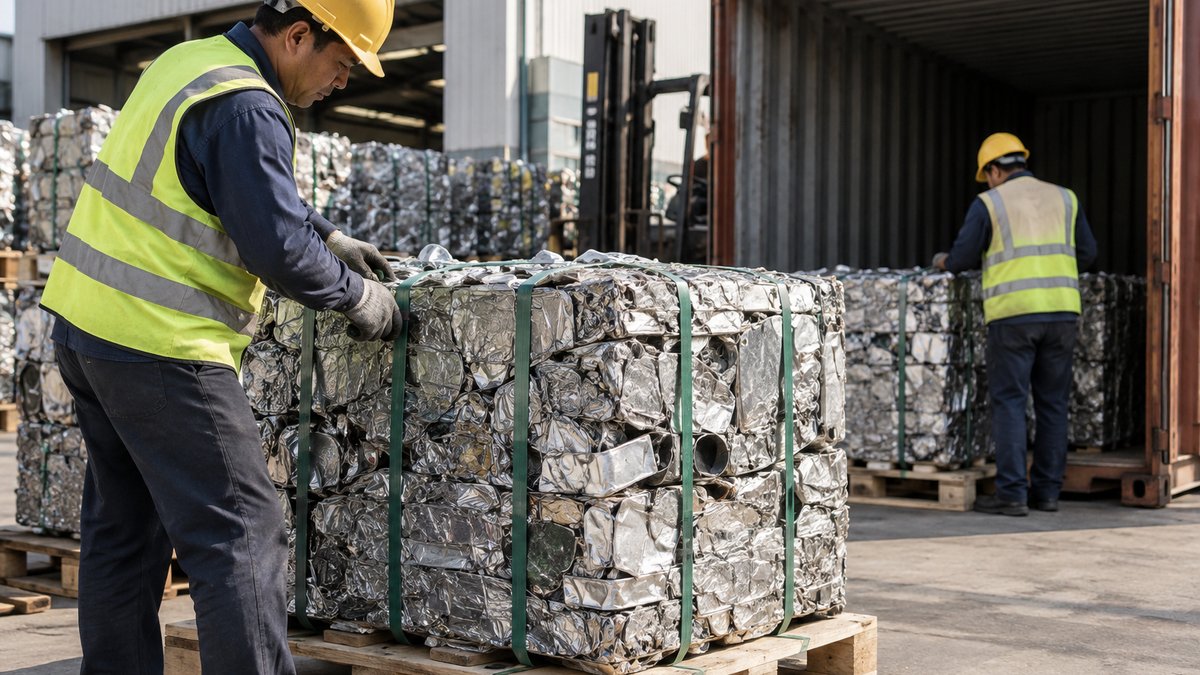
Used beverage can scrap appears in requests alongside broader aluminium scrap descriptions. Some listings specify compressed or strapped bales, while others use general terms such as scrap or material. A supplier should establish whether the buyer wants loose, processed or baled material, and agree on the permitted level of liquids, coatings and non-aluminium contaminants. A product title alone does not settle those questions.
Wheel scrap has a more precise example in a request for 20 MT of clean aluminium alloy wheel scrap destined for Busan. The buyer names A356 or A356.2 alloy and sets limits for several alloying elements and contaminants. The request also describes the material as unplated and free from tires and other attached non-metal parts. An exporter considering this request would need to match the stated chemistry and preparation, then provide test or inspection evidence that supports the offer.
Other listings ask for engine block scrap or mixed descriptions that combine scrap with product terms such as ingots or extruded profiles. When a title and specification point to different material forms, suppliers should confirm whether the buyer wants scrap, processed scrap or a finished recycled product. Do not price one form as another.
The stated quantities are not directly comparable. They include amounts in tons or MT, a minimum quantity, and a request expressed as 40-foot containers. A container count does not establish net cargo weight unless the buyer confirms the loading basis. Several requests also state destination ports in India, while others name Busan, Dar es Salaam, Sihanoukville or Karachi. The destination and named delivery point should be checked against the supplier's freight plan.
Trade-term entries also need reading at the request level. In this Freshdi set, 11 requests list CIF, three list FOB and two list DDP; some requests list more than one option, and one specifically states CIF Busan. These counts describe listed terms and are not mutually exclusive. Before quoting, confirm the governing Incoterms rule and the named port or place. CIF, for example, needs a named destination port, while DDP requires the parties to settle the exact delivery point and import responsibilities.
Payment fields show a similarly mixed picture: T/T appears in eight requests and L/C in five, with some requests listing multiple methods. A payment option in a listing is not a complete payment agreement. Confirm the instrument, timing, required documents, bank charges and any advance or deferred-payment conditions directly in the transaction terms.
Every request in this set contains a target-price field, but the recorded entries do not all provide a usable numeric price on the same basis. Some show a currency without a figure, while other entries include a price alongside a unit or delivery term. Suppliers should verify the amount, currency, weight unit, grade, delivery basis and price validity before using any listed figure in a quotation.
3. What do these requests mean for aluminium scrap suppliers?
The strongest signal in this sample is material variety: buyers describe different scrap forms and levels of processing, so a broad claim such as “aluminium scrap available” may not answer their requests. Suppliers should identify the exact material they can supply and compare it against each buyer's stated form, composition and contamination requirements.
- For used beverage can scrap, state whether the material is baled, the bale dimensions and weight, and what has been removed or remains in the load.
- For alloy wheel scrap, provide the alloy designation, a recent chemical analysis where available, and a clear description of attached materials and contaminants.
- For engine block or mixed scrap, identify the component or alloy mix and explain how the material has been dismantled, sorted and prepared.
- For container-based orders, confirm the buyer's required net weight per container and whether the quantity is a total shipment amount or a recurring requirement.
- For every offer, specify the shipment origin, available quantity, packing, loading point, named destination, delivery term and payment schedule.
A missing specification is a point to clarify, not a reason to assume the buyer will accept the supplier's usual grade. Ask for an acceptable chemistry range, sampling method, inspection timing and rejection procedure before reserving material. Where the listing gives a specific cleanliness or composition limit, state how the offered lot will be checked and what documents can support the result.
The commercial terms require the same discipline. Some requests list more than one trade term or payment method, and the destination and delivery responsibility can change the landed cost materially. Prepare separate calculations where a buyer is comparing FOB with CIF or DDP, and put the named port or place beside each offer. A quotation with an undefined delivery point is difficult to compare and may not reflect the buyer's actual requirement.
Buying consideration: Before responding, match the material and quantity basis first, then resolve the destination, inspection evidence, Incoterm and payment schedule. If any of those determine whether the shipment is feasible, ask for confirmation before submitting a firm quotation.
4. How can suppliers use Freshdi to find aluminium scrap buyers?
Suppliers can review aluminium scrap buying requests in Freshdi's Aluminium Scrap buyer category and read each listing for its material description, quantity, destination and stated commercial terms. The 12 requests discussed here were posted between 18 October and 12 November 2026; a listing's details or availability may change after that period.
Use the request as a screening document. Check whether the listed scrap matches current stock, whether the requested quantity is available, and whether the shipment route and named delivery term can be supported. Then compare the specifications against the supplier's own test results and packing details. If an RFQ gives conflicting descriptions or incomplete price terms, record the questions that must be resolved before treating it as a firm commercial opportunity.
A useful supplier response is specific to the request. It identifies the scrap form and grade, states the available quantity and packing, describes the inspection evidence, and gives a price with currency, unit, Incoterm and named place. Separate confirmed facts from details still under discussion. That gives the buyer a basis to assess whether the offered lot fits the request.
Suppliers comparing current aluminium scrap requirements can review the buyer listings and check which requests match their material.
View Latest Buying Requests for This Product →
5. What should suppliers check before quoting aluminium scrap?
A quotation should let the buyer compare the offered lot with the RFQ without filling gaps by assumption. State the material category, alloy or grade where known, preparation method, quantity and unit, packing, origin, loading point, destination, Incoterm and payment conditions. Include the inspection basis and identify which chemical or contamination results are available.
For a request that uses a broad label such as aluminium scrap, ask the buyer to define acceptable feedstock and limits for attached materials, oil, moisture or other contaminants. For a named alloy, confirm whether the buyer requires a specific composition range or allows substitutions. If the buyer asks for an external inspection or analysis, agree who arranges and pays for it, when sampling occurs and which result governs acceptance.
Quantity and logistics should be written on the same basis. If the buyer asks for containers, state the estimated net weight per container and whether the final quantity will depend on loading. If the buyer asks for tons or MT, use that unit consistently and clarify any tolerance. Give a validity period for the quotation and explain whether freight, insurance, duties or local delivery are included under the stated term.
Illustrative aluminium scrap quotation details:
Material: Scrap form, alloy or grade, and preparation
Quantity: Net weight, unit, packing and loading basis
Quality evidence: Available analysis, inspection method and sampling point
Delivery: Incoterms rule, named place and shipment schedule
Payment: Instrument, timing, documents and quotation validity
This is an illustrative checklist, not a universal specification or payment requirement.
6. What should suppliers take from this aluminium scrap demand snapshot?
The recent Freshdi requests show demand for several aluminium scrap forms, from used beverage cans to wheel and engine block scrap. Their quantities, destinations and commercial terms differ, and some listings require clarification before a supplier can determine fit or calculate a comparable offer.
Suppliers should verify the scrap grade, material condition, quantity basis, inspection evidence, destination and payment terms for each request. Freshdi is a place to review relevant buying requests; the supplier still needs to assess the buyer's stated requirements and confirm the commercial details before committing stock or shipment capacity.
Suppliers ready to assess aluminium scrap requirements can use Freshdi's buyer listings to review requests that match their available material.
View Latest Buying Requests for This Product →
Frequently Asked Questions
What specifications should an aluminium scrap supplier include in a quotation?
State the scrap form, alloy or grade where known, preparation, quantity and unit, packing, origin, delivery term and named place. Include available chemistry or inspection evidence and describe any known contaminants. Confirm any buyer-specific acceptance limits before treating the offer as final.
How should a supplier compare quantities stated in tons and containers?
Do not convert a container count into tonnage without an agreed net loading weight. Ask whether the quantity is a total shipment or a recurring volume, confirm the weight unit and any tolerance, and state the loading basis in the quotation.
Why should an aluminium scrap buyer's grade and contamination limits be confirmed?
Scrap categories can contain different alloys, attached materials and levels of contamination. A supplier should match the buyer's stated chemistry and cleanliness limits, agree on sampling and inspection, and document which test result governs acceptance.
What should I do when an RFQ lists several trade terms or payment methods?
Ask the buyer which option applies to the shipment before calculating a firm offer. Confirm the Incoterms rule and named place, then agree on the payment instrument, timing, required documents and any advance or deferred-payment conditions.
How can suppliers find aluminium scrap buying requests on Freshdi?
Review the Aluminium Scrap buyer category on Freshdi and open relevant listings to check the material description, stated quantity, destination and terms. Treat the listing as a starting point for screening and confirm any missing or conflicting commercial details before committing to supply.
References
1. International Aluminium Institute – Emissions Reduction Factsheet, June 2024.
2. U.S. Geological Survey – Mineral Commodity Summaries 2026: Aluminum, 2026.
3. World Bank WITS – Waste and Scrap, Aluminium Exports by Country, 2024, 2024.
4. Directorate General of Commercial Intelligence and Statistics – World’s Top 10 Importers of Aluminium Waste and Scrap, HS Code 7602, 2025.
5. Freshdi – Aluminium Scrap Buying Requests Posted 18 October to 12 November 2026, 2026-11-16.
Disclaimer: This article is compiled from platform data, public sources and information provided by third parties, for general informational purposes only. We do not guarantee its accuracy or completeness. Mentions and rankings of suppliers do not constitute an endorsement or guarantee, and strategies and examples are illustrative; results may vary. Please conduct your own due diligence before making business decisions.