
Introduction
Robusta coffee buyers specify different order sizes, grades and delivery terms, so a product name alone is not enough to prepare a comparable offer. Six buyers posted Robusta coffee requests on Freshdi between October 21 and November 14, 2026. Their listed quantities range from 6 tons to 4,500 tons, plus one request for a 40-foot high-cube container.
The requests come from buyers based in Nigeria, Iran, Djibouti, the United Arab Emirates and Hong Kong. Their stated destinations include Bangladesh, Iran, Egypt, Jebel Ali and Hong Kong. This snapshot covers those six requests, not total market demand. Suppliers can use it to see what buyers have specified and what needs clarification before a quotation.
Key Takeaways
- Six buyers posted Robusta coffee requests on Freshdi from October 21 to November 14, 2026; two buyers are based in the United Arab Emirates.
- Listed quantities range from 6 tons to 4,500 tons, while one buyer states a 40-foot high-cube container rather than a weight.
- Four requests state product specifications. These include screen sizes, green color, S18 grade, wet polishing, flavor, aroma and origin details.
- The requests list EXW on two, CIF on four and FOB on two; some include more than one trade term.
- Several target-price entries lack a stated price amount or unit basis, so suppliers should confirm currency, pricing unit, grade and delivery basis before comparing offers.
1. Global coffee supply is forecast to grow in 2026/27
USDA Foreign Agricultural Service’s July 2026 coffee overview forecasts world production of 189.7 million 60-kilogram bags in 2026/27, a record for its series. Its forecasts also put global consumption at 179.7 million bags and coffee-bean exports at 131.4 million bags. These are forecasts for all coffee, not Robusta alone.
USDA expects production gains in Brazil, Ethiopia, Uganda and Vietnam to outweigh lower output in India and Indonesia. It forecasts Indonesia’s Robusta production at 10.0 million bags in 2026/27, down 1.0 million bags year on year, citing lower yields after excessive rain disrupted flowering and cherry formation in parts of Sumatra and Java. This country-level outlook is relevant to Robusta supply, but it does not establish the origin available for any individual offer.
The International Coffee Organization’s October 2026 Coffee Market Report gives a more recent trade and price reading. Global green-coffee exports reached 10.19 million 60-kilogram bags in September 2026, up 5.8% from September 2025; Robusta green-bean exports rose 15.7% to 4.07 million bags over the same month-to-month comparison. The report’s Robusta group indicator averaged 164.19 US cents per pound in October 2026, down 2.0% from September. The London Robusta futures market averaged 152.56 US cents per pound that month. These are separate reference measures, not quotations for a particular screen size, grade, origin or shipment.
For broader trade context, FAO identifies Brazil and Vietnam as leading coffee exporters and the European Union and United States as the largest importing and consuming markets. Those figures cover coffee generally, not this six-request Freshdi sample. In the sample, buyer locations span five countries and stated destinations are not always in the buyer’s country. The platform observations therefore show specific requests to assess, not market-wide import volumes or a ranking of destinations.
Looking to Sell Robusta Coffee?
Connect with verified buyers, receive relevant buying leads, and explore sourcing opportunities from global markets.
2. Six recent Robusta requests differ in scale and detail
The six requests are for Robusta coffee and each states a quantity. Freshdi lists them as posted from October 21 to November 14, 2026, by six buyers. The quantities and request details below are reported as written; a container quantity is not converted into a weight.
2.1 Quantity and destination need separate checks
Five requests state a ton or metric-ton quantity, ranging from 6 tons to 4,500 tons. The sixth asks for one 40-foot high-cube container. The request does not give a net coffee weight for that container, so a supplier should not treat it as a fixed tonnage. Confirm whether a ton means a metric tonne and whether the stated amount is a trial, a single shipment or a recurring requirement.
Buyer country and delivery destination are separate fields. For example, a Nigeria-based buyer names Bangladesh as the destination, and a Djibouti-based buyer names Egypt. Other requests name Bandar Abbas, Jebel Ali, Dubai’s Jebel Ali port or Hong Kong. Suppliers should quote against the destination stated in the relevant request and confirm the precise delivery point and route before calculating freight.
2.2 Specifications cover different quality attributes
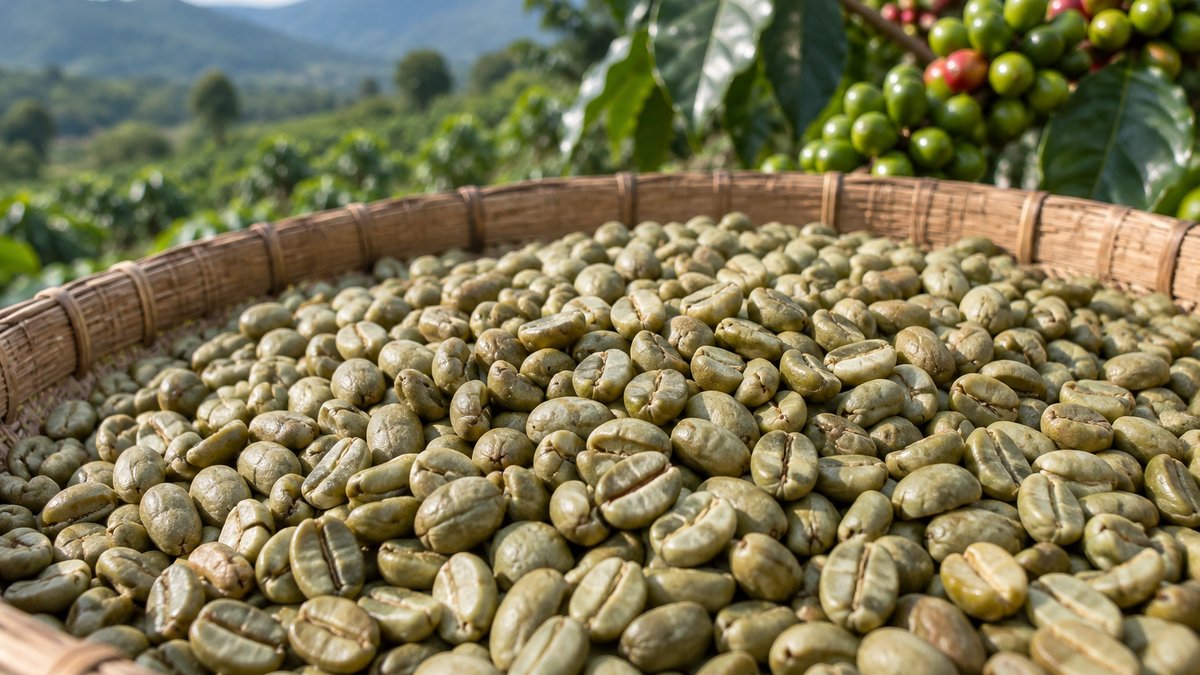
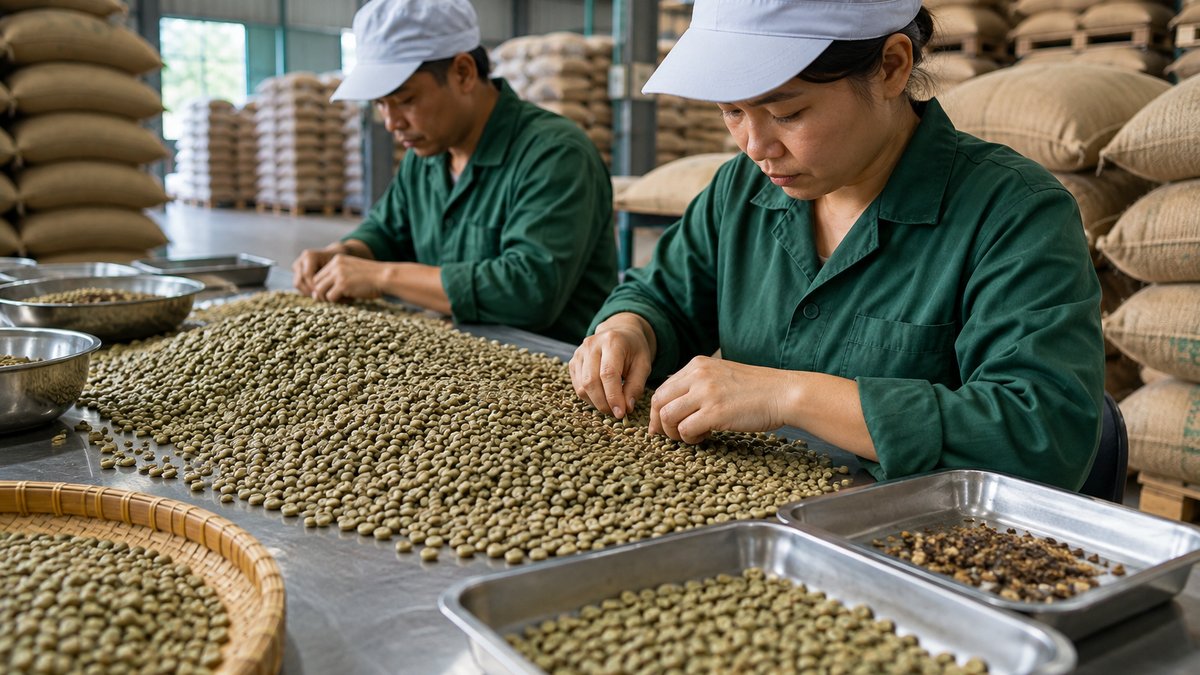
Four of the six requests state specifications. Two mention screen sizes 12, 15 and 18; another calls for green Robusta coffee, grade S18 and wet-polished processing. A separate request describes strong flavor and natural aroma. The listed request that names Uganda also states screen sizes and physical availability in Uganda as confirmed.
The entries do not define a shared screen-size method, grading tolerance, defect limit or moisture range. A supplier quoting screen 18 or S18 should ask what standard and acceptance criteria the buyer uses. For wet-polished coffee, confirm the buyer’s expected process and appearance. Flavor and aroma descriptions also need a mutually agreed evaluation method if they will determine acceptance.
Two requests do not provide product specifications. A supplier can still decide whether the volume and route fit its business, but should obtain the required grade, processing method, moisture, defect tolerance, packaging and quality checks before offering a firm price.
2.3 Commercial fields do not always give a comparable quotation basis
The six requests list EXW, CIF and FOB terms. EXW means Ex Works, FOB means Free on Board, and CIF means Cost, Insurance and Freight. Freshdi’s summary records EXW in two requests, CIF in four and FOB in two; some requests list more than one term. Where a buyer gives options, clarify the applicable term and named place or port before pricing.
Payment fields include T/T, meaning bank transfer, in four requests, and L/C, meaning letter of credit, in two. D/P, or documents against payment, appears once; one request also lists Other and another lists Negotiable. These field counts overlap because a request can list multiple terms. Confirm the payment instrument, timing, documents and any bank conditions with the buyer.
All six requests contain a target-price entry, but some state only USD without an amount. Other entries give amounts without a clear unit basis, such as price per kilogram, ton or container. One entry also places a price in its specifications. Treat these as buyer-stated fields, not verified market prices or a basis for comparing offers. Ask the buyer to confirm the currency, unit, product specification, Incoterm and named place.
3. Suppliers should reconcile quantity, grade and delivery terms before quoting
The requests point to several distinct sourcing needs: screen-size coffee, a green S18 wet-polished grade, flavor and aroma descriptions, and large-volume or container-based orders. A supplier should first match a request to coffee it can document and ship, then resolve missing details that would change price or acceptance.
- Confirm the weight unit and whether the buyer wants a one-time shipment, trial quantity or repeated supply. For the 40-foot high-cube request, ask for the buyer’s target net weight and packing plan.
- Match the stated grade or screen size to a written specification. Confirm screen-size method, tolerances, moisture, defects, processing and sample-approval requirements.
- State the actual origin and available volume. If a buyer names a country or source condition, confirm that the offered lot meets it and can be supported with shipment documents.
- Confirm the destination, named port or place, shipment method and applicable Incoterm. Calculate freight and insurance only after those details are settled.
- Clarify the target price basis and payment conditions. State the price unit, currency, grade, quantity, delivery basis, validity period and any documents required for payment.
A useful quotation answers each confirmed requirement directly. If a request leaves a quality or commercial field open, mark the assumption in the offer and ask the buyer to confirm it before treating the price as final. Keep sample results, lot details and shipment availability consistent with the coffee actually offered.
4. Freshdi lets suppliers review Robusta buying requests
Suppliers can use Freshdi’s Robusta Coffee buying-request category to review requests by product and inspect the details buyers have posted. Compare the requested quantity, destination, specifications, trade terms and payment terms with your current supply before deciding whether to prepare an offer.
The six requests in this snapshot show why checking the full listing matters. Screen sizes, processing, stated origins and order units vary, while some target-price entries need clarification. Open a request to review its exact wording and status, then confirm unclear requirements with the buyer before committing stock, freight or a firm quotation.
Suppliers whose stock and export route match a stated request can review current Robusta buying opportunities on Freshdi.
View Latest Buying Requests for This Product →
A supplier profile and product information should describe only capabilities the business can support. Keep available grades, origins, processing, packing and shipment options accurate so a buyer can assess whether the offer fits the request. A marketplace listing can help suppliers find and review requests; it does not establish that a buyer will respond or place an order.
5. Confirm the request details before sending a Robusta offer
Six recent requests show varied order sizes and product descriptions, but they do not provide a uniform specification or comparable price basis. Before quoting, match the coffee to the stated grade and processing details, confirm the quantity unit and delivery point, and settle the Incoterm and payment conditions.
Suppliers can use Freshdi to find relevant buying requests and assess whether their Robusta coffee matches the buyer’s stated requirements. Review the individual request before preparing an offer.
Suppliers ready to compare their product and route with current buyer requirements can look for relevant requests on Freshdi.
View Latest Buying Requests for This Product →
Frequently Asked Questions
What quantities are buyers requesting for Robusta coffee?
The six requests posted between October 21 and November 14, 2026, list quantities from 6 tons to 4,500 tons. One additional request is for one 40-foot high-cube container and does not state its net coffee weight. Confirm the unit and shipment plan with the buyer.
Which Robusta coffee specifications appear in these requests?
The requests mention screen sizes 12, 15 and 18, green coffee, S18 grade, wet-polished processing, strong flavor and natural aroma. The entries do not establish shared tolerances or a common grading method, so ask the buyer to confirm the applicable specification.
Do the target prices provide a market price for Robusta coffee?
No. The target-price fields are buyer-stated request details. Some show USD without an amount, while others give amounts without a clear unit basis. Confirm currency, unit, grade, quantity and delivery term before comparing any quotation.
Which trade and payment terms do the buyers list?
The requests list EXW in two, CIF in four and FOB in two; some include multiple trade terms. Payment entries include T/T in four requests and L/C in two, with D/P, Other and Negotiable also appearing. Confirm the exact term and payment conditions for the request you are considering.
How should a supplier respond when a Robusta request is missing details?
Ask the buyer to confirm the missing information before sending a firm offer. Common items to verify include quantity unit, grade, screen-size method, moisture and defect limits, packaging, destination, Incoterm, price unit and payment schedule.
Where can suppliers find Robusta coffee buying requests on Freshdi?
Suppliers can browse Freshdi’s Robusta Coffee buying-request category and open a listing to review its stated requirements and status. Check each request individually because quantities, destinations and commercial terms differ.
References
1. International Coffee Organization – Coffee Market Report, October 2026, October 2026.
2. USDA Foreign Agricultural Service – 2026/27 Coffee Overview, July 2026.
3. FAO – Coffee: Facts, Data and Global Perspective, 2026.
4. Freshdi – Robusta Coffee buying requests posted October 21 to November 14, 2026, including the six requests listed in this article, November 16, 2026.
Disclaimer: This article is compiled from platform data, public sources and information provided by third parties, for general informational purposes only. We do not guarantee its accuracy or completeness. Mentions and rankings of suppliers do not constitute an endorsement or guarantee, and strategies and examples are illustrative; results may vary. Please conduct your own due diligence before making business decisions.