
Introduction
For French coffee buyers, the latest verified monthly Arabica benchmarks are the International Coffee Organization’s October 2026 group indicators. Colombian Milds averaged 357.85 US cents per pound, Other Milds averaged 334.99 cents, and Brazilian Naturals averaged 294.49 cents. These are international reference prices, not French importer quotations or delivered prices.
This update covers the October 2026 benchmark period and the available EU coffee-trade context. The sources reviewed do not provide a like-for-like October price for Arabica coffee delivered into France, so buyers should use the benchmarks to frame discussions and confirm current offers against grade, origin, shipment terms and destination costs.
Key Takeaways
- The ICO’s October 2026 Arabica group indicators averaged 294.49 to 357.85 US cents per pound, depending on the group.
- Compared with September 2026, the ICO reported increases of 0.5% for Colombian Milds, 1.7% for Other Milds and 1.5% for Brazilian Naturals.
- These indicator prices are not France-specific landed prices. They do not include a buyer’s particular grade, contract differential, freight, insurance or import costs.
- Eurostat reported that the EU imported 2.9 million tonnes of coffee from non-EU countries in 2025. Brazil and Vietnam supplied 34% and 20% of that volume, respectively.
- French buyers should request comparable quotations for the same coffee specification and delivery basis, then calculate the cost to their own receiving point.
1. Coffee prices relevant to France depend on the quote basis
French buyers sourcing green Arabica need to distinguish an international market indicator from a supplier’s export offer and a delivered price. The ICO’s Arabica group indicators provide a dated reference for October 2026, while a transaction price depends on the coffee’s origin, grade, preparation, contract differential, shipment date and delivery terms.
The period in this update is October 2026, the latest complete month covered by the ICO report reviewed for this article. The indicators are denominated in US cents per pound. They describe broad coffee groups and cannot be treated as a direct quotation for a particular lot entering France.
The distinction matters when buyers compare a benchmark with a euro-denominated offer. The exchange rate and the supplier’s delivery basis affect the comparison, as do freight, insurance and any destination charges included in the quotation.
Looking to Source Arabica Coffee?
Connect with verified suppliers, discover matching products, and explore sourcing opportunities from global markets.
2. Market overview: EU coffee imports and supply origins
The EU sources coffee from several producing countries, with Brazil and Vietnam the largest non-EU suppliers by volume in Eurostat’s 2025 figures. Those figures cover coffee imports across product categories, not Arabica alone, and describe the EU rather than France specifically.
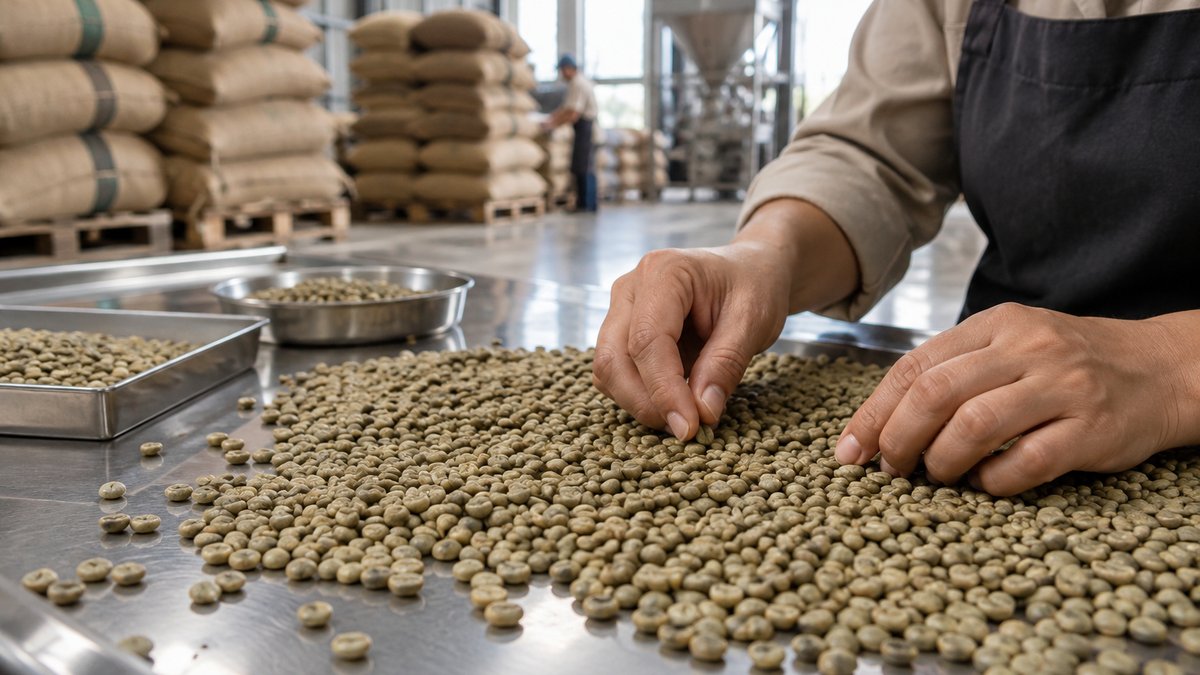
Eurostat reported 2.9 million tonnes of coffee imports from non-EU countries in 2025. Brazil supplied 1,005,200 tonnes, or 34% of the total, and Vietnam supplied 587,500 tonnes, or 20%. Uganda, Colombia and Honduras followed. These volumes show the breadth of the EU’s sourcing base, but do not identify the origin mix of French Arabica purchases.
The European Commission reported that higher coffee prices contributed to increased EU coffee import values in 2025. Value changes combine price and volume effects, so they do not establish that the amount of coffee consumed rose by the same rate. For a buyer in France, EU-wide figures give trade context, while the purchase decision still depends on the intended coffee and its contracted specification.
The sources reviewed do not supply comparable global production, consumption and French destination-share figures for Arabica in October 2026. Nor do they establish a current harvest or trade-policy event that can be tied to a France-specific Arabica price. Buyers should keep those gaps separate from the dated ICO benchmark observations.
3. Latest Arabica coffee price benchmarks
3.1 October 2026 Arabica group indicators
The ICO’s October 2026 monthly report gives the most recent complete monthly Arabica group averages reviewed here. Colombian Milds averaged 357.85 US cents per pound, Other Milds 334.99 cents, and Brazilian Naturals 294.49 cents. These indicator groups are useful for comparing broad market levels; they do not replace an offer for a specific shipment.
The Robustas figure is included as a market comparison, not an Arabica substitute. Arabica and Robusta indicators cover different coffee groups and should not be used as equivalent purchase prices. A buyer considering a blend should compare the actual proportions, grade and product specification in the offer.
3.2 How the Arabica price groups compare
The three Arabica group averages moved higher month on month, but their October levels differed. Colombian Milds averaged 23.36 cents per pound above Other Milds. Other Milds averaged 40.50 cents above Brazilian Naturals. The group averages do not explain the price of every coffee within those categories; lot quality, preparation, certification claims, contract timing and supplier differentials can change an individual quotation.
The ICO also reported that New York ICE Arabica futures averaged 285.10 US cents per pound in October, up 1.6% from September. Futures are exchange-traded contracts and are not the same as a physical coffee offer to a French importer. Buyers should establish whether a supplier’s price is fixed, linked to a futures contract, or set using another reference and differential.
3.3 Price trend and reporting limits
The ICO Composite Indicator Price averaged 261.26 US cents per pound in October 2026, down 0.3% from 262.18 cents in September. That composite includes multiple coffee groups. Its small monthly decline therefore does not contradict the increases in the three Arabica group indicators.
The October report attributed the divergence partly to tight certified Arabica stocks and improving Robusta supply availability. It reported that US certified Arabica stocks fell to 0.23 million bags at the end of October from 0.26 million at the end of September, while the Robusta market faced different supply conditions. These are market context and reported factors, not a guaranteed guide to the next price movement.
4. Factors affecting Arabica export prices
Arabica prices reflect both the exchange market and the physical coffee available for delivery. The ICO’s October 2026 report described firmer Arabica group indicators alongside lower Robusta prices, and linked the difference in part to tight certified Arabica stocks and better Robusta availability.
Supply conditions at origin can affect the physical differential over a benchmark. Buyers should ask which crop and harvest period a lot comes from, how much is available, and whether the supplier’s offer covers the requested shipment window. The October sources reviewed do not provide a verified, origin-by-origin harvest estimate for a France-specific price comparison.
Demand and inventory decisions also affect offers. The ICO report’s monthly indicators capture broad market movement, while an individual seller’s available lot and a buyer’s requested volume may carry a different basis. Confirm the quantity, shipment month and price-validity period in writing.
Currency and logistics costs change the price a French buyer evaluates. A US-dollar benchmark must be converted using the buyer’s chosen exchange-rate basis, and a port-side quote does not automatically include transport to the buyer’s warehouse. Freight availability, insurance and destination charges should be checked for the actual route and shipment.
Competition between origins is visible in the different ICO Arabica group averages, but those categories are not interchangeable country quotations. Use them as a market reference, then compare physical offers for equivalent Arabica type, grade, processing method, moisture tolerance, packaging and shipment basis.
The ICO reported a 1.6% rise in the October average for New York ICE Arabica futures and a decline in the Robusta indicator. These movements describe different contracts and coffee groups. They should not be turned into a forecast for a French buyer’s next purchase.
5. Which countries import the most coffee?
5.1 Leading EU importers of coffee
Eurostat’s 2025 figures identify Germany, Italy, Spain, Belgium and the Netherlands as the largest EU importers of coffee from non-EU countries by volume. These are EU-level coffee totals across product categories, not a global ranking and not an Arabica-only comparison.
France does not appear among those five largest EU importers in the cited figures. This does not mean that France lacks coffee demand; it means the cited source does not place France in that top five. The published figures also do not provide a matching French Arabica import price for October 2026.
5.2 Main export destinations of a featured country
No exporting country is specified in this brief, so there is no single country whose leading export destinations can be reported without changing the article’s subject. The EU figures above describe imports by destination and origin, not the export destinations of one featured exporter.
5.3 What import demand means for exporters
The 2025 EU import figures confirm sizeable coffee trade and show that several origins supply the market. They do not confirm a current order, tender or forecast for French Arabica. Exporters assessing France should verify the buyer’s required Arabica type, quantity, shipment timing, documentation and delivery basis before preparing an offer.
6. How buyers can compare Arabica coffee offers
A competitive Arabica offer is the one that fits the buyer’s specification and total delivery cost. The ICO group indicator can help frame a market discussion, but a buyer should not compare it directly with a physical quotation unless the product and price basis are understood.
- Write the coffee specification clearly, including Arabica type or variety, origin, grade, processing method and agreed quality tolerances.
- Request the same quantity, packaging and shipment window from each supplier.
- Ask whether the offer is fixed or linked to a market reference, and request the reference date, differential and quotation-validity period.
- Compare offers on the same delivery basis. Identify which transport, insurance and destination costs are included.
- Convert currencies using a consistent rate and date for the comparison.
- Check the documents and import requirements applicable to the product and shipment before agreeing the contract.
FOB, CFR and CIF quotations include different parts of the transport arrangement, so the price labels alone do not establish the buyer’s complete cost. Request a written breakdown of the named port or destination and charges included. Then compare each offer on the same route and delivery basis.
Buying consideration: Before selecting an offer, compare the physical coffee specification and the expected cost to your French receiving point, rather than ranking suppliers by the benchmark or headline price alone.
7. Freshdi buying-request demand for Arabica coffee
No dated Freshdi buying-request snapshot accompanies this article, so there is no verified request count, buyer count, destination breakdown, quantity pattern or stated trade-term trend to report. Freshdi activity should be treated separately from national and international trade statistics whenever a dated platform snapshot is available.
Buyers can review Arabica coffee requests to see the requirements stated by individual requesters. Suppliers should read each request for its specified product, quantity, destination and terms, and respond only when their available coffee matches the stated requirements. A request is evidence of that buyer’s stated need, not a measure of total French or global demand.
8. What buyers and suppliers should do next
8.1 For buyers and importers
- Use the October ICO Arabica indicators as dated context, not as a supplier quotation.
- Send suppliers one consistent specification, quantity and shipment window.
- Ask for the price basis, currency, reference date, differential and quotation validity.
- Calculate the full cost to the receiving point, including any freight, insurance and destination charges not already included.
- Confirm quality parameters, sample approval, inspection arrangements and required documents before contracting.
8.2 For exporters and suppliers
- State the Arabica origin, type, grade, processing method and available quantity in each offer.
- Show the currency, pricing basis, delivery term, loading port and quotation-validity period.
- Explain whether the price is fixed or linked to a reference and state the relevant date and differential.
- Keep product and availability information current, and tailor quotations to the buyer’s destination and shipment window.
- Review buying requests and respond when the product and commercial terms fit the stated requirement.
9. How Freshdi helps coffee buyers and suppliers connect
Freshdi’s coffee category pages let buyers browse potential coffee suppliers and let suppliers review coffee buying requests. Buyers can view potential coffee suppliers, while exporters can review coffee buying requests. The pages are a place to discover relevant listings and requests; they do not verify that a listed offer matches a buyer’s specification.
After setting a comparable Arabica specification, buyers and suppliers can review relevant coffee listings and requests.
View Latest Coffee & Coffee Bean Buying Requests →View Potential Coffee & Coffee Bean Suppliers →
10. October 2026 Arabica market outlook for French buyers
The latest complete monthly ICO figures reviewed here show Arabica group indicators rising between 0.5% and 1.7% from September to October 2026, while the broader ICO composite indicator edged down 0.3%. That difference reflects the composite’s inclusion of several coffee groups, including Robusta.
For French buyers, the practical task is to separate the benchmark from the delivered offer. Compare the same coffee specification, price basis, currency and shipment window, then add costs not included in the quotation. Exporters can keep offers useful by stating those terms and the available volume clearly.
Buyers comparing Arabica offers can review current coffee supplier listings and buying requests on Freshdi.
View Latest Coffee & Coffee Bean Buying Requests →View Potential Coffee & Coffee Bean Suppliers →
Frequently Asked Questions
What was the Arabica coffee price in October 2026?
The ICO’s October 2026 monthly group averages were 357.85 US cents per pound for Colombian Milds, 334.99 cents for Other Milds and 294.49 cents for Brazilian Naturals. These are international indicators, not a specific supplier offer or a France-delivered price.
Did Arabica prices rise in October 2026?
Compared with September 2026, the ICO reported increases of 0.5% for Colombian Milds, 1.7% for Other Milds and 1.5% for Brazilian Naturals. The ICO Composite Indicator Price, which includes multiple coffee groups, declined 0.3% over the same monthly comparison.
Why do Arabica prices differ by origin or coffee group?
The ICO’s Arabica indicators cover different coffee groups and report different October 2026 averages. A physical offer can also depend on the lot’s origin, grade, preparation, availability, contract differential and shipment terms. Buyers should compare equivalent specifications before treating two offers as comparable.
Which countries supplied the most coffee to the EU?
Eurostat reported that Brazil supplied 34% of EU coffee imports from non-EU countries in 2025, followed by Vietnam at 20%. The figures cover coffee imports across product categories and do not identify Arabica-only or France-only sourcing.
How should a French buyer compare FOB, CFR and CIF coffee quotations?
Confirm which costs each quotation includes and compare offers on the same route and delivery basis. Add freight, insurance or destination charges that are excluded, and convert currencies consistently. The ICO indicator is a market reference, not a delivered quotation.
Can Freshdi data show current French demand for Arabica coffee?
A dated Freshdi request snapshot is not included in this article, so no request count or France-specific demand pattern can be verified here. Freshdi’s coffee category pages can be used to review listings and requests; each request describes the needs stated by that buyer, not total market demand.
References
1. International Coffee Organization – Coffee Market Report: October 2026, 2026-11-11.
2. International Coffee Organization – ICO Indicator Prices: October 2026, 2026-11.
3. Eurostat – Import value of coffee more than doubled in a decade, 2026-10-01.
4. European Commission, Directorate-General for Agriculture and Rural Development – Monitoring EU Agri-Food Trade: Developments Until December 2025, 2026-02.
Disclaimer: This article is compiled from platform data, public sources and information provided by third parties, for general informational purposes only. We do not guarantee its accuracy or completeness. Prices, volumes and forecasts are indicative, reflect conditions as of 2026-11-15 and may change without notice. This is not financial, investment or trading advice.