
Introduction
Japan’s latest complete annual trade data show that it imported 4,405 tonnes of whole dried pepper in 2025, valued at US$43.78 million. That works out to an import unit value of about US$9.94 per kilogram. It is a customs-trade value divided by reported quantity, not a current supplier quote or a grade-specific price.
For November 2026, the International Pepper Community’s latest listed reference prices are dated 13 November. The prices cover supplying origins and specifications, not delivery to Japan. This update separates those export references from Japan’s latest import figures, which cover 2025.
Key Takeaways
- Japan imported 4,405 tonnes of whole dried pepper, HS 090411, worth US$43.78 million in 2025. The implied unit value was about US$9.94/kg.
- On 13 November 2026, IPC listed Vietnamese black pepper at US$5,700/MT for 500 g/l and US$5,900/MT for 550 g/l. The IPC page does not state a Japan delivery basis.
- Compared with prices reported from IPC on 10 November, the 500 g/l Vietnam reference was down US$250/MT by 13 November. The figures are dated reference prices, not confirmed Japan-bound offers.
- Indonesia and Malaysia were Japan’s largest suppliers by 2025 import value in the cited whole-pepper trade data. Their aggregate import unit values differ, but product specifications and shipment terms are not matched.
- Buyers should compare the same pepper specification and delivery basis, then calculate landed cost. Exporters should state grade, cleaning, packing, loading point and quote validity.
1. Japan’s Black Pepper Market and Global Supply
Japan imported 4,405 tonnes of whole dried pepper, excluding crushed or ground pepper, in 2025, according to UN Comtrade data presented by World Bank WITS. The reported import value was US$43.78 million. These figures describe a full calendar year and are the latest complete annual totals used here; they do not show Japan’s 2026 purchases or retail prices.
The trade code covers dried pepper that is neither crushed nor ground. It does not identify a specific black-pepper grade, cleaning level, moisture limit or intended use. Buyers should therefore treat the aggregate unit value as a market reference, not a quotation for a specific lot.
Japan sourced whole dried pepper from several countries in 2025. Indonesia and Malaysia each supplied more than US$11 million of the reported imports, while Vietnam supplied about US$9.66 million. The customs data describe declared trade by origin; they do not establish current supplier availability or demand.
The International Pepper Community’s November 2026 references show that prices differed across origins and listed specifications. Those observations are useful for tracking export-market levels, but they are not Japan-specific quotations and should not be presented as landed prices in Japan.
Looking to Source Black Pepper?
Connect with verified suppliers, discover matching products, and explore sourcing opportunities from global markets.
2. Latest Black Pepper Prices for Japan and Export Origins
2.1 Latest reference prices from exporting origins
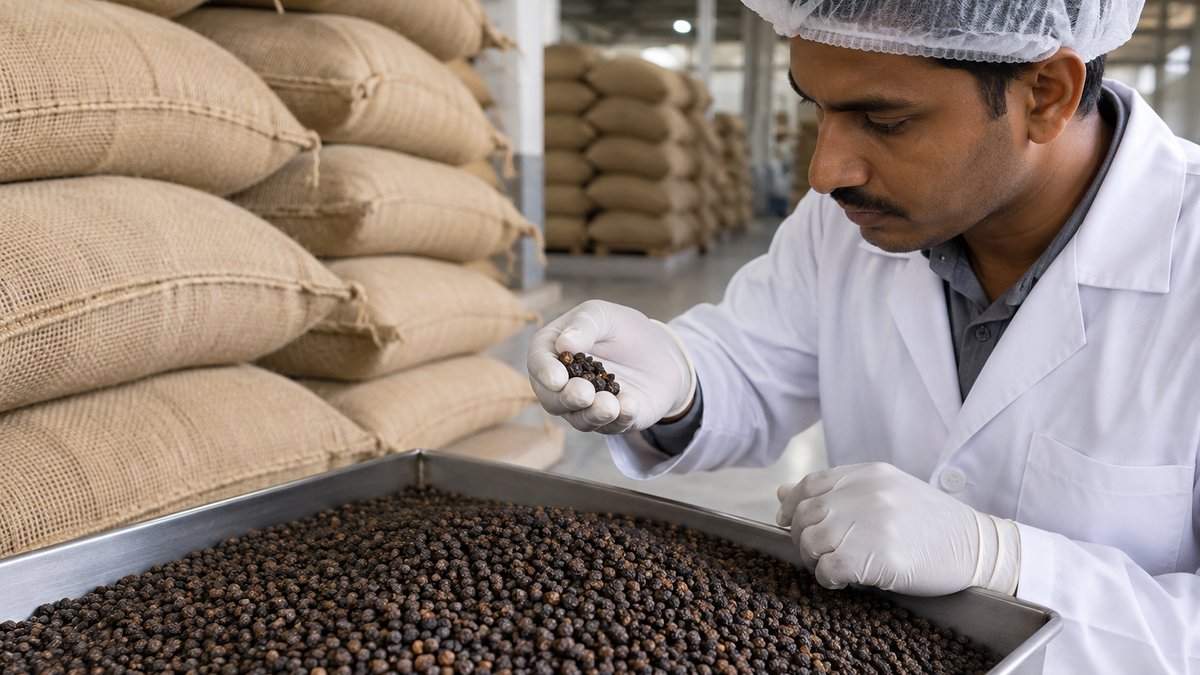
The latest IPC prices located for this update are dated 13 November 2026. The IPC lists prevailing prices reported from different origins and sources; its page says it does not set prices. The page does not specify a Japan delivery basis, so buyers should confirm the quotation basis, loading point and validity directly when requesting an offer.
The grade descriptions are not equivalent. Vietnam’s figures specify density in grams per litre, Brazil’s figure names ASTA 570, and the IPC listing shown for Indonesia does not state a grade. The Malaysia reference also names ASTA but does not give the same grade number as Brazil. These figures should not be ranked as like-for-like offers.
2.2 Japan’s latest recorded import unit values
Japan’s 2025 customs import values divided by quantities produce an approximate unit value of US$9.94/kg for whole dried pepper from all origins. The same calculation by origin gives the figures below. They cover the mix of declared product and transactions for each origin, not a matched grade or a current offer.
Japan’s import unit values cannot be compared directly with the IPC references. The customs calculation aggregates transactions over 2025 and does not separate grade, processing, packaging or contract terms. IPC’s November references are dated origin-level market indicators. Neither figure is a delivered price for a particular Japanese buyer.
2.3 Price movement in November
A market report citing IPC listed Vietnamese 500 g/l black pepper at US$5,950/MT on 10 November 2026 and 550 g/l at US$5,995/MT. IPC’s 13 November list showed US$5,700/MT and US$5,900/MT respectively. On those dated references, the 500 g/l figure fell US$250/MT, or about 4.2%, over three days; the 550 g/l figure fell US$95/MT, or about 1.6%.
This short comparison tracks the published reference figures, not a confirmed series of completed transactions. Buyers should check the latest origin-specific offer before budgeting, and suppliers should put the quotation date and validity period in writing.
3. What Is Changing Black Pepper Export Prices?
The November IPC references show different price levels by origin, while the reported Vietnamese figures moved lower between 10 and 13 November. The cited price pages alone do not establish why each figure changed, so attributing the short-term movement to a particular harvest, policy or currency event would go beyond the evidence.
Supply expectations are one factor buyers can monitor. A November 2026 market report from Majestic Spice said Vietnam’s 2026 harvest was smaller than the 2025 harvest and inventories remained limited. This is the report’s assessment, not a final official crop tally. Buyers can ask suppliers to confirm available crop, lot size and shipment timing rather than treating a general harvest assessment as proof that a specific offer is available.
Demand and competition also affect negotiations, but the 2025 Japanese import totals cannot confirm current buying activity. Those annual figures show that Indonesia, Malaysia and Vietnam were important sources for Japan. They do not show current tenders, outstanding orders or the quantity Japanese buyers may purchase next.
Currency and freight can change a buyer’s landed cost even when the origin reference is unchanged. A buyer comparing a US-dollar export reference with a yen budget should use the exchange rate applicable to the purchase and include freight, insurance, port charges and any applicable import costs. The IPC reference should not be treated as a complete Japan-delivered price.
4. Which Countries Import the Most Whole Dried Pepper?
4.1 Major importing markets
Japan imported 4,405 tonnes of whole dried pepper in 2025. For context, WITS reports 8,035 tonnes for Thailand, 7,095 tonnes for China and 7,002 tonnes for the Republic of Korea under the same HS 090411 description and year. These selected figures help place Japan’s import volume in the region; they are not a complete global ranking.
The comparison concerns total trade under the product code, not demand for one grade of black pepper. Differences in product mix, importer requirements and sourcing contracts can affect the reported value per tonne. A supplier should verify the buyer’s specification and destination before using national import totals to shape an offer.
4.2 Japan’s main supplying origins
Indonesia and Malaysia were Japan’s two largest listed sources by 2025 import value in the WITS data, followed by Vietnam among the origins shown. The recorded value from Indonesia was US$11.73 million, and Malaysia’s was US$11.69 million. Vietnam supplied US$9.66 million. The figures are customs records for 2025 and do not show year-on-year changes or 2026 market shares.
No forecast or confirmed buyer orders are inferred from those customs totals. Exporters considering Japan can use them to identify established sourcing origins, then check current buyer requirements and the applicable Japanese import documentation for the product and shipment.
5. How Buyers Can Compare Black Pepper Offers for Japan
Buyers should compare offers only after aligning the product specification and delivery basis. A price per tonne for one density or ASTA grade is not directly comparable with a reference that omits grade or cleaning details. The 2025 Japanese import unit value is a historical aggregate, so it should not substitute for a current supplier quotation.
- Specify whole black pepper and state the required grade or density, such as grams per litre or an agreed ASTA specification.
- Set measurable quality limits in the purchase specification, including moisture, foreign matter and any agreed defect or cleanliness criteria.
- State the requested quantity, packaging format, shipment window and destination port in Japan.
- Ask the supplier to identify the quotation currency, loading point, Incoterm and validity period.
- Compare FOB, CFR or CIF offers on the same destination and shipment assumptions. FOB means the buyer arranges the main carriage; CFR includes freight to the named destination port, while CIF also includes insurance.
- Calculate landed cost using the quoted price plus freight, insurance where applicable, port and handling charges, and import costs relevant to the shipment.
- Confirm required documents, sampling arrangements and inspection terms before signing the contract.
A lower origin reference may not produce a lower landed cost if the grade, packing, shipment date or freight differs. Ask suppliers to quote against one written specification, then compare the total cost and shipment conditions for the same Japanese destination.
Buying consideration: Before selecting an offer, confirm that the quoted grade, packaging, delivery basis and shipment period match the purchase requirement.
6. What Does the Latest Demand Look Like on Freshdi?
Freshdi buying requests are individual sourcing requirements, not a measure of Japan’s total black pepper demand. No dated, product-specific request count is reported here, so this update makes no claim about current request volume, popular specifications or buyer quantities.
A buyer reviewing current requests should check the destination, stated quantity, product description and trade terms in each listing. An exporter should match those details against available grade, stock and shipment timing before preparing a quotation. A request is not evidence of a completed order.
Freshdi’s black pepper buying requests can be reviewed alongside supplier listings, while the black pepper supplier category helps buyers see relevant product profiles.
7. What Buyers and Suppliers Should Do Next
7.1 For buyers and importers
- Use the 13 November IPC figures as dated origin references, not as a Japan-delivered offer.
- Request current quotations with the same specification, quantity, shipment window and destination.
- Compare landed cost on a consistent delivery basis and confirm what charges the offer includes.
- Review the supplier’s product details and shipment documents against the applicable Japanese requirements.
- Treat Japan’s 2025 import unit values as historical trade indicators, not a price target for a new contract.
7.2 For exporters and suppliers
- State the pepper grade, density or ASTA specification, cleaning level and available quantity.
- Name the loading point, quotation currency, Incoterm and offer validity.
- Give the packing details and proposed shipment period, and identify documents available for the lot.
- Refresh prices when costs or stock change, and avoid presenting an origin reference as a firm Japan-bound offer.
- Respond to buying requests only when the product and shipment terms fit the stated requirement.
8. How Freshdi Helps Buyers and Suppliers Connect
Buyers can use Freshdi to review supplier profiles for black pepper, while exporters can check product-specific buying requests. Listings and requests help users compare stated requirements, but they do not verify a future transaction or guarantee a commercial result.
A buyer can review black pepper suppliers; an exporter can review black pepper buying requests and assess whether the stated product and delivery needs match the offer.
Buyers and exporters comparing current black pepper requirements can review the relevant product listings and requests.
View Latest Herbs, Spices & Seasonings Buying Requests →View Potential Herbs, Spices & Seasonings Suppliers →
9. Conclusion: Japan Black Pepper Market Outlook
Japan’s latest complete annual data show 4,405 tonnes of whole dried pepper imports worth US$43.78 million in 2025, while the latest IPC references located for November are dated 13 November 2026. The two datasets serve different purposes: one records Japan’s annual import trade, and the other lists origin-level market references.
Buyers should request current, specification-matched offers and compare their landed cost in Japan. Exporters should state grade, quantity, packing, delivery basis and quote validity. Freshdi can help users review relevant black pepper suppliers and buying requests.
Buyers and suppliers ready to check current black pepper listings can continue with the relevant Freshdi categories.
View Latest Herbs, Spices & Seasonings Buying Requests →View Potential Herbs, Spices & Seasonings Suppliers →
Frequently Asked Questions
What was Japan’s latest recorded black pepper import unit value?
Japan imported 4,405 tonnes of whole dried pepper under HS 090411, valued at US$43.78 million in 2025, according to UN Comtrade data presented by World Bank WITS. Dividing value by quantity gives an implied unit value of about US$9.94/kg. It is an annual trade statistic, not a current supplier offer or a grade-specific price.
What were the latest black pepper export reference prices in November 2026?
The latest IPC listing located for this update is dated 13 November 2026. It showed Vietnamese black pepper at US$5,700/MT for 500 g/l and US$5,900/MT for 550 g/l, Indonesia at US$6,770/MT, Brazil ASTA 570 at US$5,550/MT and Malaysia ASTA at US$9,100/MT. The IPC page does not state a Japan delivery basis, and the specifications are not all equivalent.
Did Vietnamese black pepper prices fall in November 2026?
A report citing IPC listed Vietnam 500 g/l at US$5,950/MT on 10 November 2026; IPC’s 13 November listing showed US$5,700/MT. That is a US$250/MT decrease in the published reference over three days. It is not proof that every transaction or Japan-bound offer fell by the same amount.
Which countries supplied the most whole dried pepper to Japan?
In the 2025 WITS data cited here, Indonesia and Malaysia were the largest listed suppliers by import value, at US$11.73 million and US$11.69 million. Vietnam supplied US$9.66 million. These annual customs totals do not show current availability or 2026 market shares.
How should buyers compare FOB, CFR and CIF black pepper quotations?
Compare quotations for the same grade, quantity, packaging and shipment period. FOB means the buyer arranges the main carriage from the named loading point. CFR includes freight to the named destination port, while CIF also includes insurance. Add relevant destination and import costs to calculate landed cost, and confirm the specific contract terms with the supplier.
Can Freshdi buying requests be treated as Japan-wide demand statistics?
No. Buying requests describe individual sourcing needs and do not measure total Japanese demand. Check the destination, product details, quantity and trade terms stated in each request, and do not treat a request as a confirmed order.
References
1. International Pepper Community – Daily Prices, 13 November 2026, 13 November 2026.
2. BCCE – Agricultural Prices Today, November 10: Pepper Holds at VND 138,000/kg, Coffee Under Pressure, 10 November 2026.
3. World Bank WITS, using UN Comtrade data – Japan imports of dried pepper, excluding crushed or ground, HS 090411, 2025, 2025.
4. World Bank WITS, using UN Comtrade data – Exports of dried pepper, excluding crushed or ground, to Japan, HS 090411, 2025, 2025.
5. Majestic Spice – November 2026 Market Report, November 2026.
Disclaimer: This article is compiled from platform data, public sources and information provided by third parties, for general informational purposes only. We do not guarantee its accuracy or completeness. Prices, volumes and forecasts are indicative, reflect conditions as of 2026-11-17 and may change without notice. This is not financial, investment or trading advice.