
Introduction
Black tea buyers in the United Kingdom can use recent origin-auction results as a reference for raw-tea markets, but those results are not UK import prices or supplier quotations. In October 2026, the World Bank’s monthly auction benchmarks were US$3.75/kg for Colombo, US$2.55/kg for Kolkata and US$2.33/kg for Mombasa.
This update covers those October benchmarks and the latest Mombasa weekly result available by 14 November 2026. It also uses 2025 UK customs data to show the main tea-supplying origins. The customs figures cover tea under HS 0902, not black tea alone, and the auction averages cover different mixes of tea. Buyers should compare them as market indicators, then obtain offers for the same grade, packing, quantity and delivery basis.
Key Takeaways
- The World Bank’s October 2026 auction benchmarks were US$3.75/kg in Colombo, US$2.55/kg in Kolkata and US$2.33/kg in Mombasa. These are origin auction averages, not UK delivered prices.
- The East African Tea Trade Association reported a Mombasa average of US$2.33/kg for Sale 44 on 2 November 2026, up from US$2.28/kg on 26 October.
- UK imports of all tea under HS 0902 totaled 109.6 million kg, worth US$393.6 million, in 2025. Kenya and India were the leading origins by reported import value and volume in the cited UN Comtrade data.
- Auction averages cannot establish that one origin’s tea is cheaper for a UK buyer. Grade, catalogue, quality, packing, freight, insurance and destination charges affect the comparison.
- A useful quotation request specifies the tea type and grade, quantity, packaging, shipment timing, Incoterm and UK delivery point.
1. Market Overview
The UK sources tea from several producing countries, while auctions in Colombo, Kolkata and Mombasa provide useful origin-market references for black tea. Those auction series are not a complete measure of global tea production or UK demand, and they do not represent one identical product specification.
UN Comtrade data published through the World Bank’s WITS platform show that the United Kingdom imported 109.6 million kg of tea under HS 0902 in 2025, with a reported value of US$393.6 million. Kenya supplied 56.3 million kg, India 13.8 million kg, Malawi 11.1 million kg and Rwanda 5.8 million kg. The product code covers tea more broadly, so these figures should not be read as black-tea-only totals.
The trade values and quantities describe recorded imports, not retail sales or current buyer orders. They also do not show the price of a single grade. UK importers buying black tea should use origin data to understand established supply routes, then check whether the relevant origin can provide the required style and specification.
The UK’s HM Revenue & Customs published August 2026 overseas trade statistics on 15 October 2026. Its product-level import data are a source for monitoring more recent UK trade, while the annual 2025 figures provide the latest country-by-country totals identified here. Customs unit values, where calculated, would still reflect the mix of products and transactions recorded.
Looking to Source Black Tea?
Connect with verified suppliers, discover matching products, and explore sourcing opportunities from global markets.
2. Latest Black Tea Export Prices
2.1 Current origin benchmarks in October 2026
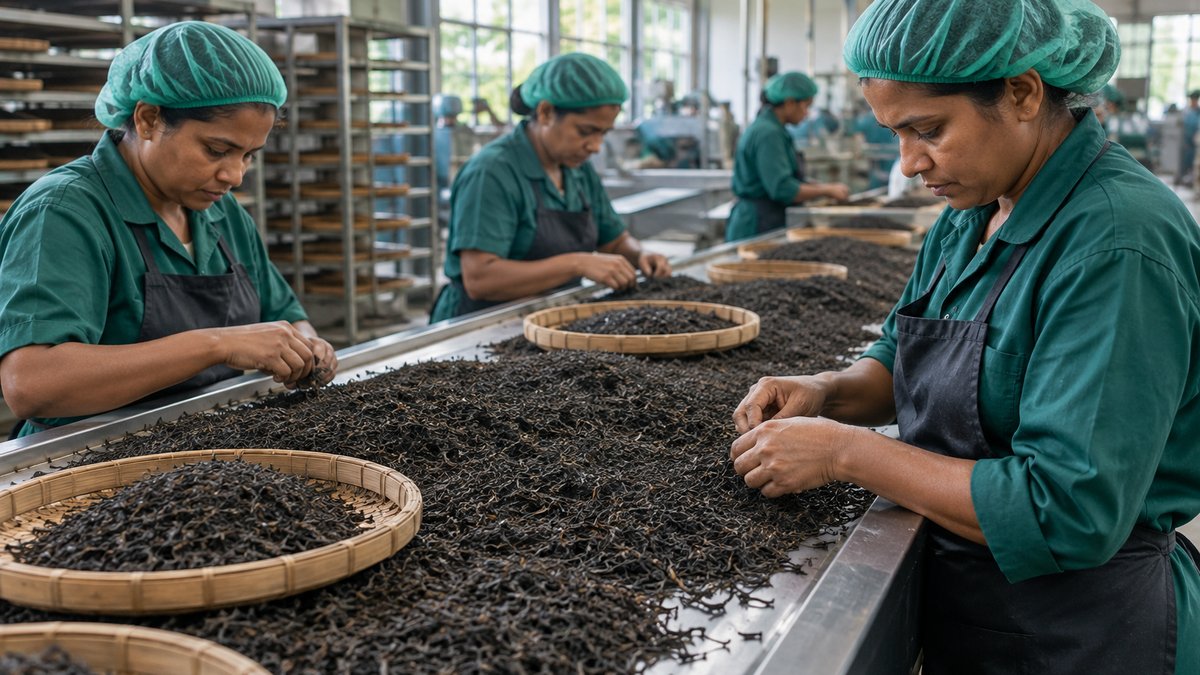
The latest monthly origin comparison identified for October 2026 is the World Bank’s auction-price series for Colombo, Kolkata and Mombasa. The reported averages were US$3.75/kg, US$2.55/kg and US$2.33/kg, respectively. These are auction benchmarks, not FOB offers for a defined grade and not CIF or delivered prices in the United Kingdom.
The World Bank series compares average auction prices across three centres. Auction catalogues and the grades sold differ, so the figures do not establish a like-for-like price ranking for a buyer’s chosen black tea. They are also not quotations for shipment to the UK.
2.2 Price comparison by exporting origin
The three benchmarks give buyers a starting point for tracking origin markets, but they cannot substitute for equivalent-specification export offers. A Colombo average may include a different grade mix from a Mombasa or Kolkata average. A buyer should confirm the exact grade, leaf or particle style, quality parameters, lot size and packing before comparing supplier prices.
The UK’s 2025 customs figures add origin context but not an equivalent price comparison. Dividing declared import value by quantity would produce an average unit value for a broad HS 0902 mix, not a price for black tea of a particular grade. It would also differ from an auction average in product mix and trade stage.
2.3 Recent Mombasa price movement
The East African Tea Trade Association reported an average of US$2.33/kg at the Mombasa Tea Auction on 2 November 2026, Sale 44. The previous reported sale, on 26 October, averaged US$2.28/kg. The weekly increase was US$0.05/kg, or about 2.2% using those reported averages.
The auction figures describe weekly average prices, not the movement of a single grade or the price of tea destined for the UK. A buyer tracking a specific Kenyan grade should compare sale-level results for that grade where available and request a current supplier quotation against a written specification.
3. Why Are Black Tea Prices Changing?
The cited auction series show different price levels by centre, while the Mombasa weekly average rose between 26 October and 2 November 2026. The available figures do not isolate one cause for that weekly movement, so it should not be attributed to a particular harvest, weather event or change in UK demand.
Supply and grade mix affect auction averages. The lots offered in one sale may differ from those in another, and a centre-wide average can move when the mix of grades and qualities changes. Buyers comparing individual offers should check the grade description and relevant quality terms rather than assuming the average applies to every lot.
Demand also varies by destination and intended use. UK blenders and packers may require consistent characteristics across shipments, while buyers of single-origin teas may specify a particular region or style. The aggregate UK import totals do not identify those buyer segments or confirm current purchase demand.
Currency and logistics affect the price paid by an importer. Auction averages are reported in US dollars per kilogram, while a supplier may quote in another currency and on a different delivery basis. Freight, insurance, packaging and UK destination charges can change the landed cost even when the origin price is unchanged.
The auction and customs figures in this update do not establish the effect of UK trade policy or a specific weather event on October prices. Importers should check the applicable UK requirements for the product and shipment and use current shipment quotations when budgeting.
4. Which Countries Import the Most Black Tea?
4.1 Major UK tea-supplying origins
For UK sourcing, Kenya and India were the two largest origins by reported value and quantity among the country entries shown in the 2025 UN Comtrade data for tea under HS 0902. The figures below cover tea broadly, not black tea alone, and describe imports recorded during calendar year 2025.
These are UK import origins, not a global ranking of importing countries. The available figures also combine tea types within HS 0902, so they cannot show which origin led specifically in bulk black tea or in any named grade.
4.2 UK market implications for exporters
The import totals show established UK trade links with Kenya, India, Malawi, Rwanda and Sri Lanka. They do not confirm that a UK buyer is currently seeking a particular tea or that an exporter can meet a buyer’s specification. Exporters should present grade, origin, available quantity, packing and shipment timing clearly in each offer.
Importers assessing a new origin can use customs data to identify trade flows, then check the product and commercial details directly. A historical import quantity is not a forecast, a confirmed order or evidence that a specific grade will be available at the auction benchmark.
5. Where Can Buyers Source Black Tea at a Competitive Price?
A competitive UK purchase depends on the cost of a suitable tea delivered to the agreed destination. The October auction averages are useful reference points, but they cannot show which origin will produce the lowest landed cost for a specific order.
- Write one product specification for all suppliers, including black tea style, grade, origin preference and quality parameters.
- State the quantity, packaging, shipment window and UK delivery point.
- Ask suppliers to identify the quotation currency, validity period, loading point and Incoterm.
- Compare FOB, CFR and CIF offers only after confirming what costs each quotation includes. FOB means the seller delivers the goods on board the vessel at the named port; under CFR the seller pays freight to the named destination port; under CIF the seller also arranges insurance. Confirm the precise contract terms.
- Add freight, insurance, port and other destination costs when calculating landed cost.
- Check the UK import requirements and shipment documents that apply to the specific tea and transaction.
For example, a lower origin price may be offset by higher freight, different packing costs or a longer shipment route. Ask suppliers to quote against the same specification and delivery point, then compare the resulting cost per kilogram on a consistent basis.
Buying consideration: Before selecting an offer, confirm that the quoted tea matches the approved sample and contract specification, and that the shipment schedule and delivery basis fit the purchasing plan.
6. What Does the Latest Demand Look Like on Freshdi?
This brief contains no Freshdi buying-request records or platform statistics, so it does not support a count of current black tea requests, quantities, buyer countries or trade terms. UK customs imports and auction prices are separate from Freshdi platform activity.
Buyers can use Freshdi’s black tea category to review relevant supplier listings, while suppliers can review buying requests in the category. Check each listing or request for its stated product details and requirements before deciding whether it fits a sourcing need or offer.
7. What Should Buyers and Suppliers Do Next?
7.1 For buyers and importers
- Use the October auction figures as origin-market references, not as UK delivered prices.
- Request offers for the same black tea grade, specification, quantity, packing and shipment period.
- Confirm whether the quote is FOB, CFR, CIF or another named delivery basis, and identify the named port or place.
- Calculate landed cost in a consistent currency and per-kilogram unit.
- Check the product specification, sample approval, shipment documents and UK import requirements before contracting.
7.2 For exporters and suppliers
- State the tea style, grade, origin and quality parameters in the offer.
- Give the available quantity, packaging, loading point and shipment window.
- Name the quotation currency, Incoterm and validity period.
- Keep price references separate from a firm offer and state the date and basis of any market comparison.
- Review relevant buying requests and respond only when the product and shipment terms match the buyer’s stated needs.
8. How Freshdi Helps Buyers and Suppliers Connect
Freshdi provides category pages where buyers can review potential black tea suppliers and suppliers can find relevant buying requests. Those pages support discovery; the buyer and supplier still need to check product details, availability, specifications and commercial terms.
Buyers sourcing black tea for the United Kingdom can review potential suppliers in the Freshdi Black Tea supplier category. Suppliers can review Freshdi Black Tea buying requests and assess whether their offer matches each request.
Buyers and suppliers comparing black tea requirements can review relevant category activity on Freshdi.
View Latest Tea & Tea Leaves Buying Requests →View Potential Tea & Tea Leaves Suppliers →
9. Conclusion: Black Tea Prices and the UK Market
October 2026 auction benchmarks ranged from US$2.33/kg at Mombasa to US$3.75/kg at Colombo, with Kolkata at US$2.55/kg. The Mombasa weekly average reached US$2.33/kg on 2 November, up from US$2.28/kg on 26 October. These origin auction figures are not UK export offers or delivered prices.
UK import data show substantial tea trade with Kenya and India, but the 2025 totals cover tea under HS 0902 rather than black tea alone. Buyers should compare current offers on matching specifications and landed-cost terms. Exporters should date and define their offers so UK buyers can assess them against their procurement needs.
Buyers preparing a black tea specification can review related suppliers on Freshdi.
View Related Suppliers for This Product →
Frequently Asked Questions
What was the black tea price in the United Kingdom in October 2026?
The cited figures are origin auction benchmarks, not a UK market price or delivered quotation. The World Bank reported October 2026 averages of US$3.75/kg for Colombo, US$2.55/kg for Kolkata and US$2.33/kg for Mombasa. A UK buyer’s price depends on grade, quantity, packing, shipment and delivery basis.
Which origin had the lowest October 2026 auction benchmark?
Among the three World Bank auction benchmarks cited here, Mombasa was lowest at US$2.33/kg, followed by Kolkata at US$2.55/kg and Colombo at US$3.75/kg. The averages cover different auction mixes, so they do not prove which origin offers the cheapest equivalent tea for a UK buyer.
Did Mombasa tea prices rise in early November 2026?
The East African Tea Trade Association reported a Mombasa average of US$2.33/kg for the sale on 2 November 2026, compared with US$2.28/kg on 26 October. These are sale averages, not a price movement for a single grade or a UK-bound shipment.
Which countries supplied the most tea to the United Kingdom?
In 2025, UN Comtrade data shown through WITS list Kenya first and India second among the UK’s tea origins by import quantity and value. The reported totals use HS 0902 and include tea more broadly, so they are not black-tea-only statistics.
How should a UK buyer compare black tea quotations?
Ask each supplier to quote the same tea style and grade, quality parameters, quantity, packing, shipment timing and delivery point. Confirm the Incoterm and include freight, insurance and destination charges where applicable. Compare the landed cost per kilogram rather than auction averages alone.
Where can buyers find black tea suppliers on Freshdi?
Buyers can review potential suppliers in Freshdi’s Black Tea supplier category. The brief provides the category page for discovery; buyers should check each supplier’s stated product details and confirm current availability and terms directly through the relevant Freshdi process.
References
1. World Bank – Commodity Markets, Pink Sheet, November 2026.
2. East African Tea Trade Association – Tea Auction Statistics, November 2026.
3. World Bank, World Integrated Trade Solution – United Kingdom Tea Imports by Country, 2025, 2025.
4. HM Revenue & Customs – UK Overseas Trade in Goods Statistics August 2026: Import and Export Data, 15 October 2026.
Disclaimer: This article is compiled from platform data, public sources and information provided by third parties, for general informational purposes only. We do not guarantee its accuracy or completeness. Prices, volumes and forecasts are indicative, reflect conditions as of 2026-11-14 and may change without notice. This is not financial, investment or trading advice.