
Introduction
Vietnam remains the main source of shelled cashews entering the United States. In October 2026, a U.S. importer quoted a W320 cashew kernel import price of US$3.24 per pound on an FOB basis, according to Vietnam’s Ministry of Agriculture and Environment. A Vietnam market report dated 5 November listed FOB W320 offers at US$3.17 to US$3.25 per pound.
These are reference prices for different reporting dates and sources, not a U.S. delivered price or a binding offer. This update covers published price indications available through 5 November 2026, recent U.S. import context, and the checks buyers need before comparing quotations.
Key Takeaways
- A U.S. importer cited by Vietnam’s Ministry of Agriculture and Environment reported an October 2026 W320 price of US$3.24 per pound FOB.
- TerraNuts’ 5 November 2026 report placed Vietnam W320 at US$3.17 to US$3.25 per pound FOB. The report’s African-origin indication was US$3.45 per pound for W320.
- Vietnam’s W320 FOB price in an SVC bulletin rose from US$7.00 per kilogram on 13 July to US$7.15 on 19 October 2026. The latest indication was for November shipment from Ho Chi Minh City.
- USDA reported that U.S. shelled cashew imports totaled 123.7 million pounds from January through May 2026, up 11% from the same months in 2025 but 9% below the five-year average.
- Buyers should compare grade, pack, shipment timing and delivery basis, then add freight, insurance, duties and destination charges before treating one origin as cheaper.
1. Cashew Kernel Market Overview for U.S. Buyers
Vietnam is the leading source of shelled cashews for the United States, while U.S. import volumes have recovered from their low 2025 base. USDA’s Economic Research Service reported 123.7 million pounds of U.S. shelled cashew imports in January to May 2026, 11% more than in the same period of 2025, yet 9% below the previous five-year average. Those figures cover shelled cashews under HS 0801.32, not only W320 kernels.
The same USDA report says U.S. shelled cashew imports fell to 277.3 million pounds in 2025, down 29% from 2024. USDA cited higher U.S. tariffs on imports from Vietnam, stronger demand from China and the European Union, and changes in African raw cashew exports among factors that contributed to lower volumes and higher average unit values. These are market factors identified by USDA, not a price formula for an individual purchase.
Cashew processing links producing regions to kernel-exporting centers. Vietnam processes domestic and imported raw cashew nuts into kernels, so raw nut availability and purchase costs affect processors’ offers. Vietnam’s Ministry of Agriculture and Environment reported that rising raw-material costs and demand from India and Europe were supporting kernel prices in October 2026.
The U.S. import statistic and export quotations describe different parts of the trade. Import volume shows how many shelled cashews entered the country during a period; an FOB quotation is an origin-side offer that excludes the buyer’s ocean freight and other costs after loading. Buyers should keep those measures separate when assessing demand or budgeting.
Looking to Source Cashew Nuts Kernel?
Connect with verified suppliers, discover matching products, and explore sourcing opportunities from global markets.
2. Latest Cashew Kernel Export Prices
2.1 Current W320 Price Indications
The latest dated W320 reference found for this update is TerraNuts’ Week 44 report, published 5 November 2026. It listed Vietnam FOB offers at US$3.17 to US$3.25 per pound. The report also described U.S. demand as stable, but did not provide a separate U.S. destination quotation, delivery price or transaction record.
For a different reference point, Vietnam’s Ministry of Agriculture and Environment reported that a U.S. importer cited an October 2026 W320 import price of US$3.24 per pound FOB. That October figure falls within TerraNuts’ November Vietnam range, but the sources use different reporting dates and describe different quotation contexts. They should not be treated as a continuous price series or as proof of a settled U.S. market price.
SVC International’s 19 October bulletin listed WW320 at US$7.15 per kilogram FOB Ho Chi Minh City for November shipment. The bulletin reported US$7.00 per kilogram on 13 July and 4 September, then US$7.10 on 28 September. It is a supplier’s published indication, distinct from the per-pound quotations in the other reports. SVC also specified AFI standards and 22.68-kilogram PE bags in cartons for its listed products. Confirm those conditions directly in a current quotation before using the number in a purchase calculation.
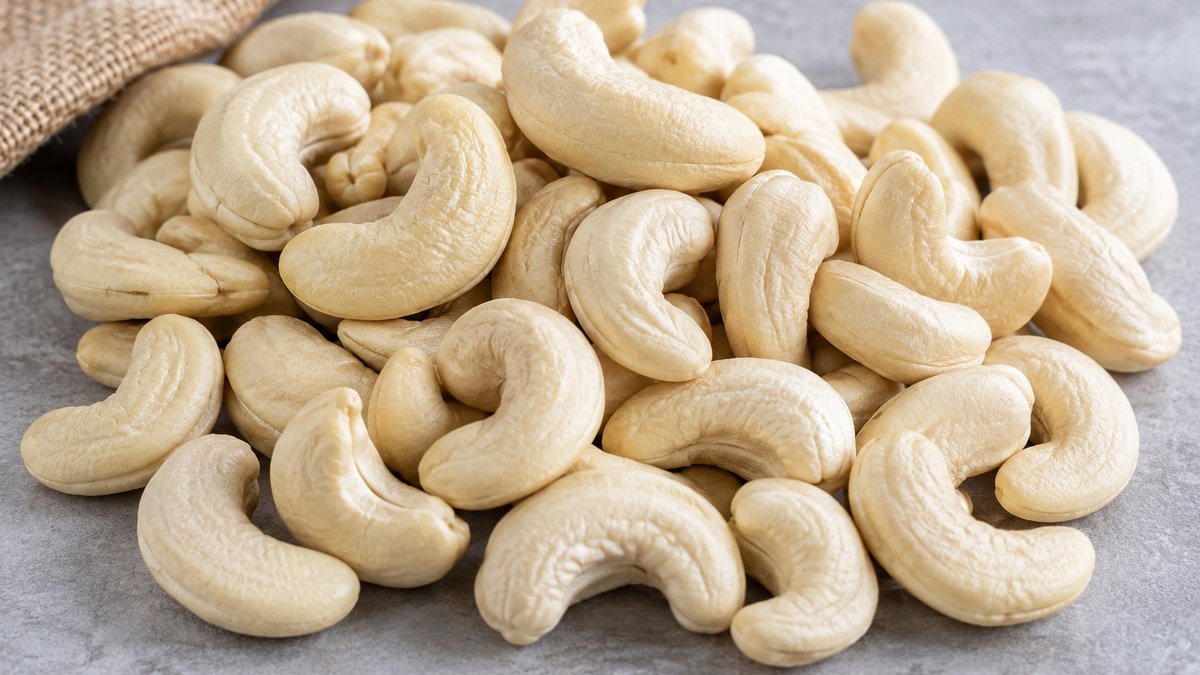
W320 and WW320 labels refer to a whole-kernel grade commonly defined by kernel count per pound, but the exact quality tolerances, crop, packing and contract terms still need confirmation. The sources do not establish that every quoted grade uses identical specifications. Treat the listed prices as indicative references, not as equivalent offers for an identical lot.
2.2 Price Comparison by Exporting Origin
TerraNuts’ 5 November report gives a same-report comparison for Vietnam and Africa: W320 at US$3.17 to US$3.25 per pound for Vietnam and US$3.45 per pound for Africa. Its W240 comparison was US$3.60 to US$3.65 per pound for Vietnam and US$3.77 per pound for Africa. The report does not identify a specific African exporting country or provide contract terms beyond the FOB price table, so buyers should not read the African figure as a country-specific offer.
This comparison is useful as a market indication, not a landed-cost ranking. It does not state the origin country for the African quotes, and it does not set out common packaging, shipment dates, payment terms or quality tolerances. Buyers should request comparable quotations for the same specification and destination before concluding that one origin is less expensive.
2.3 Recent Price Movement and Market Direction
SVC’s Vietnam WW320 FOB bulletin moved from US$7.00 per kilogram on 13 July and 4 September to US$7.10 on 28 September, then US$7.15 on 7 and 19 October 2026. That is a US$0.15-per-kilogram increase between 13 July and 19 October in one publisher’s series. SVC listed the 19 October figure for November shipment from Ho Chi Minh City.
TerraNuts’ 5 November report said W320 and broken-kernel prices were expected to hold steady or rise slightly, citing limited stocks and high raw cashew nut prices. This is the publisher’s short-term outlook, not a confirmed later price movement. The report also described Vietnam kernel demand as cautious, with the U.S. market stable, China more active and European demand weaker.
The W320 movement in SVC’s bulletin and TerraNuts’ November quotation should not be combined into a single trend line. The reports come from separate publishers and differ in format and quoted basis. A buyer tracking a procurement budget should record each source’s date, grade, unit, shipment window and Incoterm.
3. Why Cashew Kernel Prices Are Changing
Raw cashew nut costs, available kernel stocks and buyer demand are the main factors cited in the November market report. TerraNuts said high input costs were limiting Vietnamese processors’ interest in buying raw nuts, while limited kernel stocks supported W320 and broken-kernel prices. The same report characterized U.S. buying as stable and Chinese buying as more active.
Raw material prices do not translate into kernel prices at a fixed rate. Processors also account for recovery yield, shelling and grading costs, labor, packaging, financing and shipment costs. A quote for kernels should therefore be compared with other kernel offers, not with the price of in-shell nuts alone.
Harvest supply can affect processors’ raw-nut availability and purchase costs. TerraNuts reported that Tanzania was entering the 2026/27 season and that stocks received into warehouses exceeded 200,000 tonnes as of its 5 November report. The report also noted that raw-material offers from Tanzania, Indonesia and Guinea-Bissau were high for Vietnamese buyers. These are reported market conditions and do not confirm how much kernel supply will reach the U.S. or when.
U.S. import demand also affects how much product buyers seek from exporters. USDA’s January to May 2026 volume was above the same period a year earlier but below the five-year average. That mixed comparison gives buyers a better context than a simple claim that demand is rising: the market had recovered year over year, while remaining below its recent norm.
Trade policy and logistics can change the total cost without changing an exporter’s FOB offer. USDA identified higher U.S. tariffs on imports from Vietnam as one factor in the 2025 import decline. The tariff applicable to a shipment depends on its classification, origin and current U.S. rules. Buyers should verify the rate and any applicable trade measures for the exact shipment rather than assume the price report includes those charges.
Currency movements, container availability, freight rates and shipment timing can also alter a buyer’s landed cost. The price sources cited here do not provide a matched freight quote or delivered U.S. price. Obtain those costs for the destination port and shipment window before comparing offers.
4. Which Countries Import the Most Cashew Kernels?
4.1 Major Importing Markets
The evidence in this update is strongest for U.S. import volume, rather than a current global ranking of cashew kernel importers. USDA recorded 123.7 million pounds of U.S. shelled cashew imports in January to May 2026. Its report identifies China and the European Union as sources of stronger competing demand in 2025, but it does not provide a current ranked table of all importing countries in the cited material.
For U.S. buyers, the practical signal is the combination of import recovery and competing supply demand. January to May imports were up 11% year over year but still 9% below the five-year average. That statistic covers all shelled cashews reported under the relevant customs code, so it cannot be used as a W320-only demand measure.
4.2 The United States as a Destination for Vietnamese Kernels
Vietnam is the dominant source of U.S. shelled cashew imports in USDA’s long-run origin chart. The U.S. Department of Agriculture’s July 2026 outlook also links Vietnam’s processing sector to large imports of raw cashews, primarily from African countries. The origin of the raw in-shell nut may differ from the country that processes and exports the shelled kernel.
The available January to May 2026 import total is a national volume measure and does not give destination shares by exporting country in the excerpted data. Buyers should avoid using it to claim a precise Vietnam share for that five-month period. For a supplier discussion, confirm the declared origin, grade and shipment documentation for the specific lot.
4.3 What Import Demand Means for Exporters
A national import increase is not a confirmed order for a particular supplier. USDA’s figures describe shipments that entered the country, while a buyer’s request specifies a prospective purchase. Exporters can use the import trend as broad market context, then assess individual inquiries by grade, volume, delivery window and destination.
The latest market report describes U.S. kernel demand as stable, while noting stronger demand from China and weaker demand from Europe. These are observations from TerraNuts’ market report, not a measurement of total buying activity or a forecast of U.S. purchase volumes. Exporters should check current buyer requirements before setting production or shipment plans.
5. How Buyers Can Source Cashew Kernels at a Competitive Price
A competitive offer is the one that meets the buyer’s specification at a suitable delivered cost. The November Vietnam W320 indication of US$3.17 to US$3.25 per pound is FOB, so it excludes costs after loading. The African W320 figure in the same report is higher on that stated basis, but the origin is unspecified and the reports do not demonstrate that the offers match on every contract detail.
- Specify the grade and count range, whole or broken form, color, moisture limits, foreign matter and other contract tolerances.
- State the required crop or production period, quantity, bag size, carton format and whether retail packing is required.
- Ask each supplier to quote on the same basis, such as FOB at a named loading port or CIF at a named U.S. port. CIF includes cost, insurance and freight to the named destination, while FOB leaves the buyer to arrange the main carriage and insurance.
- Calculate landed cost with the same currency and weight unit. Include ocean freight, insurance, import duties, port charges, customs brokerage and inland delivery where relevant.
- Confirm the shipment window, quote validity, payment terms, inspection arrangements and documents before comparing final offers.
SVC’s October bulletin, for example, specified WW320, FOB Ho Chi Minh City, a November shipment period, AFI quality standards and 22.68-kilogram PE bags in cartons. Those details make the reference more useful than a number without a grade or shipment basis, but they still do not replace a current contract quotation for the buyer’s own order.
Buying consideration: Before approving a purchase, ask suppliers to return the same specification sheet with the quoted unit price, loading port, Incoterm, shipment period and validity date. Then calculate landed cost against the same U.S. destination and verify import requirements for the product and packaging.
6. What Does the Latest Demand Look Like on Freshdi?
Freshdi buying requests are individual buyer inquiries, while USDA import totals describe recorded national shipments. No current Freshdi cashew request counts or request-level requirements are stated in this market update, so it makes no claim about the number of active U.S. buyers, popular grades or requested quantities.
Buyers can use Freshdi’s cashew category to review potential suppliers, and suppliers can review buying requests relevant to the product. A listing or request is a starting point for checking fit; it does not confirm current stock, a completed transaction or a final price.
7. What Buyers and Suppliers Should Do Next
7.1 For Buyers and Importers
- Use the 5 November Vietnam W320 FOB range as a dated reference, then request current offers for the exact grade and shipment period.
- Compare the same form of kernel, count range, tolerances and packaging across quotations.
- Request FOB and delivered alternatives when useful, and calculate landed cost to the same U.S. port.
- Check tariff classification, origin documentation, food-safety requirements and shipment documents for the specific product and entry date.
- Agree how the parties will handle pre-shipment inspection, sample approval, claims and any quality variance.
7.2 For Exporters and Suppliers
- Date each quotation and state the currency, unit, grade, loading port, Incoterm and validity period.
- Separate white whole kernels from broken grades and describe the count range and tolerances clearly.
- State available quantity, pack format and earliest shipment window rather than implying unconfirmed capacity.
- Keep price indications distinct from contract prices, and update buyers when raw-material or freight costs change.
- Check the buyer’s destination, required documents and specification before preparing an offer.
8. How Freshdi Helps Cashew Buyers and Suppliers Connect
Cashew kernel price references help buyers frame an inquiry, but supplier quotations still need to match the buyer’s grade, quantity, packing and destination. Freshdi provides category pages where buyers can review potential cashew suppliers and suppliers can look for relevant buying requests.
Buyers and exporters who are ready to compare current requirements can explore the cashew category on Freshdi.
View Latest Bean, Nut & Seed Buying Requests →View Potential Bean, Nut & Seed Suppliers →
9. Conclusion: United States Cashew Kernel Market Outlook
The latest published W320 indication in this update is Vietnam FOB at US$3.17 to US$3.25 per pound on 5 November 2026. A separate October reference cited a U.S. importer’s FOB price of US$3.24 per pound. USDA’s January to May import data shows U.S. shelled cashew volumes above the previous year but below the five-year average. These figures describe different measures and should not be treated as one delivered U.S. market price.
Buyers should check the full specification and landed cost before choosing an origin. Suppliers should date offers and state grade, port, terms and shipment timing. Freshdi’s cashew supplier category is a place to begin reviewing potential suppliers for a sourcing inquiry.
Buyers preparing a cashew kernel specification can review potential suppliers in Freshdi’s cashew category.
View Related Suppliers for This Product →
Frequently Asked Questions
What is the latest reported W320 cashew kernel price for U.S. buyers?
TerraNuts’ report dated 5 November 2026 listed Vietnam W320 at US$3.17 to US$3.25 per pound FOB. Vietnam’s Ministry of Agriculture and Environment separately reported an October 2026 W320 import price of US$3.24 per pound FOB, citing a U.S. importer. Neither is a delivered U.S. price or a binding offer.
Is the November W320 price a price delivered to the United States?
No. The November range is an FOB indication for Vietnam. It does not include the buyer’s freight, insurance, import duties, port charges or inland delivery. Ask for a delivered quotation or calculate those costs separately for the shipment and destination.
Were Vietnam cashew kernel prices rising in 2026?
SVC’s Vietnam WW320 bulletin increased from US$7.00 per kilogram on 13 July to US$7.15 on 19 October 2026, FOB Ho Chi Minh City. TerraNuts’ 5 November report expected W320 prices to hold steady or rise slightly. These are separate publishers’ indications, and the outlook is not a confirmed subsequent price change.
Which countries supply cashew kernels to the United States?
USDA’s July 2026 outlook identifies Vietnam as the dominant source of U.S. shelled cashew imports in its long-run origin chart. The same report explains that Vietnam’s processors import substantial raw cashew nuts, primarily from African countries. Raw nut origin and kernel-export origin can therefore differ.
Why can two W320 quotations differ?
A W320 label alone does not establish that offers have identical count tolerances, color, moisture, crop, packing, shipment date or inspection terms. The Incoterm also changes which transport and insurance costs are included. Compare a written specification and the same delivery basis before judging price differences.
How should a U.S. buyer compare FOB and CIF cashew offers?
FOB prices cover the goods through loading at the named port; the buyer arranges main carriage and insurance. CIF includes cost, insurance and freight to the named destination port. Compare the final cost to the same U.S. port and add any destination charges, duties and inland delivery that the quotation excludes.
References
1. Vietnam Ministry of Agriculture and Environment – Sustainable supply chains enhance Viet Nam’s cashew industry, November 2026.
2. USDA Economic Research Service – Fruit and Tree Nuts Outlook, FTS-385, July 23, 2026.
3. TerraNuts Group – Cashew Market Report Week 44, November 5, 2026.
4. SVC International – Cashew Price Today: SVC Official FOB Price Update For Every Kernel Grade, October 21, 2026.
Disclaimer: This article is compiled from platform data, public sources and information provided by third parties, for general informational purposes only. We do not guarantee its accuracy or completeness. Prices, volumes and forecasts are indicative, reflect conditions as of 2026-11-14 and may change without notice. This is not financial, investment or trading advice.