
Introduction
Cinnamon buyers in Canada face two different price references this November: recent export offers from producing origins and Canada’s latest reported import unit values, which cover 2025 customs trade. They measure different things. An export quotation is a dated offer on a stated delivery basis; an import unit value is customs-reported trade value divided by quantity, across shipments that may differ in grade and form.
On 6 November 2026, a market quotation service listed Vietnamese cassia at €2.60 per kg for broken cinnamon, €3.18 per kg for split cinnamon and €5.50 per kg for cigarette cinnamon, all FOB Hanoi. Canada’s 2025 import data provides a separate benchmark, not a current Canadian wholesale quote. The comparison below keeps those bases distinct and identifies what buyers should confirm before pricing an order.
Key Takeaways
- On 6 November 2026, reported FOB Hanoi quotations for Vietnamese cassia ranged from €2.60/kg for broken cinnamon to €5.50/kg for cigarette cinnamon. The forms are different, so the figures are not interchangeable.
- World Bank WITS, using UN Comtrade data, reports Canada imported crushed or ground cinnamon worth US$15.28 million and weighing 2.58 million kg in 2025. That equals an approximate customs unit value of US$5.93/kg, not a supplier offer or retail price.
- For uncrushed cinnamon, Canada’s 2025 imports were reported at US$5.80 million and 916,420 kg, an approximate customs unit value of US$6.33/kg. Product mix and trade terms prevent a direct comparison with FOB offers.
- Sri Lanka’s Central Bank monthly cinnamon series reached Rs. 6,270.8/kg in September 2026, up 2.5% from August. This is an origin-side price series in Sri Lankan rupees, not a Canadian import price or an FOB quotation.
- Buyers should compare the same cinnamon form, grade, packaging, quantity and Incoterm, then add freight, insurance, duty and destination charges before judging landed cost.
1. Cinnamon Supply and Demand in the Canadian Market
Canada depends on imported cinnamon, and its customs data shows material trade in both crushed or ground and uncrushed forms. The latest country-level import figures located for this update cover calendar year 2025, so they describe completed trade rather than November 2026 buying activity.
The 2025 WITS data lists Vietnam, Indonesia, India and Sri Lanka among Canada’s suppliers of crushed or ground cinnamon. Vietnam led this category by reported value and quantity, with US$7.14 million and 1.44 million kg. Indonesia followed at US$4.78 million and 683,710 kg. The data records customs flows; it does not establish current supplier availability or the grade mix in each shipment.
For uncrushed cinnamon, Canada imported US$5.80 million worth, weighing 916,420 kg, in 2025. These figures sit in a separate customs category from crushed or ground cinnamon. Buyers should avoid treating the category totals as a complete specification or as retail-market prices.
Origin matters because the word cinnamon covers products sold in different forms and grades. Ceylon cinnamon from Sri Lanka and cassia cinnamon from origins such as Vietnam are distinct commercial offerings. A buyer comparing them should specify species or commercial type, whole or ground form, grade, moisture and other agreed quality limits before comparing prices.
Looking to Source Cinnamon?
Connect with verified suppliers, discover matching products, and explore sourcing opportunities from global markets.
2. Latest Cinnamon Export Prices
2.1 Current export quotations and Canadian import unit values
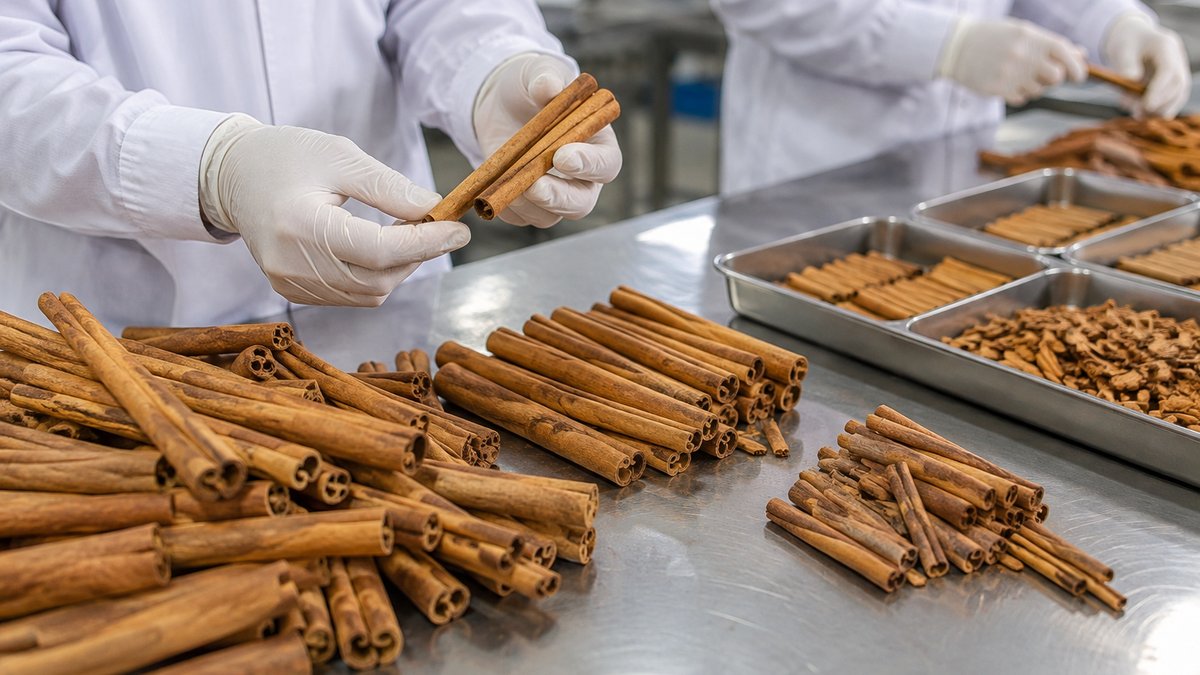
The latest dated origin-side comparison located for this update is a set of 6 November 2026 FOB Hanoi quotations for Vietnamese cassia. FOB means the seller’s price covers delivery and loading on board at the named port; the buyer generally arranges main carriage and insurance. The quotation service reported €2.60/kg for broken cassia, €3.18/kg for split cassia and €5.50/kg for cigarette cassia. These are export-market indications, not Canadian delivered prices.
The Canadian unit values are calculated from reported total import value divided by quantity. For crushed or ground cinnamon, the reported US$15.28 million across 2,576,920 kg gives about US$5.93/kg. For uncrushed cinnamon, US$5.80 million across 916,420 kg gives about US$6.33/kg. The figures cover Canada’s imports from all reported origins and combine shipments with differing product characteristics and commercial terms. They are not current price offers.
A unit value can sit above or below an individual offer because it averages recorded trade transactions. It may reflect differences in grade, packaging, shipment size, origin, currency conversion and the point at which value is recorded. The WITS figures do not identify a single comparable grade or delivery basis, so buyers should use them as historical market context rather than a target price.
2.2 Price comparison by exporting origin
A like-for-like comparison requires quotations for the same form, grade and delivery basis. The available November origin quotations provide three Vietnamese cassia forms but do not provide an equivalent, same-date Canadian destination price from another origin. Sri Lanka’s September producer-price series is useful context for origin costs, but it is not comparable to FOB Hanoi: it is reported in Sri Lankan rupees per kilogram and represents a different point in the supply chain.
The Central Bank of Sri Lanka’s monthly cinnamon price series, as presented by Macro Lab, records Rs. 6,270.8/kg for September 2026, 2.5% above August’s Rs. 6,119.1/kg. The source identifies this as a selected export-agriculture-crop price series. It does not state an FOB Colombo basis, so it should not be labelled an export quotation.
The comparison indicates that cinnamon prices need to be read with their basis attached. The Vietnam quotations distinguish product forms and specify FOB Hanoi; the Canada figures are annual customs unit values; the Sri Lankan series is a monthly rupee price at the origin side. Currency conversion alone would not make those measures equivalent.
2.3 Recent price movement and limits of comparison
The November 2026 Vietnam quotation report shows a small increase from its previous listed observation: broken cassia rose from €2.58 to €2.60/kg, split cassia from €3.13 to €3.18/kg, and cigarette cassia from €5.45 to €5.50/kg. The report dates the latest offers to 6 November. It does not establish a long, consistent monthly series for Canadian buyers.
Sri Lanka’s September 2026 cinnamon figure rose month on month, while Canada’s import unit values refer to 2025. These movements should not be combined into one trend line: the sources use different currencies, products, periods and price stages. The available figures support a dated snapshot, not a forecast for the next Canadian purchase.
3. Why Cinnamon Prices Change
Cinnamon quotations change with product form, grade, origin-side availability, order size and delivery terms. The November FOB Hanoi report itself shows a substantial spread between broken, split and cigarette cassia. A buyer who asks only for “cinnamon” may receive offers for products that are not equivalent.
3.1 Product form and grade
Whole sticks, split bark, broken material and powder involve different processing and sorting. Quill dimensions and grade can also affect the price of Ceylon cinnamon. The October 2026 Sri Lanka price guide lists separate Ceylon grades and order-size prices, illustrating why a price without a grade and quantity can mislead. Those are seller listing prices and should be treated as indicative, not as a confirmed market-wide quotation.
3.2 Supply, harvest and origin costs
Origin-side supply affects what exporters can offer, but a farm or producer price is only one part of an export cost. Cleaning, grading, processing, packing, inland transport, port handling and exporter margin can stand between a producer price and an FOB quotation. Sri Lanka’s September 2026 series rose 2.5% month on month, but it does not quantify how much of that change passed through to export offers.
3.3 Demand, currency and logistics
Export prices are quoted in different currencies and on different delivery bases. Freight, insurance, exchange rates and shipment timing change the cost to a Canadian buyer even when the origin quotation is unchanged. Compare offers in one currency and for the same arrival point, then include the costs that the seller’s Incoterm leaves with the buyer.
3.4 Trade policies and import requirements
Import compliance can affect the landed cost and the documents required for a shipment. Requirements depend on the product and the shipment details. Buyers should confirm current Canadian food-import and customs requirements for the specific cinnamon form before finalizing a contract; an export quotation does not confirm that the shipment meets Canadian entry conditions.
4. Which Countries Supply and Import Cinnamon?
4.1 Canada’s leading reported supplier origins
For crushed or ground cinnamon in 2025, Vietnam was Canada’s largest listed supplier by value and quantity in the WITS data, followed by Indonesia, India and Sri Lanka. Those four origins together accounted for the bulk of the named supplier values shown in the country table. Trade values measure recorded imports, not the number of Canadian buyers or current demand.
These figures apply to crushed or ground cinnamon under the product description reported by WITS. They should not be used as a ranking for every cinnamon form or for all Canadian spice imports. The same dataset reports total imports in this category of 2,576,920 kg, valued at US$15.28 million, during 2025.
4.2 Global market ranking and Canada’s own export destinations
This update focuses on Canada as the destination and on origin-side price references. The sources used here do not provide a consistent, current ranking of global cinnamon importers or a comparable list of Canadian re-export destinations. Canada’s 2025 imports show the main origins for the specified customs category, but they do not establish a global demand forecast or confirmed future orders.
4.3 What import data means for exporters
The 2025 figures show that Canadian importers bought crushed or ground cinnamon from several origins, with Vietnam and Indonesia leading the listed quantities. Exporters can use that as evidence of past trade flows, not proof that a particular Canadian buyer is seeking product now. A quotation should state the exact form, grade, quantity, packaging, port, Incoterm and validity period.
5. How Canadian Buyers Can Compare Cinnamon Offers
A lower FOB figure does not necessarily produce a lower delivered cost in Canada. Buyers should compare offers against one written specification and add freight, insurance, customs charges, inland delivery and any required testing or inspection costs. The 2026 FOB Hanoi values and 2025 Canadian import unit values do not share the same period or basis, so they cannot substitute for current supplier quotations.
- Name the commercial type and form: for example, cassia or Ceylon, whole sticks, split, broken or ground.
- Specify grade and measurable quality limits, including moisture and foreign matter where relevant to the contract.
- Request the same order quantity, packaging and shipment window from each supplier.
- Compare offers on the same Incoterm and named place. FOB, CFR and CIF allocate transport and insurance responsibilities differently.
- Convert currencies using the same dated exchange rate, then add freight, insurance and destination costs to calculate landed cost.
- Confirm Canadian import documentation and food requirements for the product and shipment before contracting.
- Check quotation validity, sample or inspection arrangements and the agreed method for resolving quality disputes.
For example, a buyer comparing an FOB price with a CIF price should first identify what each seller includes. The CIF quotation includes cost, insurance and freight to the named destination port, while the FOB buyer arranges the main carriage and insurance. Port charges, customs clearance and inland delivery may remain outside either quoted amount, depending on the contract.
Buying consideration: Use the reported November prices as a dated reference for specific Vietnamese cassia forms. Request fresh offers for the same specification and Canadian destination before setting a purchase budget.
Buyers ready to compare suppliers and sourcing requirements can review cinnamon listings and current buying requests on Freshdi.
View Latest Herbs, Spices & Seasonings Buying Requests →View Potential Herbs, Spices & Seasonings Suppliers →
6. What the Latest Cinnamon Demand Looks Like on Freshdi
No Freshdi buying-request data was supplied for this article, so no platform counts, buyer destinations, quantities or requested specifications can be reported. Canada’s customs imports describe recorded trade in 2025; they are not a substitute for Freshdi requests or evidence of current individual orders.
A cinnamon request can be assessed only against the details it states. Buyers should include origin preference, form, grade, quantity, packaging, destination and delivery term in their inquiry. Exporters should check those requirements before responding and avoid treating historic import statistics as confirmation of an active order.
7. What Buyers and Suppliers Should Do Next
7.1 For buyers and importers
- Use the same cinnamon form and grade in every quotation request.
- Compare the seller’s stated price basis with the delivery point you need in Canada.
- Check the supplier’s current availability, shipment schedule and product documents.
- Calculate landed cost from the offer, freight and destination charges rather than relying on an import unit value.
- Confirm the shipment’s Canadian import requirements before payment or contract commitment.
7.2 For exporters and suppliers
- Separate cassia and Ceylon offers and identify whole, split, broken or ground product clearly.
- State grade, quality limits, available quantity, packaging and loading port.
- Quote currency, Incoterm, validity date and shipment window on every offer.
- Keep product listings and prices current, since buyers cannot compare an offer without its basis.
- Review each buying inquiry against the offered form, quantity and destination before preparing a quotation.
8. How Freshdi Helps Buyers and Suppliers Connect
Freshdi’s cinnamon category pages give buyers and suppliers a place to review category listings and buying requests. Buyers can use the category to look for potential cinnamon suppliers; suppliers can review relevant buying requests and decide whether their offer fits the stated requirement.
Use those pages to continue sourcing research, then confirm product specifications, availability, price basis and import documents through the commercial process agreed with the other party. A listing or request does not verify current stock, confirm a quotation or guarantee a transaction.
Once the cinnamon specification and destination are clear, buyers can review related supplier listings on Freshdi.
View Related Suppliers for This Product →
9. Conclusion: Cinnamon Market Outlook for Canada
The latest dated figures offer useful reference points, but they describe different parts of the cinnamon trade. On 6 November 2026, reported FOB Hanoi prices for Vietnamese cassia varied by form from €2.60/kg for broken product to €5.50/kg for cigarette cinnamon. Canada’s latest cited customs figures cover 2025 and imply unit values of about US$5.93/kg for crushed or ground cinnamon and US$6.33/kg for uncrushed cinnamon. Neither customs value is a live Canadian quotation.
Buyers should request comparable offers and calculate landed cost. Exporters should date each price and state its grade, form, quantity, port and delivery terms. Freshdi’s cinnamon pages can help buyers and suppliers continue category-level sourcing research.
Buyers and suppliers can use Freshdi’s cinnamon category pages to review potential sourcing matches and buying requests.
View Latest Herbs, Spices & Seasonings Buying Requests →View Potential Herbs, Spices & Seasonings Suppliers →
Frequently Asked Questions
What is the current cinnamon price in Canada?
The sources used here do not provide a November 2026 Canadian wholesale quotation. Canada’s latest cited WITS import data covers 2025 and implies customs unit values of about US$5.93/kg for crushed or ground cinnamon and US$6.33/kg for uncrushed cinnamon. Those averages are not current supplier offers or retail prices.
What were the latest reported cinnamon export prices?
A market quotation report dated 6 November 2026 listed Vietnamese cassia at €2.60/kg for broken product, €3.18/kg for split product and €5.50/kg for cigarette cinnamon, FOB Hanoi. Each figure applies to a different product form and is an origin-side indication, not a Canadian delivered price.
Why do cinnamon prices differ between countries and grades?
Prices vary with commercial type, form, grade, processing, order size and delivery basis. The November Vietnamese quotations show different prices for broken, split and cigarette cassia. Buyers should confirm that competing offers match in specification before comparing them.
Which countries supplied the most crushed or ground cinnamon to Canada?
In 2025, WITS lists Vietnam first by import value and quantity, followed by Indonesia, India and Sri Lanka. The data records past imports in the crushed or ground cinnamon category and does not show current orders or availability.
How should buyers compare FOB and CIF cinnamon quotations?
FOB and CIF prices include different cost responsibilities. Compare offers for the same product and destination, identify the named port, then add any freight, insurance, customs, port and inland charges that the quoted term leaves out. Confirm the exact Incoterm and named place in the contract.
Where can Canadian buyers find cinnamon suppliers?
Buyers can review potential suppliers in Freshdi’s cinnamon category. They should then confirm the supplier’s current product specification, quantity, quotation basis, shipment timing and required import documents. A category listing does not guarantee availability or a completed transaction.
References
1. Commodity Board – Vietnam Cassia Cinnamon Price Update and Export Signals, November 2026, 6 November 2026.
2. World Bank WITS, using UN Comtrade data – Canada cinnamon and cinnamon-tree flowers, crushed or imports by country, 2025, 2025 trade data.
3. World Bank WITS, using UN Comtrade data – Canada cinnamon and cinnamon-tree flowers, neither crushed nor ground imports by country, 2025, 2025 trade data.
4. Central Bank of Sri Lanka, via Macro Lab – Prices of Selected Export Agriculture Crops: Cinnamon, 4 November 2026.
5. SriLankaExport – Ceylon Cinnamon Price per kg by Grade, FOB Sri Lanka, October 2026.
Disclaimer: This article is compiled from platform data, public sources and information provided by third parties, for general informational purposes only. We do not guarantee its accuracy or completeness. Prices, volumes and forecasts are indicative, reflect conditions as of 2026-11-15 and may change without notice. This is not financial, investment or trading advice.