
A buyer's guide to chickpea varieties, food applications, grades, export specifications and supplier trust signals.
Introduction
Chickpeas are traded under several names, and a buyer can easily receive a quotation that sounds right but describes the wrong type. Kabuli chana, Desi chana, split chickpeas and chickpea flour are related products, yet they serve different recipes and production lines. For importers, food processors and distributors, the first sourcing decision is therefore not the country of origin. It is the product form and its intended use.
A hummus manufacturer may need large, pale whole Kabuli chickpeas that cook evenly and produce a smooth texture. A pulse mill may be looking for smaller Desi chickpeas that can be split into chana dal or milled into besan. A snack producer may prioritise roast performance, skin condition and uniform size. If the buyer does not make this distinction in the RFQ, supplier quotations may not be comparable.
Key Takeaways
- Kabuli and Desi are different market types of chickpea; name the variety in the RFQ.
- Whole chickpeas, chana dal and besan are different product forms with different processing needs.
- Specify size basis, moisture, purity, foreign matter, broken grains and packaging numerically.
- Two reviewed supplier profiles show Trust Stars above 4/5, so they are reasonable first contacts, though Trust Stars alone do not replace product checks.
Product Types and Trade Forms
Chickpeas in international trade
Chickpeas (Cicer arietinum) are edible pulse seeds from a legume crop. They are sold whole and dried, canned or cooked, split into dal, or milled into chickpea flour. In international trade, the word “chickpea” can cover different seed types and processing forms, so buyers should state the variety and form rather than relying on the generic product name.
Kabuli chickpeas: large, pale whole-seed type
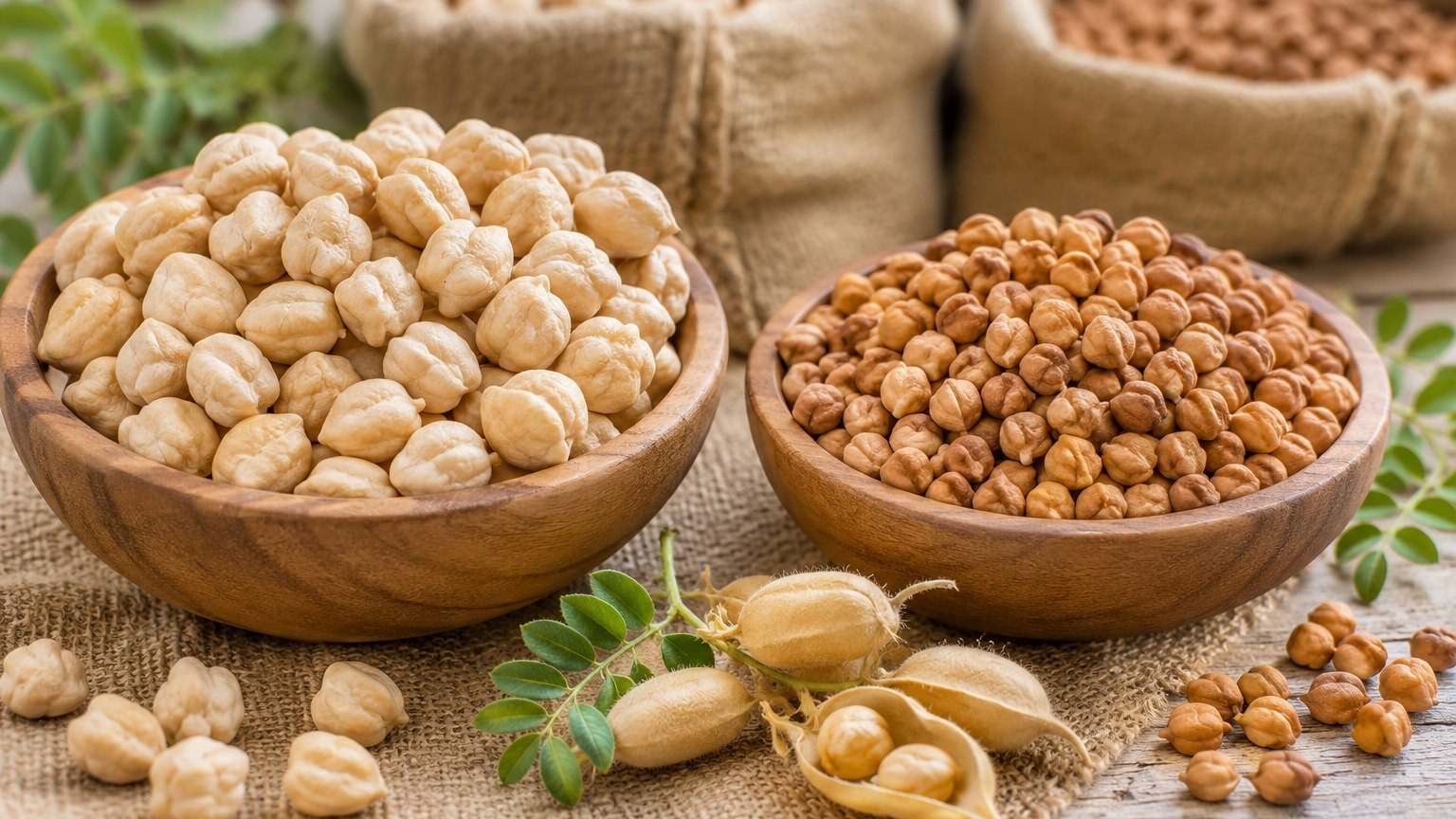
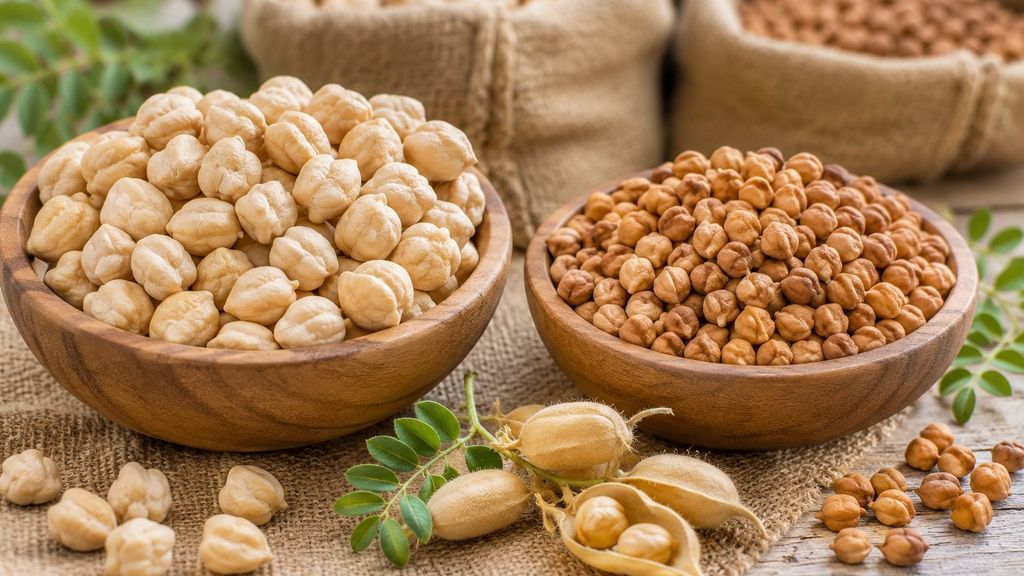
Kabuli chickpeas are typically larger, rounder and pale cream to beige, with a relatively thin seed coat and a mild, nutty taste. They are commonly sold whole for hummus, canned chickpeas, salads, ready meals, retail packs and foodservice. Buyers usually focus on seed size, colour consistency, cooking behaviour, broken-grain tolerance and appearance after hydration.
Desi chickpeas: smaller seed for dal, flour and snacks
Desi chickpeas are generally smaller and darker, often brown, tan or near-black, with a thicker seed coat. They are important in South Asian food processing and are often split into chana dal or milled into besan, also called gram flour. Desi chickpeas are also used in curries, roasted snacks and traditional dishes where their flavour and texture are wanted.
From whole chickpeas to chana dal and besan
Whole chickpeas are the intact seed. Chana dal is made by splitting and usually dehulling Desi chickpeas, creating a cooking pulse with a different texture and preparation time. Besan is flour milled from chickpeas, commonly Desi. These forms cannot be substituted commercially without changing the buyer’s recipe, process, packaging and labelling requirements.
Looking to Source Chickpea?
Connect with verified suppliers, discover matching products, and explore sourcing opportunities from global markets.
Commercial Applications and Buyer Use Cases
Hummus, dips and spreads. Food processors often use whole Kabuli chickpeas because colour, seed size and cooking softness influence the texture and appearance of the finished puree. Buyers should run a cooking test using a representative sample and specify whether skins must separate easily.
Canned, cooked and ready-to-eat foods. Canners and prepared-food manufacturers need consistent hydration, intact seeds and predictable cooking performance. Size variation can lead to uneven cooking, while broken or discoloured grains may affect visual quality in clear jars or trays.
Chana dal, besan and traditional foods. Mills and ingredient makers commonly buy Desi chickpeas for splitting or grinding. Their RFQ should distinguish whole Desi seed from split, dehulled dal or finished flour, and should include the required milling yield or particle specification where applicable.
Roasted snacks and retail pulses. Snack manufacturers and packers may require uniform size, controlled moisture and low defect levels to support even roasting and an attractive retail pack. Packaging, shelf-life validation and allergen or food-safety controls should be agreed for the destination market.
Market Overview
Freshdi’s Chickpeas market snapshot reviewed for this article showed 279 supply listings from 120 suppliers across 31 countries. India represented 26.7% of the supplier base in that platform snapshot, followed by Ethiopia at 11.7% and South Africa at 8.3%. These figures describe Freshdi listings and suppliers, not global chickpea production or total exports.
The listing pool is broad enough to compare more than one sourcing origin, but a country label alone does not establish product origin, crop year or export readiness. Buyers should confirm the origin of the actual lot, its harvest year and the loading port on the quotation and shipping documents.
How Buyers Should Specify the Product
Variety and form. State Kabuli or Desi, whole or split, hulled or unhulled, dried or cooked. For flour, specify whether the required product is besan and include particle size and microbiological criteria.
Size and grade basis. Ask whether the supplier grades by millimetres, sieve range or count per 100 grams. Do not treat “large”, “premium” or “export grade” as a shared international grade unless the measuring method and tolerance are stated.
Moisture and cleanliness. Set a maximum moisture level and define how it will be tested. Add limits for foreign matter, admixture, damaged or discoloured grains, insect damage and broken or split seeds. Obtain a lot-specific COA or inspection report.
Cooking and processing performance. For canning, hummus and ready meals, request a cooking or hydration sample. For milling, evaluate splitting yield, dehulling behaviour and flour characteristics. These performance checks should be tested on the buyer’s equipment or a mutually agreed protocol.
Packaging and logistics. Specify 25 kg or 50 kg PP woven bags, food-grade liner requirements, smaller retail packs, palletisation, net-weight tolerance and marks. Confirm the named loading port, Incoterm version, shipment window, container condition and responsibility for phytosanitary documents.
Supplier Comparison: Evidence Before Claims
The comparison below separates Trust Stars, profile rating and product specifications. A supplier is not presented as fully eligible unless the public record supports the relevant claim.
| Supplier and country | Trust Stars and profile | What the listing documents |
|---|---|---|
| BF Global Trading (Pty) Ltd South Africa | Trust Stars 5.0/5 (0 reviews shown) | Freshdi listing describes whole, dried, machine-cleaned chickpeas in 6–12 mm sizes depending on grade. It lists 25 kg/50 kg PP woven bags or bulk in containers, FOB, Cape Town loading port, and T/T or L/C. Listed limits include purity ≥99%, moisture ≤12%, foreign matter ≤1%, admixture ≤1%, damaged/discoloured grains ≤1% and broken/split seeds ≤2%. Supplier website, address and business registration are shown as confirmed with Freshdi. |
| Agrocarte Exim Enterprises Pvt Ltd India | Trust Stars 4.3/5 (1 review shown) | Freshdi listing describes Kabuli Chana with creamy-white colour and uniform size. MOQ is 100 kg; packaging is 25 kg/50 kg PP bags or buyer requirement. The listing states CIF, EXW or FOB, Cochin Port, India, and L/C payment. Moisture is described as “low” but no numerical limit is published. The supplier profile shows Verification Level 3 and a declared export-country list that includes Bahrain, Kuwait, Malaysia, Oman, Qatar and Saudi Arabia. |
| Balingi Trading Company (Pty) Ltd South Africa | Trust Stars 5.0/5 (1 review shown); Silver badge visible | The supplier profile shows Trust Stars 5.0/5, but the accessible public product detail did not expose enough current chickpea specifications to confirm a product match. The profile shows response rate 1% and average response time up to 6 days. |
Source: Observed and compiled by Freshdi.
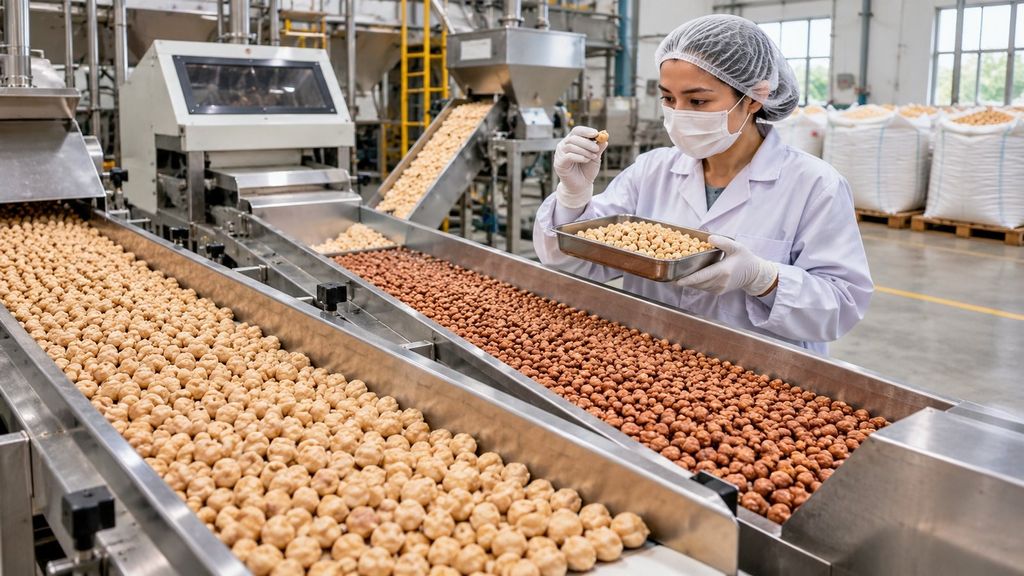
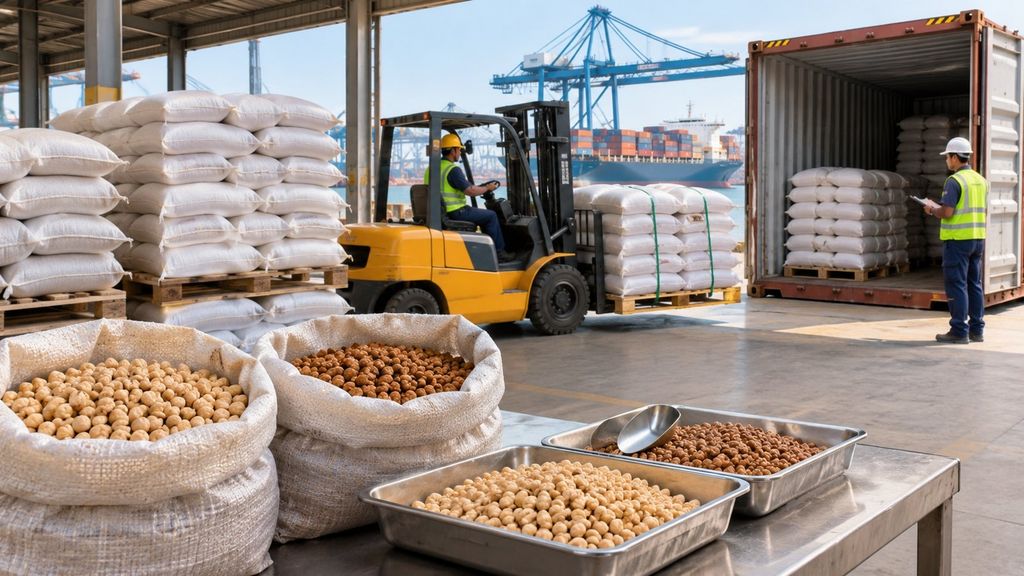
Buyers should check size, cleanliness, moisture and visible defects against an agreed specification.
Which Suppliers Should You Contact for Your Buying Needs?
For the current public evidence, two chickpea suppliers meet the Trust Stars above 4/5 threshold and have a product listing with useful specifications. They are therefore reasonable leads to contact, but each still needs its lot details confirmed before a contract.
BF Global Trading (Pty) Ltd, South Africa. Best documented fit in this group for buyers seeking clearly stated cleanliness and defect limits, plus more than one seed size and bulk packaging. Confirm actual lot origin, crop year, selected grade and current availability before contract.
Agrocarte Exim Enterprises Pvt Ltd, India. Potential fit for smaller trial orders or buyers needing Kabuli Chana in conventional 25/50 kg bags. Require a numerical moisture specification and written confirmation of the exact trade and payment terms, shipment origin and destination-market compliance.
Balingi Trading Company (Pty) Ltd, South Africa. Not prioritised for first outreach despite the trust score. Reconsider only after the seller confirms an active chickpea lot, complete specification, quantity, packing, current terms and a realistic response channel.
Trust Stars and product reviews
Trust Stars evaluate platform trust signals such as account activity, profile completeness, listing quality, certifications and responsiveness. They are not the same as a product’s review score. Read how Freshdi Trust Stars work before relying on the rating shown on a profile.
How Freshdi Helps Buyers Find Suitable Suppliers
Step 1. Search Freshdi for Chickpeas, then open the individual Kabuli or Desi listing. Check the supplier’s Trust Stars, verification information and current activity before comparing product claims.
Step 2. Send the same specification to every candidate: variety, size basis, moisture, purity, defect limits, crop year, quantity, bag format, destination, required documents and target shipment date.
Step 3. Ask for a representative sample and batch-specific COA. For hummus or canned foods, perform a cooking test; for dal or flour, run a processing trial before committing to commercial volume.
Step 4. Compare landed cost, not only the headline price. Align Incoterm, named port, freight, insurance, inspection, import duties and local handling so the quotations are commercially comparable.
What Should Buyers Verify Before Contacting a Supplier?
- Supplier identity, business documents and active account status.
- Trust Stars and review count, keeping Trust Stars separate from product ratings.
- Actual country of origin, crop year, lot code and quantity available for shipment.
- Kabuli or Desi type, size basis, moisture test method, purity and defect tolerances.
- Food-safety, residue and phytosanitary documents required by the destination market.
- Bag material, liner, net weight, container cleanliness, loading photos and agreed inspection rights.
- Written payment milestones, named port, Incoterm version, claims procedure and bank-account ownership.
Supplier data and Freshdi marketplace figures in this guide were reviewed on 5 November 2026. Supplier specifications are listing information, not independent laboratory results or a guarantee of current stock. Confirm all details directly before purchasing.
Discover suppliers on FreshdiPost Your Buying Request
Frequently Asked Questions
How are chickpeas classified in international trade?
Chickpeas are edible pulse seeds from the legume species Cicer arietinum. International suppliers commonly offer whole dried seeds, while processors may also buy split chickpeas, canned or cooked product, or chickpea flour. Buyers should identify the required variety and form in the RFQ, because a whole-seed order, a split-dal order and a flour order have different processing and quality requirements.
How do Kabuli and Desi chickpeas differ in commercial use?
Kabuli chickpeas are generally larger and pale cream or beige, making them common in hummus, canned chickpeas, salads, ready meals and retail whole-pulse packs. Desi chickpeas are usually smaller and darker, and are often split into chana dal or milled into besan (gram flour). Their seed size, skin and cooking behaviour differ, so buyers should not treat the two types as interchangeable.
Can Kabuli and Desi chickpeas be substituted in the same product?
Not automatically. Their size, skin, colour and cooking characteristics differ, so changing the variety can affect texture, appearance, cooking time and processing yield. A hummus or canning factory should run a sample test before substituting Desi for Kabuli. A mill should also check splitting and flour performance instead of assuming that all chickpeas will produce the same result.
Which chickpea specifications matter most for bulk importers?
Start with variety, form, size basis and crop year. Then specify maximum moisture, minimum purity and limits for foreign matter, admixture, damaged grains, discolouration, insect damage and broken seeds. Packaging, net weight, liner, destination documents, inspection method and shipment window also matter. Ask for a lot-specific COA or independent inspection report tied to the exact goods being offered.
How should buyers test chickpeas for hummus, canning or milling?
Use a representative sample from the lot under consideration. Hummus and canning buyers should assess hydration, cooking time, skin separation, texture and intact-seed appearance. Mills should evaluate dehulling, splitting yield and flour behaviour. Agree the sample size, test method and acceptance range with the supplier before shipment, and retain a sealed reference sample linked to the lot number.
Is a supplier with Trust Stars above 4 automatically a safe choice?
No. Trust Stars are a useful Freshdi platform signal, but they do not replace product inspection, document checks, sample approval or a signed contract. Review count and seller responsiveness also matter. Confirm whether the offered lot meets your specification, whether the company receiving payment is the contracting party, and whether the destination’s import rules can be satisfied.