
Introduction
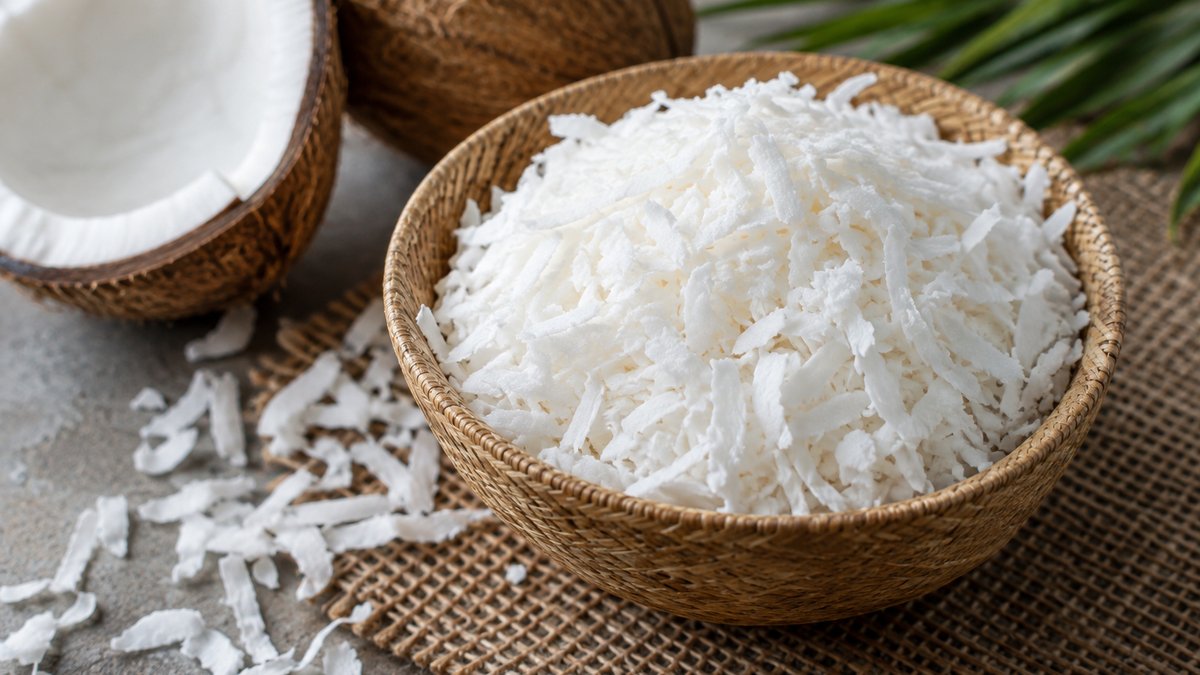
The latest public export quotations located for desiccated coconut in November 2026 are origin benchmarks, not prices delivered to Australia. On 9 November, TM Duché & Sons reported Philippine quotations of US$1.09 to US$1.90 per pound FOB, with an average seller quotation of US$1.3517 per pound. The International Coconut Community (ICC) reported Indonesia’s fine, high-fat product at US$1,925 per metric tonne FOB on 7 November.
This update covers those dated November quotations and the most recent comparison periods available in the cited sources. It separates export prices from Australian import costs: the sources reviewed did not provide a November Australia-specific landed or wholesale quotation. Importers should treat the origin figures as reference points and obtain current offers against a matching specification and delivery basis.
Key Takeaways
- TM Duché & Sons reported Philippine desiccated coconut quotations at US$1.09 to US$1.90/lb FOB on 9 November 2026; its average quotation was US$1.3517/lb.
- ICC reported Indonesian fine, high-fat desiccated coconut at US$1,925/MT FOB on 7 November 2026. The product specification differs from the broad Philippine quotation range, so the figures are not a like-for-like price ranking.
- The Philippine quotation range was reported unchanged for 38 consecutive weeks as of 9 November, while its average quotation was 21.6% below the October 2025 comparison cited by TM Duché & Sons.
- The latest destination-specific price series located here does not establish a delivered Australian price. Freight, insurance, packaging, quality, currency and import-side charges affect the cost to an Australian buyer.
- Australian buyers should request comparable quotes with grade, particle size, fat content, moisture, packaging, quantity, shipment date and Incoterm stated.
1. Desiccated Coconut Market Overview
Australia is an import market for desiccated coconut, and its buying cost depends on origin offers plus shipment and destination expenses. ICC’s trade table, based on UN Comtrade and marked preliminary, records 5,273 metric tonnes of Australian imports in January to March 2025. That is a three-month figure, not a full-year total or a measure of November 2026 demand.
The ICC’s June 2026 market review describes the global desiccated coconut market as being in a correction phase after the price surge of 2024 and early 2025. Its review also notes differing export performances between the Philippines and Indonesia, indicating that supply conditions were not identical across origins. These broader developments help frame current offers, but they do not establish the price an Australian buyer will pay.
The latest dated price sources used here cover Philippine export quotations on 9 November and an Indonesian FOB benchmark on 7 November 2026. They provide origin-level reference prices, not Australian customs values, wholesale prices or supplier offers made specifically to an Australian buyer. Buyers should keep those measures separate when budgeting.
Looking to Source Desiccated Coconut?
Connect with verified suppliers, discover matching products, and explore sourcing opportunities from global markets.
2. Latest Desiccated Coconut Export Prices
2.1 Current export benchmarks relevant to Australian buyers
The newest dated public quotation found for the Philippines is from 9 November 2026. TM Duché & Sons reported a range of 109 to 190 US cents per pound FOB Philippines and an average seller quotation of 135.17 cents per pound. FOB, or free on board, means the quoted basis covers the goods through loading aboard the vessel at the named port; the buyer’s ocean freight, insurance and Australian import-side costs are not included.
On 7 November 2026, ICC listed Indonesian desiccated coconut, fine and high fat, at US$1,925/MT FOB. This is a distinct product specification and a single reported benchmark. The Philippine range does not specify an equivalent grade in the quoted summary, so comparing its upper or lower end directly with Indonesia’s figure would be misleading.
The Philippine average quotation was 21.6% below the October 2025 comparison in the same market update. TM Duché & Sons also said the published quotation range had remained unchanged for 38 consecutive weeks as of 9 November 2026. A stable range does not mean every transaction price stayed fixed: actual offers can differ by grade, fat content, particle size, quantity, packaging, shipment timing and seller.
2.2 Price comparison by exporting origin
The two November benchmarks offer a view of prices at origin, but they are not a matched-origin comparison. The Philippine source reports a broad range and average in cents per pound; the ICC figure identifies an Indonesian fine, high-fat specification in US dollars per metric tonne. Buyers should obtain matched specifications and quote terms from exporters before using either figure to assess competitiveness.
For historical context, ICC’s October 2026 weekly table recorded Indonesian fine, high-fat product at US$1,950/MT FOB on 24 October. The ICC figure of US$1,925/MT on 7 November is US$25/MT lower, or about 1.3% below that earlier reported level. This comparison applies to the same stated Indonesian specification and FOB basis, though it compares two dated weekly observations rather than a continuous series.
2.3 What the November price movement says
The November evidence points to a steady Philippine published quotation range and a modestly lower Indonesian weekly benchmark than the 24 October figure. It does not establish a common downward trend across all origins or product grades. Philippine domestic raw-material prices and export quotations can move differently, as TM Duché & Sons noted in its 9 November update; buyers should therefore confirm offer validity and shipment availability rather than assume an unchanged benchmark guarantees a fixed supply price.
3. Why Are Desiccated Coconut Export Prices Changing?
Raw coconut availability and competing uses affect the cost base for desiccated coconut processors. TM Duché & Sons reported rising Philippine domestic desiccated coconut prices in its 9 November 2026 update, alongside stable international export quotation levels. The same update noted firmer local copra prices. These observations suggest cost pressure at origin, but they do not quantify how much of that pressure has passed into any particular export offer.
Harvest and weather conditions can influence coconut supply with a lag because palms need time to flower and develop fruit. The ICC’s June 2026 review describes a market correction after the earlier price surge and different recovery patterns in producing countries. Buyers can use these reports as context for supplier conversations, but should ask for current stock, production schedule and quote validity rather than treating a weather outlook as a confirmed supply loss.
Demand from food manufacturers and importers also affects the market, but the sources cited here do not provide a November Australia-specific order count or consumption forecast. An exporter’s general market commentary is not the same evidence as a confirmed buyer order. Australian buyers should check whether a supplier’s quoted quantity is available for the requested shipment window.
Currency and logistics change the Australian buyer’s effective cost even when the FOB offer is unchanged. A quotation in US dollars exposes the buyer to exchange-rate movement, while freight, insurance, port charges and delivery arrangements add costs beyond the export price. A comparison should use the same currency, quantity, specification, shipment period and delivery basis.
4. Which Countries Import the Most Desiccated Coconut?
4.1 Major global importing markets
ICC’s trade table based on UN Comtrade identifies the United States, Benin, the Netherlands, Singapore and China among the leading import destinations in its 2025 preliminary column, which covers January to March rather than the full year. The table reports 9,491 MT for the United States, 7,416 MT for Benin, 7,246 MT for the Netherlands, 5,845 MT for Singapore and 4,517 MT for China in that partial period. These figures are not a complete calendar-year ranking.
Australia recorded 5,273 MT in the same January to March 2025 preliminary column. That is historical destination evidence, not a current forecast or a measure of Australian demand in November 2026. Importers should use it to understand the market’s trade context, not to estimate current stock or purchase timing.
The available ICC table gives Australia’s import total but does not identify supplier-country shares in the figures cited here. This update therefore does not rank Australia’s origins or assign market shares. Buyers can ask each exporter to state the producing country, processing site and shipment origin in its quotation and shipping documents.
4.2 Market opportunities for exporters
The partial-year import figures show that Australia is a material destination in the ICC table, while the November price sources describe export benchmarks from producing origins. Neither source confirms a particular buyer requirement. Exporters assessing Australia should confirm the buyer’s grade, packaging, quantity, delivery location and import documentation needs before preparing an offer.
5. Where Can Buyers Source Desiccated Coconut at a Competitive Price?
Buyers should compare the delivered cost of matching product offers, not just the lowest FOB number. The November Philippine and Indonesian figures differ in units and stated specifications, so neither alone proves which origin is cheaper for an Australian order. Ask suppliers to quote against one specification and shipment schedule.
- Product form and grade: specify fine or medium particle size, flakes or chips, and any required quality grade.
- Fat content and moisture: state target values and permitted tolerances in the purchase specification.
- Packaging: give bag material, net weight, liner requirements and whether palletizing is required.
- Quantity and shipment timing: request an offer for the same volume and loading window from each supplier.
- Delivery basis: distinguish FOB from CFR, which includes cost and freight to the named destination port, and CIF, which also includes marine insurance. Confirm the named port and applicable Incoterms version in the contract.
- Landed-cost components: add ocean freight, insurance, import charges, local handling and inland transport as applicable.
- Quote terms: record currency, validity date, payment terms, inspection arrangements and documents included.
Australia’s Customs Tariff Act lists tariff item 0801.11.00 for desiccated coconuts with a free rate of duty in the compilation dated 4 July 2026. That tariff line does not establish every other import condition or charge. Buyers should confirm the applicable classification and current import requirements for their exact product and shipment before signing a contract.
Buying consideration: For a useful comparison, request offers on the same product specification and destination basis, then calculate landed cost using current freight and insurance figures. Keep the supplier’s FOB price separate from any Australian duty or other import-side costs.
6. What Does the Latest Demand Look Like on Freshdi?
Freshdi’s product-category pages give buyers and suppliers a place to check current category listings and buying requests. Those platform listings represent activity on Freshdi; they are not a substitute for customs statistics or a measure of total Australian demand. Buyers should verify each request’s current status and match the stated specifications before preparing a quotation.
For desiccated coconut, the useful details to compare include the requested origin, grade or particle size, quantity, destination, packaging and delivery term. Suppliers can use those stated requirements to decide whether an offer is a fit. A request should be treated as an inquiry, not as a confirmed purchase order.
7. What Should Buyers and Suppliers Do Next?
7.1 For buyers and importers
- Write one specification sheet covering product form, grade, particle size, fat content, moisture, packaging and quantity.
- Ask suppliers from competing origins to quote that same specification for the same shipment window and Australian destination.
- Separate FOB cost from freight, insurance, port charges, inland delivery and applicable import costs.
- Confirm samples, inspection method, certificate and document requirements with the supplier and relevant authorities before shipment.
- Compare quote currency, payment terms, shipment schedule and validity date alongside the landed-cost calculation.
7.2 For exporters and suppliers
- State origin, product grade, particle size, fat content, moisture and packaging in the offer.
- Specify quantity available, loading port, Incoterm, currency and quotation validity period.
- Give buyers a shipment schedule and identify which documents are included in the offer.
- Update pricing when raw-material, freight or currency conditions change, and distinguish an indicative benchmark from a firm quotation.
- Review relevant buying requests and respond with a quotation that addresses the buyer’s stated destination and specification.
8. How Freshdi Helps Buyers and Suppliers Connect
Buyers can use Freshdi’s category pages to review potential supplier listings and describe their sourcing requirements. Suppliers can review relevant buying requests and assess whether their product and shipment terms match the buyer’s stated needs. Any listing or request still requires direct confirmation of specifications, availability and commercial terms.
Australian buyers comparing available listings can start with the Desiccated Coconut supplier category, while suppliers can review the Desiccated Coconut buying-request category.
Buyers and suppliers ready to compare current category activity can review the relevant Freshdi pages.
View Latest Fruit Buying Requests →View Potential Fruit Suppliers →
9. Desiccated Coconut Market Outlook for Australian Buyers
The latest dated November references found for this update put Philippine export quotations at US$1.09 to US$1.90/lb FOB on 9 November and Indonesian fine, high-fat product at US$1,925/MT FOB on 7 November 2026. The Philippine range was reported unchanged for 38 weeks, while the Indonesian benchmark was below the ICC’s 24 October figure. These observations describe origin quotations, not a delivered Australian price.
For Australian buyers, the next decision is to obtain offers with matched specifications and shipment terms, then calculate the landed cost. Exporters should state grade, quantity, port and quote validity clearly. Freshdi can be used to review relevant supplier listings and buying requests, alongside direct checks of the product and commercial terms.
Readers preparing a sourcing inquiry or reviewing supplier options can check current Freshdi category activity.
View Latest Fruit Buying Requests →View Potential Fruit Suppliers →
Frequently Asked Questions
What is the latest desiccated coconut export price relevant to Australian buyers?
The latest dated public figures located were the Philippines range of US$1.09 to US$1.90/lb FOB, reported on 9 November 2026, and Indonesia’s fine, high-fat benchmark of US$1,925/MT FOB, reported by ICC on 7 November. They are origin benchmarks, not Australian delivered prices.
What was the Philippine desiccated coconut price in November 2026?
TM Duché & Sons reported a 9 November 2026 quotation range of 109 to 190 US cents/lb FOB Philippines and an average seller quotation of 135.17 cents/lb. Confirm grade, quantity, packaging and offer validity with the supplier before budgeting.
Why do desiccated coconut prices differ between origins?
Offers can differ by grade, particle size, fat content, moisture, packaging, quantity, shipment date and delivery basis. The November Philippine range and Indonesian fine, high-fat benchmark do not state identical specifications, so they should not be treated as a like-for-like comparison.
Which countries imported the most desiccated coconut?
ICC’s preliminary January to March 2025 figures list the United States, Benin, the Netherlands, Singapore and China among the leading destinations. Australia recorded 5,273 MT in that same partial-year column. These figures are not full-year totals or a November 2026 demand ranking.
How should an Australian buyer compare FOB and CIF prices?
FOB covers the goods through loading aboard the vessel at the named port. CIF includes cost, freight and marine insurance to the named destination port. Compare quotations for the same specification, quantity and shipment timing, then account for applicable charges and inland delivery to calculate the buyer’s full landed cost.
References
1. TM Duché & Sons – Global Coconut Market Update 9 November 2026, 9 November 2026.
2. International Coconut Community – Latest Coconut Product Prices, 7 November 2026.
3. International Coconut Community – Prices of Coconut Products (US$/MT), October 2026, October 2026.
4. International Coconut Community – Market Review of Desiccated Coconut, June 2026, June 2026.
5. International Coconut Community – Quarterly Bulletin, Table 31: World Imports of Desiccated Coconut, 2025 preliminary data; bulletin published 2026.
6. Australian Government, Federal Register of Legislation – Customs Tariff Act 1995, Schedule 3, tariff item 0801.11.00, Compilation dated 4 July 2026.
Disclaimer: This article is compiled from platform data, public sources and information provided by third parties, for general informational purposes only. We do not guarantee its accuracy or completeness. Prices, volumes and forecasts are indicative, reflect conditions as of 2026-11-16 and may change without notice. This is not financial, investment or trading advice.