
Introduction
The latest published prices located for this 15 November 2026 update are export quotations from the Philippines dated 9 November and European spot-market indications reported in November. They provide useful reference points for French buyers, but neither is a France-specific delivered quotation.
T.M. Duché reported Philippine desiccated coconut at US$1.09 to US$1.90 per pound FOB, with the range unchanged for 38 consecutive weeks. European FCA Netherlands indications put high-fat, fine Philippine product at €2,750 per metric tonne. The figures use different bases and specifications, so buyers should compare them only after confirming grade, delivery terms and destination costs.
Key Takeaways
- T.M. Duché’s 9 November 2026 report put Philippine desiccated coconut at US$1.09 to US$1.90/lb FOB. The range had held for 38 consecutive weeks; the report did not give a France-specific quotation.
- A November European spot-market report listed FCA Netherlands indications of €2,750/MT for high-fat, fine Philippine product, €2,500/MT for high-fat, fine Indonesian product and €2,000/MT for high-fat, medium Vietnamese product.
- The European figures differ by origin and specification. They are market indications, not equivalent offers or delivered prices in France.
- The International Coconut Community’s October 2026 weekly table showed Indonesia’s FOB price for fine, high-fat desiccated coconut rising from US$1,825/MT on 3 October to US$1,950/MT on 24 October. Its Philippines FOB series had no quote for 24 October.
- France-bound buyers should request matching specifications and delivery bases, then add freight, insurance and destination charges before comparing offers.
1. Desiccated Coconut Market Overview
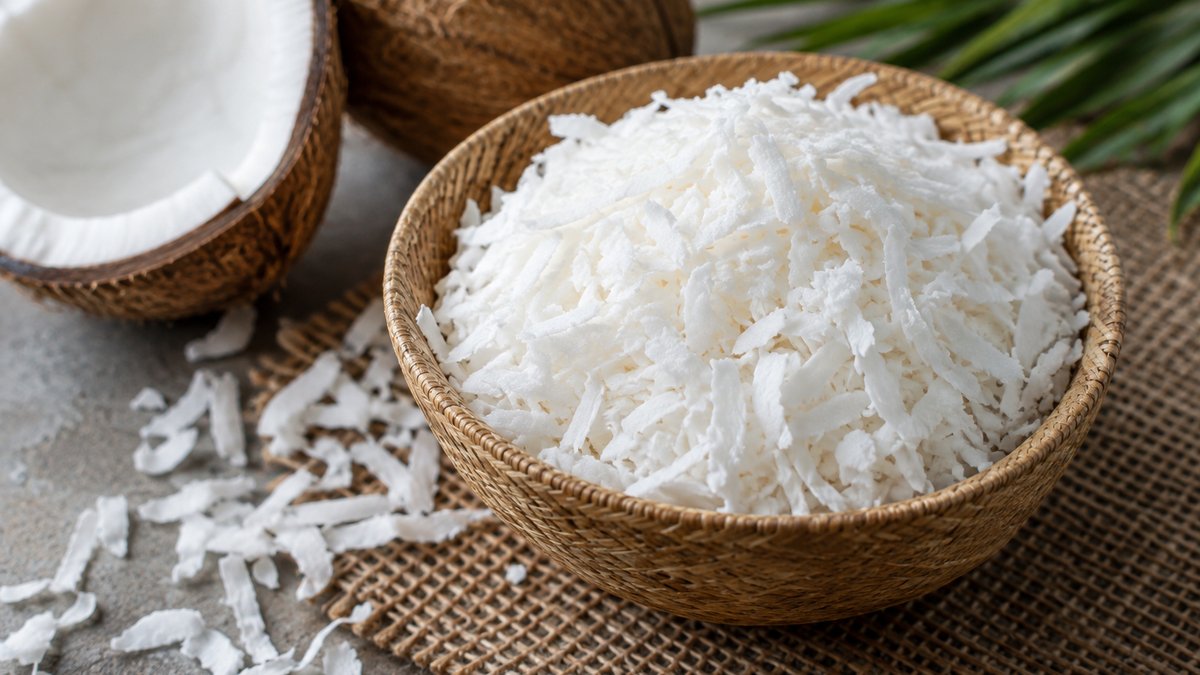
France is an established European market for desiccated coconut, with demand from food manufacturers, bakeries and confectionery producers. Buyers often source through European trading and distribution hubs as well as from producing countries. The most relevant current price evidence is therefore a European spot indication and an origin-level export quotation, not a single French market price.
The International Coconut Community’s October 2026 price bulletin lists origin-level quotations for desiccated coconut and notes prices from coconut associations and industry sources. Its weekly figures show different movements by origin and specification. The series does not provide a France-delivered price, which depends on the shipment, delivery basis and destination charges.
Production and export availability are concentrated in tropical producing countries, including the Philippines, Indonesia, India, Sri Lanka and Vietnam. European buyers also purchase through intermediary markets. The source and product specification should be checked on each offer because a European delivery point does not, by itself, establish where the product was grown or processed.
European demand comes from food businesses that use coconut in bakery, confectionery and other processed foods. Product requirements can differ by application. Fine and medium cuts, fat content, moisture, microbiological criteria, packaging and allergen controls should be agreed before an importer compares prices.
Weather and logistics are current watchpoints. A November 2026 market report cited supply concerns related to El Niño and described international freight rates as lower than recent levels but still above the comparable period a year earlier. These are reported market conditions, not proof of a specific future production loss or a guaranteed freight-cost change.
Looking to Source Desiccated Coconut?
Connect with verified suppliers, discover matching products, and explore sourcing opportunities from global markets.
2. Latest Desiccated Coconut Export Prices
2.1 Current Export Price Relevant to France

The latest dated Philippine export range located for this update was US$1.09 to US$1.90/lb FOB, reported by T.M. Duché on 9 November 2026. FOB means the seller’s price covers delivery of the goods on board at the named port; the buyer arranges and pays for the onward carriage and insurance. The report said the range had remained unchanged for 38 consecutive weeks.
That broad range is not a quote for one uniform grade, nor a delivered price for France. A buyer should request the seller’s exact cut, fat content, quality limits, packaging, quantity, loading port and shipment window. Without those details, the endpoints cannot be treated as competing offers for the same product.
A recent European spot-market report gave the following FCA Netherlands indications. FCA means the seller delivers the goods to the named place, where the buyer takes responsibility for onward transport. The Netherlands is a European reference point, not the French delivery location.
The table is not a like-for-like origin comparison: the Vietnamese indication is for medium cut, while the other two are for fine cut. The report describes market indications rather than firm offers, and the FCA Netherlands basis does not include onward delivery to a French buyer’s premises.
2.2 Price Comparison by Exporting Origin
A single contemporaneous comparison requires matching product specifications and delivery terms. The November European indications compare three origins, but the Vietnamese product has a different cut. The latest available Philippines FOB range also lacks a specification-matched France destination basis.
The International Coconut Community’s October 2026 table provides a separate origin-price reference. Indonesia’s FOB fine, high-fat quotation was US$1,825/MT on 3 October, US$1,900/MT on 17 October and US$1,950/MT on 24 October. The Philippines was listed at US$2,980/MT on 3, 10 and 17 October, with no quote on 24 October. These origin-level figures should not be directly compared with FCA Netherlands indications: the currency, date, delivery basis and level of specification differ.
2.3 Price Trend and Changes
The Philippine quotation range reported on 9 November had not changed for 38 consecutive weeks. That describes the published range, not a stable price for every grade or transaction. The report also said the average seller quotation was about 21.6% below its October 2025 comparison; this average and the wide quotation range are separate measures.
Indonesia’s ICC-listed fine, high-fat FOB quotation rose by US$125/MT between 3 and 24 October 2026. The Philippine table price remained at US$2,980/MT through 17 October, then showed no quote for 24 October. A missing quote is not evidence that the price stayed unchanged or moved.
3. Why Are Desiccated Coconut Export Prices Changing?
Desiccated coconut prices reflect the cost and availability of mature coconuts, processing, export logistics and buyer demand. Those factors do not affect every origin or grade at the same time.
3.1 Domestic supply, harvests and inventory
The November market report cited rising input-cost pressure for desiccated coconut manufacturers and warned that weather developments could affect future supply. T.M. Duché’s unchanged Philippine quotation range alongside those cost concerns shows that raw-material pressure does not immediately translate into a new published export range. The report does not establish how much any individual supplier’s production cost changed.
3.2 International buyer demand
Demand for a specific grade can affect availability and offer timing. Philippine quotations cover a broad range and the report does not identify a France-specific order book or tender. French buyers should confirm whether an offer is for prompt shipment or a later contract period rather than treating a general export range as a confirmed sale.
3.3 Export policies and trade requirements
The price sources used here do not identify a new export restriction affecting desiccated coconut shipments to France. Importers should check the current requirements that apply to their product and shipment, including food-safety documentation and customs classification, before contracting.
3.4 Weather and climate conditions
The November market report cited El Niño as a supply risk for the coming year. A weather risk is not a confirmed crop loss. Buyers can monitor later crop reports and supplier availability, while keeping any weather-related premium separate from a confirmed offer price.
3.5 Currency, freight and competition
FOB prices and FCA European indications use different currencies and delivery points. Exchange rates, freight, insurance and inland transport can change the cost comparison for a French buyer. European market reports also noted that freight levels remained above the comparable year-earlier period, so a commodity-price comparison alone does not establish the final landed cost.
4. Which Countries Import the Most Desiccated Coconut?
4.1 Major Global Importing Markets
The International Coconut Community’s quarterly bulletin reports desiccated coconut imports using UN Comtrade data under HS 080111. Its 2025 provisional table lists France in 17th place, with imports of 5,474 tonnes. The figure is a national customs import measure for the stated product code, not a current price or a measure of confirmed buyer demand.
That dataset provides a dated reference for France’s place in global trade, but it should not be treated as a forecast. Import rankings can change as reporting countries revise data and as annual shipments are recorded.
4.2 Main Export Destinations of France’s Suppliers
France sources desiccated coconut through both producing countries and European distribution channels. The European Commission’s CBI market study identified the Philippines, Indonesia and Sri Lanka among France’s direct supplying origins in its reporting period. The study also noted that some French traders sourced through the Netherlands and Germany. Those findings describe the study period and should not be read as a 2026 supplier-share ranking.
4.3 Market Opportunities for Exporters
France’s reported imports indicate an existing market, while the November FCA Netherlands indications give buyers a nearby European reference point. An exporter assessing France should confirm the buyer’s intended use, cut, fat content, packaging, food-safety requirements and delivery point before preparing a quotation. National import volumes and price reports do not confirm that a particular buyer is seeking product.
5. Where Can Buyers Source Desiccated Coconut at a Competitive Price?
Buyers should compare offers on a common specification and delivered-cost basis. The November FCA Netherlands indication for Philippine fine, high-fat product is a European market reference; the Philippine FOB quotation is an origin-level range. One cannot be substituted for the other without adding the costs and obligations between the named delivery points.
- Set the product specification: fine or medium cut, fat content, moisture limit, microbiological criteria and other agreed quality tolerances.
- Ask for the same quantity, packaging and shipment window from each supplier. Include the loading port and country of origin.
- Compare offers on the same Incoterm and named place. For FOB, add main carriage, insurance and destination charges. For FCA Netherlands, add onward freight and handling to the French delivery point.
- Check applicable French and EU import requirements, customs classification and required shipment documents for the exact product.
- Confirm the quotation’s validity, availability, payment terms and inspection arrangements before budgeting.
Buying consideration: A French importer can compare the November market references with supplier offers only after normalizing currency, grade, quantity, delivery basis and shipment date. Ask each supplier to quote the same specification and destination, then calculate the total landed cost.
6. What Does the Latest Demand Look Like on Freshdi?
No dated France-specific Freshdi buying-request snapshot is available for this update, so it is not possible to report a request count, buyer quantity or destination pattern. A platform request would show what a buyer stated in that request; it would not measure total French or global demand.
Buyers and suppliers can use Freshdi’s desiccated coconut category pages to review relevant product listings and buying requests. Check each listing or request for its current status and stated specifications before treating it as relevant to a sourcing decision.
7. What Should Buyers and Suppliers Do Next?
7.1 For Buyers and Importers
- Request current prices against a written grade, cut, fat content, packaging, quantity and shipment schedule.
- Compare FOB, FCA and other delivery terms only after identifying the named port or place and who pays each transport cost.
- Calculate the expected cost to the French delivery point, including freight, insurance, handling and applicable import charges.
- Confirm food-safety, documentation and quality requirements for the intended product and shipment.
- Ask suppliers to clarify quotation validity and product availability before relying on a price for procurement planning.
7.2 For Exporters and Suppliers
- State the product cut, fat content, quality parameters, packaging and available quantity on the offer.
- Name the loading port or delivery place, Incoterm, currency and quotation-validity period.
- Separate an indicative market reference from a firm quotation for a defined shipment.
- Keep product availability and shipment schedules current when responding to French buyers.
- Review relevant buying requests and tailor an offer only when the stated destination and specification match the product.
8. How Freshdi Helps Buyers and Suppliers Connect
Freshdi has product-category pages where buyers can review potential suppliers and suppliers can find relevant buying requests. Buyers should compare the stated product details against their specification; suppliers should check each request’s destination, quantity and terms before responding.
French buyers looking for desiccated coconut can review the product category and related supplier listings. Suppliers can review buying requests for the same product category.
Businesses comparing sourcing options can review relevant desiccated coconut requests and supplier listings on Freshdi.
View Latest Fruit Buying Requests →View Potential Fruit Suppliers →
9. Conclusion: France Desiccated Coconut Market Outlook
As of 15 November 2026, the latest located Philippine export quotation range was unchanged for 38 weeks, while a November European report listed distinct FCA Netherlands indications by origin and cut. These are useful reference points, but neither establishes a delivered price for France.
Buyers should match specifications and delivery terms before comparing offers, then calculate the cost to the French destination. Suppliers should quote a defined grade, quantity, shipment period and basis. Freshdi’s desiccated coconut pages let buyers review potential suppliers and suppliers review relevant buying requests.
Buyers ready to compare product listings can review potential desiccated coconut suppliers on Freshdi.
View Related Suppliers for This Product →
Frequently Asked Questions
What is the latest desiccated coconut price relevant to France?
T.M. Duché reported Philippine desiccated coconut at US$1.09 to US$1.90/lb FOB on 9 November 2026. A November European spot report listed €2,750/MT for high-fat, fine Philippine product on an FCA Netherlands basis. Neither figure is a France-specific delivered quotation.
Why do desiccated coconut prices differ between exporting countries?
Prices can differ by cut, fat content, quality, origin, shipment timing and delivery basis. The November European indications were €2,750/MT for high-fat, fine Philippine product, €2,500/MT for high-fat, fine Indonesian product and €2,000/MT for high-fat, medium Vietnamese product. Because the Vietnamese cut differs, those figures are not a fully equivalent product comparison.
What affects desiccated coconut price movements?
Raw coconut costs, processing, supply availability, buyer demand, freight and currency can affect quotations. A November 2026 market report cited input-cost pressure and El Niño-related supply concerns, but did not establish a specific future price change.
Which countries import the most desiccated coconut?
The International Coconut Community’s 2025 provisional UN Comtrade-based table places France 17th, at 5,474 tonnes under HS 080111. That is a provisional annual trade figure, not a live measure of buyer demand.
How should a buyer compare FOB and FCA prices?
FOB covers the seller’s delivery of the goods on board at the named port; the buyer arranges the main carriage. FCA means delivery at the named place to the buyer’s carrier. Add the onward costs to the same French delivery point before comparing offers.
How can buyers find desiccated coconut suppliers on Freshdi?
Buyers can review the desiccated coconut supplier category on Freshdi and compare the product information suppliers state. Confirm the current offer, specification, quantity and delivery terms directly through the relevant marketplace listing.
References
1. T.M. Duché & Sons – Global Coconut Market Update 9 November 2026, 2026-11-09.
2. Mundus Agri – Desiccated coconuts: stable export prices despite rising costs, 2026-11-10.
3. International Coconut Community – Prices of Coconut Products (US$/MT), October 2026, 2026-10.
4. International Coconut Community – Quarterly Bulletin, Table 31: World Imports of Desiccated Coconut, 2025.
5. Centre for the Promotion of Imports from developing countries – The European market potential for desiccated coconut, 2023.
Disclaimer: This article is compiled from platform data, public sources and information provided by third parties, for general informational purposes only. We do not guarantee its accuracy or completeness. Prices, volumes and forecasts are indicative, reflect conditions as of 2026-11-15 and may change without notice. This is not financial, investment or trading advice.