
Introduction
On 9 November 2026, a published market update put Philippine desiccated coconut quotations at US$1.09 to US$1.90 per pound FOB, with an average seller quotation of US$1.3517 per pound. The quoted range had held for 38 consecutive weeks, while the average was 21.6% below the October 2025 comparison cited in the same report.
These are Philippine export indications, not a Germany-specific landed quotation. This update uses the latest dated quotation located by 13 November 2026, alongside European customs and import data, to show what buyers and suppliers should compare before agreeing a shipment.
Key Takeaways
- A 9 November market update reported Philippine desiccated coconut at US$1.09 to US$1.90/lb FOB. Its average seller quotation was US$1.3517/lb, approximately US$2,981/MT.
- The published quotation range was unchanged for 38 consecutive weeks; the reported average was 21.6% below the October 2025 comparison. The range is wide and does not describe one grade-specific offer.
- For January 2022 to March 2026, Eurostat-based EU data showed weighted import unit values of €2.31/kg for Philippine product, €2.15/kg for Indonesian product and €2.75/kg for Sri Lankan product. These are historical customs values, not current offers.
- Germany accounted for 21.7% of EU desiccated coconut imports by value in the January 2022 to March 2026 dataset. The Netherlands was the largest EU importer, at 42.5%.
- Buyers should compare matching grade, particle size, moisture, packaging and delivery basis, then add freight, insurance and destination costs before judging an offer.
1. Desiccated Coconut Market Overview
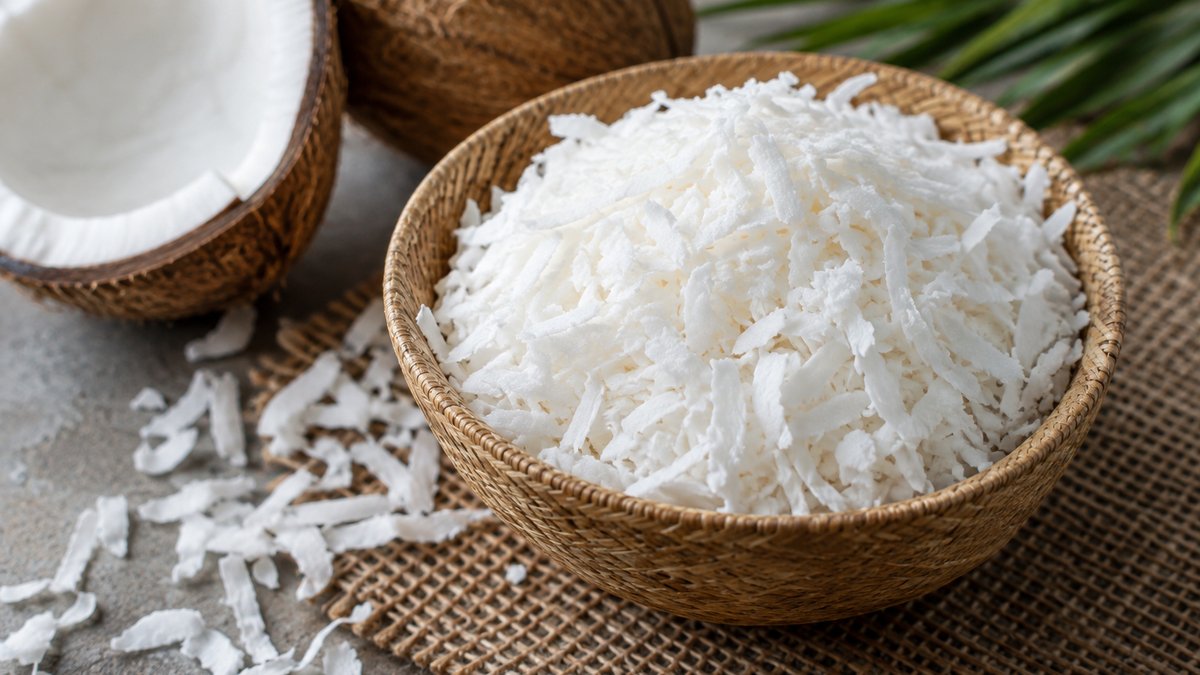
Europe is a large destination market for desiccated coconut used in bakery and confectionery. The Centre for the Promotion of Imports from developing countries (CBI), using Eurostat and ITC Trade Map data, reports that European imports reached 121,000 tonnes worth €245 million in 2024. The Philippines and Indonesia were the leading suppliers, followed by Sri Lanka, Malaysia, Ghana and India.
Germany is a substantial part of that market. Eurostat COMEXT data summarized by The Trade Hub for January 2022 to March 2026 puts Germany at 21.7% of EU desiccated coconut imports; the Netherlands accounted for 42.5%. Those figures describe EU trade over a multi-year period, not German orders in November 2026.
Supply conditions have shifted since the unusually high prices of 2024 and early 2025. The International Coconut Community’s June 2026 review says prices in its reported market series fell across the Philippines, Indonesia and Sri Lanka between January and May 2026, as coconut availability improved and buying interest softened. Its review also says prices remained above levels recorded in 2023 and most of 2024.
For Philippine exporters, destination demand and export volume need separate attention. The United Coconut Association of the Philippines reported 167,683 tonnes of desiccated coconut exports in 2025, compared with 170,453 tonnes in 2024, while export earnings rose 76.4% to US$522.071 million. The association attributed the earnings increase to a 79.3% rise in traded price, reporting US$3,113.43/MT FOB for 2025. Annual export data is not a current offer or a Germany-specific price.
Looking to Source Desiccated Coconut?
Connect with verified suppliers, discover matching products, and explore sourcing opportunities from global markets.
2. Latest Desiccated Coconut Export Prices
2.1 Current Philippine export price
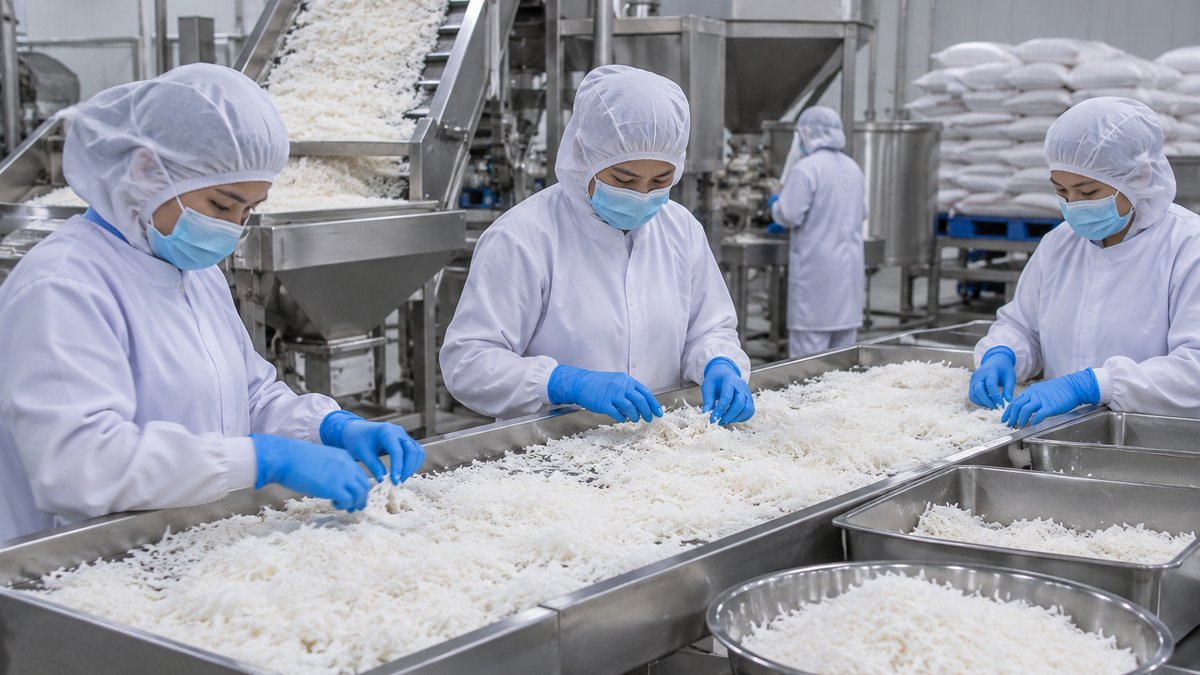
The latest dated public quotation located for this update is from 9 November 2026. TM Duché & Sons reported Philippine export quotations at US$1.09 to US$1.90/lb FOB and an average seller quotation of 135.17 US cents/lb. At the average, that is about US$2,981/MT after converting pounds to metric tonnes. FOB, or free on board, means the stated export price covers the goods through loading aboard the vessel at the named port; it does not include the buyer’s ocean freight, insurance or German import-side costs.
The report says the published range had not changed for 38 consecutive weeks. It also reports that the average quotation was 21.6% lower than its October 2025 comparison. The figures come from a market update reporting quotations, not completed sales. The range spans different commercial offers and should not be treated as a single price for every grade, specification or shipment.
2.2 Price comparison by exporting origin
A like-for-like historical comparison is available in EU customs data. For January 2022 to March 2026, The Trade Hub’s Eurostat COMEXT-based dataset reports weighted import unit values by supplying origin. These values are customs import value divided by quantity across the stated period. They are neither November 2026 spot prices nor quotations for identical grades.
The difference between these historical unit values does not establish which origin is cheapest for a particular German order. Customs averages cover shipments with different specifications, shipment dates, contract terms and costs. The November FOB range is a newer export quotation measure, so comparing it directly with a multi-year EU import unit value would mix dates and delivery stages.
2.3 Price trend and reporting limits
The November update points to a stable published range and a lower average quotation than its October 2025 comparison. The International Coconut Community’s June review provides a separate view of the first five months of 2026: its reported prices declined from January to May in the Philippines, Indonesia and Sri Lanka. The ICC figures and November weekly quotations come from different reporting series, so they should not be joined into one continuous price chart.
A buyer should request a current quotation for the required grade, order size, packaging, loading port and shipment window. Ask the supplier to confirm the quote’s validity date and whether it is an offer or an indicative market level.
3. Why Are Desiccated Coconut Export Prices Changing?
Supply recovery and buyer response help explain the softer 2026 price trend reported by the International Coconut Community. The ICC says prices declined between January and May as coconut availability improved and importers adjusted after the exceptional price increases of 2024 and early 2025. Its review does not establish that every grade or supplier had the same price movement.
Philippine export results show why price and volume should be read together. UCAP’s 2025 figures show lower desiccated coconut export volume than in 2024, but much higher earnings and a higher annual traded price. Export earnings can rise when prices rise even if shipped volume falls; they do not, on their own, measure current demand from Germany.
Raw material availability, harvest conditions and processor inventories can affect what factories can offer and when they can ship. The available market reports describe improved availability earlier in 2026 and continued domestic cost pressure in the Philippines later in the year. Those reports do not confirm a specific production loss or a guaranteed future price move.
International demand also depends on the buyer’s end use and purchase timing. CBI identifies bakery and confectionery as important European uses. A bakery ingredient buyer may specify particle size, fat content, moisture, colour and microbiological criteria differently from a buyer serving another application, so quotations should be compared against the same written specification.
Currency and logistics affect the amount paid after an FOB offer. An importer paying in euros for a US-dollar quotation faces exchange-rate exposure, while freight, insurance, port charges and inland transport change the landed cost. The November FOB quotation does not include those costs, and no current Germany-specific freight or exchange-rate amount is included here.
4. Which Countries Import the Most Desiccated Coconut?
4.1 Major importing markets
Within the EU, the Netherlands was the largest importer and Germany ranked second in the Eurostat COMEXT dataset for January 2022 to March 2026. The Netherlands accounted for 42.5% of EU imports and Germany for 21.7% over that period, according to The Trade Hub’s analysis of extra-EU and intra-EU trade. These are EU-level shares, not a global country ranking.
At the wider European level, CBI reports 2024 imports of 121,000 tonnes valued at €245 million. Its market overview identifies the Philippines and Indonesia as the leading suppliers, with Sri Lanka among the next main sources. The figures have a European scope and should not be read as Germany’s own import totals.
4.2 Philippine supply to Germany
The Philippines is the leading extra-EU supplier in the Eurostat-based EU data summarized by The Trade Hub. Its dataset for January 2022 to March 2026 reports €407.7 million in Philippine desiccated coconut imports across the EU and a 56.2% share of the listed third-country supply. This confirms the Philippines’ position in the wider EU market, but it does not establish Germany’s share of Philippine exports or a Germany-specific bilateral growth rate.
A current German import figure by origin and a Philippine export-destination ranking for the same period are not supplied by the cited market summaries. Buyers and exporters should therefore treat EU-wide supplier shares as context, not as proof of a particular German buyer’s demand.
4.3 What import demand means for exporters
Germany’s share of EU imports and the Philippines’ leading EU supplier position make the market relevant for Philippine sellers. They do not guarantee a sale. Exporters need to confirm that a German buyer’s grade, food-safety documentation, packaging and delivery schedule match the product and shipment they can supply.
5. Where Can Buyers Source Desiccated Coconut at a Competitive Price?
A competitive source is the one that meets the buyer’s specification at the lowest workable landed cost. The historical EU customs unit values in the origin comparison can help frame questions, but they are not supplier quotations. A lower average value for one origin does not prove that a current shipment from that origin will cost less.
- Write one specification for every supplier: grade, particle size, moisture, fat content, colour, microbiological limits, packaging and any other contractual requirement.
- Ask each supplier to quote the same quantity, shipment window, loading port and payment basis. Confirm whether the quotation is FOB, CFR or CIF. CFR means cost and freight to the named destination port, without insurance; CIF means cost, insurance and freight to that port.
- Compare like with like. Check whether the product is sweetened or unsweetened, sulphured or unsulphured, organic or conventional, and whether the requested grade is available in the stated quantity.
- Calculate landed cost by adding freight, insurance where applicable, destination port charges, customs duties or taxes, inspection and inland delivery. Confirm each cost with the relevant service provider or authority.
- Confirm the quotation validity, production lead time, shipment availability and documents before budgeting. A market quotation does not confirm that a supplier has stock or has reserved vessel space.
For a German delivery, compare a Philippine FOB quotation with another origin only after converting both to the same delivery basis and confirming the product specification. If a supplier quotes CIF, ask which destination port, freight period and insurance cover are included. A price in euros per kilogram is not directly comparable with a US-dollar-per-pound FOB offer until the unit, currency and delivery basis are normalized.
Buying consideration: Ask for a written quotation that separates product price, Incoterm, named port, packaging, shipment window and validity date. Then compare the full delivered cost against the same specification from each origin.
6. What Does the Latest Demand Look Like on Freshdi?
A Freshdi buying request records the needs stated by the buyer who posted it. It is a sourcing signal for that request, not a measure of German imports or total market demand. Check each live request for its destination, product specification, quantity, trade term and timing before deciding whether it fits an offer.
For desiccated coconut, a supplier should match the buyer’s stated grade and shipment terms before preparing a quotation. Buyers can use requests to describe their target specification and destination so potential suppliers can assess the order. Neither a request nor a reply confirms a completed sale.
7. What Should Buyers and Suppliers Do Next?
7.1 For buyers and importers
- Use the November Philippine FOB quotation as a dated reference, not a current firm offer for Germany.
- Request prices for the same grade, packaging, quantity and shipment window from each origin being considered.
- Compare FOB, CFR and CIF offers only after checking the named port and what charges each offer includes.
- Confirm product requirements, import documentation and any applicable German or EU rules with the competent authority before shipment.
- Set a quotation validity period and shipment schedule that match the procurement decision.
7.2 For exporters and suppliers
- State grade, particle size, moisture, packaging and available quantity in the quotation.
- Name the loading port, Incoterm, currency and quote validity date.
- Separate firm offers from indicative market references, and update the price when costs or availability change.
- Confirm shipment timing and documentation before accepting an order.
- Review current buying requests and respond when the stated destination and requirements match the product on offer.
8. How Freshdi Helps Buyers and Suppliers Connect
Freshdi’s fruit category pages give buyers a place to review potential suppliers and give suppliers a place to review buying requests. Use the product-specific pages to look for desiccated coconut offers or describe a sourcing requirement. Listings and requests are starting points for checking fit; buyers and suppliers still need to confirm specifications, availability and commercial terms directly through their transaction process.
Buyers and suppliers comparing desiccated coconut requirements can review relevant activity in Freshdi’s fruit category.
View Latest Fruit Buying Requests →View Potential Fruit Suppliers →
9. Desiccated Coconut Market Outlook for Philippine Exporters to Germany
The latest dated Philippine quotation located for this update, from 9 November 2026, shows a broad FOB range of US$1.09 to US$1.90/lb and an average seller quotation of US$1.3517/lb. The range was unchanged for 38 weeks, while the reported average was lower than the October 2025 comparison. Those figures describe export quotations, not German landed prices.
European customs data confirms Germany’s importance within the EU market, while the Philippines remains a leading supplier to Europe. Buyers should compare current offers on a matched specification and landed-cost basis. Philippine suppliers should state the grade, quantity, shipment terms and quotation validity clearly when pricing for Germany.
Importers preparing a German sourcing inquiry can review potential suppliers for desiccated coconut on Freshdi.
View Related Suppliers for This Product →
Frequently Asked Questions
What is the current Philippine desiccated coconut export price?
A market update dated 9 November 2026 reported quotations of US$1.09 to US$1.90/lb FOB Philippines and an average seller quotation of US$1.3517/lb, approximately US$2,981/MT. These are reported export indications, not a firm offer or a Germany-specific landed price. Confirm the grade, quantity, port and validity date with the supplier.
Why is the quoted price range so wide?
The reported 109 to 190 US cents/lb range covers quotations that may differ by grade, specification, packaging, quantity and shipment timing. The market update does not identify a single specification for the full range. Buyers should request an offer against their own written requirements rather than budgeting from the range midpoint.
Which countries supply desiccated coconut to the EU?
CBI identifies the Philippines and Indonesia as Europe’s leading suppliers, followed by Sri Lanka, Malaysia, Ghana and India. Eurostat COMEXT data summarized by The Trade Hub also places the Philippines first among extra-EU suppliers for January 2022 to March 2026. These are Europe-wide figures, not a ranking of suppliers to an individual German buyer.
How should a German buyer compare FOB and CIF prices?
FOB covers the goods through loading aboard the vessel at the named port. CIF includes cost, insurance and freight to the named destination port. Compare offers only after confirming the product specification, destination port and included costs, then add any destination charges, duties, taxes and inland delivery not included in the quotation.
How can suppliers find relevant desiccated coconut buyers on Freshdi?
Suppliers can review Freshdi buying requests and check the destination, product requirements, quantity and stated trade terms. Respond when the requested specification and shipment conditions match the product available. A request or quotation does not guarantee a completed transaction.
References
1. TM Duché & Sons – Global Coconut Market Update 9 November 2026, 9 November 2026.
2. International Coconut Community – Market Review of Desiccated Coconut, June 2026, June 2026.
3. United Coconut Association of the Philippines – Philippine Coconut Products Export Earnings Topped USD4 Billion in 2025, 16 April 2026.
4. The Trade Hub – 08011100: Coconuts, Desiccated, EU Trade, Eurostat COMEXT data January 2022 to March 2026, Data through March 2026.
5. Centre for the Promotion of Imports from developing countries – What is the demand for processed fruit and vegetables on the European market?, 2025.
6. Eurostat – Extra-EU coconut imports worth €146 million, 15 August 2024.
Disclaimer: This article is compiled from platform data, public sources and information provided by third parties, for general informational purposes only. We do not guarantee its accuracy or completeness. Prices, volumes and forecasts are indicative, reflect conditions as of 2026-11-13 and may change without notice. This is not financial, investment or trading advice.