
Introduction
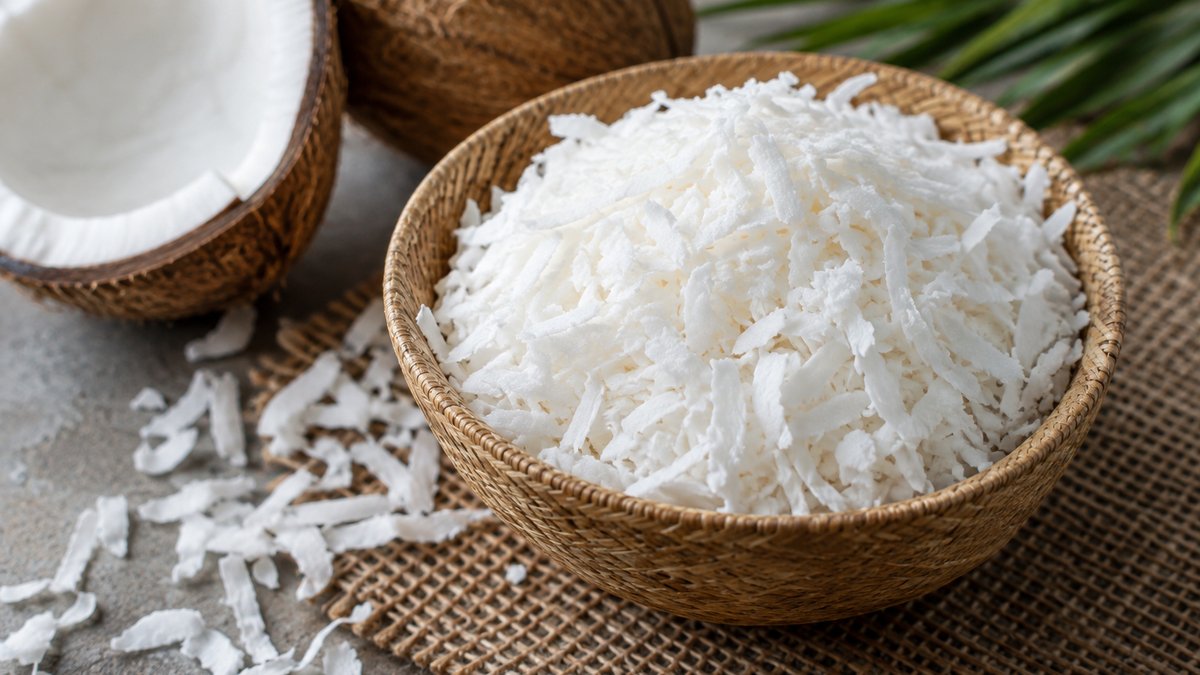
The latest November price indications located for this update are export quotations from producing countries, not a delivered price for Italy. A market update dated 9 November 2026 reported Philippine desiccated coconut at US$1.09 to US$1.90 per pound FOB, with an average seller quotation of US$1.3517 per pound. The International Coconut Community’s 7 November update listed Indonesian fine, high-fat desiccated coconut at US$1,925 per metric tonne FOB.
Those figures describe different reference points and should not be treated as directly comparable offers. This snapshot covers published prices available through 9 November 2026 and Italy as the destination market. Buyers need to confirm grade, fat content, particle size, shipment terms and delivery costs before using an export indication to budget a shipment.
Key Takeaways
- On 9 November 2026, TM Duché & Sons reported Philippine desiccated coconut export quotations of US$1.09 to US$1.90/lb FOB and an average seller quotation of US$1.3517/lb, approximately US$2,981/MT.
- The Philippine quoted range was reported unchanged for 38 consecutive weeks. The average seller quotation was 21.6% below the October 2025 comparison cited in the same market update.
- On 7 November, the International Coconut Community listed Indonesia fine, high-fat desiccated coconut at US$1,925/MT FOB. Its Philippines FOB entry showed no quote, so the two country figures are not a matched comparison.
- The International Coconut Community reported Italy imported 3,521 MT of desiccated coconut in 2025, preliminary data. That is a national trade statistic, not a November 2026 demand measure.
- Buyers should request quotations against one written specification and compare delivered cost to the Italian destination, including freight, insurance and import-side costs.
1. Desiccated Coconut Supply and Demand Set the Italy Market Context
Italy imports desiccated coconut, while the published November price figures available for this update are export or origin-market references. The International Coconut Community’s preliminary 2025 trade figures put Italian imports at 3,521 metric tonnes. The same report lists the United States, Benin and the Netherlands among the largest import markets by volume, with 9,491 MT, 7,416 MT and 7,246 MT respectively.
The ICC’s June 2026 market review reported global imports of 117,985 MT for January to April 2026, down 0.3% year on year. EU-27 imports reached 30,387 MT in that period and were described as virtually unchanged. These figures indicate a broadly steady import picture across those markets, but they do not establish Italy’s month-by-month demand.
Export availability differed by origin in the ICC review. Indonesia’s desiccated coconut shipments rose 21.9% year on year to 36,709 MT in January to April 2026, while export earnings fell 2.1% to US$74.3 million. The ICC attributed that difference to lower average export prices. This volume-and-value pattern helps explain why one country’s shipment growth does not necessarily mean its sellers are receiving higher prices.
For an Italian buyer, the distinction between import-market data and an export quotation matters. Italy’s annual import volume helps establish that the product has an existing trade lane; it does not tell a buyer what an importer will pay for a particular fine, medium, high-fat or low-fat grade in November. A supplier quote must match the intended use, specification, quantity and delivery point.
Looking to Source Desiccated Coconut?
Connect with verified suppliers, discover matching products, and explore sourcing opportunities from global markets.
2. Latest Desiccated Coconut Export Prices
2.1 Current export price references through 9 November
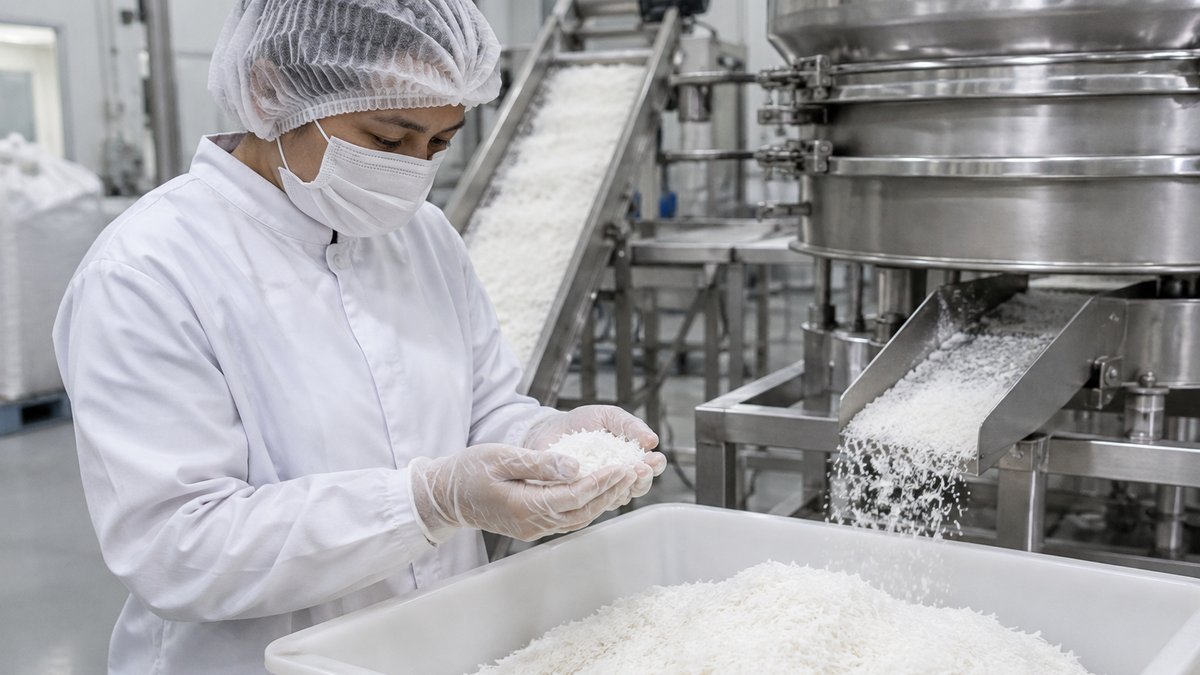
The latest dated market update located for the Philippines is TM Duché & Sons’ report of 9 November 2026. It gives a broad export quotation range of US$1.09 to US$1.90 per pound FOB Philippines and an average seller quotation of 135.17 US cents per pound. Converting that average by weight gives approximately US$2,981 per metric tonne. The source presents an export reference, not a firm offer for a specified Italian delivery.
FOB, or free on board, is a shipping term under which the seller’s delivery obligation includes loading the goods aboard the vessel at the named port. The buyer arranges main carriage and pays freight and insurance under the usual FOB allocation. The exact named port and the applicable Incoterms version should appear in a commercial quotation.
The International Coconut Community’s 7 November 2026 price update lists Indonesia fine, high-fat product at US$1,925/MT FOB. Its Philippines entry shows no quote. The ICC figure is specific to a stated Indonesian grade; the Philippine market bulletin gives a wide range and an average without a matching grade breakdown in the quoted figures. Buyers should not read the difference as a like-for-like discount.
2.2 Price comparison by exporting origin
The November references do not provide a fully matched origin comparison for Italy. Indonesia’s price is identified as fine, high-fat product, while the Philippine quotation range is not split by grade in the reported summary. A buyer can use both to frame questions for suppliers, but should request a fresh quote for the same fat content, cut, packaging, quantity, shipment period and FOB port.
2.3 Recent trend and changes
TM Duché & Sons reported the Philippine export quotation range unchanged for 38 consecutive weeks as of 9 November 2026. The same report put the average seller quotation at 135.17 US cents/lb, compared with 172.33 US cents/lb in its October 2025 comparison, a reported year-on-year decrease of 21.6%. These are the source’s stated comparisons; they do not establish that all grades or supplier offers moved by the same amount.
The stable published range sits alongside firmer Philippine domestic raw-material prices, according to the November market update. For Italian buyers negotiating forward shipments, that divergence makes quotation validity and shipment timing worth checking: a reported export reference can remain steady even while a processor’s input costs change.
3. Why Desiccated Coconut Prices Are Moving
Published Philippine export quotations were stable through 9 November, while the market update reported rising domestic coconut and copra costs. This difference between an export reference and local input costs is one reason buyers should ask suppliers how long a quotation remains valid and which shipment window it covers.
3.1 Raw material and processing costs
Desiccated coconut processors depend on coconut meat as their raw material. TM Duché & Sons reported higher Philippine local coconut prices and firming copra prices in its 9 November update. When raw-material costs rise, processors may face pressure on margins even if the published export quotation has not yet changed. That pressure is a market condition, not proof that a supplier will raise a particular offer.
3.2 Export supply and shipment availability
The same November report said Philippine desiccated coconut exports fell 10.4% year on year in September 2026. The ICC’s June review, covering January to April, reported higher Indonesian shipment volume and lower export earnings. The periods and origins differ, so the figures should not be combined into one supply trend. Buyers should ask each exporter about available stock, production schedule and shipment capacity for the requested grade.
3.3 Buyer demand, season and logistics
Global imports were nearly flat year on year in January to April 2026, according to the ICC, while individual markets varied. That global figure does not confirm current Italian orders or a particular buyer’s purchase plan. For a shipment to Italy, freight, insurance, port handling and delivery timing can change the delivered cost even when the seller’s FOB reference is unchanged.
The November price sources do not provide a quantified desiccated-coconut price effect for currency movements, weather or European freight to Italy. Buyers should treat those as items to check in a current quotation rather than assign them an unsupported price premium. Ask whether the quote is in US dollars or euros and confirm which party bears each transport cost.
4. Which Countries Import the Most Desiccated Coconut?
4.1 Major global importing markets
The ICC’s preliminary 2025 import table ranks the United States first by volume, at 9,491 MT, followed by Benin at 7,416 MT and the Netherlands at 7,246 MT. China recorded 4,517 MT, Germany 3,755 MT and Italy 3,521 MT. These are annual preliminary import figures, not forecasts or current-month orders.
The Netherlands and Germany are also relevant EU markets, but their import volumes do not define the Italian price. Trade can pass through distribution hubs, and an import statistic identifies reported customs trade rather than the final buyer, end use or current supplier offer.
4.2 Italy’s demand and market opportunities
Italy’s preliminary 2025 import figure confirms a measurable market for desiccated coconut. It does not show which Italian companies are buying, what grade they need or whether demand has grown in 2026. Exporters considering Italy should confirm the buyer’s intended application and technical requirements before quoting.
A market forecast and a confirmed purchase order are different kinds of evidence. Annual imports describe trade already recorded; an outlook describes an expectation; an RFQ describes a buyer’s stated request at a particular time. Suppliers should check the shipment date, quantity, destination and specification in each inquiry before treating it as demand they can serve.
5. How Buyers Can Source Desiccated Coconut at a Competitive Price
A competitive offer for Italy is the one that meets the required specification at an acceptable delivered cost. The November FOB references can help buyers frame discussions, but neither is a CIF or delivered quotation for an Italian destination. Compare supplier offers on the same product and delivery basis.
- Specify fat content and grade, such as high-fat or low-fat, and state whether the requirement is fine, medium, coarse, chips or another cut.
- Set the agreed limits for moisture, colour, flavour, particle size and other quality parameters that matter to the intended use.
- State the quantity, packaging format, destination port or delivery address, and preferred shipment period.
- Ask for the named port and Incoterms rule on an FOB quote. For CFR or CIF, confirm the named destination; under CIF the seller arranges freight and insurance, while CFR includes freight but not seller-provided insurance.
- Check whether the offer includes export packing, inspection, documents and any charges that affect the price basis.
- Compare the resulting landed cost, adding freight, insurance, destination handling, customs duties and other applicable import costs.
CFR means cost and freight, while CIF means cost, insurance and freight. For both terms the named destination matters, and buyers should check the precise allocation of risk and costs under the contract. An FOB price cannot be compared directly with a CIF price without adding the relevant transport and insurance costs.
Illustrative inquiry format:
Product: Desiccated coconut, high-fat, fine cut
Quantity: State the required volume and whether it is a trial or repeat order
Destination: Name the Italian port or delivery location
Quote basis: Request the same Incoterm and named place from each supplier
Specification: Attach agreed limits for fat, moisture, colour, particle size and packaging
Shipment: State the required shipment window and quote validity
This is an illustrative inquiry format, not a universal specification or a market quotation.
Buying consideration: Before choosing an offer, match its grade and delivery basis to the purchase specification, then compare the cost to the same Italian destination. Buyers evaluating supplier options can review related product listings.
Buyers comparing specifications and delivered costs can review potential suppliers for this product.
View Related Suppliers for This Product →
6. What the Latest Desiccated Coconut Demand Looks Like on Freshdi
Freshdi’s desiccated coconut category is a place to review current supplier listings and buying requests. A marketplace listing or request is not a measure of Italy’s total import demand, and a request should be checked for its current status and complete commercial details before a supplier responds.
Buyers can use a buying request to state the required grade, quantity, destination and delivery term. Suppliers can review requests and decide whether their product and shipment schedule fit. Neither a request nor a listing confirms a completed sale or guarantees that an offer is available at the published price.
For a price discussion, the most useful inquiry is one that names the product specification and destination. Suppliers can then state the available grade, quantity, loading port, Incoterm, quotation currency and validity period instead of sending an unqualified price.
7. What Buyers and Suppliers Should Do Next
7.1 For buyers and importers
- Use the November FOB figures as dated reference points only; request a current offer before budgeting or contracting.
- Send the same specification and shipment details to each supplier so that quotations can be compared on a common basis.
- Confirm the grade, fat content, particle size, packaging and quality limits in the quotation and contract.
- Calculate delivered cost to the same Italian destination and clarify who arranges and pays for freight and insurance.
- Confirm current import requirements and documentation for the product and shipment with the relevant authorities or your customs adviser.
7.2 For exporters and suppliers
- State the grade, fat content, cut, packaging and available quantity alongside the price.
- Name the loading port, Incoterm and currency, and give a clear quotation date and validity period.
- Separate an indicative market reference from a firm quotation for the requested shipment.
- Confirm the production or stock position and the shipment window before accepting a buyer’s requested schedule.
- Review buying requests for destination and specification fit before preparing a tailored offer.
A dated price reference helps frame a negotiation, but contract decisions depend on the product and delivery details. Buyers should avoid comparing a broad export average with a grade-specific delivered offer, and suppliers should make the basis of each quotation explicit.
8. How Freshdi Helps Buyers and Suppliers Connect
Freshdi’s fruit category pages let buyers browse potential suppliers and let suppliers review buying requests. The desiccated coconut category is relevant to product-specific sourcing, while the wider fruit pages cover the parent category. Listings and requests are starting points for checking fit; commercial terms, product quality and availability still need confirmation.
Buyers comparing desiccated coconut suppliers and exporters reviewing buyer requirements can use Freshdi’s category pages to find relevant listings and requests.
Buyers and suppliers can review relevant activity in Freshdi’s fruit category.
View Latest Fruit Buying Requests →View Potential Fruit Suppliers →
9. Desiccated Coconut Market Outlook for Italy
Through 9 November 2026, the latest Philippine reference located for this update showed a broad FOB quotation range of US$1.09 to US$1.90/lb and an average seller quotation of US$1.3517/lb. The ICC’s 7 November update listed Indonesian fine, high-fat product at US$1,925/MT FOB, while showing no Philippines quote in its weekly table. The figures use different levels of product detail and are not a matched origin comparison.
The published Philippine range had remained unchanged for 38 consecutive weeks, even as the market bulletin reported firmer local raw-material costs. Italy’s 2025 preliminary imports reached 3,521 MT, but that annual total does not indicate current Italian orders. Buyers should seek current, grade-matched quotations and calculate landed cost; exporters should state their specifications, availability and delivery basis clearly.
Buyers ready to compare product-specific offers can review potential desiccated coconut suppliers on Freshdi.
View Related Suppliers for This Product →
Frequently Asked Questions
What was the latest Philippine desiccated coconut export price in November 2026?
TM Duché & Sons’ market update dated 9 November 2026 reported Philippine quotations of US$1.09 to US$1.90 per pound FOB and an average seller quotation of US$1.3517/lb, approximately US$2,981/MT. The source does not present that average as a firm offer for a particular grade or Italian destination.
What was the November 2026 desiccated coconut price from Indonesia?
The International Coconut Community’s 7 November 2026 weekly update listed Indonesian fine, high-fat desiccated coconut at US$1,925/MT FOB. Confirm the current price, specification, port and validity directly in a supplier quotation.
Was the Philippine export price rising in November 2026?
The 9 November market update reported the Philippine export quotation range unchanged for 38 consecutive weeks. It also reported higher local coconut and copra costs. Those are separate market observations and do not establish that a particular supplier’s price will rise.
Which countries import the most desiccated coconut?
In the ICC’s preliminary 2025 import table, the United States imported 9,491 MT, Benin 7,416 MT and the Netherlands 7,246 MT. Italy recorded 3,521 MT. These are annual preliminary figures, not current orders or forecasts.
How should an Italian buyer compare FOB and CIF desiccated coconut prices?
FOB covers the seller’s delivery through loading aboard the vessel at the named port; the buyer generally arranges main carriage. CIF includes seller-arranged carriage and insurance to the named destination under the agreed term. Compare quotes with the same specification and destination, and account for any costs that are outside the quoted basis.
Where can buyers find desiccated coconut suppliers?
Buyers can review product-specific supplier listings on Freshdi. They should confirm the grade, quantity, shipment availability, delivery basis and quotation validity with each supplier before making a purchasing decision.
References
1. TM Duché & Sons – Global Coconut Market Update 9 November 2026, 9 November 2026.
2. International Coconut Community – Latest Coconut Product Prices, 7 November 2026.
3. International Coconut Community – Market Review of Desiccated Coconut, June 2026, June 2026.
4. International Coconut Community – Quarterly Bulletin, Table 31: World Imports of Desiccated Coconut, 2025 preliminary import data.
Disclaimer: This article is compiled from platform data, public sources and information provided by third parties, for general informational purposes only. We do not guarantee its accuracy or completeness. Prices, volumes and forecasts are indicative, reflect conditions as of 2026-11-16 and may change without notice. This is not financial, investment or trading advice.