
Introduction
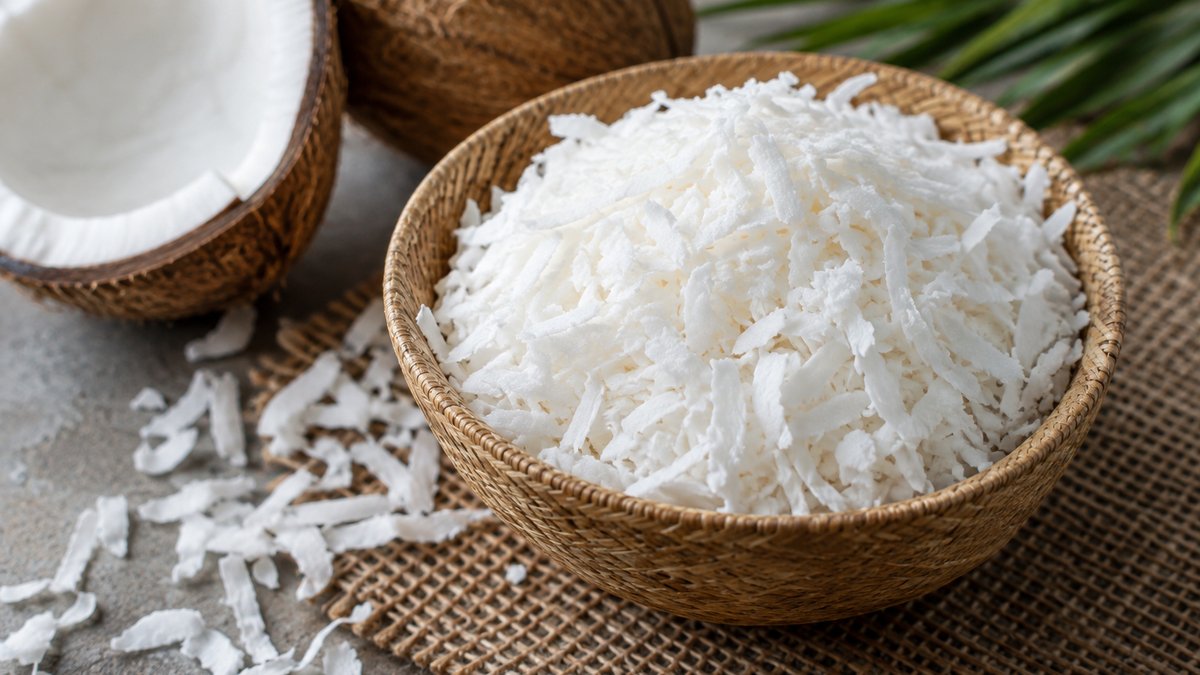
The latest November export indications found for desiccated coconut are origin-level quotations, not Japan-specific offers. On November 9, 2026, TM Duché & Sons reported Philippine quotations of US$1.09 to US$1.90 per pound FOB, with an average quoted price of US$1.3517 per pound. The International Coconut Community's November 7 update listed Indonesian fine, high-fat desiccated coconut at US$1,925 per metric tonne FOB.
Japan's latest product-specific customs figures located for this update cover August 2026. The reported import unit value was JPY 550 per kilogram, calculated from customs value and quantity; it is a historical customs measure, not a November supplier quotation. This update covers November 1-9 export indications and uses August customs data for Japan's import-price and origin context.
Key Takeaways
- On November 9, 2026, TM Duché & Sons reported Philippine desiccated coconut quotations of US$1.09 to US$1.90/lb FOB and an average of US$1.3517/lb, about US$2,981/MT.
- The ICC's November 7, 2026 price update listed Indonesian fine, high-fat desiccated coconut at US$1,925/MT FOB. Its specification differs from the broad Philippine quotation range, so the figures are not a like-for-like offer comparison.
- Japan's August 2026 customs import unit value was JPY 550/kg, down from JPY 540/kg in July? No. August was JPY 550/kg, up from JPY 540/kg in July, but below JPY 565/kg in June. These are monthly customs unit values, not supplier quotes.
- The Philippines accounted for 87.1% of Japan's August 2026 desiccated coconut imports by quantity in the reported country breakdown. Vietnam had 7.1%, India 4.2% and Sri Lanka 1.7%.
- Buyers should compare grade, fat content, particle size, packaging and delivery terms, then calculate destination landed cost. Exporters should state those details and the quotation's validity period.
1. Desiccated Coconut Market Overview
Japan imports desiccated coconut from several producing countries, with the Philippines the largest reported source in August 2026. Japan's Ministry of Finance trade statistics, as presented in the monthly product data reviewed for this update, show 171,795 kg imported in August, with a customs value of JPY 94,566,000. The resulting unit value is JPY 550/kg.
That customs unit value covers imports cleared during one month and can reflect different grades, origins, contract dates and shipment terms. It does not identify the price of a particular November order. Japan's product code for desiccated coconut is 0801.11-000; the Japan Customs tariff schedule dated April 1, 2026 lists a general customs duty rate of 6%. Buyers should confirm the tariff treatment that applies to their origin and shipment.
The ICC's June 2026 market review described a price correction after the sharp rise in 2024 and early 2025. For January to May 2026, it reported prices declining from US$3,711/MT to US$3,197/MT in the Philippines, from US$2,650/MT to US$2,095/MT in Indonesia, and from US$2,825/MT to US$2,365/MT in Sri Lanka. Those figures provide historical context, not a November price series for Japan.
Japan's import sources and global import rankings answer different questions. The August country breakdown shows where Japanese shipments originated, but does not rank Japan against other importing countries. The sources reviewed here do not establish a current, comparable global ranking of desiccated coconut import volumes, so a country league table would not be reliable.
2. Latest Desiccated Coconut Export Prices
2.1 November export quotations by origin
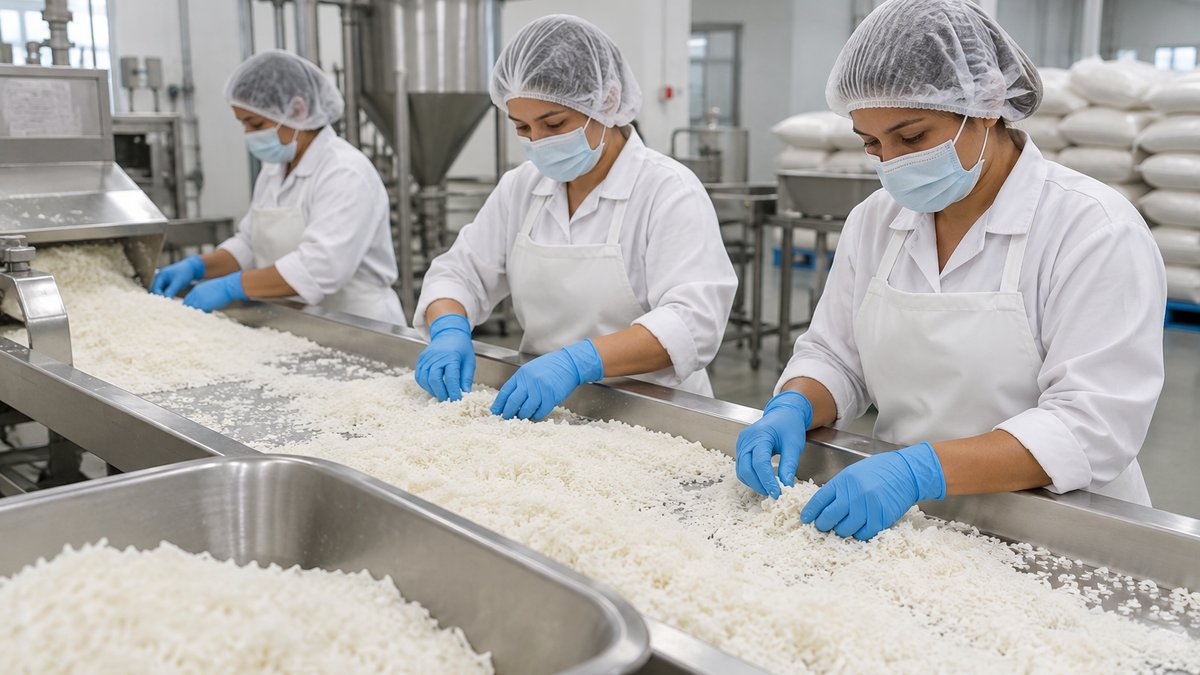
The latest dated export indications located for November cover Philippine quotations and an Indonesian grade-specific price. TM Duché & Sons' November 9, 2026 market update reported Philippine offers at US$1.09 to US$1.90/lb FOB, with an average seller quotation of US$1.3517/lb. Converted at 2,204.62 pounds per metric tonne, that average is approximately US$2,981/MT. The reported quotation range had remained unchanged for 38 consecutive weeks.
The ICC's November 7, 2026 weekly update listed Indonesia fine, high-fat desiccated coconut at US$1,925/MT FOB. It gave no Indonesian quotation for other grades in that entry. FOB, or free on board, means the quoted price covers delivery through loading aboard the vessel at the named port; the buyer arranges and pays for the main freight and insurance.
The Philippine range and Indonesian figure are not equivalent specifications. The ICC identifies Indonesia's quote as fine and high-fat, while the Philippine range does not specify a matching grade or fat content in the reported summary. The figures also come from separate publications and dates. Buyers should treat them as market references, then request current offers against one written specification.
2.2 Price comparison by exporting origin
A narrow comparison is possible only where the product specification matches. The November figures do not provide equivalent Philippine and Indonesian grades, so the table keeps each origin's description and basis visible rather than implying a direct price ranking. The Philippines average is substantially above the Indonesian fine, high-fat quote, but the difference cannot be assigned to origin alone.
Japan's customs unit value is a separate measure. It aggregates customs value and quantity for the month's imports and is denominated in yen. It cannot be compared directly with FOB export prices in US dollars without accounting for exchange rates, shipment timing, grade mix, freight, insurance and customs valuation.
2.3 Price trend and changes
The Philippine FOB quotation range was unchanged for 38 consecutive weeks through the November 9 report. Its average seller quotation of US$1.3517/lb was 21.6% below the US$1.7233/lb October 2025 comparison cited in that report. The report does not provide a grade-matched Japanese import quote for the same dates.
Japan's customs unit value moved from JPY 626/kg in January 2026 to JPY 676/kg in February, then declined to JPY 639/kg in March, JPY 611/kg in April and JPY 595/kg in May. It was JPY 565/kg in June, JPY 540/kg in July and JPY 550/kg in August. The August figure is preliminary in the monthly data source. The sequence reflects the value and quantity mix of recorded imports, not a constant-grade price series.
3. Why Are Desiccated Coconut Export Prices Changing?
The November evidence points to stable published Philippine export quotations alongside rising local raw-material costs reported by market sources. TM Duché & Sons' November 9 update said domestic Philippine desiccated coconut prices and copra costs had increased, while export quotations remained within the same range. Higher input costs can pressure processors, but the report does not establish that they have already changed the export quotation.
Supply recovery and buyer demand have shaped the broader 2026 correction. The ICC's June review reported lower prices across the Philippines, Indonesia and Sri Lanka between January and May, alongside improved coconut availability and softer buying interest. That account covers the first five months of the year; it should not be read as a forecast for November or as evidence of a Japan-specific demand change.
Japan's import unit value can also shift when the mix of origins, grades or shipment sizes changes. A monthly average may rise even if an individual supplier holds its offer steady, or fall when lower-value product makes up a larger share. Customs unit values therefore help track import spending per kilogram but do not replace comparable supplier quotations.
Exchange rates and logistics affect the yen cost of a shipment. An FOB offer excludes the ocean freight and insurance that a buyer needs to bring goods to Japan. Importers should use the relevant shipment date and route when costing a quote, rather than applying a general freight estimate to every origin.
4. Which Countries Import the Most Desiccated Coconut?
4.1 Japan's import sources
The available August 2026 country breakdown identifies the Philippines as Japan's leading source by import quantity. The Philippines represented 87.1% of the reported total, followed by Vietnam at 7.1%, India at 4.2% and Sri Lanka at 1.7%. The data source labels August figures preliminary.
These shares describe Japan's imports for one month, not annual market shares or confirmed future orders. The listed shares total approximately 100% after rounding. Buyers assessing alternative sources should compare each offer's grade, fat content, particle size and shipment basis before using these percentages to guide procurement.
4.2 Japan's import price and market demand
Japan imported 171,795 kg of desiccated coconut in August 2026, valued at JPY 94,566,000. The monthly quantity was lower than July's 297,269 kg, while the unit value rose from JPY 540/kg to JPY 550/kg. A one-month movement does not establish a sustained demand trend, and customs arrivals do not show orders still being negotiated.
The Philippines is clearly the main source in this snapshot. The available data do not show market forecasts or a ranking of all global importing countries. Buyers and exporters should distinguish these confirmed customs entries from forecasts and from individual buyer orders.
4.3 What the import figures mean for exporters
Japan's August origin mix suggests that Philippine product had the largest presence among the recorded shipments. The figures do not prove that any exporter has an order, approved status or available capacity. Exporters considering Japan should verify the buyer's specification, applicable import requirements, delivery window and documentation before quoting.
5. Where Can Buyers Source Desiccated Coconut at a Competitive Price?
The lowest visible FOB number may not produce the lowest delivered cost in Japan. Compare quotations from the Philippines and Indonesia only after matching product grade, fat content, particle size, moisture, sulphur dioxide limit, packaging and shipment quantity. These details can change both product suitability and price.
CFR means cost and freight: the seller pays freight to the named destination port, while insurance is not included. CIF means cost, insurance and freight: the seller also arranges insurance to the named port. Under all three bases, clarify the named port and the point at which costs and risks transfer under the applicable Incoterms rule.
- Send the same written specification to each supplier, including grade, fine or medium cut, fat content, moisture limit, sulphur dioxide limit and any buyer-required tests.
- Ask for a quote in one currency and on the same basis, such as FOB at a named loading port or CIF at the same Japanese port.
- Compare the same quantity, bag size, pallet arrangement and shipment month. Confirm whether the offer covers inspection, export documents or other charges.
- Add ocean freight, insurance, destination handling, customs duty and other import-side costs to estimate landed cost. Confirm the applicable Japanese tariff treatment for the origin and product.
- Check the quotation validity period and available production or shipment date. Request a current quote before relying on a November market indication.
A buyer can compare the Philippine average quotation of US$1.3517/lb with Indonesia's US$1,925/MT figure only as broad reference points. The Philippine range does not state a grade matching Indonesia's fine, high-fat specification. Obtain offers on a shared specification and include freight and import costs before deciding which origin is more competitive.
6. What Does the Latest Demand Look Like on Freshdi?
Freshdi is a B2B marketplace for agricultural and food commodities where users can review product-related buying requests and supplier listings. These platform pages are a place to check current listings; they are not a measure of Japan's total desiccated coconut imports or national demand.
No dated, product-specific Freshdi request count or request sample is available to support a numerical demand summary here. Buyers can review relevant desiccated coconut supplier listings, while exporters can check current buying requests and assess each request's stated destination and specification. Treat an individual listing as a lead to evaluate, not as a confirmed order.
7. What Should Buyers and Suppliers Do Next?
7.1 For buyers and importers
- Use a single specification sheet when requesting Philippine, Indonesian or other origin quotations.
- Ask suppliers to state grade, fat content, cut, moisture, sulphur dioxide limit, packaging, quantity, loading port and quote validity.
- Compare the same delivery basis and Japanese destination port. Calculate landed cost from the quoted basis rather than comparing FOB and CIF figures as if they were equivalent.
- Check product documentation and Japanese import requirements for the specific shipment, including applicable customs treatment.
- Recheck supplier availability and price before placing an order because November market references are not firm offers.
7.2 For exporters and suppliers
- State the product grade, particle size, fat content and quality limits in each quotation.
- Identify the loading port, Incoterm, currency, quantity, packaging and validity period.
- Separate confirmed product availability from indicative market prices and planned production.
- Review the buyer's destination and specifications before preparing a quotation.
- Keep supplier information current and respond only when the product and shipment terms fit the request.
8. How Freshdi Helps Buyers and Suppliers Connect
Freshdi's product-category pages let buyers review supplier listings and let suppliers look for buying requests relevant to their product. Buyers can review Desiccated Coconut suppliers, while exporters can review Desiccated Coconut buying requests. A listing or request does not guarantee a completed transaction.
Buyers comparing source options and exporters checking current demand can review the relevant product listings on Freshdi.
View Latest Fruit Buying Requests →View Potential Fruit Suppliers →
9. Japan Desiccated Coconut Market Outlook
November export indications show Philippine quotations holding within a reported US$1.09 to US$1.90/lb FOB range and Indonesia fine, high-fat desiccated coconut at US$1,925/MT FOB. The specifications differ, so these references do not establish which origin is cheaper for a Japanese buyer.
Japan's latest product-specific customs figure located for this update is August 2026: JPY 550/kg across recorded imports, with the Philippines supplying the largest reported share by quantity. Buyers should use that figure as historical import context, then request current, specification-matched offers and calculate landed cost. Exporters should state the grade and delivery basis clearly when quoting for Japan.
Buyers preparing a Japan-bound inquiry can review Freshdi's Desiccated Coconut supplier listings.
View Related Suppliers for This Product →
Frequently Asked Questions
What is the latest desiccated coconut export price for Japan?
The November 1-9, 2026 sources located report origin-level export indications, not a Japan-specific supplier offer. On November 9, TM Duché & Sons reported Philippine quotations of US$1.09 to US$1.90/lb FOB, with an average of US$1.3517/lb. The ICC's November 7 update listed Indonesian fine, high-fat desiccated coconut at US$1,925/MT FOB. Request a current quote for the required grade and Japanese destination.
What was Japan's latest desiccated coconut import unit value?
The latest product-specific monthly figure located for this update is August 2026. Japan's reported customs value of JPY 94,566,000 divided by 171,795 kg gives a unit value of JPY 550/kg. The August data are preliminary, and the unit value is not a November supplier quotation.
Why do Philippine and Indonesian prices differ?
The reported figures do not specify matching products. The Indonesian ICC price is for fine, high-fat desiccated coconut; the Philippine quotation range does not identify a matching grade in its summary. Publication, date and quote format also differ. Ask both origins to quote the same specification and delivery basis before comparing.
Which country supplies most of Japan's desiccated coconut?
In the August 2026 country breakdown, the Philippines accounted for 87.1% of Japan's desiccated coconut imports by quantity. Vietnam accounted for 7.1%, India for 4.2% and Sri Lanka for 1.7%. The figures describe that month's imports and should not be treated as annual shares or future orders.
How should buyers compare FOB and CIF desiccated coconut prices?
FOB excludes the main ocean freight and insurance paid by the buyer. CIF includes freight and insurance arranged by the seller to the named destination port. Compare the same product specification, quantity, shipment month and destination, then check which destination charges and import costs remain outside each quotation.
Where can buyers find desiccated coconut suppliers on Freshdi?
Buyers can review Desiccated Coconut supplier listings on Freshdi and compare the information each supplier provides. Check product specification, quantity, shipment terms and documentation directly against the sourcing requirement. A marketplace listing is not a guarantee of availability or a completed sale.
References
1. TM Duché & Sons – Global Coconut Market Update 9 November 2026, November 9, 2026.
2. International Coconut Community – Latest Coconut Product Prices, November 7, 2026.
3. Washu Trading – Desiccated (080111000) Import Statistics, August 2026 data; accessed November 2026.
4. Statistics Bureau of Japan – Trade Statistics Data by Customs, Commodity by Customs by Country, Import, Published August 28, 2026.
5. Japan Customs – Japan's Tariff Schedule as of April 1, 2026, Chapter 08, April 1, 2026.
6. International Coconut Community – Market Review of Desiccated Coconut - June 2026, June 2026.
Disclaimer: This article is compiled from platform data, public sources and information provided by third parties, for general informational purposes only. We do not guarantee its accuracy or completeness. Prices, volumes and forecasts are indicative, reflect conditions as of 2026-11-16 and may change without notice. This is not financial, investment or trading advice.