
Introduction
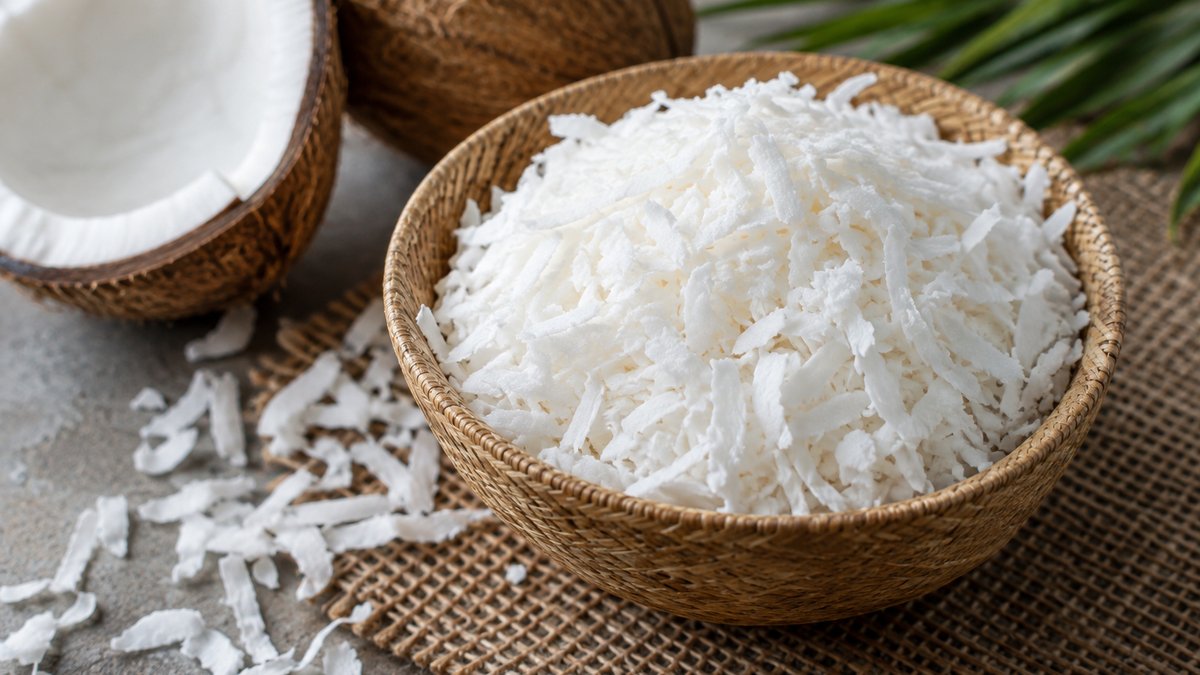
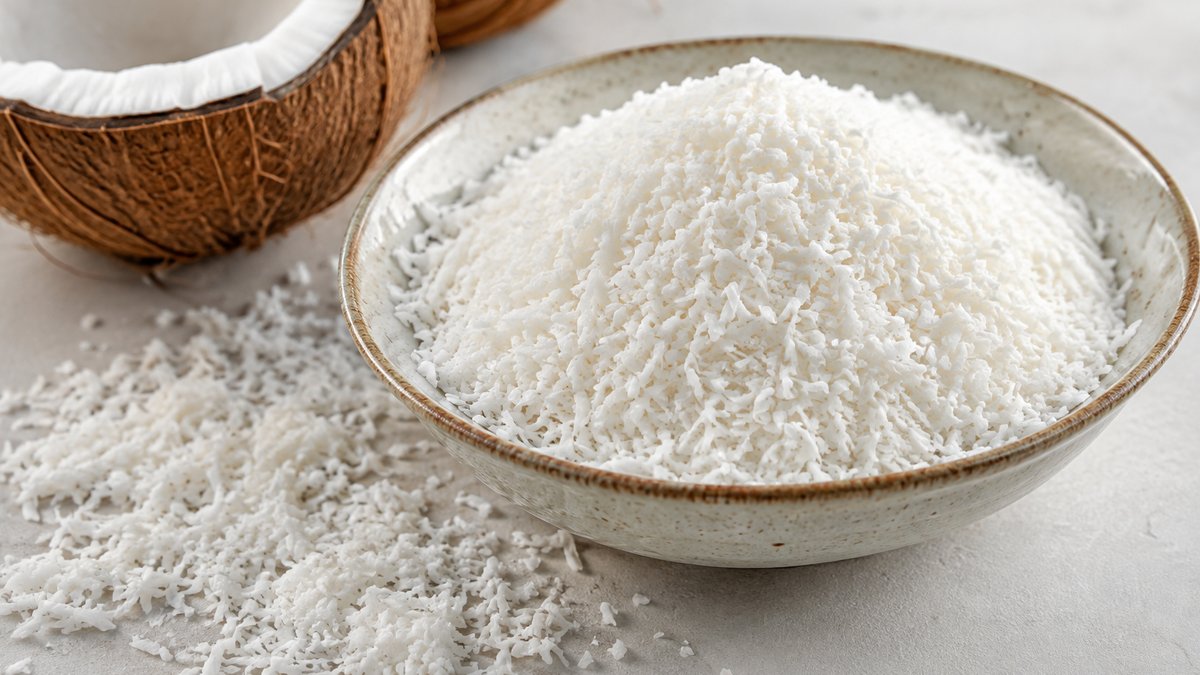
The latest dated public quotation located by 16 November 2026 is for Philippine desiccated coconut, not a delivered price in Poland. On 9 November, TM Duché & Sons reported a Philippine export indication of US$1.09 to US$1.90 per pound FOB, with an average seller quotation of 135.17 US cents per pound, about US$2,981 per metric tonne.
That figure is an origin-side reference. It excludes ocean freight, insurance, import charges and delivery within Poland. This update covers the November quotation published on 9 November, with October origin-price comparisons and the latest available trade context for Poland.
Key Takeaways
- TM Duché & Sons reported Philippine desiccated coconut at US$1.09 to US$1.90/lb FOB on 9 November 2026; the average seller quotation was 135.17 US cents/lb, or about US$2,981/MT.
- The published Philippine quotation range had remained unchanged for 38 consecutive weeks as of 9 November. The average was 21.6% below the October 2025 comparison reported by TM Duché.
- The International Coconut Community’s October 2026 price table listed Indonesia fine, high-fat desiccated coconut at US$1,950/MT FOB on 24 October. Its specification differs from the Philippine quotation, so the figures are not a strict like-for-like comparison.
- Poland imported 9,889.6 tonnes of desiccated coconut in the 12 months from October 2024 to September 2025, according to a GTAIC analysis of trade data. That is the latest Poland-specific volume period cited here, not a November 2026 result.
- A Polish buyer should compare equivalent grade, fat content, packaging and delivery basis, then add freight, insurance and destination costs to the FOB quotation.
1. Desiccated Coconut Market Overview
The Philippines and Indonesia are major exporting origins, while the European Union is a leading destination market. In its June 2026 market review, the International Coconut Community reported EU-27 imports of 30,387 metric tonnes for January to May 2026, nearly unchanged year on year. That figure is for the EU as a bloc, not Poland alone.
Recent export evidence shows why price and volume should be read separately. The United Coconut Association of the Philippines reported that Philippine desiccated coconut exports in 2025 were 167,683 tonnes, down from 170,453 tonnes in 2024, while the average traded price rose 79.3% year on year to US$3,113.43/MT FOB. Volume eased as the reported export price increased.
Poland is an established import market for the product. A GTAIC analysis based on trade data put Polish imports at 9,889.6 tonnes in the 12 months from October 2024 to September 2025, up 1.81% from the preceding 12-month period. Its most recent six-month comparison, April to September 2025, was down 2.36% year on year. These figures describe different windows and should not be treated as current monthly demand.
The latest available evidence does not establish a November 2026 Polish wholesale price or a Polish import unit value for desiccated coconut. Buyers can use the Philippine FOB quotation as an origin benchmark, then request a delivered quotation for their own specification and Polish delivery point.
Looking to Source Desiccated Coconut?
Connect with verified suppliers, discover matching products, and explore sourcing opportunities from global markets.
2. Latest Desiccated Coconut Export Prices
2.1 Current export price in the Philippines
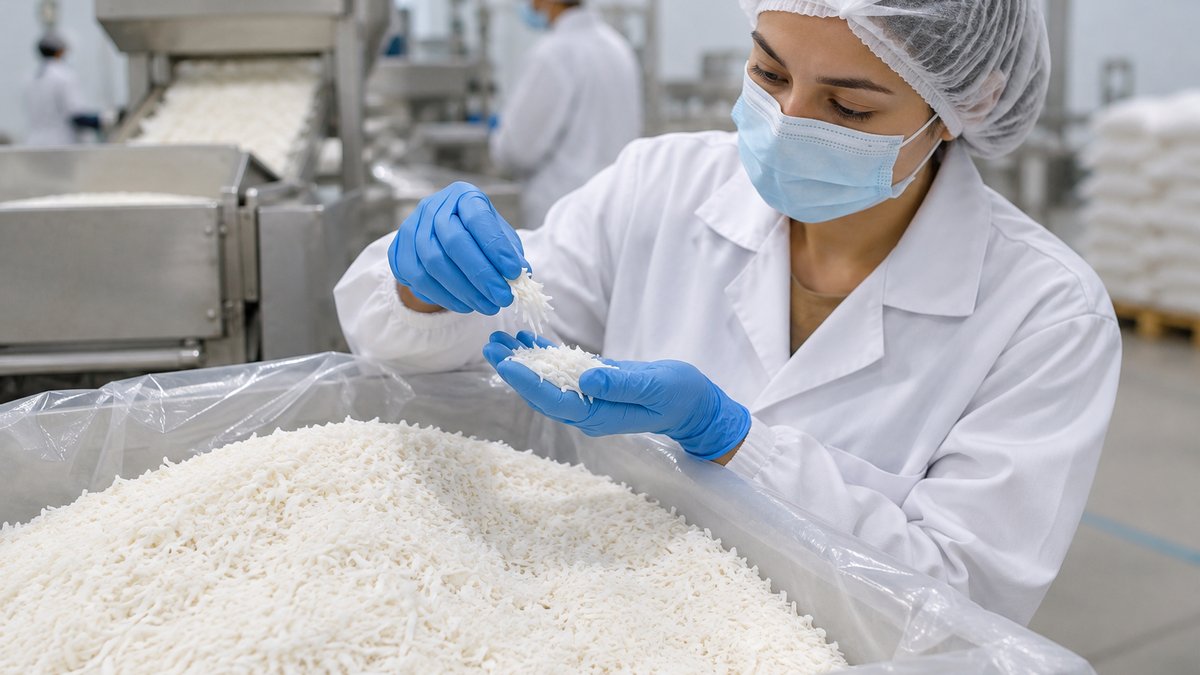
On 9 November 2026, TM Duché & Sons reported Philippine export quotations of US$1.09 to US$1.90/lb FOB. The same update gave an average seller quotation of 135.17 US cents/lb, equivalent to approximately US$2,981/MT when converted by weight. FOB, or Free On Board, is the seller’s delivery basis up to loading aboard the vessel at the named port; the quoted amount does not include the buyer’s sea freight, insurance or Polish import-side costs.
The quotation range had been unchanged for 38 consecutive weeks as of 9 November, according to TM Duché. The reported average of 135.17 US cents/lb was 21.6% below the October 2025 comparison of 172.33 US cents/lb in the same update. This is a comparison with the stated October 2025 reference, not a month-on-month change.
The October ICC figures provide an origin comparison, not a Polish offer. The Indonesian entry names fine, high-fat product, while the listed Philippine entry does not give an equivalent grade in the table. The sources also report prices in different formats and on different dates. Buyers should not treat the apparent gap as a verified price advantage without matching specification, quotation method and shipment terms.
2.2 Price trend and changes
The November signal is stability in the published Philippine quotation range, with a lower reported average than the October 2025 comparison. The 9 November update does not provide a November week-on-week price movement; the 38-week unchanged range describes the reported band, not necessarily every negotiated transaction.
A separate annual indicator gives context but covers a different period. UCAP reported a 79.3% rise in the Philippines’ average traded export price to US$3,113.43/MT FOB for calendar 2025. That annual average cannot be compared directly with a single November 2026 quotation without accounting for the difference in period and price measure.
3. Why Are Desiccated Coconut Export Prices Changing?
The latest public material points to a market that has eased from its 2025 price peak but still faces supply and cost uncertainty. In June 2026, the International Coconut Community said prices had fallen between January and May across the Philippines, Indonesia and Sri Lanka. Its review attributed the correction to improving coconut availability and softer buying interest after the previous year’s price surge.
The same review reported that the Philippines’ price moved from US$3,711/MT in January to US$3,197/MT in May 2026, while Indonesia’s moved from US$2,650/MT to US$2,095/MT. Those are the ICC’s reported country price series for that period. They are older than the November quotation and should not be presented as current prices.
Supply recovery does not affect every origin or grade in the same way. UCAP’s calendar-year figures show Philippine desiccated coconut exports fell by 1.6% in volume in 2025, while the average export price rose sharply. A change in export volume alone does not reveal how much product is available for a particular grade, customer or shipment window.
Freight can also change the economics for a Polish importer even when the FOB offer is unchanged. Buyers should obtain a current freight quote for the route and loading period, confirm whether insurance is included, and compare the total delivered cost at the agreed destination. The evidence cited here does not give a current freight rate for a shipment to Poland.
Weather and harvest outlooks are planning factors, not confirmed losses. The cited November price update mentions possible 2027 weather risk, but it does not establish a production shortfall. Buyers should treat any weather-related price effect as uncertain until a producer, government or recognized market source reports a measurable impact.
4. Which Countries Import the Most Desiccated Coconut?
4.1 Major global importing markets
The EU-27 was the largest regional market identified in the International Coconut Community’s June 2026 review. EU-27 imports reached 30,387 MT in January to May 2026 and were virtually unchanged year on year. The ICC also reported total world imports of 117,985 MT for the period, down 0.3% year on year.
Those figures establish the EU’s importance as a destination region, but they do not rank individual importing countries for November 2026. The available evidence cited here does not support a current country-by-country ranking, so buyers should not read the EU total as a Poland figure.
4.2 Main export destinations of the Philippines
For an origin-specific destination example, UCAP reported that the Netherlands received 3,188 MT of Philippine desiccated coconut in June 2025, or 23.7% of that month’s shipments. Poland was among 24 destinations that each received less than 100 MT that month. This dated monthly snapshot shows that Philippine product reached Poland, but it does not establish Poland’s current share or its November 2026 buying activity.
Poland’s own import trend is better represented by the GTAIC trade-data analysis: 9,889.6 tonnes over October 2024 to September 2025, with a 1.81% year-on-year increase for that 12-month window. The window and measure differ from UCAP’s single-month Philippine export data, so the two should not be combined into a market-share calculation.
4.3 Market opportunities for exporters
Poland’s documented import volume and the EU’s large regional demand make the market relevant to exporters, but neither statistic confirms a current order. Exporters assessing Poland should check the buyer’s required grade, fat content, microbiological and residue specifications, pack format, quantity and delivery point before preparing an offer. Any import requirements should be verified for the product and shipment with the relevant EU and Polish authorities.
5. Where Can Buyers Source Desiccated Coconut at a Competitive Price?
A competitive offer is the one that meets the buyer’s specification at an acceptable delivered cost. The November Philippine quotation is FOB, while a Polish buyer may need a delivered price that accounts for transport from origin, insurance and destination charges. A lower origin quote can lose its advantage after those costs are added.
Compare suppliers against one written specification. State whether the product is fine or medium, the required fat content, moisture and other quality tolerances, the packaging, shipment quantity and delivery period. The October ICC comparison lists Indonesian fine, high-fat product, so that row should not be compared with an unspecified Philippine grade unless the seller confirms equivalent characteristics.
CFR means Cost and Freight: the seller arranges and pays for carriage to the named destination port, while insurance is not included in that price. CIF means Cost, Insurance and Freight: the seller arranges and pays for carriage and insurance to the named destination port. FOB, CFR and CIF quotations cover different cost components, so compare them only after identifying the named port and which charges remain with the buyer.
Ask each supplier to quote the same quantity, packaging, currency, loading period and delivery basis. Confirm the quote’s validity date, loading port, documents, inspection arrangement and whether charges at the destination are included. For a Polish landed-cost comparison, add the costs excluded from the quotation and confirm the applicable duties and import requirements for the product classification.
Buying consideration: Before selecting an origin, ask shortlisted suppliers to quote the same product specification and Polish delivery point on a clearly named Incoterm. Record the quotation date and expiry so that a November benchmark is not mistaken for a firm offer.
6. What Does the Latest Demand Look Like on Freshdi?
Freshdi’s product category pages give buyers and suppliers a place to review relevant marketplace listings and buying requests. They are a separate source from national trade statistics: a marketplace request represents stated buyer interest, while customs data records reported cross-border trade.
A supplier considering a Polish inquiry should check the request’s quantity, destination, product form, quality requirements and requested trade term before replying. Buyers comparing suppliers should ask for the same grade and delivery basis from each candidate. These checks help keep a marketplace inquiry aligned with the commercial specification needed for a quotation.
7. What Should Buyers and Suppliers Do Next?
7.1 For buyers and importers
- Use the 9 November Philippine quotation as a dated FOB reference, not a Polish delivered price.
- Request comparable offers for the same grade, fat content, moisture limits, packaging and quantity.
- Ask each seller to state the loading port, named destination, Incoterm, currency and quotation validity.
- Add freight, insurance, customs charges and other destination costs before comparing landed cost.
- Confirm the current import and food-safety requirements that apply to the product and shipment in Poland.
7.2 For exporters and suppliers
- Date every offer and identify the product grade, fat content, quality tolerances, packaging and available quantity.
- State whether the price is FOB, CFR or CIF and name the relevant port for the quotation.
- Explain which shipment costs and documents are included, and give the offer validity period.
- Check that the quoted specification matches the buyer’s destination requirements before confirming a shipment schedule.
- Review relevant buying requests and prepare a quotation only when the product and shipment terms fit.
8. How Freshdi Helps Buyers and Suppliers Connect
Buyers can review desiccated coconut suppliers and specify the grade, volume and delivery basis they need. Suppliers can review desiccated coconut buying requests and assess whether an inquiry matches their product and available shipment terms.
A marketplace listing or inquiry does not confirm a sale, product approval or supplier capability. Buyers should verify specifications and documents directly through the transaction process, while suppliers should keep product and quotation details current.
Businesses comparing current coconut supply and sourcing needs can review the relevant Freshdi category pages.
View Latest Fruit Buying Requests →View Potential Fruit Suppliers →
9. Conclusion: Poland Desiccated Coconut Market Outlook
The latest dated price reference located for this update is the Philippine FOB quotation published on 9 November 2026: US$1.09 to US$1.90/lb, with an average seller quotation of 135.17 US cents/lb. The reported band was unchanged for 38 consecutive weeks, while the average was below the October 2025 comparison.
For Polish buyers, the practical issue is the delivered cost of a specified product. Use the FOB figure as a benchmark, then compare equivalent offers with freight, insurance and destination costs stated. Exporters should make grade, price basis, loading port and validity clear so buyers can compare offers accurately.
Buyers preparing a comparable quotation can review suppliers listed for desiccated coconut on Freshdi.
View Related Suppliers for This Product →
Frequently Asked Questions
What is the latest desiccated coconut export price for Poland?
The latest dated quotation located by 16 November 2026 is not a Poland-delivered price. On 9 November, TM Duché & Sons reported Philippine export quotations at US$1.09 to US$1.90/lb FOB and an average seller quotation of 135.17 US cents/lb, about US$2,981/MT. Freight, insurance and Polish import-side costs are not included.
Did desiccated coconut prices rise in November 2026?
The 9 November TM Duché update reported that the Philippine quotation range had remained unchanged for 38 consecutive weeks. It did not report a new November week-on-week increase. Its average seller quotation was 21.6% below the October 2025 comparison cited in the same update.
How do Philippine and Indonesian desiccated coconut prices compare?
The ICC’s 24 October 2026 table listed Philippine desiccated coconut at US$2,980/MT FOB and Indonesian fine, high-fat product at US$1,950/MT FOB. The Indonesian row specifies a grade that the Philippine row does not, so the figures are not a fully matched comparison.
Which market imports the most desiccated coconut?
The ICC’s June 2026 review identified the EU-27 as the largest regional market, with 30,387 MT of imports in January to May 2026. That is a regional figure, not a ranking of individual countries or a Poland-specific total.
How much desiccated coconut does Poland import?
A GTAIC analysis based on trade data reported that Poland imported 9,889.6 tonnes in the 12 months from October 2024 to September 2025, up 1.81% from the preceding 12-month period. This is the latest Poland-specific volume period cited in this update, not a current November 2026 figure.
How should a buyer compare FOB and CIF quotations?
FOB covers the seller’s delivery through loading aboard the vessel at the named port. CIF includes the seller-arranged freight and insurance to the named destination port. Compare quotations only after confirming the product specification, named ports, included charges and any destination costs that remain payable by the buyer.
References
1. TM Duché & Sons – Global Coconut Market Update 9 November 2026, 9 November 2026.
2. International Coconut Community – Prices of Coconut Products (US$/MT), October 2026, October 2026.
3. International Coconut Community – Market Review of Desiccated Coconut, June 2026, June 2026.
4. United Coconut Association of the Philippines – Philippine Coconut Products Export Earnings Topped USD4 Billion in 2025, 16 April 2026.
5. Global Trade Analytics and Data Intelligence – Short-Term Trends: Imports Volumes, Poland Desiccated Coconut, 2025.
6. United Coconut Association of the Philippines – Desiccated Coconut Export Destinations, June 2025, 20 November 2025.
Disclaimer: This article is compiled from platform data, public sources and information provided by third parties, for general informational purposes only. We do not guarantee its accuracy or completeness. Prices, volumes and forecasts are indicative, reflect conditions as of 2026-11-16 and may change without notice. This is not financial, investment or trading advice.