
Introduction
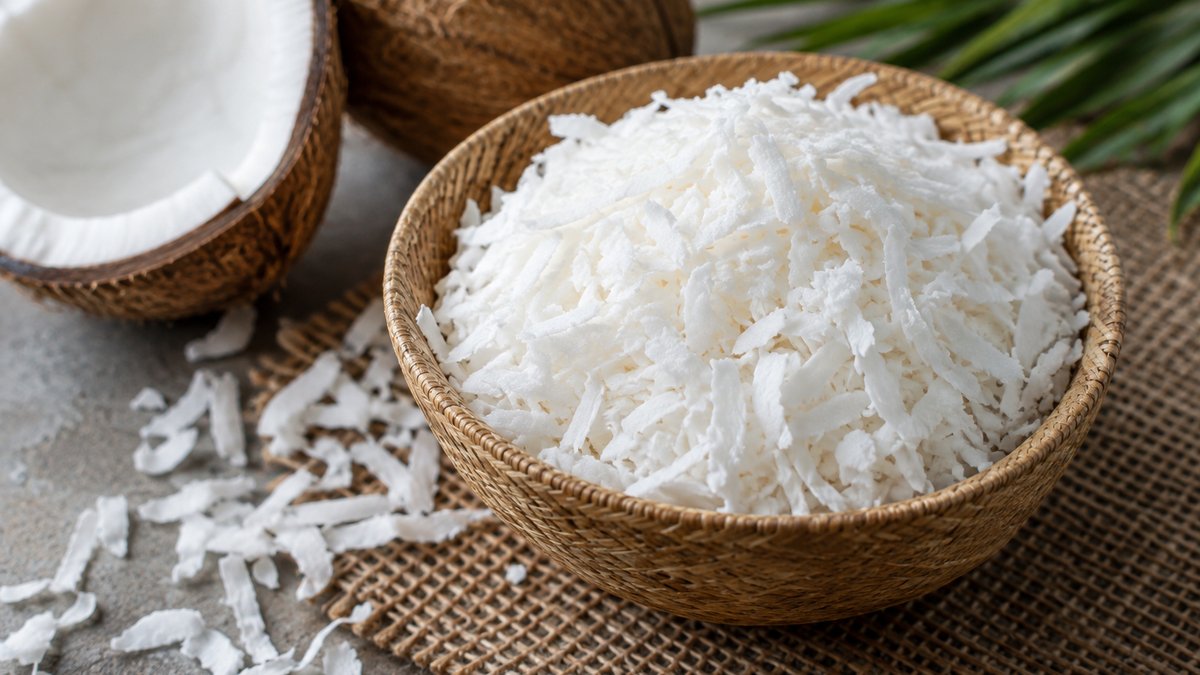
The latest public quotations located for this update were published on 9 and 10 November 2026. Philippine desiccated coconut was quoted at US$1.09 to US$1.90 per pound FOB, while European trade indications listed high-fat, fine Philippine product at €2,750 per metric tonne FCA the Netherlands. Neither figure is a Spain-specific delivered offer.
The price scope is therefore two benchmarks: an origin quotation from the Philippines and European indications on an FCA Netherlands basis. Spain-specific customs data located for this research covers January to October 2025, so it provides historical import context rather than a current November price. Buyers should request current quotations for their Spanish delivery point and compare identical grades and delivery terms.
Key Takeaways
- On 9 November 2026, TM Duché & Sons reported Philippine desiccated coconut at US$1.09 to US$1.90/lb FOB; its average quotation was US$1.3517/lb, about US$2,981/MT after conversion.
- On 10 November 2026, Mundus Agri reported European FCA Netherlands indications of €2,750/MT for high-fat, fine Philippine product, €2,500/MT for high-fat, fine Indonesian product, and €2,000/MT for high-fat, medium Vietnamese product.
- The Philippine export quotation range was unchanged for 38 consecutive weeks as of 9 November. Its average was 21.6% below the October 2025 comparison reported by TM Duché & Sons.
- A GTAIC report using trade statistics put Spain's desiccated coconut imports at US$20.38 million and 5,380 tonnes for January to October 2025. That is historical customs data, not a current supplier offer.
- Compare particle size, fat content, moisture, treatment, packaging, shipment date and delivery basis. Add freight, insurance, import charges and inland transport before comparing landed cost.
1. Desiccated Coconut Market Overview
Europe is a substantial import market for desiccated coconut, used in bakery, confectionery and other food manufacturing. The Centre for the Promotion of Imports from developing countries (CBI), using Eurostat and ITC Trade Map data, reported that European imports reached 121,000 tonnes worth €245 million in 2024. The Philippines and Indonesia were the leading suppliers, followed by Sri Lanka, Malaysia, Ghana and India.
Spain is one destination within that wider European market. A GTAIC report based on trade data identified Spain's 2024 imports under HS 080111, desiccated coconut, as 5,680 tonnes worth US$12.55 million. Its reported average import unit value was US$2,210 per tonne. That customs average combines transactions with different qualities and terms; it is not a directly comparable offer price.
The same GTAIC report found Spain imported 5,380 tonnes worth US$20.38 million from January to October 2025. Sri Lanka was the largest supplier by value in 2024, followed by the Philippines and Indonesia. In January to October 2025, reported values from Indonesia increased, while the import mix and unit values varied by origin. Customs values can include different product specifications and shipment conditions, so they do not establish a like-for-like price ranking.
The latest trade figures located for this update do not cover 2026. They show Spain has established import demand, but buyers should use current supplier quotations to budget a November or later shipment. Import statistics describe recorded trade; they are not confirmed purchase orders or forecasts.
Looking to Source Desiccated Coconut?
Connect with verified suppliers, discover matching products, and explore sourcing opportunities from global markets.
2. Latest Desiccated Coconut Export Prices
2.1 Current export price and European indications
On 9 November 2026, TM Duché & Sons reported Philippine export quotations of US$1.09 to US$1.90/lb FOB. The same update gave an average seller quotation of US$1.3517/lb, equivalent to about US$2,981/MT using a pound-to-metric-tonne conversion. FOB, or free on board, means the seller's quoted price covers the goods through loading aboard the vessel at the named port. It excludes the buyer's freight, insurance and destination costs.
A separate report published by Mundus Agri on 10 November 2026 gave FCA Netherlands price indications for three products. FCA means the seller makes the goods available at the named place, with onward carriage arranged by the buyer. The product grades differ, so the values are market indications rather than a controlled comparison of identical specifications.
The FOB range and European indications should not be combined into one Spain price. They have different currencies, delivery points and product descriptions. The FCA figures also describe indicative European prices, not firm offers for Spanish delivery. Request a current quote with the Spanish destination, quantity, packaging, payment terms and validity date stated.
2.2 Price trend and comparison with earlier periods
TM Duché & Sons reported that the Philippine export range had remained at US$1.09 to US$1.90/lb for 38 consecutive weeks as of 9 November 2026. Its average quotation of US$1.3517/lb was 21.6% below the October 2025 comparison average of US$1.7233/lb. The range did not move in that report, although it does not establish that every grade or shipment contract held at the same price.
The International Coconut Community's 7 November 2026 weekly price update listed Indonesian fine, high-fat desiccated coconut at US$1,925/MT FOB. Its October weekly data showed the same benchmark rising from US$1,825/MT on 3 and 10 October to US$1,950/MT on 24 October. These are separate dated indications; the 7 November figure is lower than the 24 October figure, while the November European indications use a different basis and currency. Buyers should avoid treating these sources as one continuous, directly comparable series.
3. Why Are Desiccated Coconut Export Prices Changing?
The latest reports describe stable Philippine export quotations alongside firmer raw-material costs in the country. TM Duché & Sons reported higher local Philippine desiccated coconut prices and increasing copra costs in its 9 November update. Copra is dried coconut meat used to produce coconut oil; processors may compete for coconut raw material, affecting their input costs.
Export volume is another factor to monitor. TM Duché & Sons reported that Philippine desiccated coconut exports fell 10.4% year on year in September 2026. That single-month decline does not by itself establish a supply shortage or predict a price increase. Buyers should confirm a supplier's available quantity and shipment window before relying on a broad market indication.
Weather is a forward-looking risk rather than a confirmed price driver for a particular shipment. The 9 November market update discussed possible El Niño effects on coconut production in 2027. Any effect on flowering, yields or export availability would depend on how weather conditions develop and where they occur. A buyer planning a later shipment should follow official crop and weather updates and check supplier availability closer to contracting.
European delivered cost can also move independently of the export quotation. The FCA Netherlands indications cover delivery to a named point in the Netherlands, while a Spanish buyer may face further transport and handling charges. Freight, insurance, packaging, customs treatment, currency conversion and inland delivery can change the landed amount. Compare offers at the same named destination and delivery basis.
4. Which Countries Import the Most Desiccated Coconut?
4.1 Major global importing markets
The United States, the Netherlands and several Asian markets are among the large importers of desiccated coconut. The International Coconut Community's preliminary 2025 import table, which covers January to March rather than the full year, lists the United States at 9,491 tonnes, Benin at 7,416 tonnes and the Netherlands at 7,246 tonnes. Those preliminary figures should not be read as full-year rankings.
For the broader European market, CBI reported 121,000 tonnes of desiccated coconut imports in 2024, worth €245 million. The Philippines and Indonesia led supply to Europe. This regional total and country-level preliminary figures cover different periods and geographic scopes, so they should not be combined into one ranking.
4.2 Spain's suppliers and import demand
Spain imported 5,680 tonnes of desiccated coconut in 2024, according to the GTAIC report, which attributes its trade figures to customs data. By import value, Sri Lanka led, with the Philippines and Indonesia next. The report's January to October 2025 figures recorded 5,380 tonnes and US$20.38 million in imports. These are the latest Spain-specific figures located for this article, but they end in October 2025 and do not show current buyer orders.
Importers can use destination data to identify established supplier origins, then check current availability and requirements directly. A rise in an origin's recorded export value can reflect changes in volume, unit values or product mix; it does not show that the same origin will be the least expensive for a new Spanish order.
5. Where Can Buyers Source Desiccated Coconut at a Competitive Price?
Start with a written specification and compare quotations on the same basis. The November European indications differ by origin and grade: the Philippine and Indonesian products are described as high-fat fine, while the Vietnamese product is high-fat medium. Buyers should confirm that particle size and fat content match the intended use before comparing the stated prices.
- State grade and particle size, such as fine or medium, and define any required tolerance.
- Confirm fat content, moisture, microbiological limits, treatment requirements and any other contract specifications.
- Specify the packaging material, bag size, pallet arrangement and order quantity.
- Ask for the origin, named loading or delivery point, shipment window, currency and quotation validity.
- Compare FOB, FCA, CFR and CIF offers only after identifying which costs each price includes. CFR includes cost and freight to the named destination port; CIF also includes insurance. Neither term automatically includes all import-side or inland charges.
- Add freight, insurance, customs duties or taxes where applicable, port handling and delivery to the Spanish receiving site to calculate landed cost.
A lower origin quotation may not produce a lower delivered cost if the shipment requires different packaging, extra transport or a more expensive inspection arrangement. Ask suppliers to quote the same quantity, specification and destination basis. Check Spain and EU import requirements for the exact product and processing method before placing an order.
Buying consideration: Before accepting a quotation, ask the supplier to confirm stock or production availability, shipment date, specification, packaging, delivery term and validity in writing. Compare the resulting landed costs rather than ranking suppliers by one headline figure.
Buyers preparing a specification can review suppliers listed for desiccated coconut on Freshdi.
View Related Suppliers for This Product →
6. What Does the Latest Demand Look Like on Freshdi?
No Freshdi buying-request snapshot was supplied for this update, so there are no verified platform counts, request dates, buyer destinations or quantities to report. National import statistics and public market quotations should not be presented as Freshdi request data.
Buyers can use Freshdi to review relevant supplier listings, while suppliers can check buying requests for product and destination details. Confirm that any listing or request matches the required grade, quantity and shipment timing before discussing an offer.
7. What Should Buyers and Suppliers Do Next?
7.1 For buyers and importers
- Use the 9-10 November quotations as dated reference indications, not as live offers for Spain.
- Send the same product specification, order quantity and Spanish delivery point to each supplier.
- Ask suppliers to separate the product price from freight, insurance and other charges, and to state the Incoterm named place.
- Confirm product documentation and applicable import requirements for the shipment's origin and processing method.
- Check quotation validity and availability before comparing or approving offers.
7.2 For exporters and suppliers
- State origin, grade, particle size, fat content, moisture, packaging and available volume in each offer.
- Name the delivery basis and point, quote currency, shipment period and expiry date.
- Keep export quotations distinct from domestic market prices and European delivery indications.
- Check that the quotation answers the buyer's destination, quantity and product specification.
- Update listings and offers when availability or shipment timing changes.
8. How Freshdi Helps Buyers and Suppliers Connect
Freshdi has category pages for buyers seeking fruit suppliers and for suppliers reviewing buying requests. Buyers can browse the Desiccated Coconut supplier category and suppliers can review the Desiccated Coconut buyer category. A listing or request is a starting point for checking product fit; it does not confirm a current price or guarantee a transaction.
Once the grade and delivery basis are clear, buyers and suppliers can review relevant desiccated coconut listings and requests on Freshdi.
View Latest Fruit Buying Requests →View Potential Fruit Suppliers →
9. Conclusion: Spain Desiccated Coconut Market Outlook
The latest located November quotations show a stable Philippine FOB range and separate European FCA indications for products with different grades. Spain-specific customs data available for this research ends in October 2025, so it cannot establish a November 2026 Spanish import price. Buyers should obtain current offers for their destination and compare matched specifications and landed costs.
Exporters can make offers easier to assess by stating grade, quantity, packaging, loading point and quotation validity. Buyers and suppliers can use Freshdi to review relevant listings and buying requests, then verify availability and commercial terms directly through the platform.
Buyers checking suppliers and exporters reviewing demand can continue their search through relevant Freshdi categories.
View Latest Fruit Buying Requests →View Potential Fruit Suppliers →
10. Sources and Data Scope
- International Coconut Community, Latest Coconut Product Prices, 7 November 2026. The desiccated coconut figures are origin and domestic market indicators; the Philippines FOB quotation was not quoted in that weekly update.
- TM Duché & Sons, Global Coconut Market Update, 9 November 2026. Philippine export quotations and reported export movement; quotations are indicative market information.
- Mundus Agri, Desiccated coconuts: stable export prices despite rising costs, 10 November 2026. European FCA Netherlands price indications and market commentary.
- GTAIC, Spain market report for desiccated coconuts, covering 2019 to October 2025. The report presents trade statistics attributed to customs data; the latest period used here is January to October 2025.
- Centre for the Promotion of Imports from developing countries, What is the demand for processed fruit and vegetables on the European market?, 2025. European 2024 market figures based on Eurostat and ITC Trade Map.
- International Coconut Community, Quarterly Bulletin, Table 31, 2025. Preliminary January to March 2025 import figures based on UN Comtrade.
Frequently Asked Questions
What was the latest Philippine desiccated coconut export quotation?
TM Duché & Sons reported a range of US$1.09 to US$1.90/lb FOB Philippines on 9 November 2026. The report's average seller quotation was US$1.3517/lb, about US$2,981/MT after conversion. It is an indicative origin quotation, not a current offer delivered to Spain.
What were the latest European desiccated coconut price indications?
Mundus Agri reported FCA Netherlands indications on 10 November 2026 of €2,750/MT for high-fat, fine Philippine product, €2,500/MT for high-fat, fine Indonesian product, and €2,000/MT for high-fat, medium Vietnamese product. The grades differ, and the figures are not Spain-specific landed prices.
Why do prices differ between exporting countries?
Offers can differ by grade, particle size, fat content, moisture, origin, packaging, shipment timing and delivery basis. Freight and other charges also affect the cost at the buyer's destination. Compare quotations against the same specification and named delivery point.
How much desiccated coconut did Spain import?
A GTAIC report based on trade statistics recorded 5,680 tonnes worth US$12.55 million in 2024. For January to October 2025, it reported 5,380 tonnes worth US$20.38 million. These are customs statistics, not confirmed orders or current November 2026 market prices.
How should a buyer compare FOB, FCA, CFR and CIF quotations?
Check the named place and which transport costs the seller includes. FOB covers the goods through loading aboard the vessel at the named port. FCA means the seller makes the goods available at the named place. CFR includes cost and freight to the named destination port, while CIF also includes insurance. Add any remaining import, handling and inland delivery costs to compare landed cost.
Where can buyers find desiccated coconut suppliers and exporters find requests?
Freshdi has category pages for desiccated coconut suppliers and buying requests. Buyers and suppliers should check each listing or request for product specification, quantity, destination and timing, then verify current availability and terms.
References
1. International Coconut Community – Latest Coconut Product Prices, 7 November 2026.
2. TM Duché & Sons – Global Coconut Market Update 9 November 2026, 9 November 2026.
3. Mundus Agri – Desiccated coconuts: stable export prices despite rising costs, 10 November 2026.
4. GTAIC – Spain market report: nuts, edible; coconuts, desiccated, 2026.
5. Centre for the Promotion of Imports from developing countries – What is the demand for processed fruit and vegetables on the European market?, 2025.
6. International Coconut Community – Quarterly Bulletin, Table 31: World Imports of Desiccated Coconut, 2025.
Disclaimer: This article is compiled from platform data, public sources and information provided by third parties, for general informational purposes only. We do not guarantee its accuracy or completeness. Prices, volumes and forecasts are indicative, reflect conditions as of 2026-11-16 and may change without notice. This is not financial, investment or trading advice.