
Introduction
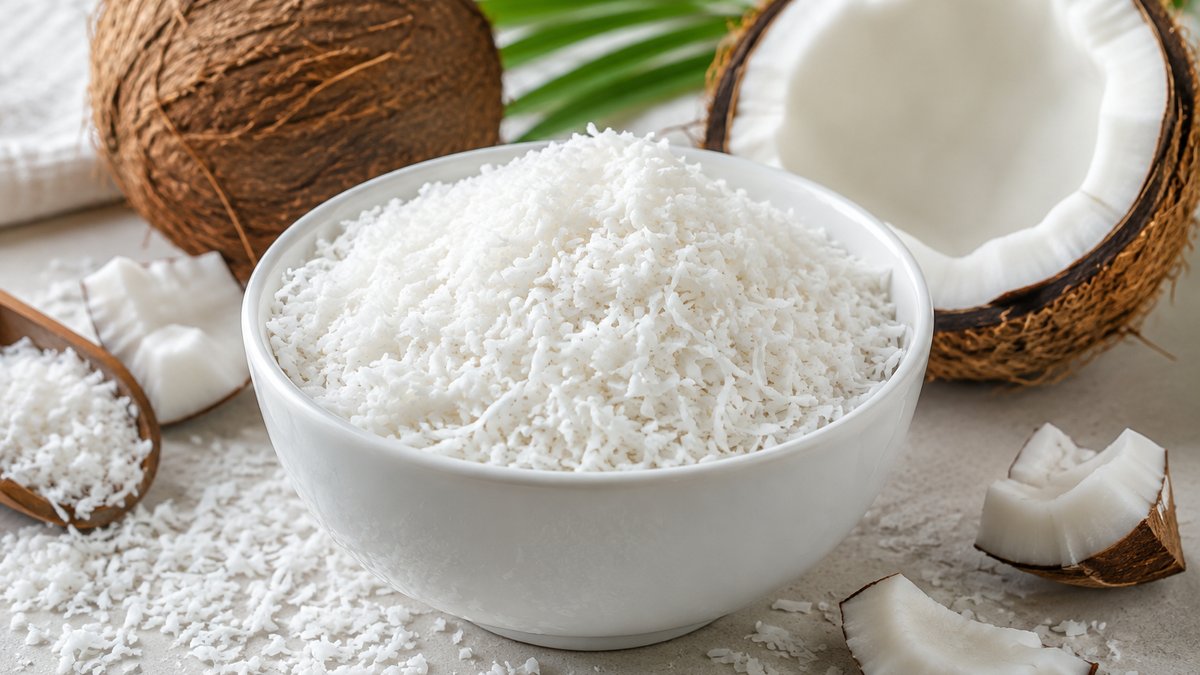
As of 9 November 2026, a published Philippine export quotation for desiccated coconut remained at 109–190 US cents per pound FOB. The reported average was 135.17 cents per pound, or approximately US$2,980 per metric tonne before freight. These are origin-side export references, not a UK delivered price or a firm offer for a particular grade or shipment.
This update covers the latest quotation and market information located through 13 November 2026. It separates the Philippine export reference from UK import costs, which also depend on specification, freight, insurance, packing and the delivery terms in a supplier’s offer.
Key Takeaways
- On 9 November 2026, TM Duché reported Philippine desiccated coconut export quotations of 109–190 US cents per pound FOB. Its reported average was 135.17 cents per pound, approximately US$2,980/MT before freight.
- The quoted range had reportedly remained unchanged for 38 consecutive weeks. The reported average was below the 172.33 cents per pound cited for October 2025, but the range and average are market indicators, not a UK purchase price.
- The International Coconut Community’s 7 November price update listed no Philippine FOB quotation, while showing Indonesia at US$1,925/MT FOB for fine, high-fat desiccated coconut. Different reporting coverage and product specifications mean these figures are not a like-for-like price comparison.
- A June 2026 ICC review described prices easing from 2025 highs as coconut availability improved and buying interest softened. Philippine domestic raw-material prices were rising in the 9 November market report, while export quotations remained steady.
- UK buyers should request a current quotation for a stated grade and delivery basis, then compare landed costs. The sources reviewed do not establish a current UK delivered price or a recent ranking of the UK’s supplying origins.
1. Desiccated Coconut Market Overview
Desiccated coconut prices in late 2026 show different signals at origin: the Philippine export range reported by TM Duché was steady, while the same report described higher domestic Philippine prices for the product and firmer raw-material costs. For a UK buyer, those indicators help frame supplier discussions, but they do not set the cost of a shipment delivered to Britain.
The ICC’s June 2026 review said prices had corrected during the first part of the year after the exceptional highs of 2025. It attributed the easing to improved coconut availability and softer buying interest as importers adjusted to the previous year’s high prices. The review also said prices remained above levels recorded in 2023 and most of 2024. These are market-wide observations, not a UK import price series.
The Philippines, Indonesia and Sri Lanka appear in the recent sources as producing or exporting origins with price information, but the available figures are not all comparable. For example, the ICC’s 7 November update gives an Indonesian FOB price for fine, high-fat product, while its Philippine FOB entry is marked no quotation. TM Duché’s 9 November report gives a Philippine range and average. The different entries should not be treated as a single origin ranking.
The evidence reviewed for this update does not support ranking the UK’s leading import origins or giving a current UK import-volume forecast. UK import demand and a supplier’s export quotation are separate measures. Buyers assessing demand should use dated UK customs data for the relevant product code and period, rather than infer UK purchasing from a global export quotation.
Looking to Source Desiccated Coconut?
Connect with verified suppliers, discover matching products, and explore sourcing opportunities from global markets.
2. Latest Desiccated Coconut Export Prices
The most recent dated Philippine export reference located for this update is from 9 November 2026. TM Duché reported a range of 109–190 US cents per pound FOB Philippines and an average quoted export price of 135.17 cents per pound, equivalent to approximately US$2,980/MT before freight. FOB means the seller’s delivery obligation is tied to loading at the named port; costs after that point are not included in the reference.
2.1 Current export price in the Philippines
The 109–190 cents per pound range is wide. It should not be read as a single price that applies to every order. Grade, fat content, particle size, moisture, microbiological requirements, packing, order volume and shipment timing can change a supplier’s offer. The market report does not identify a specific grade or shipment attached to each end of the range, so buyers should not assign one end to a grade without confirmation.
The 135.17 cents per pound figure is the reported average quotation, not a transaction price verified for a UK buyer. The report puts it at approximately US$2,980 per metric tonne before freight. The quoted average is useful for discussing the origin market, but it excludes the costs needed to calculate a UK landed cost.
The Philippine range and Indonesian figure should not be used to declare one origin cheaper. Their reporting dates differ, and the Indonesian entry specifies fine, high-fat product while the Philippine range does not provide equivalent grade details. The ICC also showed no Philippine quote in its 7 November update, two days before TM Duché published its market report. These sources therefore show different reporting coverage, not a confirmed contradiction in prices.
2.2 Price comparison by exporting origin
A useful origin comparison needs matching product specifications and comparable quotation dates and terms. The available dated figures provide an indicative Philippine range and an Indonesian reference for fine, high-fat product, but they do not establish matched offers for the same grade, packaging, order size or shipment period. A UK buyer should ask each supplier to quote against one written specification and the same delivery basis.
2.3 Price trend and changes
TM Duché reported the Philippine export range unchanged for 38 consecutive weeks as of 9 November 2026. Its average quotation of 135.17 cents per pound was lower than the 172.33 cents per pound it cited for October 2025. That is a comparison of reported quotation averages, not proof that every grade or actual contract price fell by the same amount.
The ICC’s June review provides broader context: prices in major producing countries had fallen between January and May 2026 from high 2025 levels. It reported that the Philippines moved from US$3,711/MT in January to US$3,197/MT in May; those figures belong to the ICC review’s price series and should not be substituted for the later November quotation.
3. Why Are Desiccated Coconut Export Prices Changing?
The latest reports point to a split between steady export quotations and firmer costs inside the Philippines. TM Duché described Philippine domestic desiccated coconut prices as rising in early November, alongside firmer copra and fresh coconut costs. The report said higher raw-material costs may put pressure on manufacturers, but it did not report a confirmed increase in export quotations.
3.1 Supply, harvests and inventory
The ICC’s June review linked the early-2026 price correction to improving coconut availability after the supply constraints behind the 2025 highs. That assessment describes conditions at the time of the review; it does not confirm how much stock was available to each exporter in November. Buyers need current supplier information on stock, production capacity and shipment windows before relying on an origin-wide supply assumption.
3.2 Buyer demand and export volumes
The 9 November report said Philippine desiccated coconut exports fell 10.4% year on year in September. It also cited rising domestic prices and steady export quotations. This monthly export change is a reported trade statistic, not evidence that UK demand rose or fell by the same amount. Buyers should keep country-level export data separate from a specific UK market forecast.
3.3 Policies, weather, currency and logistics
The sources used here do not establish a current policy change affecting UK imports of desiccated coconut, nor do they provide a product-specific freight quote to a UK port. A general freight index or a crop-weather outlook cannot substitute for the charges and delivery schedule on an actual shipment. Importers should confirm applicable UK entry requirements and request current route-specific freight and insurance costs when comparing offers.
3.4 Competition between exporting countries
The ICC’s 7 November entry for Indonesian fine, high-fat product and TM Duché’s Philippine range can help buyers identify questions to ask across origins. They do not support a direct price ranking because their specifications and reporting sources differ. Competition should be assessed using quotations that match grade, fat content, packing, volume, inspection requirements and delivery terms.
4. Which Countries Import the Most Desiccated Coconut?
The sources reviewed for this update do not provide a recent, verified ranking of global desiccated coconut importing markets or a UK-specific import forecast. A price quotation for Philippine exports cannot establish which countries imported the largest volumes. Buyers and exporters should use customs statistics for the correct product classification and reporting period when making market-size comparisons.
4.1 Major global importing markets
No current ranking is presented here because the cited sources do not substantiate one. Customs figures can vary with the reporting year, product code, value or quantity measure and whether the data records imports or exports. A buyer assessing a destination market should compare those measures consistently and identify the year covered.
4.2 Main export destinations of the Philippines
The available November market report provides a September year-on-year change in Philippine desiccated coconut exports, but it does not identify destination shares or a ranked list of export markets. It therefore cannot support claims about the Philippines’ leading destinations, changing shares or growth by country.
4.3 Market opportunities for exporters
Exporters considering the United Kingdom should distinguish a general market signal from a confirmed order. Import statistics describe past trade; a forecast describes an expectation; a buying request describes a buyer’s stated requirement. Each answers a different question. Verify the period, product code and evidence type before using a figure to plan stock or quote a buyer.
5. Where Can Buyers Source Desiccated Coconut at a Competitive Price?
A competitive offer is the one that meets the buyer’s specification at an acceptable landed cost and delivery schedule. The Philippine FOB reference is a starting point for discussion, not the UK cost. A comparison with Indonesia also needs matched product details because the available ICC figure is specifically for fine, high-fat desiccated coconut.
Before requesting quotes, define the product: fine, medium or coarse cut; fat content; moisture limit; colour; microbiological limits; treatment or additive requirements; and any relevant customer standard. State whether the product is intended for retail repacking, bakery, confectionery or industrial use. These requirements can affect which supplier offers are comparable.
- Request the price in a stated currency and unit, such as US dollars per metric tonne, and identify the product grade and packing.
- Specify the shipment quantity, loading window and destination port in the United Kingdom.
- Ask whether the offer is FOB, CFR or CIF. CFR includes cost and freight to the named destination port, while CIF also includes insurance; confirm the exact named place and applicable Incoterms edition in the contract.
- Add destination charges, customs duties, handling, testing and other applicable import costs when calculating landed cost.
- Confirm quotation validity, payment terms, inspection arrangements and the documents supplied with the shipment.
Two quotations can differ because they cover different cuts, fat levels, packaging or shipment dates. A lower FOB price may also be offset by freight or other costs. Compare offers line by line and ask suppliers to explain any specification or delivery difference before treating the prices as equivalent.
Buying consideration: For a UK purchase, ask each supplier to quote the same specification and destination basis, then compare the complete landed-cost calculation rather than the origin price alone.
Once the specification and delivery basis are set, buyers can review potential desiccated coconut suppliers on Freshdi.
View Related Suppliers for This Product →
6. What Does the Latest Demand Look Like on Freshdi?
No dated Freshdi buying-request snapshot accompanies this market update, so there is no record-based count of requests, buyers, destinations, quantities or trade terms to report. Freshdi request listings are separate from national customs statistics and from published market quotations. A price range in a trade report does not establish that a buyer has placed an order at that level.
Buyers can use Freshdi’s desiccated coconut supplier category to review supplier listings, while suppliers can check the corresponding buying-request category for stated requirements. Check each listing for its current status and compare the listed product details with the specification and destination in the inquiry. No platform-wide demand total or trend is asserted here.
7. What Should Buyers and Suppliers Do Next?
7.1 For buyers and importers
- Write a specification that identifies cut, fat content, moisture, packing and quality limits.
- Ask suppliers for dated quotations with the currency, unit, Incoterm, named port and validity period stated.
- Compare quotations only when specifications and shipment conditions match; calculate freight, insurance and destination costs separately where needed.
- Confirm current UK import requirements and shipment documentation for the product and its processing method.
- Check supplier availability, lead time and shipment schedule before committing to a price comparison.
7.2 For exporters and suppliers
- State the grade, cut, fat content, packing and available quantity in each offer.
- Name the loading port and identify whether the quotation is FOB or another delivery basis.
- Date each price and set a clear validity period, currency and unit.
- Confirm the shipment window and documents available for the buyer’s destination.
- Review relevant Freshdi buying requests and respond only when the listed product and delivery terms fit the request.
For both sides, the November Philippine price range is a dated reference rather than a standing offer. A fresh quotation tied to the order’s exact specification and shipment period is needed before setting a purchase budget or sales price.
8. How Freshdi Helps Buyers and Suppliers Connect
Freshdi’s product-category pages give buyers a place to review potential desiccated coconut suppliers and give suppliers a place to review relevant buying requests. Those listings support discovery; they do not establish a market price, verify an unlisted capability or guarantee a transaction.
Buyers can use the product details in supplier listings to identify possible matches, then request a quotation with the same grade, quantity, destination and delivery basis from each candidate. Suppliers can review the stated buyer requirements and decide whether their product and shipment schedule fit before preparing an offer.
After setting a comparable specification, buyers and suppliers can review the relevant Freshdi listings and requests for desiccated coconut.
View Latest Fruit Buying Requests →View Potential Fruit Suppliers →
9. Conclusion: United Kingdom Desiccated Coconut Market Outlook
As of 9 November 2026, TM Duché reported Philippine export quotations at 109–190 US cents per pound FOB, with a 135.17 cents per pound average, approximately US$2,980/MT before freight. The reported range had stayed unchanged for 38 weeks, while the report described higher domestic Philippine costs. The ICC’s separate 7 November update listed no Philippine FOB quotation, so buyers should treat the two publications as distinct market observations.
For UK procurement, neither the Philippine range nor the Indonesian fine, high-fat reference is a UK landed price. Buyers should compare current, specification-matched quotations and include delivery and destination costs. Suppliers should state grade, basis, port and quote validity clearly when responding to an inquiry.
Buyers ready to compare product listings can review potential desiccated coconut suppliers on Freshdi.
View Related Suppliers for This Product →

Frequently Asked Questions
What is the latest desiccated coconut export price relevant to UK buyers?
TM Duché’s 9 November 2026 report gave Philippine export quotations of 109–190 US cents per pound FOB and an average of 135.17 cents per pound, approximately US$2,980 per metric tonne before freight. This is an origin-side reference, not a UK delivered quotation.
Has the Philippine desiccated coconut price changed recently?
TM Duché reported that the 109–190 cents per pound export range had been unchanged for 38 consecutive weeks as of 9 November 2026. Its reported average was 135.17 cents per pound, compared with 172.33 cents per pound in October 2025. These are reported quotation indicators, not a record of every grade or contract.
Why do desiccated coconut export prices vary between origins?
Offers can differ by grade, cut, fat content, quality limits, packing, volume and shipment date. The available Philippine and Indonesian references also use different reporting sources and product descriptions, so they should not be ranked as equivalent offers without matching specifications.
What factors are affecting desiccated coconut prices in 2026?
The ICC’s June 2026 review described prices easing from 2025 highs as availability improved and buying interest softened. TM Duché’s 9 November report described rising Philippine domestic prices and higher raw-material costs alongside steady export quotations. Those reports describe different points in the supply chain and do not confirm a future export-price move.
How should a UK buyer compare FOB and CIF desiccated coconut prices?
FOB and CIF quotations cover different costs. Ask suppliers to state the named port and delivery basis, then account for freight, insurance and destination charges consistently. Compare the same grade, packing, quantity and shipment period before deciding which offer has the lower landed cost.
Where can buyers find desiccated coconut suppliers or buying requests on Freshdi?
Buyers can review potential suppliers through Freshdi’s desiccated coconut supplier category, and suppliers can review the corresponding buying-request category. Check listing details and request status directly; the market quotations in this article do not represent Freshdi buying requests or confirmed orders.
References
1. TM Duché & Sons – Global Coconut Market Update 9 November 2026, 9 November 2026.
2. International Coconut Community – Latest Coconut Product Prices, 7 November 2026.
3. International Coconut Community – Market Review of Desiccated Coconut, June 2026, June 2026.
Disclaimer: This article is compiled from platform data, public sources and information provided by third parties, for general informational purposes only. We do not guarantee its accuracy or completeness. Prices, volumes and forecasts are indicative, reflect conditions as of 2026-11-13 and may change without notice. This is not financial, investment or trading advice.