
Introduction
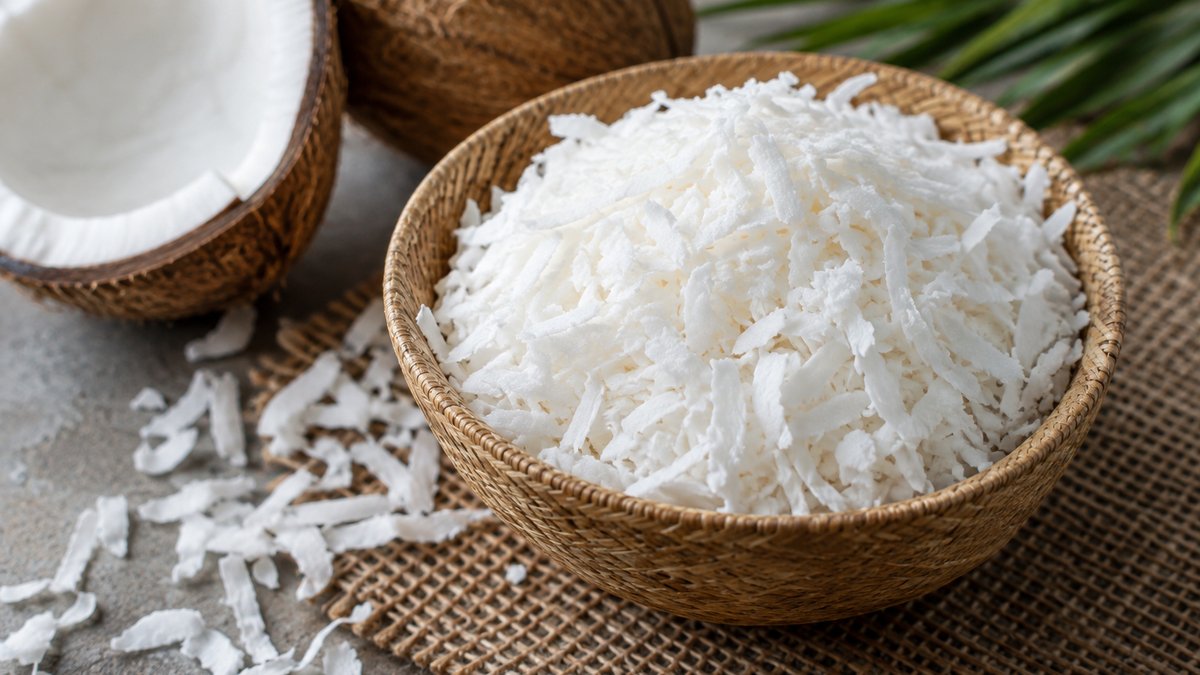
On 9 November 2026, T.M. Duché reported Philippine desiccated coconut export quotations of US$1.09 to US$1.90 per pound FOB. The reported average seller quotation was US$1.3517 per pound, unchanged from the prior week and below the US$1.7233 per pound reported for October 2025.
These are export indications, not a U.S. wholesale price or a delivered offer. This update uses the latest dated quotation located for the U.S. market, alongside market and trade information available through November 2026. FOB means the seller’s price covers the goods up to loading on board at the named port; buyers must add freight, insurance where applicable, and destination costs to estimate landed cost.
Key Takeaways
- T.M. Duché’s 9 November 2026 report put Philippine desiccated coconut quotations at US$1.09 to US$1.90/lb FOB, with an average seller quotation of US$1.3517/lb FOB.
- The reported export range had not changed for 38 consecutive weeks. The average quotation was 21.6% below the US$1.7233/lb reported for October 2025, according to T.M. Duché.
- The International Coconut Community reported that prices across the Philippines, Indonesia and Sri Lanka fell between January and May 2026 as coconut availability improved and buying interest softened.
- In 2024, the United States received 39,819 tonnes of desiccated coconut from the Philippines, according to the International Coconut Community’s trade summary. That is an export-destination figure, not total U.S. imports.
- U.S. buyers should compare identical grades, packaging, shipment timing and delivery terms, then calculate landed cost. The FOB range is a market reference, not a firm quotation.
1. Desiccated Coconut Supply and Demand in the U.S. Market
The United States is a significant destination for Philippine desiccated coconut, while the Philippines, Indonesia and Sri Lanka are among the producing and exporting origins tracked in International Coconut Community market reporting. In 2024, Philippine shipments of desiccated coconut to the United States totaled 39,819 tonnes, up 20.2% from 2023, according to the ICC’s 2025 trade summary. The same summary recorded 29,552 tonnes to the Netherlands and 10,819 tonnes to China.
Those figures describe Philippine exports by destination; they do not rank all U.S. suppliers or measure U.S. imports from every origin. They do show the scale of the U.S. outlet for Philippine product in that reporting year. Importers should use current customs data for a full origin-by-origin comparison before changing their sourcing mix.
The broader supply picture shifted during 2026. The ICC’s June 2026 review said prices in its reported series declined between January and May: the Philippines moved from US$3,711 to US$3,197 per metric tonne, Indonesia from US$2,650 to US$2,095/MT, and Sri Lanka from US$2,825 to US$2,365/MT. The ICC attributed the correction to improved coconut availability and softer buying interest after the sharp price rise of 2024 and early 2025.
The ICC said import values remained elevated compared with earlier levels, including a 26.9% increase in U.S. average import value in its reviewed period. That is a value measure, not a volume measure or a U.S. retail-price series. It indicates that lower export quotations during the 2026 correction did not immediately erase the higher import costs recorded after the earlier supply shortage.
Export availability also warrants attention. UCAP figures reported by T.M. Duché show Philippine desiccated coconut exports of 75,522 tonnes in January to June 2026, compared with 141,488 tonnes in the same period of 2025, a 46.6% decline. The export figure alone does not establish whether the change came from supply constraints, demand, or both. Buyers should confirm current mill availability and shipment windows directly in each quotation.
Looking to Source Desiccated Coconut?
Connect with verified suppliers, discover matching products, and explore sourcing opportunities from global markets.
2. Latest Desiccated Coconut Export Prices
2.1 Current Philippine export quotation
The latest dated indication found for this update is the Philippine FOB quotation published by T.M. Duché on 9 November 2026. The reported international range was US$1.09 to US$1.90/lb FOB Philippines. The average seller quotation was US$1.3517/lb FOB. The report says the range had remained unchanged for 38 consecutive weeks.
T.M. Duché compared the 9 November average with US$1.7233/lb in October 2025 and reported a decline of about 21.6%. The source does not identify one grade or specification for every offer within the broad range. Treat the range as an export-market indicator, not as a quotation for a particular size, fat content, moisture level, pack, volume or shipment date.
The quotation is FOB Philippines, so it excludes the ocean freight and destination charges needed to calculate a U.S. delivered cost. It also does not establish a price at a U.S. port or warehouse. A buyer should request the quote date, validity period, named loading port, product specification, package size and shipment window before comparing offers.
2.2 Comparison across exporting origins
The ICC’s January-to-May 2026 figures provide a same-period view of prices across three origins. They offer context for the relative correction during those months, but they are not November quotations. The latest Philippine FOB range above should not be compared directly with this earlier series unless grade, price basis and reporting method match.
The January-to-May figures show that reported prices fell in all three origins, with Indonesia showing the largest absolute drop among the listed series. They do not prove that an Indonesian offer will cost less for a U.S. buyer: product grade, quality tolerances, packaging, freight, availability and contract terms can change the comparison.
2.3 Price direction and reporting limits
The latest reported Philippine export range was stable week to week, while its average seller quotation was lower than the October 2025 comparison. The ICC’s earlier 2026 series also showed lower prices through May. These observations cover different periods and data series, so they describe a general correction rather than one continuous, specification-matched price index.
No U.S. wholesale or landed price is inferred from the FOB quotation. Customs unit values, if used, would combine shipments with different qualities, contract dates and delivery arrangements. Buyers should compare live offers on the same specification and Incoterm before using a market reference for a purchase budget.
3. Why Desiccated Coconut Export Prices Are Changing
Improved raw-coconut availability and weaker buying interest were cited by the ICC as reasons for lower desiccated coconut prices during January to May 2026. The organization described the market as moving away from the acute supply tightness of 2024 and early 2025 toward a more balanced position. Its June review also cautioned that recovery differed among producing countries.
Raw-material costs can move separately from export quotations. In its 9 November 2026 update, T.M. Duché reported rising Philippine domestic desiccated coconut prices and noted higher costs for copra and fresh coconuts. The same update reported stable export quotations. That gap means a stable export indication does not necessarily mean processors’ local input costs are unchanged.
Reported export volumes are another signal to monitor. Philippine desiccated coconut exports were down 46.6% year on year in the first half of 2026, based on UCAP figures cited by T.M. Duché. The volume decline is a reason to confirm allocation and shipment timing with suppliers. It is not, on its own, proof that export prices will rise.
Weather is a supply risk to track, but a weather concern is not a confirmed crop loss. The available price reports do not quantify a November 2026 weather impact on desiccated coconut production. Buyers setting cover for later shipment periods should check updated crop and availability information before revising purchase assumptions.
Freight and currency affect the delivered economics of a purchase even when FOB prices are unchanged. The November quotation is in U.S. cents per pound and ends at the Philippine loading point. A U.S. importer should obtain a freight quote for the intended route and shipment date, confirm the quote currency, and include insurance, port handling, customs charges and inland delivery where applicable.
4. Which Countries Import the Most Desiccated Coconut?
4.1 Major importing markets
The U.S. market is a major destination for Philippine desiccated coconut. In 2024, Philippine exports to the United States were 39,819 tonnes, compared with 29,552 tonnes to the Netherlands and 10,819 tonnes to China, according to the ICC’s 2025 trade summary. The summary reported U.S.-bound volume up 20.2% year on year, while shipments to the Netherlands were down 1.6% and shipments to China were down 3.8%.
These figures rank destinations for Philippine exports in that report, not all national import markets worldwide. They also predate the 2026 price quotation. Use them as evidence of established destination flows, not as a forecast of current U.S. demand or a substitute for current import statistics.
4.2 Philippine export destinations and demand signals
The 2024 destination figures show the United States as the largest of the three markets cited in the ICC summary. The Netherlands and China also received substantial Philippine shipments. Exporters considering U.S. business should check buyer specifications, shipment timing and applicable import procedures for each order; a national destination total does not reveal the requirements of an individual buyer.
4.3 What the trade figures mean for exporters
A large destination flow can indicate an established trade route, but it does not confirm a current order or a price premium. Exporters should separate historical export statistics from a buyer’s request and quote against the actual product, quantity, delivery basis and timing. Buyers should likewise ask whether the offered product matches the grade and intended use they purchase.
5. How U.S. Buyers Can Compare Desiccated Coconut Offers
Compare landed cost, not FOB figures alone. An FOB Philippines offer and a price delivered to a U.S. warehouse cover different services and costs. For a fair comparison, request offers on the same Incoterm, destination, shipment period, order volume, packaging and product specification.
- Specify the product form and grade, including particle size or cut, fat content and any other quality limits required by the purchase contract.
- State the package type and net weight per bag or carton, plus the total shipment quantity.
- Ask for the named loading port, Incoterm, quote currency, quote validity and shipment window.
- Add the freight and insurance cost for the same route and shipment period. Include destination-port charges and inland delivery in the landed-cost calculation.
- Check the supplier’s certificates and product documents against the buyer’s contract and U.S. entry needs. Do not assume one shipment’s documents apply to another product or facility.
- Confirm the applicable U.S. food-import steps. FDA says imported food facilities must be registered where required and that prior notice must be provided for incoming food shipments. Check current official requirements for the specific product and shipment.
For U.S. entry, FDA’s general importing guidance says food imports must meet U.S. food regulations and import procedures, including facility registration and prior notice requirements. Requirements depend on the product and circumstances of entry. Buyers should verify the current rules with the relevant authorities and their customs broker rather than treating an export-price report as regulatory advice.
Buying consideration: Ask each supplier to quote the same written specification and U.S. destination basis. A lower FOB number is not a lower landed cost until freight, insurance, handling, quality and delivery timing are included.
6. What Does Desiccated Coconut Demand Look Like on Freshdi?
Export quotations and national trade statistics do not show which buyers are currently looking for desiccated coconut. Freshdi buying requests are individual buyer requirements, so assess each request by its posting date, requested grade, quantity, destination and trade term. A request is a sourcing lead, not a measure of total U.S. market demand.
Suppliers preparing an offer should confirm that their available product matches the stated specification and shipment window. Buyers can use a clear request to state grade, package, volume, delivery basis and required documents. If any of those details are absent, clarify them before comparing a quotation with the November FOB reference.
7. What Buyers and Suppliers Should Do Next
7.1 For buyers and importers
- Use the 9 November Philippine FOB quotation as a dated reference only; request a current firm offer for the required grade and shipment period.
- Compare at least two offers on matching quality, package, volume, destination and Incoterm terms.
- Calculate landed cost using route-specific freight, insurance, port charges and inland transport.
- Confirm production availability, shipment timing and quote validity, especially when planning purchases beyond the current shipment window.
- Check product documents and current U.S. food-import requirements before confirming the contract.
7.2 For exporters and suppliers
- State the product grade, particle size, fat content, quality tolerances, package and available quantity in the quotation.
- Name the loading port and Incoterm, and identify the quote currency and validity date.
- Separate a dated market indication from a firm offer for a specific buyer and shipment.
- Confirm production capacity and shipment availability before accepting a delivery schedule.
- Review buyer requests individually and tailor quotations to the destination and stated specifications.
8. How Freshdi Helps Buyers and Suppliers Connect
Buyers can review Freshdi’s Desiccated Coconut supplier listings and post a request with their required grade, quantity, packaging and destination. Suppliers can review buying requests and decide whether their available product and shipment terms match the buyer’s stated needs. These listings and requests support discovery; they do not guarantee a transaction or a particular price.
Buyers comparing origins and suppliers can review the relevant Freshdi category pages for current listings and requests.
View Latest Fruit Buying Requests →View Potential Fruit Suppliers →
9. Conclusion: United States Desiccated Coconut Market Outlook
The latest dated export indication found for this update was the 9 November 2026 Philippine FOB range of US$1.09 to US$1.90/lb, with an average seller quotation of US$1.3517/lb. The range was reported stable for 38 weeks, while the average was below the October 2025 comparison. This is an export reference, not a U.S. landed or wholesale price.
For U.S. buyers, supplier availability, product specification and delivered cost should guide comparisons. Exporters should quote a named grade, port, delivery basis and validity period, and confirm current shipment capacity. Freshdi’s Desiccated Coconut pages can help buyers review suppliers and suppliers identify relevant buying requests.
Buyers and suppliers ready to compare current sourcing needs can continue with the relevant Freshdi category pages.
View Latest Fruit Buying Requests →View Potential Fruit Suppliers →
Frequently Asked Questions
What is the latest desiccated coconut export price relevant to U.S. buyers?
T.M. Duché’s 9 November 2026 market update reported Philippine desiccated coconut quotations of US$1.09 to US$1.90 per pound FOB. Its average seller quotation was US$1.3517/lb FOB. This is an export indication, not a U.S. wholesale or delivered price, and the source does not identify one specification for every offer in the range.
Did desiccated coconut prices rise or fall in 2026?
The ICC’s June 2026 review reported lower prices across its Philippine, Indonesian and Sri Lankan series between January and May. T.M. Duché later reported that the Philippine export quotation range was unchanged for 38 consecutive weeks as of 9 November 2026. The reports cover different periods and measures, so they indicate a price correction followed by a stable quoted range, not a single specification-matched index.
Which country supplied the most desiccated coconut to the United States?
The ICC’s 2025 trade summary reported 39,819 tonnes of Philippine desiccated coconut exports to the United States in 2024, making the U.S. the largest destination among the markets listed in that summary. That figure covers Philippine exports only, not total U.S. imports from all origins.
Why do desiccated coconut quotations vary so widely?
A market range can include offers with different grades, particle sizes, fat content, packaging, volumes, shipment dates and commercial terms. The 9 November 2026 Philippine quotation range does not specify one grade across all offers. Ask suppliers to quote against the same written specification before comparing prices.
How should U.S. buyers compare FOB and delivered prices?
FOB covers the goods through loading at the named export port. To compare it with a delivered offer, add route-specific freight, insurance where applicable, destination handling and inland delivery. Compare the same product specification, shipment period, volume and destination before deciding which quotation has the lower landed cost.
Where can buyers find desiccated coconut suppliers or buying requests on Freshdi?
Buyers and suppliers can review the Freshdi Desiccated Coconut category pages for supplier listings and buying requests. Check each listing or request for its current status, date, grade, quantity, destination and trade terms; a request is an individual buyer requirement, not a measure of total market demand.
References
1. T.M. Duché & Sons – Global Coconut Market Update 9 November 2026, 9 November 2026.
2. International Coconut Community – Weekly Price Update, 7 November 2026.
3. International Coconut Community – Market Review of Desiccated Coconut, June 2026, June 2026.
4. United Coconut Association of the Philippines – Philippine Coconut Products Export Earnings Topped USD4 Billion in 2025, 2026.
5. International Coconut Community – Prevailing Market Prices and Desiccated Coconut Trade Summary, 2025.
6. U.S. Food and Drug Administration – Importing Food Products into the United States, Accessed 14 November 2026.
Disclaimer: This article is compiled from platform data, public sources and information provided by third parties, for general informational purposes only. We do not guarantee its accuracy or completeness. Prices, volumes and forecasts are indicative, reflect conditions as of 2026-11-14 and may change without notice. This is not financial, investment or trading advice.