
Introduction
The latest South Korea-directed dried cassava chips price located for this November 2026 update is US$320 per metric tonne, FOB Quy Nhon or Ho Chi Minh City, in a Vietnam market bulletin dated 19 October 2026. The bulletin reported no change during its reporting period. It did not state a product grade, moisture level, or shipment month, so the figure is a reference, not a complete supplier quotation.
South Korea imported 92,076.2 tonnes of manioc under HS 071410 in 2025, according to World Bank WITS data from UN Comtrade. That customs heading covers fresh or dried manioc, not dried chips alone. This update uses the 19 October Vietnam reference as the latest dated South Korea-specific price located, alongside 2025 import data and an earlier Thai export reference.
Key Takeaways
- Vietnam's 19 October 2026 bulletin listed dried cassava chips for South Korea at US$320/MT FOB Quy Nhon or Ho Chi Minh City. It described the reference as unchanged during the reporting period.
- The Vietnam bulletin did not state grade, moisture, starch content, or shipment month. Buyers should confirm these details before comparing offers.
- A Thai reference reported US$255 to US$265/MT FOB for cassava chips on 13 October 2026. It was not identified as a South Korea-specific offer, so it is not directly comparable with Vietnam's quote.
- South Korea imported 92,076.2 tonnes of manioc under HS 071410 in 2025. Thailand supplied 73,914.6 tonnes and Vietnam 18,158.5 tonnes; the code includes fresh or dried manioc, not chips alone.
- Compare offers using the same product specification and delivery basis, then add freight, insurance, packaging, and destination costs to assess landed cost.
1. South Korea’s cassava trade relies on regional supply
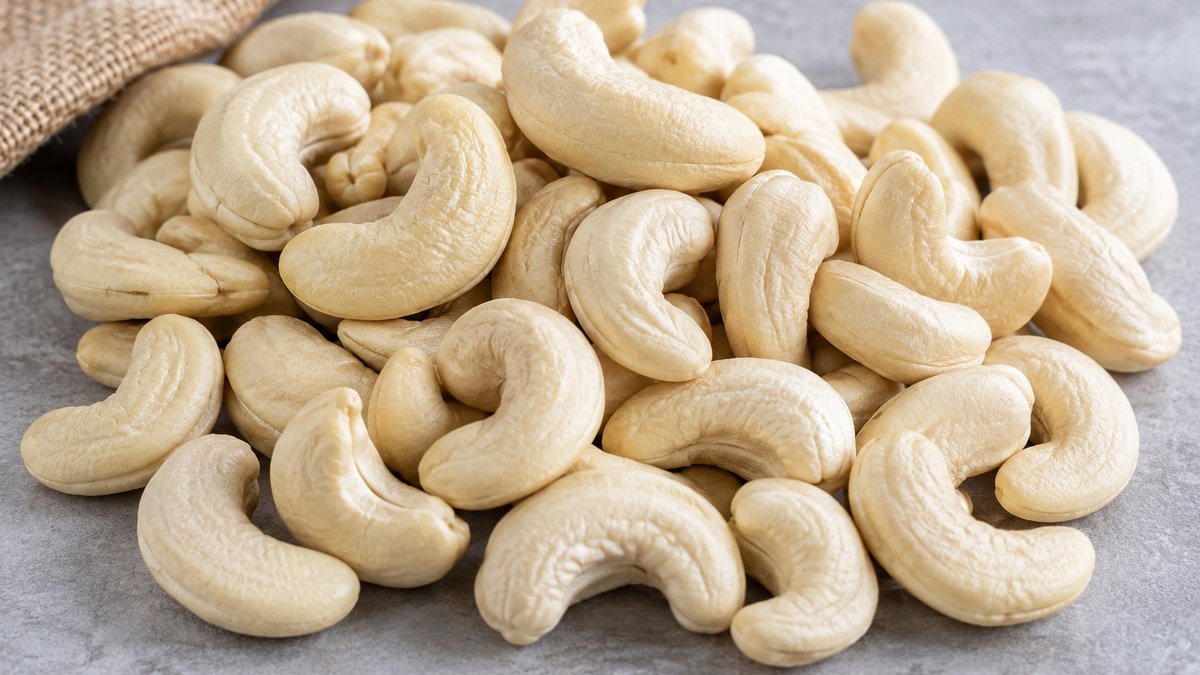
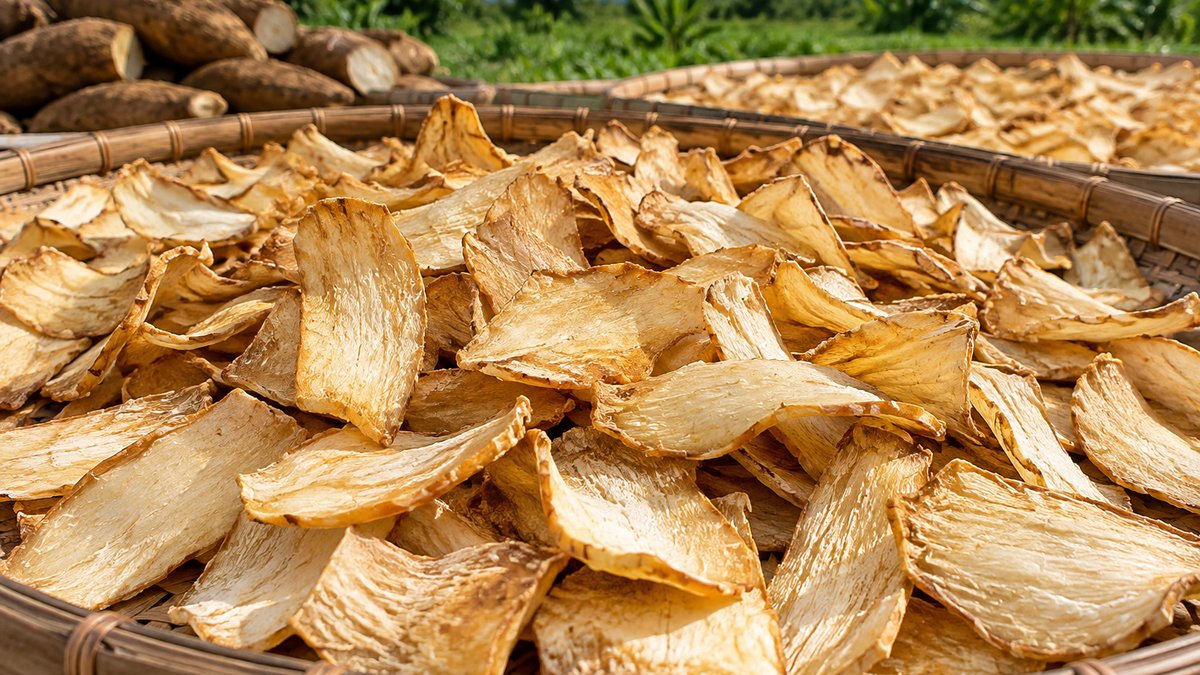
Cassava chips are a dried cassava product traded as an industrial raw material. The price evidence located for this update is origin-side export pricing, while the available South Korean import data combines fresh and dried manioc under one customs heading. Those sources describe different parts of the market and should not be treated as a single price series.
WITS reports South Korean imports of 92,076.2 tonnes under HS 071410 in 2025, valued at US$17.76 million. Thailand supplied 73,914.6 tonnes and Vietnam supplied 18,158.5 tonnes. These figures establish the main reported origins for the broader customs category, not the exact volume of dried chips.
The cited sources do not provide comparable global production and consumption totals for dried chips. Root output is converted into different products, and this price update has no like-for-like production series to report. For South Korea sourcing, the more directly supported evidence is the country’s import record and dated export references.
South Korea’s 2025 import record shows a concentrated supply base within HS 071410: Thailand and Vietnam accounted for nearly all reported quantity. The code also covers forms other than chips, so importers should confirm the product classification and any product-specific requirements for their shipment rather than assume the aggregate data describes their exact goods.
Looking to Source Dried Cassava Chips?
Connect with verified suppliers, discover matching products, and explore sourcing opportunities from global markets.
2. Latest dried cassava chips export prices
2.1 Current South Korea-directed price reference
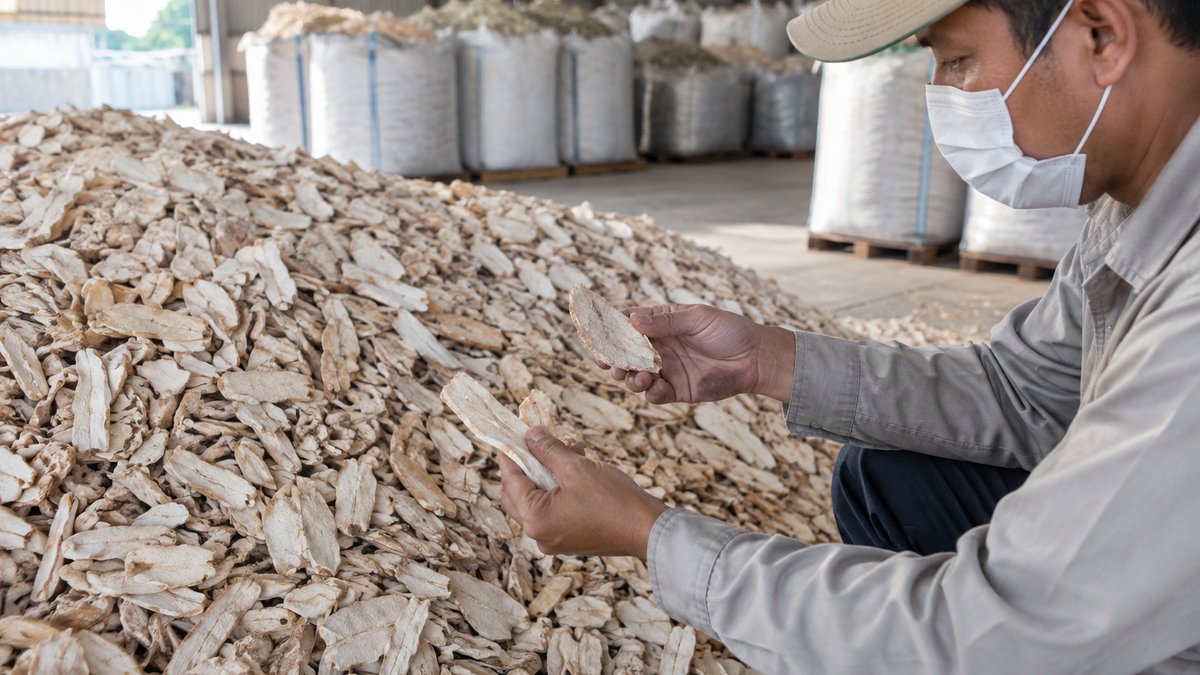
The latest dated South Korea-specific reference located is US$320/MT, FOB Quy Nhon or Ho Chi Minh City, in a Vietnam market bulletin published on 19 October 2026. The bulletin said cassava chip export prices remained unchanged during its reporting period. On 17 November 2026, that reference was 29 days old.
FOB, or Free On Board, means the seller’s price covers delivery and loading at the named port under the agreed contract. This reference does not include ocean freight or insurance to South Korea. The bulletin did not state the grade, moisture, starch content, packaging, or shipment window, and it did not identify a transaction price.
The Thai range was reported from the Thai Tapioca Trade Association’s price information in a 19 October market bulletin. Its product description and destination basis do not establish a specification-matched comparison with the Vietnam figure. The two references therefore show reported origin prices, not a proven price premium for one origin.
2.2 Price comparison by exporting origin
The Vietnam figure is the only South Korea-directed dried-chip quote among these references. Thailand’s range is useful as a separate export benchmark, but the source did not say it was for South Korea or give the same specification. Buyers should request current quotations on a shared basis before using either figure in a procurement comparison.
2.3 Price trend and changes
The 19 October bulletin reported no change in its dried-chip export reference during that reporting period, but it did not publish a numerical prior-period quote for the South Korea price. The available evidence therefore does not support a percentage change or a continuous month-on-month price trend for South Korea-bound chips.
A current November transaction price, a CIF South Korea quotation, and a specification-matched historical series were not located. Importers should treat the October figure as a dated reference and ask suppliers to confirm current availability and quotation validity before budgeting.
3. Factors that can change dried cassava chips export prices
Cassava chip prices can vary with root availability, drying conditions, product quality, buyer demand, and the costs of moving goods to port. The dated price sources in this update do not quantify each factor’s effect on the US$320/MT South Korea reference, so none should be treated as a measured explanation for that price.
3.1 Root supply, harvest, and inventories
Processors depend on available cassava roots and the ability to dry them to the buyer’s agreed specification. Seasonal supply or wet conditions can affect the amount of exportable material, while stocks held by processors and traders affect what they can offer. The sources cited here do not provide a current crop or inventory estimate for Vietnam’s South Korea-bound chips.
3.2 Buyer demand and competition between origins
South Korea’s 2025 import data shows Thailand and Vietnam as its leading reported origins under HS 071410. That annual record does not establish current orders or demand for dried chips specifically. Buyers should check recent orders and shipment availability directly rather than infer a current demand trend from one year of aggregated customs data.
3.3 Export policy, currency, and logistics
A policy change, exchange-rate movement, freight charge, or port delay can change a buyer’s total cost even when an FOB reference is unchanged. Neither the October Vietnam price bulletin nor the cited import data quantifies those effects for the quoted shipment. Ask each supplier to state the quote currency, validity period, loading port, shipment window, and any charges excluded from the offer.
4. Which countries import the most dried cassava chips?
4.1 South Korea’s reported imports by origin
South Korea imported 92,076.2 tonnes of manioc under HS 071410 in 2025, according to WITS data sourced from UN Comtrade. Thailand accounted for 73,914.6 tonnes and Vietnam for 18,158.5 tonnes. The customs category covers fresh or dried manioc, so these quantities are not a ranking of dried cassava chip imports alone.
The WITS table also lists small quantities from other origins. Because HS 071410 combines fresh and dried forms, the table describes the broader manioc import category. Buyers seeking chip-specific origin shares need a more detailed customs breakdown or shipment-level information.
4.2 Vietnam’s export destinations
The sources used for this update do not provide a comparable 2025 or 2026 ranking of Vietnam’s dried cassava chip export destinations. The dated Vietnam bulletin gives a South Korea-directed FOB reference, while the WITS data reports South Korean imports by origin. Those records do not establish Vietnam’s overall destination shares or year-on-year changes.
4.3 What import data can and cannot show exporters
South Korea’s 2025 imports confirm that manioc entered the market mainly from Thailand and Vietnam under the broad customs code. That is useful context for exporters evaluating an established trade lane. It does not confirm active buyer orders, the quantity of dried chips required, or the price an importer will accept.
5. How buyers can source dried cassava chips at a competitive price
A competitive offer is one that meets the buyer’s product and delivery requirements at an acceptable landed cost. The US$320/MT Vietnam reference is FOB, while the Thai reference is also an export-side figure with no South Korea destination specified. Neither figure alone establishes the delivered cost to a Korean port.
- Set one written specification for every supplier: chip form and size, moisture, starch content if required, foreign matter limits, packaging, and inspection method.
- Request the same quantity, shipment month, loading port, currency, and quote validity from each origin.
- Ask suppliers to identify the Incoterm and named port. For FOB, add freight, insurance, and destination charges before comparing with a delivered offer.
- Check import classification and applicable South Korean requirements for the exact product and intended use with the relevant authorities or your customs adviser.
- Confirm shipment readiness, sample or inspection arrangements, documents, and the contract’s tolerances before placing an order.
If a Vietnamese supplier quotes US$320/MT FOB, a buyer should not compare it directly with a Thai FOB range until both offers cover the same chip quality, quantity, shipment timing, and inspection conditions. A lower headline price can be offset by freight, extra handling, or a mismatch with the buyer’s specification.
Buying consideration: Ask each supplier to quote against the same specification and destination plan, then compare the full cost through arrival in South Korea.
6. What the latest demand looks like on Freshdi
No Freshdi buying-request records or platform statistics were included for this update, so it cannot report request counts, buyer quantities, preferred specifications, or active demand for dried cassava chips in South Korea. The import figures in this article come from customs data and are separate from Freshdi platform activity.
Buyers can use Freshdi’s dried cassava chips supplier category to explore supplier listings. Suppliers can review the dried cassava chips buying-request category for relevant requests. A category page is a discovery resource, not evidence that a listed supplier has a particular stock level or that a buyer has placed an order.
Before responding to a request or evaluating a listing, compare the stated product form, quantity, destination, and delivery terms with the specification you need. Request any material details that are missing before treating an offer as comparable with the dated FOB references in this update.
7. What buyers and suppliers should do next
7.1 For buyers and importers
- Use the 19 October Vietnam price as a dated reference, not as a current November offer or a delivered South Korean price.
- Request a fresh quote and record the date, validity period, Incoterm, named port, and shipment month.
- Confirm product specification, packaging, quantity, sample or inspection terms, and the documents required for the intended import.
- Compare suppliers on the same basis and calculate landed cost, including freight, insurance, and destination charges.
- Treat HS 071410 import totals as broad manioc data unless you have a chip-specific customs breakdown.
7.2 For exporters and suppliers
- State whether the price is for dried chips and identify the grade or quality parameters used.
- Name the loading port, quote currency, Incoterm, shipment period, and quotation validity.
- Give buyers the moisture, starch, chip-size, packaging, and inspection details needed to compare the offer.
- Separate a reference price from a firm offer and update the quotation when costs or availability change.
- Use South Korea import statistics as trade context, not as proof of a confirmed order.
8. How Freshdi helps buyers and suppliers connect
Freshdi provides category pages where buyers can explore suppliers and suppliers can review buying requests. Buyers comparing dried cassava chips can browse potential suppliers, while exporters can review related buying requests. These pages help with discovery; each party still needs to confirm product details, availability, and commercial terms.
Buyers and suppliers comparing product fit can review the relevant category pages before discussing specifications and delivery terms.
View Latest Vegetables Buying Requests →View Potential Vegetables Suppliers →
9. South Korea dried cassava chips market outlook
The latest located South Korea-directed reference is Vietnam’s US$320/MT FOB price dated 19 October 2026. The bulletin reported no change during its reporting period, but its published figure does not include a detailed grade or a delivered price. The Thai FOB range is a separate origin reference, not a matched South Korea offer.
South Korea’s 2025 imports under HS 071410 were led by Thailand and Vietnam, although the code covers fresh and dried manioc rather than chips alone. Buyers should seek current, specification-matched quotations and calculate landed cost; suppliers should state the terms and product details behind each offer.
Buyers and exporters can use Freshdi to find relevant supplier listings or buying requests, then verify each product specification and commercial offer directly.
Once the required chip specification and delivery basis are clear, buyers can review related suppliers for the product.
View Related Suppliers for This Product →
Frequently Asked Questions
What is the latest dried cassava chips price for South Korea?
The latest South Korea-directed reference located for this update is US$320 per metric tonne, FOB Quy Nhon or Ho Chi Minh City, in a Vietnam market bulletin dated 19 October 2026. It is a dated export reference, not a current firm offer or a delivered price in South Korea.
How does the Vietnam price compare with Thailand’s?
A Vietnam bulletin dated 19 October listed US$320/MT FOB for South Korea. A Thai reference reported US$255 to US$265/MT FOB on 13 October, but it was not identified as South Korea-directed. The sources do not establish matching product specifications, so buyers should not treat the difference as a like-for-like price comparison.
What can change dried cassava chips prices?
Root supply, drying conditions, quality, buyer demand, currency, and transport costs can affect an export offer. The sources in this update do not quantify how much each factor affected the 19 October Vietnam reference. Ask suppliers to explain the specification, shipment period, and cost basis behind a current quotation.
Which countries supplied South Korea’s manioc imports?
In 2025, South Korea imported 73,914.6 tonnes from Thailand and 18,158.5 tonnes from Vietnam under HS 071410, according to WITS data from UN Comtrade. That customs code includes fresh or dried manioc, so the quantities do not represent dried cassava chips alone.
What should buyers check before comparing cassava chip quotations?
Compare chip form and size, moisture, starch content if specified, packaging, quantity, shipment timing, named port, and Incoterm. Add freight, insurance, and destination charges when comparing FOB offers with delivered prices. Confirm South Korean import requirements for the exact product and use.
How can buyers and suppliers use Freshdi for dried cassava chips?
Buyers can explore supplier listings, and exporters can review relevant buying requests. A listing or request is a discovery starting point; confirm product details, availability, destination, and commercial terms before relying on an offer.
References
1. Viet Bac Agro Imex – Cassava Market Reference Bulletin, 19 October 2026, 2026-10-19.
2. TQ Industry – Thailand Cassava and Tapioca Starch Prices, Week of 30 September 2026, 2026-09-30.
3. World Bank WITS, UN Comtrade – Korea, Rep. Manioc, Fresh or Dried Imports by Country, 2025, 2025.
Disclaimer: This article is compiled from platform data, public sources and information provided by third parties, for general informational purposes only. We do not guarantee its accuracy or completeness. Prices, volumes and forecasts are indicative, reflect conditions as of 2026-11-17 and may change without notice. This is not financial, investment or trading advice.